

18
6.7K posts


All aggregators had their payouts reduced to 60% this cycle. We will add another 20% deduction in the next cycle.
It became abundantly clear: flooding the timeline with 100 stolen reposts and clickbait everyday crowded-out real creators and hurt new author growth.
The next step is to assign a permanent deduction to habitual bait posters who use “🚨BREAKING”on every post.
X will never infringe on speech or reach—but we will not compensate for manipulation of the program or our users.
English

Dom Lucre said he posted 100 times in a week.
Now that the money’s gone, so are the stolen clips every 15 minutes.
Funny how fast “content creators” disappear when the $ do.
Imagine if monetization disappeared entirely—this platform would look very different overnight.
English




The most Gurgaon architectural feature is this mall that seamlessly connects cars exiting the parking area with people walking around shops
The concern for pedestrian is at all time low
English
@CaVivekkhatri doesn’t matter…they both are our enemies one way or the another
English


What could potentially happen in next 6 months because of the on going war? Here’s the details many are missing out.
1. The Fertilizer Shock Will Hit Your Food Bill by July
About one third of global fertilizer shipments pass through the Strait of Hormuz, and those supplies are being disrupted. That means crops planted right now are getting less fertilizer or expensive fertilizer. By August and September, when harvests come in, yields will be lower. Food prices will rise not because of a war headline, but because of a quiet agricultural problem happening right now in the fields.
2. Helium and Nickel Supply Crunch, Quietly Threatening Tech and EVs
The Gulf supplies a large share of the world’s helium, used in semiconductors and medical imaging. Indonesia, which provides roughly half of global nickel for EV batteries, could face a shortage of sulfur needed to process the metal, and that sulfur comes from Gulf refining operations.
Nobody in the EV or semiconductor space is pricing this in yet. If helium supply tightens, chip manufacturing costs go up. If nickel processing slows, EV battery costs rise.
3. Asian Currency Stress Is Coming
In Asia’s large manufacturing economies, higher fuel and power bills are raising production costs and squeezing purchasing power. Countries like India, Indonesia, Vietnam, and South Korea are massive energy importers. Their trade deficits will widen. Their central banks will be forced to either raise rates or let their currencies weaken. Either way, it is bad for growth.
This will hit equity markets in these countries harder than people expect, especially export heavy sectors.
Everyone is watching oil prices. The real damage is arriving silently through fertilizers, food, nickel, helium, Asian currencies, and overleveraged poor nations.
If the war continues, by September 2026, several of these will become front page news. Right now, they are not even a footnote.
Markets by Zerodha@zerodhamarkets
This is a disaster of epic proportions😬
English


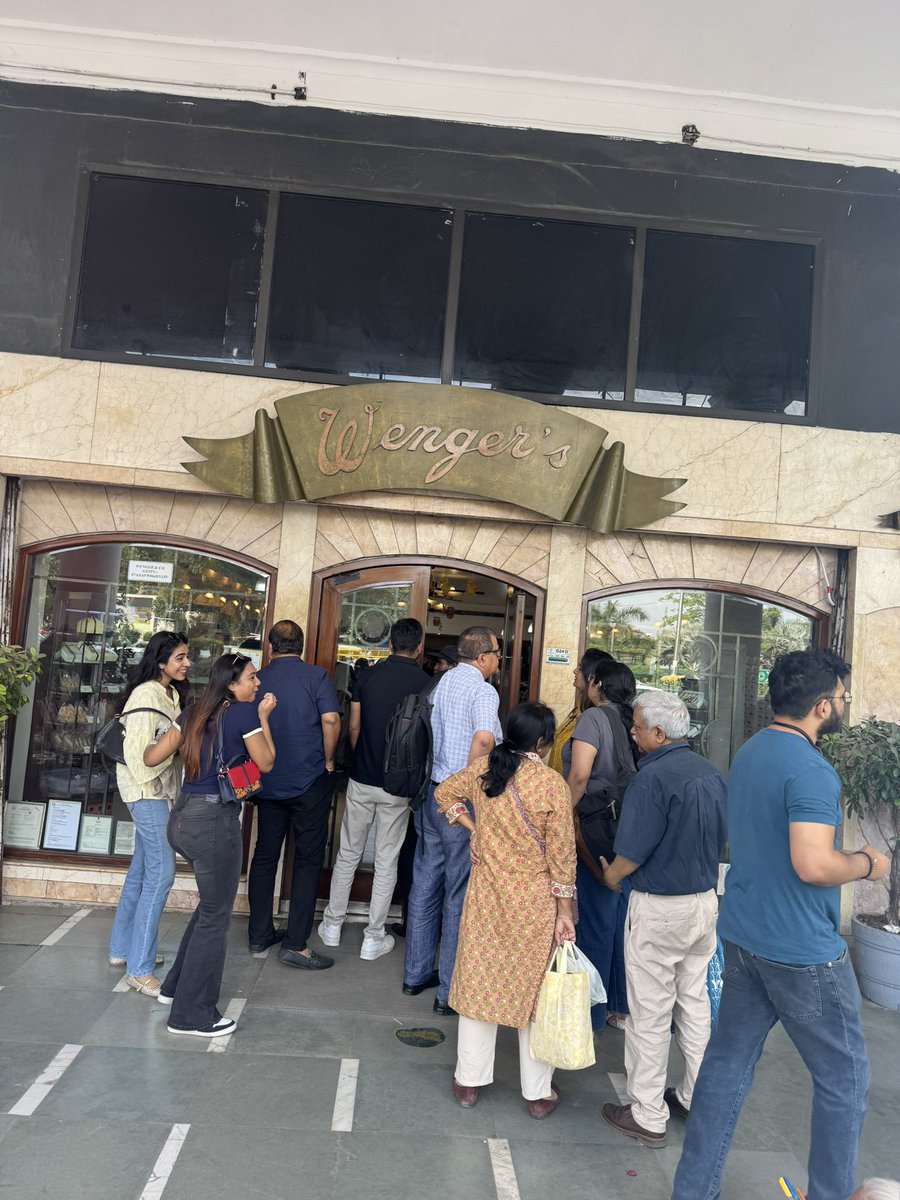
No Queues at Petrol pumps or gas stations
The only queues are at eating joints and in markets & malls
Lucky to be in India as it’s BAU despite global turmoil. We sometimes don’t appreciate it enough.
PS- Chicken Patty / Mushroom Patty is a must have.. 😋
English

Nifty is waiting for Trump statement and moving with low vol today.
At present Trump is sleeping and he is moving left and right on bed and so nifty is moving same.
English

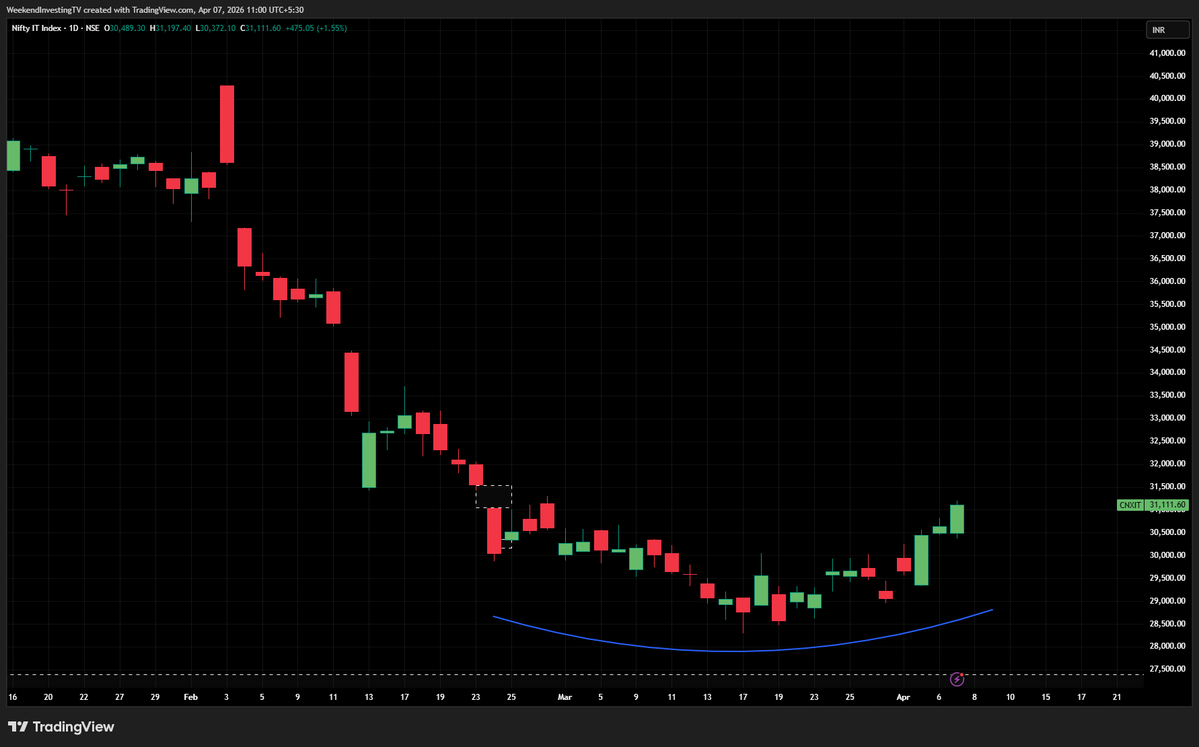
IT worst days seem to be ending for now . Nice rounding chart.
English


Ola Electric is up 30% in April 2026
The stock is now just 441% away from all time highs
You cannot keep quality stock down forever

English


There’s no immediate ceasefire on the cards. All those posts floating around on social media look planted to pump up the US markets before open.
When ceasefire is likely to happen, crude oil prices will tell you in advance.
English