Stoke Willie
2.9K posts


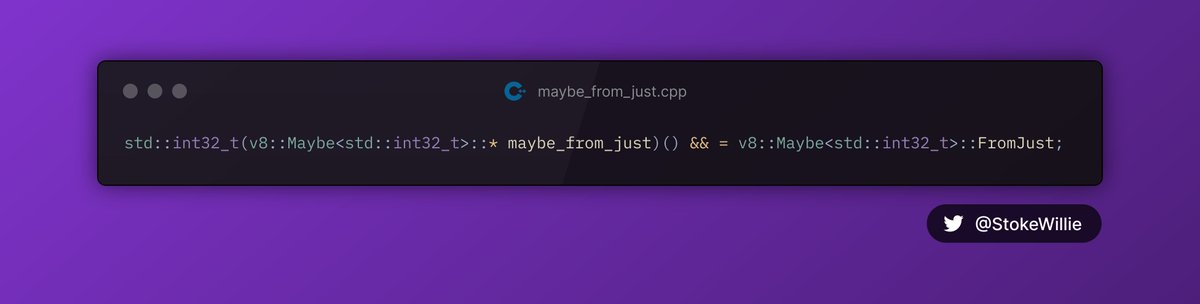
std::stod may allocate. std::strtod is locale-dependent. std::from_chars was C++17's answer, but many implementations still don't support floating-point Why does parsing a double from a string without locale quirks require a compiler lottery? 🧵👇


Paraphrasing Bryan Cantrill on Why Rust ? .. "I can write correct C [..] I can write C that frees memory properly, [..] basically doesn’t suffer from memory corruption .. on memory safety I can do that [..] I am controlling heaven and earth in my software. It makes it very hard to compose software. Because even if you and I both know how to write memory safe C, it’s very hard for us to have an interface boundary where we can agree about who does what" Link to this theme of the talk : 👇


rust is a terrible name for a programming language, almost as bad as javascript


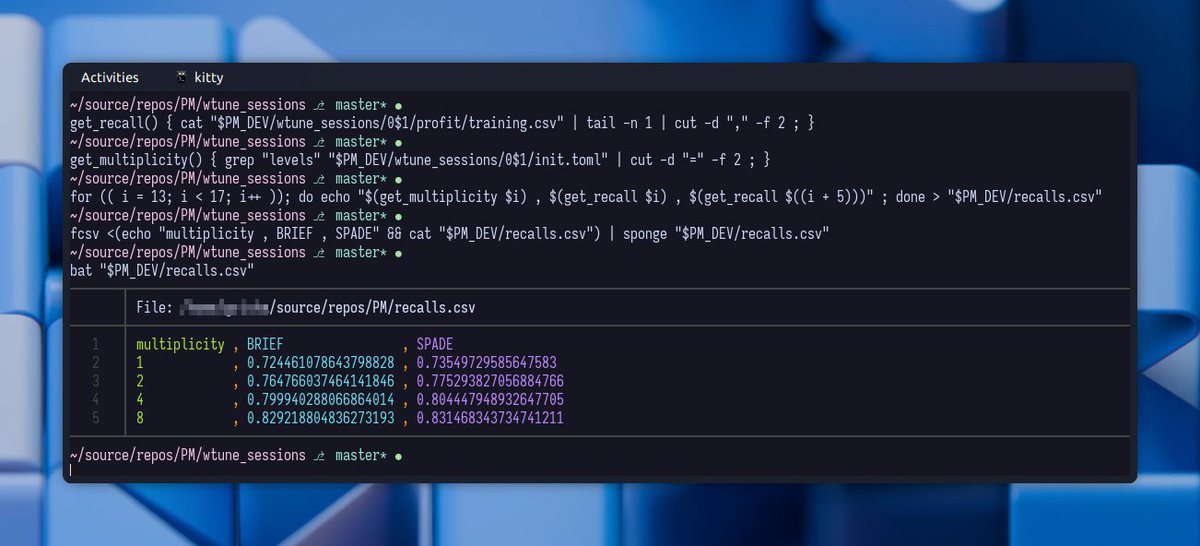
Writing in Bash feels like a breath of fresh air -- it's such an elegant language! Imagine how much it would cost to write in C++.


There’s another related thought — one drawn from my own experience. “True expert” is a silly term, but I haven’t found a better one yet — it’s someone who can drop something using ordinary words, with almost no professional jargon, short enough to stick in your memory, yet completely incomprehensible to you. And only later, once you’re deep inside the labyrinth, years down the line, do you begin to understand it better and better. Its meaning emerges gradually, like a photograph, after countless iterations, until you see it sharply and it turns out to be absolutely obvious.


There’s another related thought — one drawn from my own experience. “True expert” is a silly term, but I haven’t found a better one yet — it’s someone who can drop something using ordinary words, with almost no professional jargon, short enough to stick in your memory, yet completely incomprehensible to you. And only later, once you’re deep inside the labyrinth, years down the line, do you begin to understand it better and better. Its meaning emerges gradually, like a photograph, after countless iterations, until you see it sharply and it turns out to be absolutely obvious.



I don’t believe it’s possible to explain something truly complex to an unprepared audience. Knowledge is like a journey through a labyrinth with its wide, straight streets, secret passages, and dead ends. An expert looks down on the maze from above; they see the whole picture. A beginner stands at the entrance to the maze and sees only the next turn. A good teacher is someone who can step back into the labyrinth, into the student’s shoes. It’s just that not everyone can. “Distilling concepts” has always struck me as a popular explanation of the spin: “Imagine a spinning ball, only it’s not a ball and it doesn’t spin.”

I think it’s more that explaining in of itself is it’s own, separate skill, that also doesn’t let you signal fake competence. You can be super smart and not be able to distill concepts down; mostly because you’re taking language shortcuts that let you convey information really quickly. If you’re talking with work colleagues, conversations can be highly compressed when everyone has the same domain knowledge. The danger / meta here, is that *some* people use domain vocabulary to fake competence, without actually knowing the underlying field. It’s not that hard to “sound smart” just by using the right words. The way I’d put it, is *if* someone is able to distill a difficult concept to a lay audience, you can have high confidence that they actually understand the field. If someone is *not* able to distill a difficult concept, they probably understand the field, but there is a non zero chance (maybe ~10%) that they are just signaling via language without real domain knowledge.

So elegant and modern, not your grandpa's language 🤯