Stuart Thompson

7.7K posts

Stuart Thompson banner
Stuart Thompson

Stuart Thompson

@StuartDAA

Occasional opinions, never advice. Value and process investor; market and currency agnostic, consumer sovereignty.

Johannesburg Katılım Haziran 2011
234 Takip Edilen1.1K Takipçiler
Gina
Gina@ginnydmm·
From the “Alternative Afrikaner” “The Boy Who Crossed His Arms Twice Max du Preez has a new book. The cover tells you everything the pages won't. There is a photograph doing the rounds. Max du Preez, seventy-four years old, arms folded, jaw set, staring at the camera with the expression of a man who has just been told the wine bar is out of Pinotage. Next to him, the cover of his eleventh book, The End of Normal, featuring a photograph of a small boy, also with his arms folded, also looking cross. The subtitle reads: "Witness to the Unravelling of White Power in South Africa." Two versions of the same man, seventy years apart, doing the same thing. Arms folded. Waiting for someone to be impressed. Let me describe the face in that photo properly because I have been staring at it for five minutes and I still cannot decide what it is. It is not anger. Anger has energy. It is not defiance. Defiance has a target. It is the expression of a man who has been standing at a book launch for forty minutes and nobody has brought the canapes. It is the face of a cat that was promised tuna and received biscuits. It is the face that says "I will be signing copies between two and four, and you will queue." The subtitle is doing a lot of heavy lifting. "Witness to the Unravelling of White Power." Not participant. Not analyst. Witness. Max watched white power unravel. From a front-row seat. With a wine list. And he has written eleven books about what he saw while he was watching from the seat he was watching from. The man is not a journalist. He is a dashcam. Now, about this book. The End of Normal examines, according to the marketing copy, "how otherwise decent people came to implement and support an evil system like apartheid." It is published in May 2026, timed precisely to the peak of the Afrikaner refugee programme controversy, by Jonathan Ball Publishers, which is owned by NB Publishers, which is part of Media24, which is owned by Naspers. For those keeping score, Max du Preez left Naspers in 1983 because it supported apartheid. He then spent forty-three years building an independent brand. His independent publication died three times. And now his book about the dangers of conformity is published by the media conglomerate he left because of conformity. The circle of life, except the lion ate itself. The book warns about the rise of "a new Afrikaner nationalism." This is Max's latest concern. Not the old Afrikaner nationalism, which he has been writing about since the Bee Gees were charting. A new one. Fresh nationalism. He does not define it in any available interview, but the word "nationalism" does useful work because it makes literary festival audiences in Franschhoek shift uncomfortably in their seats, and uncomfortable seats buy hardcovers. Here is what I find extraordinary. Max du Preez ran an Afrikaans-language publication aimed at progressive Afrikaners. It launched in 2019. Could not hold subscribers. Was rescued in 2022 by Andre Pienaar, a billionaire whose venture capital firm lists a former CIA European chief, the former director of GCHQ, and the former chairman of the US Joint Chiefs of Staff as "strategic partners." The publication then died again in March 2025 because not enough Afrikaners would pay to read it. The man whose Afrikaans audience could not fill a subscription list is now writing a book warning about the dangerous power of Afrikaner nationalism. If this nationalism is so powerful, you would think at least six hundred of them could have maintained a monthly direct debit. But the book is not for them. The book is for Jonathan Ball's English-language catalogue. For literary festivals in Cape Town and London. For BBC producers who need a pull quote. For NPR's booking team. For the exact audience that has been buying the exact same product since 1988. Apartheid was bad. Max was brave. Afrikaners are concerning. Repeat until royalties.
English
49
30
147
11.9K
Stuart Thompson
Stuart Thompson@StuartDAA·
Classic!
Gina@ginnydmm

From the “Alternative Afrikaner” “The Boy Who Crossed His Arms Twice Max du Preez has a new book. The cover tells you everything the pages won't. There is a photograph doing the rounds. Max du Preez, seventy-four years old, arms folded, jaw set, staring at the camera with the expression of a man who has just been told the wine bar is out of Pinotage. Next to him, the cover of his eleventh book, The End of Normal, featuring a photograph of a small boy, also with his arms folded, also looking cross. The subtitle reads: "Witness to the Unravelling of White Power in South Africa." Two versions of the same man, seventy years apart, doing the same thing. Arms folded. Waiting for someone to be impressed. Let me describe the face in that photo properly because I have been staring at it for five minutes and I still cannot decide what it is. It is not anger. Anger has energy. It is not defiance. Defiance has a target. It is the expression of a man who has been standing at a book launch for forty minutes and nobody has brought the canapes. It is the face of a cat that was promised tuna and received biscuits. It is the face that says "I will be signing copies between two and four, and you will queue." The subtitle is doing a lot of heavy lifting. "Witness to the Unravelling of White Power." Not participant. Not analyst. Witness. Max watched white power unravel. From a front-row seat. With a wine list. And he has written eleven books about what he saw while he was watching from the seat he was watching from. The man is not a journalist. He is a dashcam. Now, about this book. The End of Normal examines, according to the marketing copy, "how otherwise decent people came to implement and support an evil system like apartheid." It is published in May 2026, timed precisely to the peak of the Afrikaner refugee programme controversy, by Jonathan Ball Publishers, which is owned by NB Publishers, which is part of Media24, which is owned by Naspers. For those keeping score, Max du Preez left Naspers in 1983 because it supported apartheid. He then spent forty-three years building an independent brand. His independent publication died three times. And now his book about the dangers of conformity is published by the media conglomerate he left because of conformity. The circle of life, except the lion ate itself. The book warns about the rise of "a new Afrikaner nationalism." This is Max's latest concern. Not the old Afrikaner nationalism, which he has been writing about since the Bee Gees were charting. A new one. Fresh nationalism. He does not define it in any available interview, but the word "nationalism" does useful work because it makes literary festival audiences in Franschhoek shift uncomfortably in their seats, and uncomfortable seats buy hardcovers. Here is what I find extraordinary. Max du Preez ran an Afrikaans-language publication aimed at progressive Afrikaners. It launched in 2019. Could not hold subscribers. Was rescued in 2022 by Andre Pienaar, a billionaire whose venture capital firm lists a former CIA European chief, the former director of GCHQ, and the former chairman of the US Joint Chiefs of Staff as "strategic partners." The publication then died again in March 2025 because not enough Afrikaners would pay to read it. The man whose Afrikaans audience could not fill a subscription list is now writing a book warning about the dangerous power of Afrikaner nationalism. If this nationalism is so powerful, you would think at least six hundred of them could have maintained a monthly direct debit. But the book is not for them. The book is for Jonathan Ball's English-language catalogue. For literary festivals in Cape Town and London. For BBC producers who need a pull quote. For NPR's booking team. For the exact audience that has been buying the exact same product since 1988. Apartheid was bad. Max was brave. Afrikaners are concerning. Repeat until royalties.

English
0
0
0
62
Stuart Thompson
Stuart Thompson@StuartDAA·
🤣 How many lines have you deleted today? @Ch3nDogg
Ihtesham Ali@ihtesham2005

A Stanford computer science professor has been teaching the same software design class for more than a decade, and every quarter the seats fill faster than almost any other course in the department. Students from Google, Meta, and Apple sneak back onto campus to audit it. Most of them have been writing code professionally for years. I read the book that came out of the class in a week and walked away seeing every codebase I had ever worked on through completely different eyes. His name is John Ousterhout. The book is called A Philosophy of Software Design. Almost everyone in tech eventually hits the same wall. You learn to code. You get good at it. You ship features. 6 months in, you cannot find anything in your own codebase. 12 months in, you are afraid to change things. 2 years in, you start wondering if the problem is you, because everyone around you seems to be drowning at exactly the same depth and nobody is willing to admit it. Ousterhout's argument is that the problem is not you. The problem is that nobody ever taught you what software was supposed to look like. Here is the story almost nobody tells you. Ousterhout was already a legend before he became a teacher. He invented the Tcl programming language, which has been used inside everything from Cisco routers to NASA spacecraft. He built systems companies. He served as a senior fellow at Electric Cloud and as VP of research at Sun Microsystems. By any normal measure he had earned the right to coast. He went back to Stanford instead. The reason he gave in interviews is the part that should make every senior engineer pay attention. He said almost every brilliant engineer he had hired in 30 years of running teams had the same gap. They could implement anything. They could solve any algorithmic problem. They could ship code that compiled, ran, and passed tests. And then 6 months later their own code would start to suffocate them, and they had no idea why. Nobody had ever taught them what good software was supposed to feel like to maintain. Universities taught data structures and algorithms. Bootcamps taught syntax and frameworks. Companies taught company processes. But the actual craft of designing software so that you would not hate yourself in two years was being passed down by accident, in code reviews, by the few senior engineers who had figured it out the hard way. Ousterhout decided to teach it on purpose. He built a class called CS 190 at Stanford, A Philosophy of Software Design. The structure of the class was unusual. Students did not just write code. They wrote code, threw it away, and rewrote it from scratch after detailed feedback. Sometimes 3 rewrites per assignment. The point was not to ship a project. The point was to feel, in your own hands, the difference between a system designed well and a system designed badly. Most students had never felt the difference before. After the class, they could not stop seeing it. He turned the lectures into a small book. It is around 190 pages. The first edition came out in 2018. It costs less than a textbook. It has quietly become one of the most-shared engineering books inside senior teams at Google, Meta, Stripe, OpenAI, and Anthropic. Senior engineers buy copies for their juniors. Tech leads send specific chapters to their teams during code reviews. The argument inside the book is brutally simple. Complexity is the enemy. Not bugs. Not slow performance. Not missed deadlines. Complexity. A system too complex to hold in your head is a system you will break by accident. You will not know which line broke it. You will fix the symptom and miss the cause. Over time, complexity compounds. The codebase becomes a place engineers fear to touch. New features take longer. Old features break for unrelated reasons. Eventually the team starts whispering about a rewrite. The rewrite usually fails for the same reasons the original did. Ousterhout argues that complexity comes from two sources. Dependencies, which are pieces of the system that affect each other across boundaries. And obscurity, which is information about the system that you cannot see from where you are reading. Reduce one, you almost always reduce the other. The deepest insight in the book is about what good modules actually look like. Most engineers are taught to build small, simple modules with lots of small, simple methods. Ousterhout calls these shallow modules and he says they are the disease, not the cure. A shallow module has a small interface and an even smaller body. The interface barely hides anything. To use the module, you have to understand almost everything inside it. Building software out of shallow modules creates the illusion of organization while the actual complexity stays exposed. Good modules are deep. A deep module has a small interface that hides a large amount of functionality inside. You use the module without understanding how it works internally. The interface gives you exactly what you need and nothing else. The complexity is contained. Files have file names, sizes, modification dates. You read and write them. You do not need to know about disk sectors, file allocation tables, or buffering strategies. The Unix file system is a deep module. Most modern abstractions are not. This is the part of the book that makes engineers stop reading and look at their own code with horror. Most production codebases are full of shallow modules disguised as good engineering. Tiny classes. Tiny functions. Long parameter lists. Wrapper layers that wrap other wrapper layers. Every layer leaks information about the layer below it. Every interface forces the caller to understand internals. Engineers wrote it that way because they thought small was good. Ousterhout argues that small is not good. Hidden complexity is good. The module should be doing a lot. The interface should be revealing very little. The second insight that landed hardest for me was about comments. Most engineers are taught that good code does not need comments. The code should be self-documenting. Variable names should be descriptive. Functions should be small enough to read top to bottom. Comments are a sign of failure. Ousterhout argues this is wrong, and that the people who say it have never actually maintained a large system over many years. Comments are not a failure of the code. Comments are how you write down the things the code cannot say. Why a particular approach was chosen. Why a tempting alternative was rejected. What invariants the function depends on. What the caller is supposed to know. None of these things can be expressed in code itself. If a future reader has to read every line of your function to understand what it is doing, you have not finished writing it. The job is not done when the tests pass. The job is done when the next engineer can pick up the file and understand it without asking you a question. The third insight is the one that hit me hardest, because it is the one almost no engineer is taught to think about until it is too late. Strategic versus tactical programming. Most engineers are taught to be tactical. You get a task. You finish the task. You move on. You take the shortest path between the current state of the codebase and the new feature. Each individual decision is reasonable. The combined effect, over years, is a codebase that has been hacked into shape by hundreds of small reasonable decisions, none of which made the system better as a whole. Strategic programming is the discipline of asking, every time you make a change, whether the change is leaving the system better than you found it. Sometimes the smallest task should pay for a refactor that makes the next ten tasks easier. Sometimes the right move is to pause for an hour and redesign the abstraction before you add the feature. Tactical programmers always feel like they are moving fast. Strategic programmers actually move fast. The difference becomes obvious around the two-year mark. Ousterhout's rule is the one I think about almost every day now. The best engineers do not write code faster than bad engineers. They delete code faster. Every line you add to a system is a permanent tax on every future reader. Most of the job of being a senior engineer is deciding what not to write. The book is short. Around 190 pages. You can finish it in a weekend. Reading it once will not make you a better engineer. Reading it twice, then watching yourself catch your own bad habits in real time, then forcing yourself to redesign one module per week using its principles, will measurably change how you write software in less than a year. Almost every engineering team I admire has at least one person who has read this book carefully and has been quietly nudging the rest of the team toward what it teaches. Most teams that do not have someone like this end up rewriting the same system every two years and never understanding why. Ousterhout is still teaching the class at Stanford. The course site is public. The book is around twenty dollars. The single most useful book about how to actually design software is sitting one click away from you. Most engineers will spend a decade learning the hard way what 190 pages would have taught them in a weekend.

English
2
0
0
122
Stuart Thompson
Stuart Thompson@StuartDAA·
Lessons here for ASML!
Parimal@Fintech03

In 1921, Mahatma Gandhi asked K.V. Ratnam to make a pen; he issued a challenge that was practically an industrial death sentence. He told Ratnam to build a fountain pen made entirely of Indian materials, or not to bother at all. For 13 yrs, Ratnam operated like a medieval alchemist in the shadows of Andhra Pradesh, trying to solve a puzzle that the British claimed was impossible for an Indian mind. The story started with a failure. Ratnam's 1st attempt was a hybrid pen using foreign nibs. When he showed it to Gandhi, the Mahatma famously rejected it. Gandhi’s logic was brutal: “If the nib is from Germany, the soul of the letter is foreign.” Ratnam went into a 13 yr exile within his own workshop. He was not just making a product; he was fighting a war against Ebonite & Iridium. The British laughed because they believed the tipping of a pen (the tiny point on the nib) required specialized European machinery that no Indian could access/operate. How did a man in Rajahmundry replicate 20th century German metallurgy w/o a factory? Ratnam began experimenting with local materials. He sourced Ebonite (hardened rubber) &, most importantly, developed a secret method to tip the nibs using indigenous alloys. In 1934, Ratnam sent his 100% Swadeshi pen to Gandhi. The Mahatma wrote back a letter that changed history: "I have used it & it is a good substitute for the foreign pen." That single piece of paper turned a small-town workshop into the Official Armory of the Satyagrahi. Before the Ratnam pen became famous, Ratnam was known as the only man who could fix the expensive British Parker & Sheaffer pens of the elite. While repairing the pens of British officers, Ratnam was essentially performing Industrial Autopsies. He was studying the internal mechanics of the Empire’s best tools to build something that would eventually destroy their market. The British officers were paying Ratnam to fix their pens, unwittingly funding the R&D of the very brand that would soon make their imports obsolete in the Indian market. When world leaders met, they often exchanged expensive Swiss watches/German pens. But the Indian leadership carried the Ratnam, a pen made of humble ebonite that did not leak at high altitudes (a common flaw in early pens), proving that Indian low-tech engineering had outsmarted European high-tech manufacturing. If Saha’s pen (story link at the bottom) was a Scalpel (precise, scientific, cold), Ratnam’s pen was a Staff. It was rugged, made of the earth, & designed to write the destiny of a nation on a piece of handmade paper. To this day, the Ratnam Sons workshop in Rajahmundry still uses some of the original lathes. When you hold a Ratnam pen, you are holding 13 yrs of stubborn refusal to accept that "Indian" meant "Inferior." Saha Story Link - x.com/Fintech03/stat…

English
0
0
0
86
Fiscal.ai
Fiscal.ai@fiscal_ai·
The card networks just crossed $30 trillion in annual payment volume. What would disrupt these moats? $V $MA $AXP
Fiscal.ai tweet media
English
5
16
171
17.6K
Stuart Thompson retweetledi
Adrian Saville
Adrian Saville@AdrianSaville·
Workers' Day at Banchan. A restaurant that pays fair wages, builds service costs into prices, and asks nothing extra of the guest. Small policy. Large statement.
Adrian Saville tweet mediaAdrian Saville tweet mediaAdrian Saville tweet media
English
36
277
910
44.1K
Stuart Thompson
Stuart Thompson@StuartDAA·
QOTD “long term own goal”
Anish Moonka@anishmoonka

A guy waiting for a Swiss train in 2020 stared at the empty strip between the rails and had an idea. Five years later, his startup laid 100 meters of solar panels there. The pilot cost $700,000. It powers four American homes a year. That same $700,000 spent on regular Swiss rooftops would have produced about 15 times more electricity. Rooftop solar in Europe runs $2 to $3 per watt to install. Sun-Ways’ track panels cost $39 per watt. 48 solar panels now sit between the rails near a Swiss village called Buttes. About 30 trains roll over them every day at up to 90 km per hour. The Swiss rail regulator turned the project down in 2023, then changed its mind in late 2024 after Sun-Ways founder Joseph Scuderi built prototypes and brought in independent engineers to sign off on safety. France’s national railway joined as a research partner last November and will study the results until April 2028. If Switzerland covered all 5,317 km of its train tracks with these panels, the country would generate 2% of its electricity that way. Enough for 300,000 homes. The startup is also pitching pilots in Spain, Romania, South Korea, and Indonesia. Dave Jones, an electrical engineer who runs the popular YouTube channel EEVblog, has made two videos arguing that both the math and the engineering don’t work. The panels lie flat between the rails. That costs them 10 to 20% of the energy they’d capture tilted toward the sun. Brake dust from passing trains coats the surface, vibrations from every train rattle the cells, and ice drops off undercarriages onto the panels in winter. Whenever crews need to do track maintenance, the panels have to be lifted off and put back. The International Union of Railways has raised separate concerns: tiny cracks forming inside the cells, fire risk in the dry grass beside the tracks, and glare reflecting into train drivers’ eyes. The original post says this is more sensible than putting solar on prime farmland. But Switzerland barely has any farmland solar. The actual Swiss debate is over solar farms in the high Alps. And the cheapest unused surface for solar in Switzerland is the same one as everywhere else: rooftops. Sun-Ways’ own long-term goal is to get the cost down to 8 cents per kWh with a 12-year payback. The pilot is nowhere near that today. It produces electricity at roughly $1.75 per kWh over its 25-year lifetime, more than five times what a Swiss household pays for grid power.

English
0
0
1
122
Stuart Thompson
Stuart Thompson@StuartDAA·
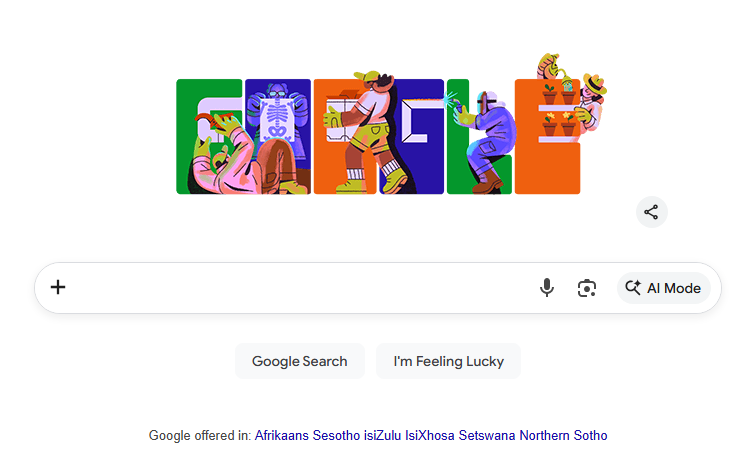
Why does it seem Google's designers have never done a day's work in their lives?
Stuart Thompson tweet media
English
0
0
0
41
Dr. M.F. Khan
Dr. M.F. Khan@Dr_TheHistories·
During WWII, Alan Turing was not only working on some of the most secret codebreaking efforts in Britain, he was also quietly worrying about what might happen if Germany invaded. Like many people at the time, he feared that ordinary money might become useless if Britain fell. So he took part of his savings and converted them into silver ingots, hoping the metal would hold its value no matter what happened. Turing reportedly buried the silver near Bletchley Park, the now famous codebreaking center where he helped crack German encrypted messages. To keep the hiding place secret, he wrote down the location in a coded note. It was a very Turing solution to a very wartime fear: hide the treasure, encode the clue, and trust logic to protect it. But the story took an ironic turn. After the war, Turing tried to recover the silver, but he could not find the exact location again. Whether the code was too unclear, the landscape had changed, or the clue simply failed him, the result was the same. One of history’s greatest codebreakers hid his own silver so well that even he never recovered it. #drthehistories
Dr. M.F. Khan tweet media
English
2
15
64
5K
derek guy
derek guy@dieworkwear·
silhouette looks like someone trying to get the most out of their toothpaste
derek guy tweet mediaderek guy tweet media
English
233
542
15.4K
662.7K
Stuart Thompson
Stuart Thompson@StuartDAA·
@thyphoidjack Go up the hill overlooking town, and find the auld graffiti of Matthew 8:36. Very poignant.
English
0
0
1
87
Mike the Warthog
Mike the Warthog@thyphoidjack·
The Cradock cemetery is probably one of the most interesting ones around. You’ll find gravestones of settlers, frontiersmen, nuns, soldiers who fell in the Anglo-Boer War and even one Harry Potter. Another interesting grave in the cemetery belongs to Reginald Koettlitz. Who was he, you ask? The grave's inscription reads, “An explorer and traveller, surgeon and geologist to Expeditions North Polar and Abyssinia and with Scott to the Antarctic”. Koettlitz’s first Artic expedition was in 1894 to Franz Josef Land as physician and geologist on the Jackson–Harmsworth expedition. In 1901, Koettlitz volunteered for Robert Falcon Scott’s Discovery Expedition to Antarctica, as physician and botanist. The story goes that Dr Koettlitz somehow neglected to add enough vitamin C to the polar pioneers’ diet. This was attributed by some critics as having led to the Scott party being in a weakened state before they perished on the ill-fated Terra Nova Expedition that followed. Even though Koettlitz was cleared of wrongdoing, the fallout led to his withdrawal from the world of exploration and moving to rural South Africa in 1905. Here he worked as a country doctor for over a decade, often using a horse or pony-and-trap to call on patients in out-of-the-way places. Reginald Koettlitz died from dysentery on 10 January 1916. Look carefully at the stone and you’ll notice that his French-born wife died on the same day, barely two hours after him.
Mike the Warthog tweet media
English
2
10
66
2.3K
Stuart Thompson
Stuart Thompson@StuartDAA·
@johnarnold Interesting John. I broke the top of my femur, and on one X-ray the surgeon pushed a dud hip-replacement on me. Ended with a loose stem, femur cracks sepsis. Surgeon could ONLY see the surgery, not the CASE from which that came, or the PATIENT underlying the case. Dismal surgeon.
English
0
0
0
200
John Arnold
John Arnold@johnarnold·
Many years ago I hurt my knee playing sports. I was referred to the orthopedist for one of the local pro teams. After keeping me waiting for 2.5 hours, he diagnosed a cartilage tear and recommended surgery. I was so mad at his manner and tardiness I left without scheduling. The next week I got a second opinion from a much younger doc who was likely more current on the recent medical literature. He looked at the same MRI. He said he could do surgery now but his advice was to wait 30 days and see if it healed on its own. It did. Medical reversal is when a practice that became widely used is later shown to be ineffective or even harmful. Examples like meniscus surgery show the need to keep gathering evidence. A not immaterial part of the practice of modern medicine doesn't improve health, and may be net harmful.
John Arnold tweet media
English
184
248
4K
871.3K