

Sturdy McKee
1.5K posts
Sturdy McKee
@SturdyMcKee
Coaching for Small Business Owners
Katılım Ağustos 2008
346 Takip Edilen1.9K Takipçiler

Data has spelled the end for some not-so-wise tactics in soccer - here are four of them
English
Kind of missing the 280, if not the 140
Colin Coggins & Garrett Brown@ColinandGarrett
There is a lot of talk around here about authenticity, including by yours truly (trulies?). It's a HUGE component of the mindset of successful leaders/entrepreneurs/sellers/friends/parents/people. BUT... There are boundaries to authenticity. Take journalist @AriMelber, for example. He’s a popular anchorman who's become well-known for quoting lines from rappers and hip-hop artists in his news stories. Even though this isn't typical newsperson behavior, it's authentic to Ari's love of the music he references. But he still wears a suit and tie when he’s on the air, even though jeans and a hoodie would probably be more his style. As is true with selling, of any kind, Melber’s credibility is critical to his success. He told us, “There are styles and habits we associate with objectivity even though they don’t prove it. Looking like your grandpa’s anchorman connotes objectivity. That doesn’t mean it’s true. Someone can deliver the news in a leather jacket or tatted up and still be objective. But in a visual or social medium they might be taking on additional complexity because they have to prove themselves that much more to the people they are speaking to.” In other words, sometimes it's better to walk the line between distinctively expressing yourself and conforming to valid expectations in order to make sure you and your message are received they way you want to be. Being our authentic selves isn’t about always behaving in some absurdly distinctive way. Every single one of us is a unique individual, but we also share a whole lot with one another, starting with 99.9 percent of our DNA. We’ve all learned lots of thoughtful behavior that society expects of us. Some conformity in life is key. The training we get growing up about social graces and proper ways of handling any manner of situations involves norms of behavior that are critical to functioning in society. If our natural inclination would be to act like an a**hole, to never express appreciation, to laugh freely at others’ expense, and to constantly judge everyone, we’d be far better off to evolve and grow out of those aspects of our authentic selves. Tailoring our behavior to positive social norms isn’t disingenuous, it’s a crucial part of personal growth. Hopefully, we come to accept those positive behaviors as part of who we are. Smiling at people we’re meeting for the first time is not a bad thing. Offering sympathy for someone’s misfortune, even if we can’t quite imagine just how they’re feeling, is a basic kindness. The question is why we’re acting in these ways — are we doing it to ingratiate ourselves to make a sale or get something we want? Or are we doing it to be good humans? If you're going to curb your authenticity for any reason, intent matters.
English
Sturdy McKee retweetledi

“Andreessen Horowitz is warning that billions of dollars in AI investments could be worth a lot less if companies developing the technology are forced to pay for the copyrighted data that makes it work.”
This is NOT from the @TheOnion …usinessinsider-com.cdn.ampproject.org/c/s/www.busine…
English
You're invited to
Nobody’s a Mind-Reader: The power of clarity for business leaders and entrepreneurs
Nov 2, 2023 9:00 AM Pacific
us02web.zoom.us/.../WN_wwM5m_K…...
#employeeengagementstrategies #employeeengagement

English
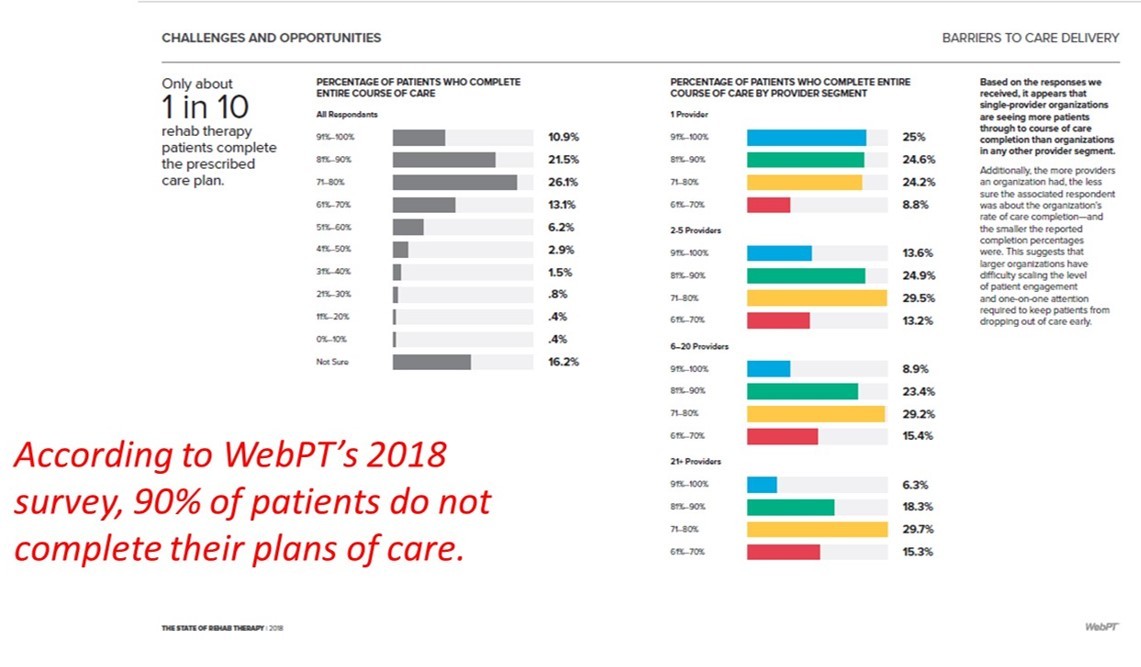
This is a big deal. And a huge black eye for PT.
And I'm learning that it hasn't changed.
What are you doing about it? #physicaltherapist
linkedin.com/pulse/90-pt-pl…
English
I admire all of you who are still here on the Twitter.
I haven't checked in for months. Glad to see some of you holding down the fort.
#FtheElon
English

Do you know the difference between cleaning, sanitizing, and disinfecting?
Cleaning removes most germs.
Sanitizing reduces the number of germs remaining after cleaning.
Disinfecting kills most germs.
Learn more: bit.ly/3JRtUE1
English
English
@JeremyBWhite @Taniel @GavinNewsom these insurers also made the following contributions to recent Newsom campaigns:
United Health Group- $130,400
Health Net- $121,800
Blue Cross/Blue Shield- $98,800
Anthem- $78,200
Molina- $52,200
English

BREAKING: @GavinNewsom gives healthcare workers a $25 minimum wage by signing #SB525
English

@JeremyBWhite @GavinNewsom Why are industries (fast food, health care) getting their own min wage?
English
This platform...
I'm seeing "new" posts that I remember from 2 years ago.
English
@RepJayapal Binary.
Is there no room for grey? For maybe everything doesn't fit exactly?
Talk to your surgeon. Overtime.
English

If you work overtime, you should get extra pay. Period.
Glad to see the Biden Administration and Acting Secretary Su taking steps to stand up for workers across the country and make sure everyone is fairly compensated for their labor. apnews.com/article/work-l…
English
Do you remember when you joined X? I do! #MyXAnniversary
No. I didn't join X.
I joined Twitter. And it got bad. But nothing like it is now.
Basically unusable. Which was the point, I guess.

English