Stuyvesant Square

18.3K posts

Stuyvesant Square banner
Stuyvesant Square

Stuyvesant Square

@StuySquare

The Stuyvesant Square Consultancy * Economics * Business Strategy * Politics * Policy * Public Affairs * Public Relations * Campaigns * Surveys & Polling

New York Katılım Ocak 2013
4K Takip Edilen859 Takipçiler
Sabitlenmiş Tweet
Stuyvesant Square
Stuyvesant Square@StuySquare·
Managing Director's tweets designated "JGC"
English
0
0
4
0
Stuyvesant Square
Stuyvesant Square@StuySquare·
@federalreserve But players should beware: it would be a huge mistake to presume they can rely on moral hazard. This government is not that of @GeorgeWBush that assuaged losses because an institution was assumed to be "too big to fail". Don't bet on it. JGC
English
0
0
0
32
Stuyvesant Square
Stuyvesant Square@StuySquare·
I suspect that the market's heavily leveraged bet on AI is much the same as the bet on crypto and that both are fed by the echo excess liquidity the @federalreserve pushed into the market in 2008 and 2020. There is too much liquidity in the marketplace. -JGC
English
1
0
0
69
Stuyvesant Square
Stuyvesant Square@StuySquare·
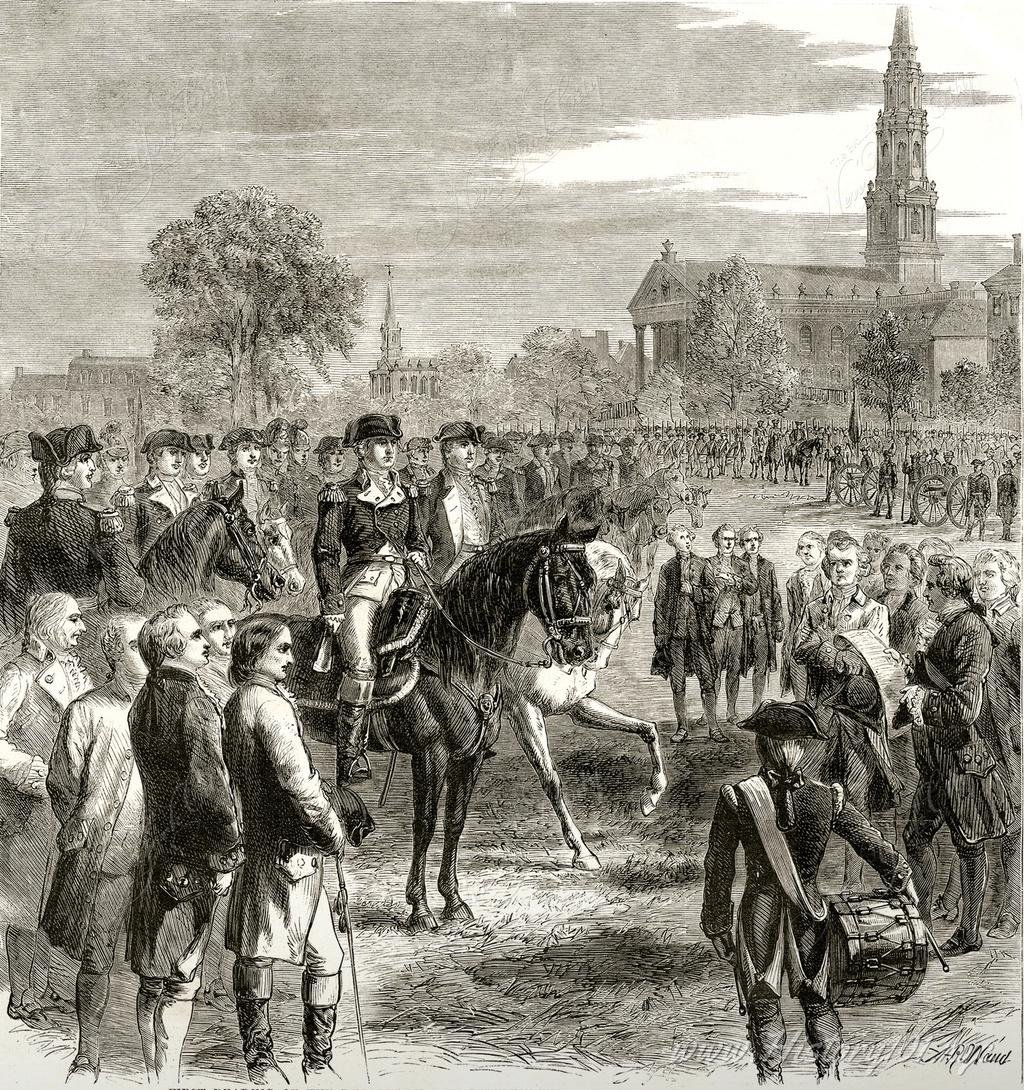
250 years ago today at around this hour and on this day at what is now City Hall Park, the first reading in NY of the Declaration of Independence.
Stuyvesant Square tweet media
English
0
0
1
43
Stuyvesant Square retweetledi
Anders Corr, Ph.D.
Anders Corr, Ph.D.@anderscorr·
The G7 democracies should consider a new set of policies to deter China from attacking Taiwan. 1. US, EU, and Japanese troops prepositioned on the island as a tripwire deterrent. 2. Impose a toll or tax on China's global shipping to fund Taiwan's defense. 3. Loan Taiwan an independent nuclear deterrent, for example by allowing a Taiwanese naval officer to occasionally captain a U.S. ballistic missile submarine. China should not know when the officer is in charge of the sub. This uncertainty could be enough to fully deter an invasion. While some of these ideas may seem outside the box, new strategies are be required to stop China's plans. Old strategies did not stop Russia and Iran from attacking their neighbors. We shouldn't make the same mistake with China, which would lead to a third major war. Better deterrence is necessary. theepochtimes.com/opinion/how-to…
English
475
50
205
103.6K
Stuyvesant Square
Stuyvesant Square@StuySquare·
#BREAKING: June #jobs prints at just 57,000 vs. consensus of 120,000 and the unemployment rate is 4.2%. U8 drops to 7.9%. Not likely to have a big market effect on a traditionally light trading day. Watch for our full jobs report and outlook here later: shorturl.at/sNlfg
English
0
0
0
51
Stuyvesant Square retweetledi
Bill Ackman
Bill Ackman@BillAckman·
Imagine your family worked for a generation to save enough money to buy a brownstone occupied with rent stabilized tenants on the Upper West Side. The family financed the purchase with a mortgage from a bank based on the premise that rents and cash flow would at least keep pace with inflation so you could pay interest and principal on the mortgage and hopefully have some cash flow left as a return on your investment. While you had rent stabilized tenants, you were led to believe that the NYC Rent Guidelines Board would be required to adjudicate rental increases each year by taking a measure of the inflation of costs to own and operate a building and setting rental increases appropriately. You believed the RGB would do its job as the board is comprised of two representatives each for landlords and tenants and five independent representatives that represent the general public. Now, a new mayor @NYCMayor Mamdani is elected on the promise of freezing rents. There are about two million rent stabilized renters that benefit if rents are frozen so by promising frozen rents the new candidate for mayor buys votes and wins the election. The new mayor achieves his objective by stacking the RGB with directors who do not follow their obligations and simply vote for a rent freeze as a preordained conclusion as evidenced by the statements of an RGB director who resigned in protest for this very reason. Meanwhile, inflation in NYC is rampant in utilities, real estate taxes, insurance, repairs and maintenance, etc. and now your rents are frozen. Real estate is a high operating leverage business which means that frozen rents and inflating expenses will cause property cash flows to plummet and your after debt service cash flow to go negative. I expect therefore there will be hundreds if not thousands of small NYC property owners who are now or will shortly be underwater on their mortgages, and without any cash flow to maintain their assets. If you remember the images of the South Bronx burning in the mid 1970s, you can viscerally understand what is happening to small NYC real estate owners. While the rent freeze appears to be short-term good news (long term it will lead to poorly maintained apartments) for 2 million NYC renters, it is bad news for the 2 million or more renters in the 1 million market rate apartments in the City because a landlord-hostile market is not likely to add meaningfully more supply and market rents will likely continue to escalate at a high rate. All of this seems quite unfair and wrong unless I missing something? Why am I wrong? For disclosure: I do not own any NYC rental apartments.
Paula Pant@AffordAnything

There's no freeze on property tax. There's no freeze on the wages paid to landscapers, plumbers, electricians, drywallers, flooring installers. There's no freeze on the cost of lumber, copper, baseboard, quarter rounds, flashing, siding, window treatments. There's no freeze on the wages paid to janitors or porters. There's no freeze on utilities -- on electric, gas, water, sewer (building-paid utilities in hallways, lobbies, maintenance corridors; most buildings pay water and sewer for tenants). There are currently 57,421 units sitting vacant in NYC because it's more cost-effective to leave them empty than it is to rent them out. If you're wondering: "How that could be possible? Wouldn't making anything be better than making nothing?" -- the answer is no, because of the 2019 Housing Stability and Tenant Protection Act. The HSTPA mandated a certain level of renovation for a vacant unit, but did not allow landlords to raise the rent enough to be able to recoup those costs. If a long-term tenant moves out after decades, the apartment often requires $50,000 to $100,000 in lead abatement, new wiring, plumbing, and structural renovations. Because the law heavily restricts how much of that cost can be passed to the next tenant. The HSPTA eliminated the "vacancy bonus" (which allowed automatic 20% rent increases when a tenant left) and heavily capped Individual Apartment Improvements (IAIs). This means landlords who want a renovation loan would be rejected by a bank, because the landlord would not be able to show that they could repay that loan. Landlords who pay out-of-pocket would end up losing money, underperforming even what they could get by putting their money in a U.S. Treasury or gov't bond. Therefore, it's more cost-effective to just leave the unit vacant. That's why we have 57,421 vacant units across New York right now. That number is about to get much worse.

English
2.7K
3.1K
19.8K
4.1M
Stuyvesant Square
Stuyvesant Square@StuySquare·
ICYMI: May Jobs Creation Is Illusory - Details Show Weakness, War Remains Concern
Stuyvesant Square tweet media
English
1
0
0
24
Stuyvesant Square retweetledi
UnveiledChina
UnveiledChina@Unveiled_ChinaX·
The illusion of a Chinese real estate recovery has officially shattered. Fresh data from April 2026 reveals that the brief stabilization seen earlier this year was nothing but a mirage, as the property market relapsed into a severe decline. New home prices collapsed by 3.5% year-on-year, marking the sharpest drop in nearly a year. The underlying metrics paint an even grimmer picture of the damage: overall real estate investment plummeted by 13.7%, while new home sales by floor space contracted by another 10.2% as buyers completely pulled back. This is a systemic crisis for a sector that historically generated 25% to 30% of the nation's entire GDP. Because real estate serves as the primary store of wealth for the vast majority of Chinese households, this compounding crash is actively suffocating domestic consumption. With massive excess inventory left completely unsold, the ongoing relapse is draining developer finances, starving local government budgets of critical land-sale revenue, and dragging down overall economic growth. #ChinaEconomy #RealEstateCrash #GlobalFinance #EconomicData #HousingMarket
UnveiledChina tweet media
The Economist@TheEconomist

Since property sales stopped plunging early this year, China’s property market has fallen back into the basement. There is the more than the pride of its leaders at stake economist.com/finance-and-ec…

English
11
79
253
28.7K