Sabitlenmiş Tweet
ˢᵘⁿ_ᶜʰᵃˢᵉʳ ☀️📸
39.1K posts

ˢᵘⁿ_ᶜʰᵃˢᵉʳ ☀️📸
@Sun_Chaser_KE
Landscapes, Skies, Music & Coffee 📸🏞 [email protected]
Kenya Katılım Ekim 2019
329 Takip Edilen9.2K Takipçiler

@ms_mutegi if you drive at night you'll come across roadblocks where officers use kerosene lamps besides the many people who still use kerosene stoves and lambs and there's nobody to stand up for the lower class in parliament or those stakeholder meetings
English
ˢᵘⁿ_ᶜʰᵃˢᵉʳ ☀️📸 retweetledi

ˢᵘⁿ_ᶜʰᵃˢᵉʳ ☀️📸 retweetledi

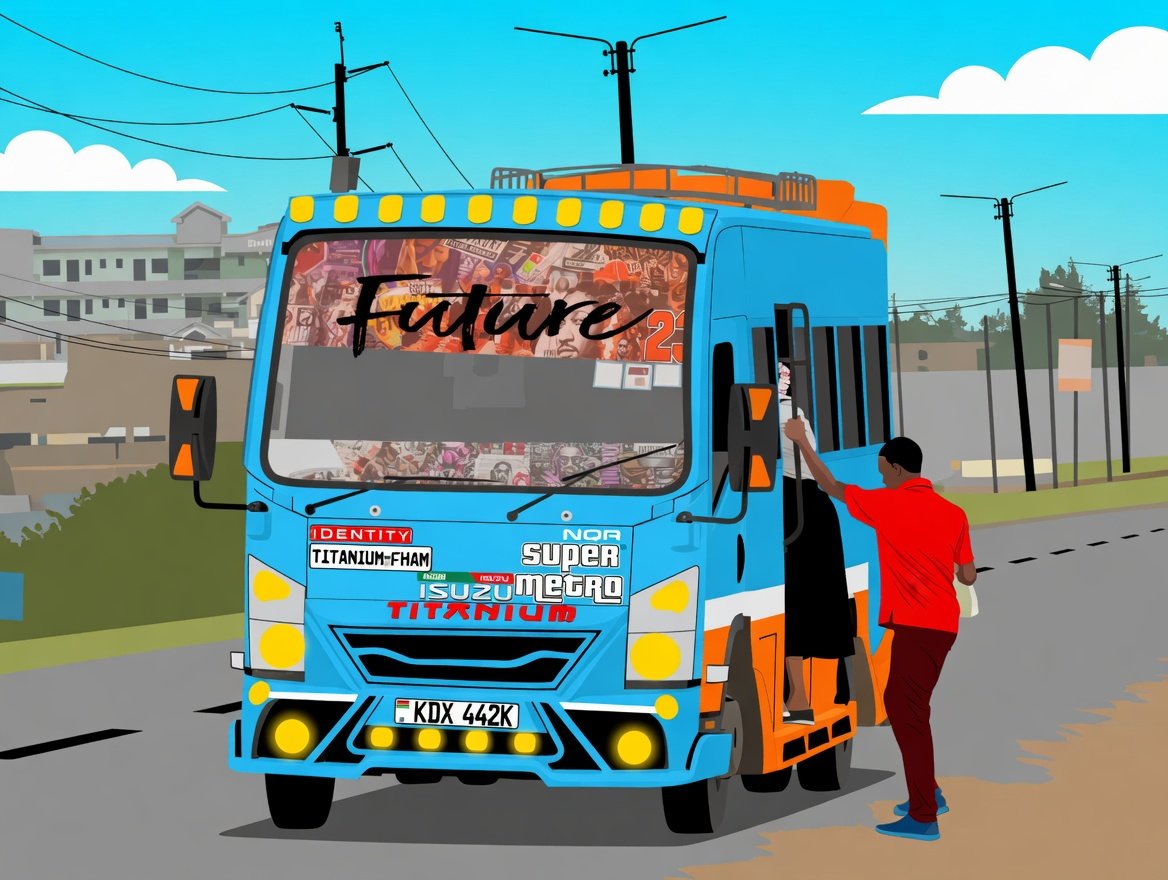
Dear Esteemed Customers,
Due to the ongoing matatu strike, our operations remain temporarily suspended.
We will keep you updated once services resume. We sincerely apologize for the inconvenience caused and thank you for your continued support.
#KeepItSuperMetro

English
ˢᵘⁿ_ᶜʰᵃˢᵉʳ ☀️📸 retweetledi

In my address titled "The Political Economy of Obedience," delivered last month at the Josef Korbel School of Global Affairs at the University of Denver, I identified five key mechanisms through which African populations have been trained into political compliance. I am sharing a summary here because they explain precisely what we are watching play out in real time every day on this continent.
The first is colonial education. The curriculum inherited from the French, the Brits or the Portugese administration was not designed to produce critical citizens. It was designed to produce a particular kind of political subject. one who understood authority as something to be respected rather than questioned, and who experienced his own political traditions as a source of shame rather than institutional possibility. As I said in Denver, the most effective political prisons are not made of concrete. They are made of curriculum. The Togolese school I attended taught us the genealogy of French kings with more precision than the history of the governance systems that predated French colonial presence on our territory.
The second is the economy of obedience itself. Authoritarian systems endure not primarily through permanent terror but because they structure the relationship between political compliance and material survival so that obedience becomes, for most people most of the time, the rational choice. Access to employment, scholarships, market licenses, import authorizations, health clinic access: none of it politically neutral, all of it conditioned on loyalty. People in these systems do not collaborate with power because they are morally deficient. They collaborate because the scaffolding of their daily lives has been designed to make non-collaboration economically catastrophic.
The third is the family as a site of control. In conditions of economic precarity, the individual who considers a dissident act must calculate not only her own risk but the risk she imposes on her parents, her siblings, her children, her cousins etc. I have watched people of intelligence and moral clarity retreat from political engagement not because they were afraid for themselves but because they could not justify the devastating exposure their activism would bring to their families. The authoritarian state does not need to threaten everyone. It only needs to ensure that the threat to one is visible and comprehensible to all.
The fourth is religion. In many parts of Africa, religious institutions have been deployed, not by their most honest practitioners but by their most politically convenient ones, to transmit a theology of earthly resignation and otherworldly reward that discourages political engagement. The pastoral instruction to render unto Caesar what is Caesar's sits very comfortably with the interests of Caesars who have no intention of rendering anything to anyone. Liberation theology, which in Latin America produced an extraordinary tradition of religiously grounded political resistance, has had a far more contested reception in much of African Christianity and Islam, partly because of the direct entanglement of many religious institutions with state power, which has made spiritual authority and political compliance structurally allied.
The fifth is media. In authoritarian African contexts, state and privately owned media aligned with power do not typically practice crude propaganda. They practice something more subtle and more durable: the selection of what is visible and what is invisible; the framing of social problems as natural phenomena rather than political choices; and the treatment of opposition voices as marginal or foreign-funded. The film industry participates in this discipline in its own way, through the systematic promotion of narratives that depict poverty and wealth as conditions of fate or personal failure, stories in which the distance between the poor and the rich has everything to do with luck, talent or divine favour and nothing to do with power, policy or the deliberate engineering of inequality.
The cumulative effect, over decades, is a population whose political imagination has been narrowed to the point where alternatives are genuinely difficult to conceive, not because the alternatives do not exist, but because the political ecosystem has ensured they remain invisible.
These are the operating manual of authoritarian systems on this continent. And authoritarianism today is not limited to regimes with a known dictator who has held power for decades. It extends equally to regimes that perform a change of leadership through placebo elections conducted every four to five years, producing a new face every eight to ten years while the same system of impunity, patronage and repression remains structurally intact.
I would argue that these are in fact the more dangerous form of authoritarianism because their citizens are deceived into believing they are living under a democracy when they are in reality governed by plutocrats. The citizen under an obvious dictatorship at least knows what he is fighting. The citizen under a rotating plutocracy has been convinced there is nothing to fight at all. He votes, he watches a new face take the oath, and he mistakes the performance of transition for the substance of change. He ends up with no voice, no justice, no agency, and worse, no drive to fight for his own dignity. For one can only fight for liberation after acknowledging one's condition of oppression.
English
ˢᵘⁿ_ᶜʰᵃˢᵉʳ ☀️📸 retweetledi

option B to Nakuru and Naivasha:
Nairobi -Jomoko-Magumu-Njabini-Engineer- (from here you can branch to Naivasha or proceed to Olkalau and then to Nakuru through Lanet ).Clear roads with around 70 extra Kilometers and beautiful landscapes. but Ruto must go first cauz fuel pricess
Long Distance Drivers and Conductors Association@loddca
TRAFFIC ALERT🚦⚠ Massive traffic between Naivasha and Kimende. No movement and overlappers have done their usual thing. @DjSoxxy @motoristsoffice
English
ˢᵘⁿ_ᶜʰᵃˢᵉʳ ☀️📸 retweetledi

@kwahome_ very true, but Sugoi pharmaceuticals sounds like garbage
English
ˢᵘⁿ_ᶜʰᵃˢᵉʳ ☀️📸 retweetledi

With his sticky fingers, long arms, and penchant for larceny, he’s always conflated private and public. Take a guess who else had a similar MO and where he matured the craft? Hint: Kabarnet Gardens was the official VP residence. Then there is Kabarak High School and University.
ˢᵘⁿ_ᶜʰᵃˢᵉʳ ☀️📸@Sun_Chaser_KE
i really didn't understand what Homelander meant yesterday when he said "he is setting up a research laboratory at his farm" on whose budget is that being done!

English