@SunkenNautilus Orkney is such a strong setting for this kind of material. Ancient sites, folklore, and landscape all seem to feed into each other there.
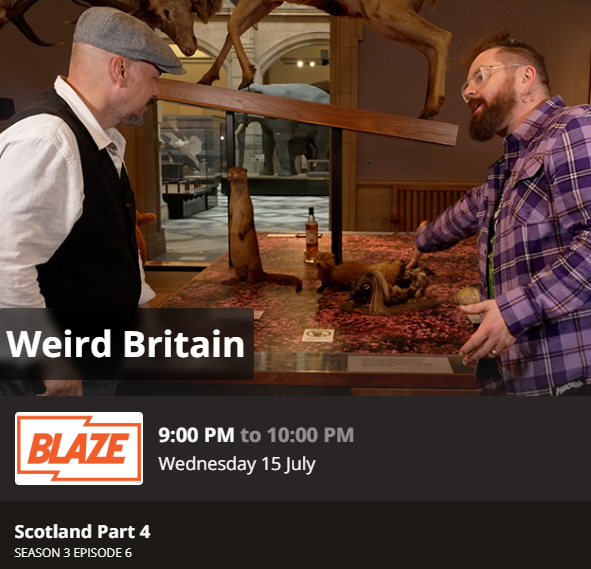
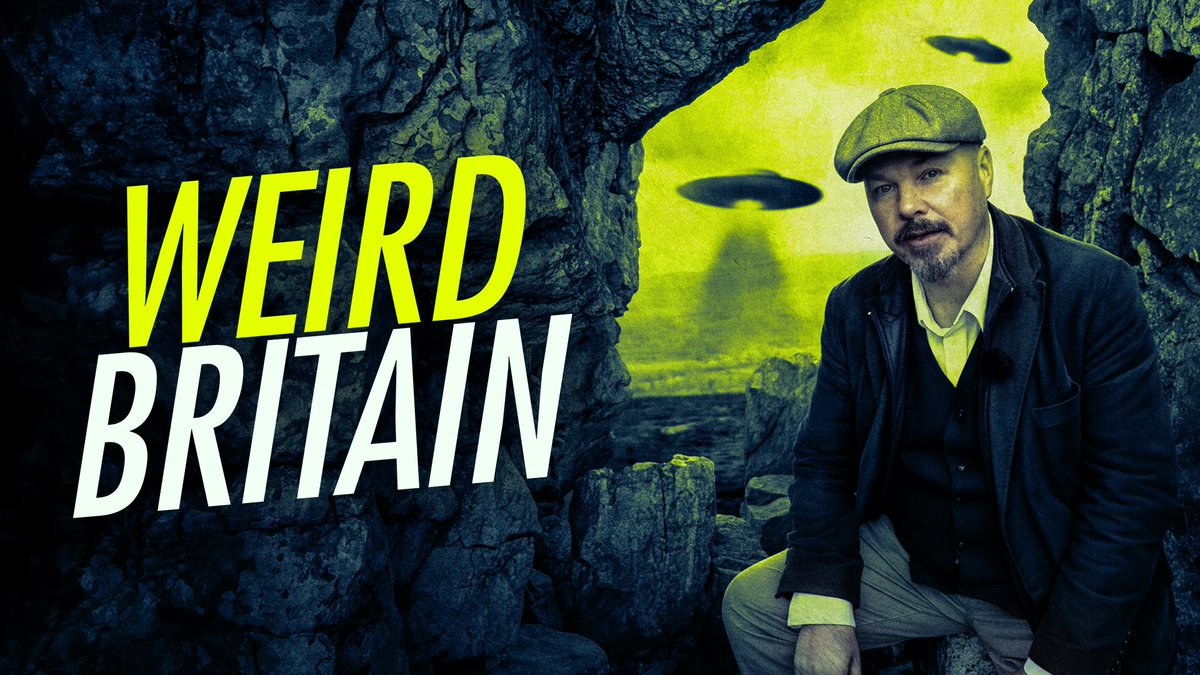
📺 Weird Britain – Season 3 Episode 6: Scotland Part 4
🕘 Wednesday 15 July | 9:00 – 10:00 PM on BLAZE
Join host Andy McGrath on a whimsical and eerie journey through Scotland’s weirdest corners!
In this episode, Andy heads to the remote Orkney Isles to explore their ancient megaliths, rich Viking heritage, and mysterious Neolithic links to giants, rituals, and the fae. He then dives into the baffling 1808 legend of the Stronsay Beast — a 55-foot globster with bizarre features — examining original historical sketches and debating whether it was a decayed shark, a sea serpent, or something even stranger.
Comedian Billy Kirkwood joins the fun as they unpack some of Scotland’s quirkiest urban legends and hoaxes, including the Stone of Scone, the mythical Wild Haggis, and the Gorbals Vampire.
Finally, Andy teams up with fairyologist Kate Ray on the magical Isle of Skye to visit enchanted fairy pools, fairy bridges, and hidden glens said to be gateways to the fairy realm.
From prehistoric wonders and cryptozoological mysteries to playful folklore and enchanting fairy traditions, this episode is a perfect blend of history, myth, and mischief!
Don’t miss it — set your reminders! ✨
tvguide.co.uk/schedule/623ea…
🏴 Happy 1099th Birthday England 🏴
On 12th July, 927AD, King Æthelstan secured control over the last Viking kingdom of Northumbria and united the Anglo-Saxon kingdoms under one ruler, becoming the first King of a united England.
Terrible day for Norway.
The "ancient handbag" is one of the internet's favorite mysteries. The real answer is more interesting than the conspiracy.
The famous carved "handbag" from Jiroft in eastern Iran, dated to around 2500 BC, isn't a handbag at all.
Archaeologists identify these chlorite objects as stone weights, used for measuring, with a semicircular handle for lifting.
The "handbags" held by winged Assyrian figures 1,500 years later are something completely different: ritual buckets called banduddu, filled with holy liquid for purification.
Same silhouette. Two unrelated objects, two unrelated jobs.
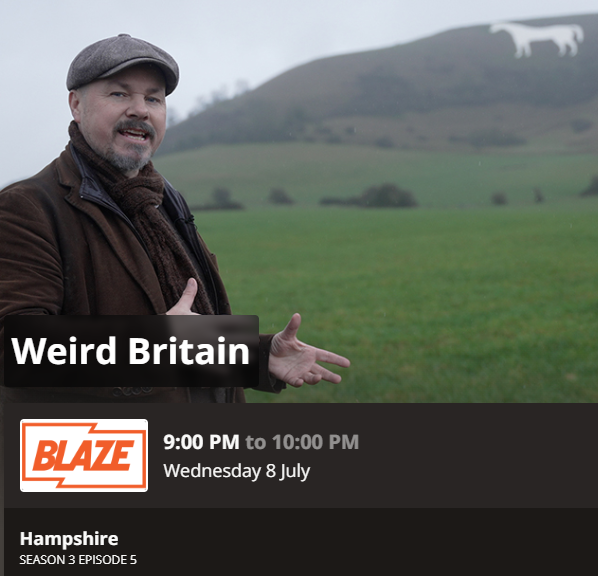
📺 Weird Britain S3:E5 – Hampshire: Tonight at 10pm on BLAZE
A reminder that you can rewatch our latest episode where we uncover explosive new evidence that King Alfred the Great may lie buried beneath a Winchester car park!
With England facing Norway in the World Cup tomorrow, the timing feels positively portentous – newspapers are already calling it an omen! ⚽🇬🇧
But that’s just the start....
This jam-packed episode also explores the city’s legendary links to King Arthur and his famous Round Table at The Great Hall, Jane Austen’s final resting place in Winchester Cathedral, the incredible story of Victorian diver William Walker who saved the Cathedral from collapse, grim Civil War execution sites, peculiar storied graves, and the haunted ruins of a legendary abbey filled with ghostly tales and unsolved mysteries.
History, legend, engineering heroics, and supernatural intrigue all in one fascinating hour!
🔍 Don’t miss it!
tvguide.co.uk/schedule/5de7d…
C’est le plus ancien règlement de bibliothèque retrouvé à ce jour. Découvert sur l’agora d’Athènes, il stipule, ciselé dans le marbre :
« Aucun livre ne sera emporté au-dehors, car nous en avons prêté le serment. La bibliothèque sera ouverte de la première heure jusqu'à la sixième. »
BYBΛION OYK EΞENEXΘHΣETAI EΠEI ΩMOΣAMEN: ANYΓHΣETAI AΠO ΩPAΣ ΠPΩTHΣ MEXPI EKTHΣ
Bibliothèque de Pantainos, musée de l’Agora, Athènes, Ier siècle.
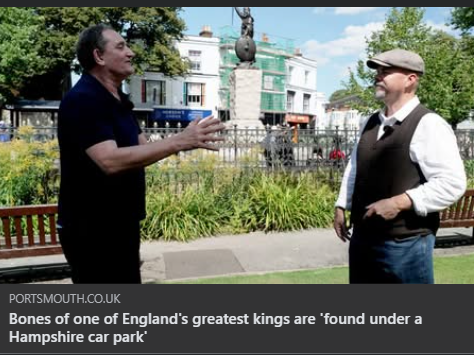
King Alfred the Great’s remains traced to a car park in Winchester, Hampshire — Alfred was best known for saving England from Viking forces in 878 and he laid the basis for a unified English nation
The find comes just days before England take on Norway and star striker Erling Haaland in a quarter-final tie at the World Cup
Died: 899 = 8:18 = 17 (Q)
2026 - 899 =1,127 ~ 9:11
2026 - 878 =1,148 ~ 11:12 ~ 11:3*
Erling = 38 = 11 = 2
Haaland = 23
⚡️2:23 ~ 322 ☠️
*11.3: End of occupation 🇺🇸 War Manual
mol.im/a/15961621
Plato never claimed to invent Atlantis, he named his source.
The story reached him through Solon, the Athenian lawmaker, who Plato says heard it around 590 BC from priests at Sais, in Egypt's Nile Delta.
Sais was then Egypt's capital, and the priests told Solon the story sat written in their temple's sacred registers, records claimed to reach back 9,000 years, deeper than any Greek memory.
🔹Had a medical school
🔹Its goddess doubled as Athena
🔹Its stones sit in village walls today
🔹"You Greeks are always children," they said
🔹Archaeologists now map the city by drilling holes
Then the city was eaten, because for centuries farmers dug its mud brick out as fertiliser, and the giant walls travellers sketched in the 1800s vanished within a single lifetime.
The temple Plato pointed to survives only as scattered blocks, so his claim can never be checked, for him or against him.
No evidence means something different when the evidence room was quite literally demolished.
If the temple at Sais were still standing today, what do you think we would find written inside?
Nobody can fully explain the giant pine cone at the heart of the Vatican.
The 13ft bronze Pigna was cast around 1,900 years ago and stood beside Rome's temple of the Egyptian goddess Isis, spouting water from its tip.
The Church claimed it in the Middle Ages and set it in the courtyard of Old St Peter's, where pilgrims washed at it for centuries, and even that is the young half of this story.
🔹Once gilded in gold
🔹Cast in 5 separate sections
🔹Dante wrote it into his tour of Hell
🔹Signed by its otherwise unknown maker
🔹A district of Rome is still named after it today
Walls from the palaces of Assyria, in modern Iraq, show winged beings raising the same cone shape, carved 900 years before the Pigna.
But here is where it gets strange, because experts cannot agree what the cone is, a pine cone or a date palm flower, or what the figures are sprinkling, holy water or pollen.
Mainstream can trace every home it had, but not the meaning it held.
What was the cone actually for, and how does a symbol outlive its own meaning?
The Giant Stone That Encodes Time Itself
Hidden in the heart of ancient Mexico lies a stone so powerful in symbolism that many people once believed it could control time itself.
Displayed today in the National Museum of Anthropology, the massive Aztec Sun Stone is one of the most fascinating creations of the Aztec Empire. Carved around 1479 CE, this enormous basalt disk weighs more than 24 tons and stretches over 3.5 meters wide—a monument that once carried the secrets of an entire civilization’s understanding of the universe.
At the center of the stone is the powerful face of Tonatiuh, the Aztec sun deity. His intense expression seems to stare directly at the viewer, as if guarding the cycles of time itself. Surrounding him are carefully carved symbols that tell the story of different cosmic ages—worlds that, according to Aztec belief, were created and destroyed before the present one.
Radiating outward like ripples in time, the stone is filled with mysterious glyphs representing sacred days, rituals, and astronomical cycles. To the Aztecs, time was not just a measurement—it was a living force tied to the movement of the sun, the stars, and the fate of humanity.
For centuries, this incredible stone lay hidden underground. After the Spanish conquest, it was buried beneath what is now the main plaza of Mexico City. Then in 1790, workers digging in the plaza made a stunning discovery. Beneath the earth was the giant stone disk, perfectly preserved, waiting silently for nearly three hundred years.
Today, standing before the Sun Stone is an unforgettable experience. Every carved line and symbol reminds us that long before modern science, the Aztecs were studying the heavens, tracking time, and weaving astronomy with myth in ways that still amaze historians and archaeologists.
And perhaps the greatest mystery remains this:
Was the Sun Stone simply a calendar… or was it a powerful symbol meant to keep the universe itself in balance?
Weird Britain Hampshire S3E5🕒 Wed 8 July | 9PM
Andy McGrath hunts the possible final resting place of King Alfred the Great, discovers King Arthur’s Round Table, and dives into Winchester’s ghosts, Jane Austen & more!
Don’t miss it! 🔔