Surviving Doomsday

18.9K posts

Surviving Doomsday banner
Surviving Doomsday

Surviving Doomsday

@SurvivingDoomsd

Practical preparedness content, news, tips, ideas, insights and gear. Real-world strategies focusing on the survival essentials. Stay safe & be prepared!

United States Katılım Haziran 2012
1.9K Takip Edilen6.3K Takipçiler
Sabitlenmiş Tweet
Surviving Doomsday
Surviving Doomsday@SurvivingDoomsd·
As the rapid decline into lawlessness, chaos & overall anarchy continues, we urge preparedness, planning & awareness. Secure the survival essentials, develop skills/mindset, and focus on realistic planning. You can prepare, or you can be a victim. Stay safe and be prepared.
Surviving Doomsday tweet media
English
1
2
6
1.5K
Surviving Doomsday retweetledi
Polymarket
Polymarket@Polymarket·
JUST IN: United CEO tells employees to prepare for $175 oil in internal memo, expects it to stay above $100 until the end of 2027.
English
227
725
5.1K
1.2M
Surviving Doomsday retweetledi
Shanaka Anslem Perera ⚡
Shanaka Anslem Perera ⚡@shanaka86·
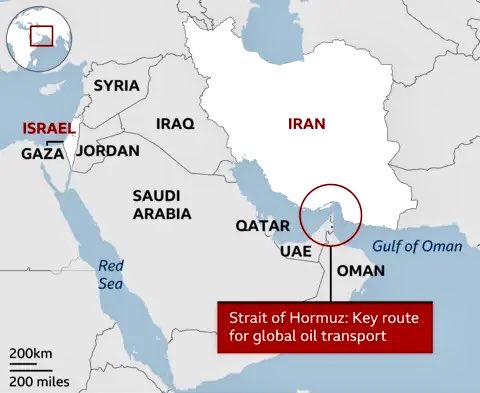
The war in the Strait of Hormuz will reach your local pharmacy within six weeks. Not because your pharmacist follows geopolitics. Because the active pharmaceutical ingredients in roughly half of America’s generic prescriptions begin as petrochemical derivatives manufactured in India, and India’s petrochemical industry begins as crude oil that transited 21 miles of water that closed on March 4. Nearly 70 percent of the active ingredients in US generic drugs are produced in India. India imports approximately 40 percent of its crude oil through the Strait of Hormuz. The crude feeds refineries that produce naphtha. The naphtha feeds petrochemical crackers that produce intermediates. The intermediates feed pharmaceutical plants in Gujarat, Maharashtra, and Hyderabad that produce the API, the active pharmaceutical ingredient, that is shipped to contract manufacturers in the United States, Europe, and across Asia. The chain from the strait to the tablet is six steps long. Every step requires the one before it. CNBC reported that the Hormuz closure puts America’s generic drug supply at risk. Fierce Pharma warned of longer-term effects on US manufacturing and generics. Think Global Health mapped the pharmaceutical supply chains most vulnerable to disruption. The consensus across trade publications, health policy analysts, and industry executives is identical: four to six weeks of current inventory exists in the pipeline. After that, shortages begin with the most complex formulations first. Cancer drugs are the highest risk. Biologics requiring cold-chain storage have the shortest shelf life and the longest replenishment cycle. Clinical trial medications depend on uninterrupted supply chains that are now interrupted. Insulin analogues, antivirals, and cardiac medications all contain intermediates sourced from Indian manufacturers whose input costs are rising with every day the strait remains closed. Air cargo is the emergency bypass. But air freight rates from India have climbed 200 to 350 percent on some routes since the war began, according to logistics tracking firms. Gulf air capacity is down 79 percent because airports in the UAE, Kuwait, and Qatar have been damaged or operate under restricted conditions. The Suez Canal route adds 10 to 14 days to maritime shipping times. The Cape of Good Hope route adds 21 to 28 days. Both alternatives assume the Red Sea remains navigable, which the Houthi threat has complicated since 2024. The World Health Organisation reported a 70 percent funding gap for its operational response in the region. Medical supply chains to Iran itself have been devastated, with hospitals reporting shortages of surgical supplies, blood products, and anaesthetics. But the downstream pharmaceutical effect extends far beyond the war zone. Every Indian manufacturer that pays more for crude pays more for naphtha, pays more for intermediates, and passes the cost forward into API prices that American generic drug companies absorb until they cannot absorb any further. The molecule does not know it is a medicine. The strait does not know it is a pharmacy. The petrochemical derivative that becomes a blood pressure tablet transits the same water as the petrochemical derivative that becomes a fertiliser pellet. Both are trapped. Both have shelf lives. Both have planting windows or prescription refill cycles that do not negotiate with blockades. Six weeks. Then the pharmacy starts calling patients about substitutions. open.substack.com/pub/shanakaans…
Shanaka Anslem Perera ⚡ tweet media
Shanaka Anslem Perera ⚡@shanaka86

Your paracetamol is made from oil. The phenol comes from a cumene process that starts with naphtha. The naphtha comes from a refinery. The refinery’s feedstock transits the Strait of Hormuz. Ninety-nine percent of pharmaceutical feedstocks, solvents, reagents, and packaging are petrochemical-derived. The American Gas Association confirmed it. The medicine cabinet is the sixth layer of the Hormuz crisis and nobody is talking about it. The war started with uranium. It moved to oil. Then fertiliser. Then water. Then plastic. Now medicine. Paracetamol is 100 percent petrochemical. Phenol from cumene, converted to para-aminophenol, then acetylated. Ibuprofen is 100 percent petrochemical. Isobutylbenzene plus propionic acid derivatives. Metformin, the most prescribed diabetes drug on Earth, is 80 to 90 percent petrochemical. Dicyandiamide from natural gas derivatives. Antibiotics like amoxicillin and ciprofloxacin require methanol, acetone, and dichloromethane as solvents for extraction and crystallisation. Oncology drugs need cold-chain energy and plastic packaging. Every blister pack, every pill bottle, every syringe is PE, PP, or PET from Gulf naphtha. India makes 40 to 47 percent of American generic medicines by volume. It imports $4.35 billion in active pharmaceutical ingredients annually, 74 percent from China. But the critical precursors, the methanol and ethylene glycol that feed Indian API synthesis, are 87.7 percent and roughly 100 percent Hormuz-dependent respectively. The Indian government has prioritised household LPG over industrial petrochemical feedstock, starving the downstream pharmaceutical chain. API costs have surged 30 percent in the last two weeks. The typical buffer is two to three months of inventory. The war is nineteen days old. The clock started before the buffer was designed for this scenario. A diabetic in Ohio takes metformin every morning. The dicyandiamide that becomes the active ingredient traces back through a Chinese intermediate to a natural gas derivative that originated in the Gulf. The methanol used to crystallise the compound in a Hyderabad factory was shipped from a terminal that now sits behind the same strait controlled by provincial commanders with sealed orders. The blister pack was moulded from polyethylene derived from naphtha that loaded at a facility the IRGC published satellite targeting images of yesterday. One pill. Four petrochemical dependencies. One chokepoint. The farmer in Iowa cannot plant corn because nitrogen costs $610. The diabetic in Ohio may not be able to fill a prescription because methanol costs whatever the strait permits. Both crises trace to the same 21 miles of water. Both are governed by the same sealed packets. Both operate on biological clocks that do not negotiate with doctrine. Nitrogen decides whether the food grows. Methanol decides whether the medicine is synthesised. Polyethylene decides whether it reaches the shelf in a blister pack. Energy decides whether the cold chain holds for oncology and biologics. Every molecule in the pharmaceutical supply chain is now compromised by the same chokepoint that trapped the fertiliser, the gas, the plastic, and the water. Europe said Iran is not their war. Their existing drug shortages, 400 to 1,500 medicines depending on the country, will deepen regardless. Bangladesh, Egypt, and sub-Saharan Africa depend on Indian generics for infectious disease and maternal health. The API depletion clock runs for everyone. The strait does not distinguish between a urea molecule and a methanol molecule. Both are gated. Both are biological. And both determine whether human beings survive the next quarter. Full analysis - open.substack.com/pub/shanakaans…

English
123
2.8K
4.8K
605K
Surviving Doomsday retweetledi
Backpirch Weather
Backpirch Weather@BackpirchCrew·
JUST IN: Australian Cyclone Narelle has been upgraded to a Category 4 storm over the warm waters of the Coral Sea, with her core pressure crashing down to 935 MBAR. This makes her the most intense storm yet of the 2025-26 Australian Cyclone Season. Furious lightning activity is thoroughly electrifying the eyewall around Narelle’s pinhole eye as rapid intensification continues.
Backpirch Weather@BackpirchCrew

Extremely high-definition satellite imagery shows the dreaded rippling-effect of the convection around Cyclone Narelle’s ravenous inner eyewall. That is the product of deeply icy thunderstorms, with cloud tops as incredibly cold as -140 F (-95 C), rotating faster and faster as the eye pressure rapidly caves inward. Vortical hot towers and lightning bursts have been firing all day today within the core. Heed all orders and advice from local officials if you are in the far north of Queensland, Australia. This is a very intense storm churning your way. (Sat-image credit: SSEC/CIMSS)

English
8
53
209
21.1K
Surviving Doomsday retweetledi
healthbot
healthbot@thehealthb0t·
Ancient off grid Cooling Method (Zeerpot) keeps Food Fresh at 40°F without Electricity.
English
4
111
397
20.6K
Surviving Doomsday retweetledi
American Rifleman
American Rifleman@NRA_Rifleman·
A flashlight is a super handy addition to any EDC kit, and @Streamlight's Wedge SL is a sleek, slim design that can be easily carried in your pocket all day long.
English
0
1
21
2.1K
Surviving Doomsday retweetledi
Breaking911
Breaking911@Breaking911·
🚨 DEVELOPING: A serious incident at Kansas City International Airport prompted a full ground stop and the evacuation of passengers and staff, though the cause remains unknown.
English
83
404
1.7K
458.1K
Surviving Doomsday retweetledi
Today Years Old
Today Years Old@todayyearsold·
I've always wondered how they know when it expires
English
42
331
1.7K
190.8K
Surviving Doomsday retweetledi
NewsForce
NewsForce@Newsforce·
RADIO GIANT FILES FOR BANKRUPTCY Cumulus Media, one of the largest radio operators in the U.S., has filed for Chapter 11 in Texas as the industry struggles to survive a massive shift in how people listen to music and podcasts. Source: NewsForce
English
6
10
30
7.7K
Surviving Doomsday retweetledi
Backpirch Weather
Backpirch Weather@BackpirchCrew·
JUST IN: Indian Ocean Cyclone Horacio has just become the world’s first CATEGORY 5 storm of 2026. He has strengthened from 65 mph to 160 MPH in only 24 hours.
English
28
276
1.2K
73.6K
Surviving Doomsday retweetledi
Eric Yeung 👍🚀🌕
Eric Yeung 👍🚀🌕@KingKong9888·
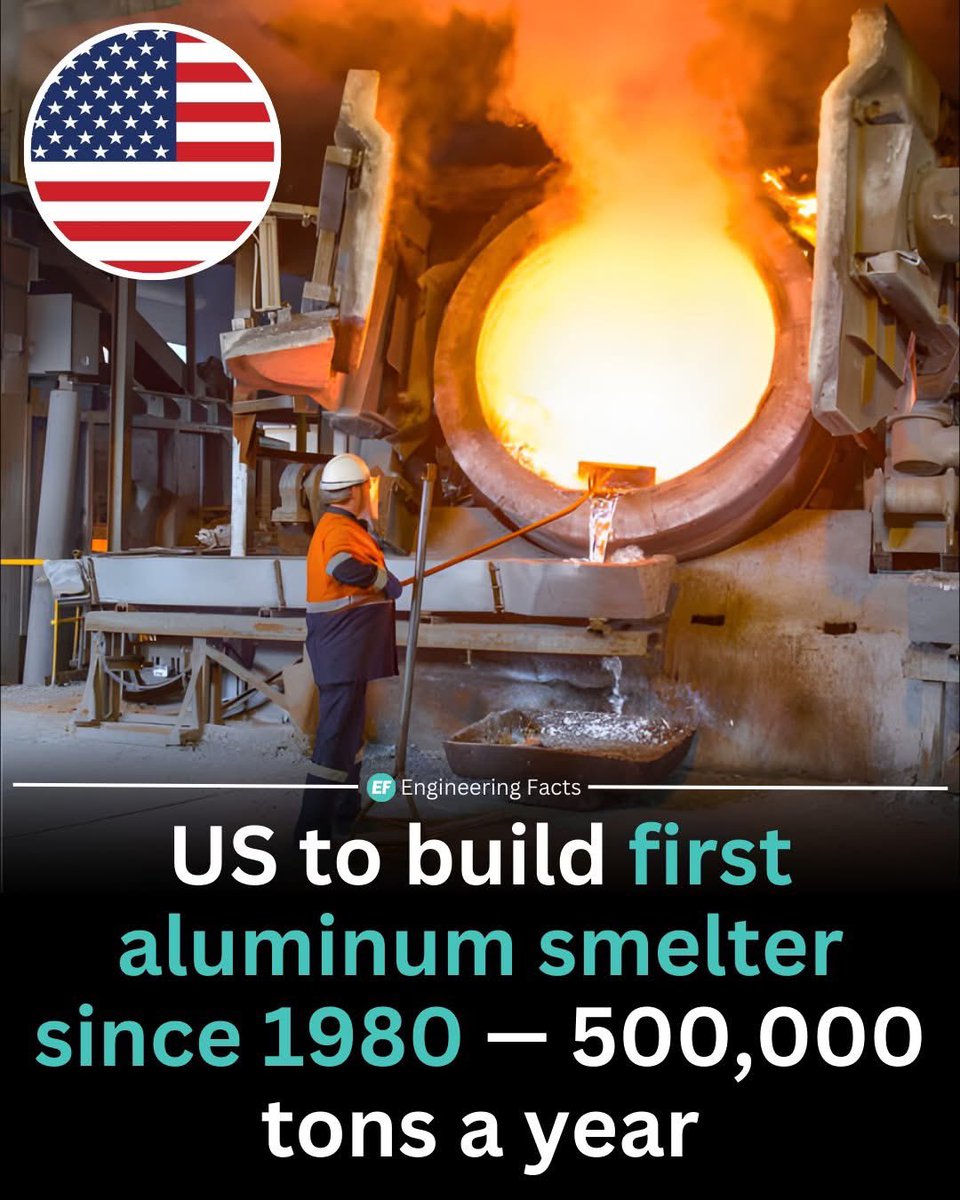
🚨🚨🚨🚨🚨 The United States is preparing to build its first new primary aluminum smelter in decades, signaling a major shift toward rebuilding domestic industrial capacity. The planned facility in Oklahoma is expected to become the largest of its kind in the country. Century Aluminum’s project aims to produce up to 500,000 tons annually, including high-purity aluminum critical for defense and aerospace applications. This reflects growing concern over supply chain security for strategic materials. Aluminum is essential across modern industries because it is lightweight, strong, corrosion-resistant, and highly conductive. It plays a key role in everything from aircraft and power grids to packaging and consumer electronics. The U.S. once dominated global aluminum production, but domestic output has fallen sharply as smelters shut down and imports surged. Reinvesting in smelting is part of a broader push to reshore manufacturing and reduce reliance on foreign supply. Supported by major federal funding and international investment partners, the project could reshape America’s aluminum industry while raising questions about energy demands, sustainability, and the future of industrial production. Via Engineering Facts on FB #Gold #Silver #Manufacturing #AluminumIndustry #USIndustry #SupplyChainSecurity #DefenseMaterials #EconomicDevelopment
Eric Yeung 👍🚀🌕 tweet media
English
56
107
628
25.5K