Sabitlenmiş Tweet
Ronald Manuel Rivera
70.5K posts

Ronald Manuel Rivera
@SynodBooks
Teólogo venezolano Escritor e investigador
Santa Cruz de Tenerife, España Katılım Mart 2023
3K Takip Edilen675 Takipçiler
Ronald Manuel Rivera retweetledi

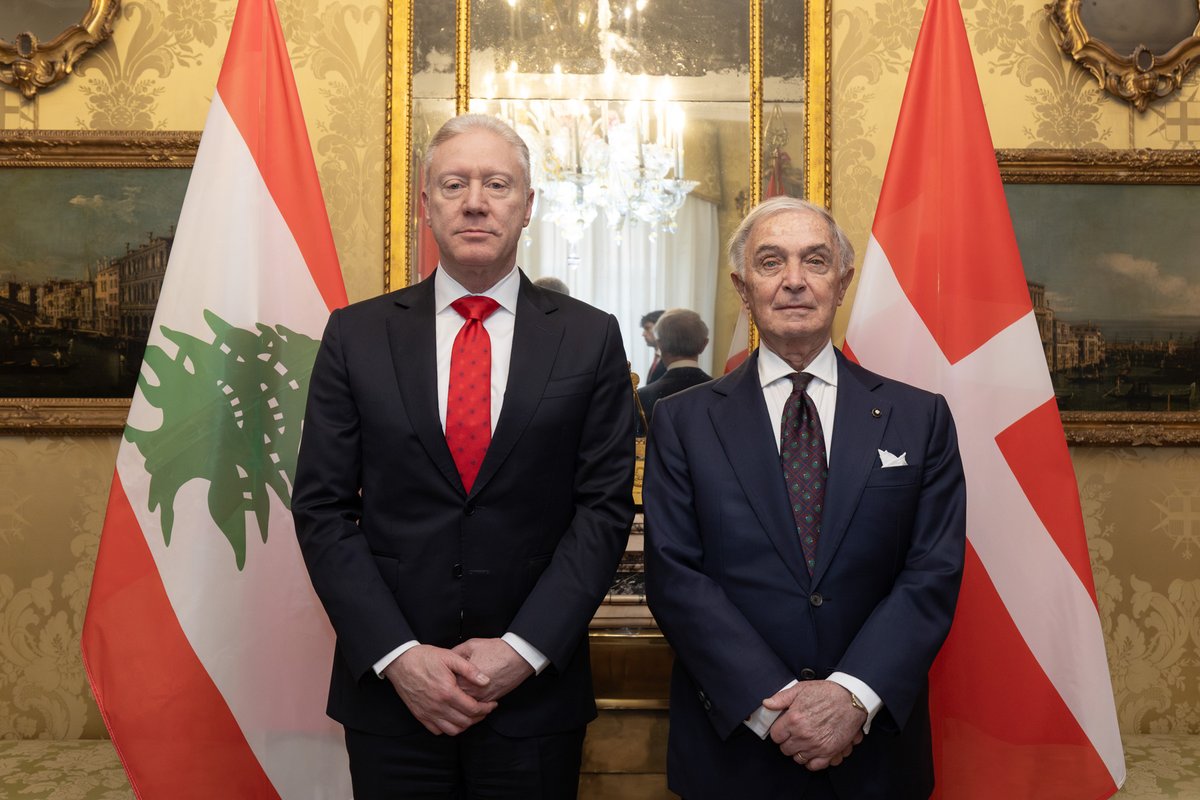
Incontro tra il Gran Cancelliere e il Ministro degli Affari Esteri del #Libano @YoussefRaggi per rafforzare la cooperazione nell'affrontare la crisi umanitaria. L’#OrdinediMalta continua a fornire assistenza medica e cibo a migliaia di sfollati nel Paese.
orderofmalta.int/it/notizie/gra…


Italiano
Ronald Manuel Rivera retweetledi

“La sinodalidad no tendrá vuelta atrás”: expertos del Celam motivan a construir una Iglesia donde “todos/as caben, hablan y caminan”. Así se inauguraron una serie de encuentros organizados por el @Cebitepal_Celam y el Equipo Sinodal Continental @Synod_va adn.celam.org/la-sinodalidad…
Español
Ronald Manuel Rivera retweetledi

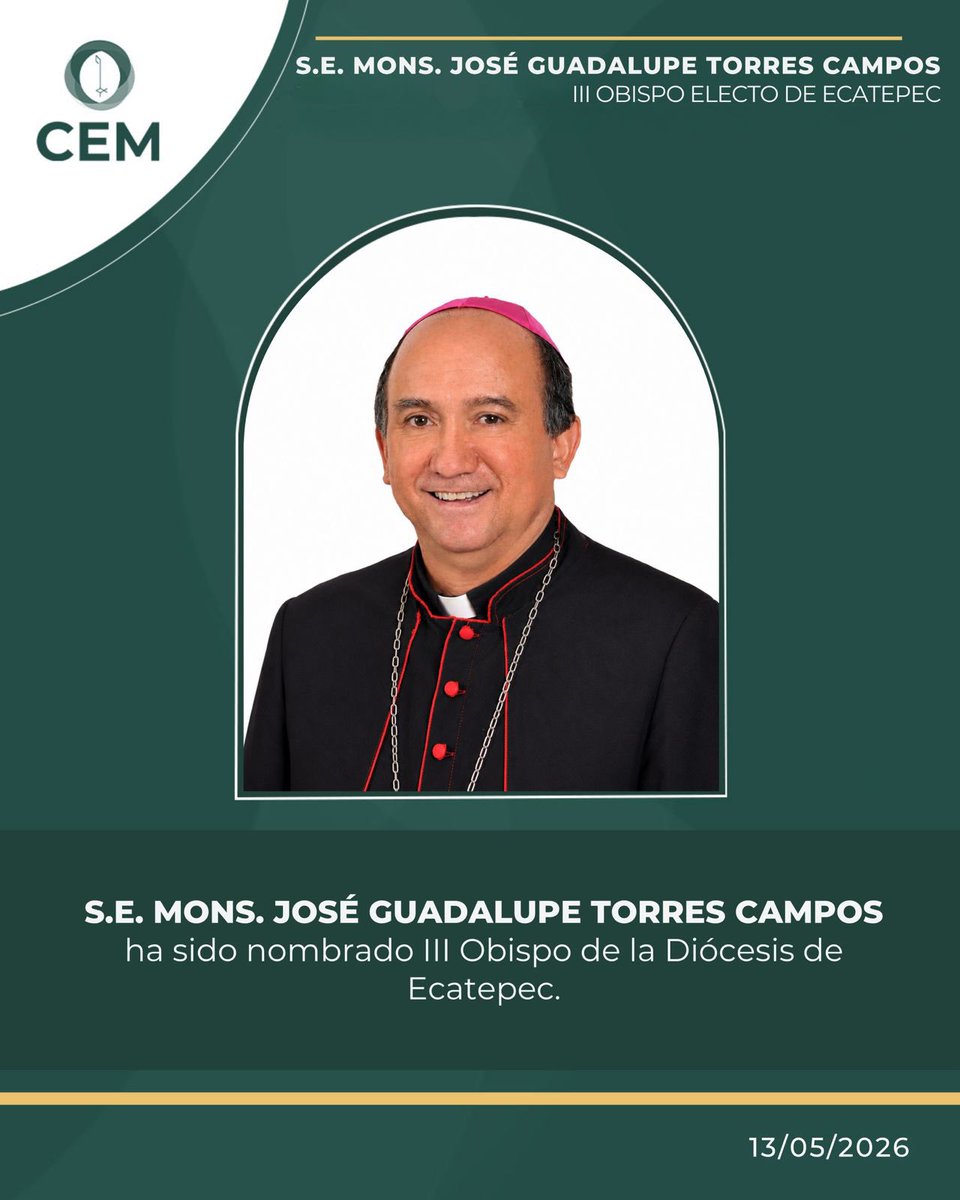
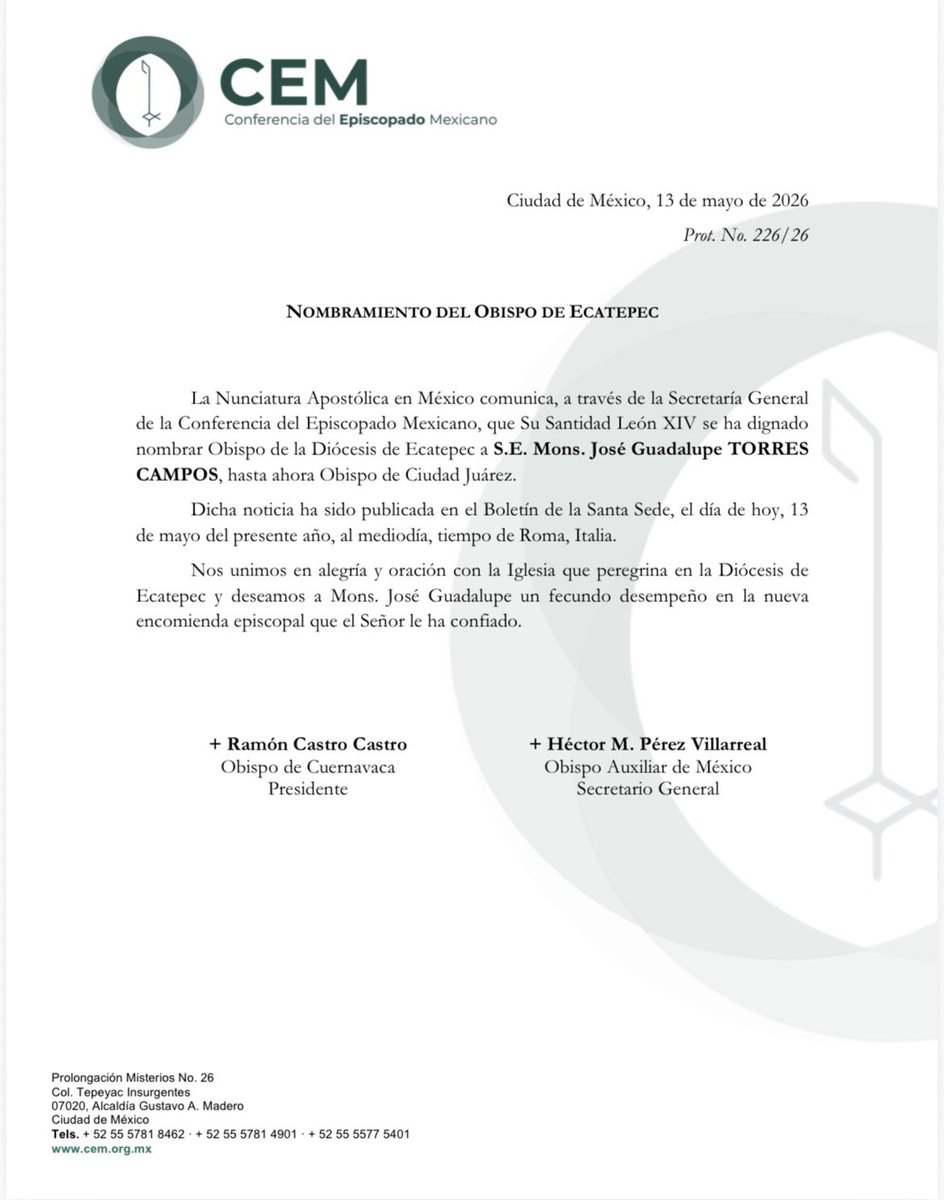
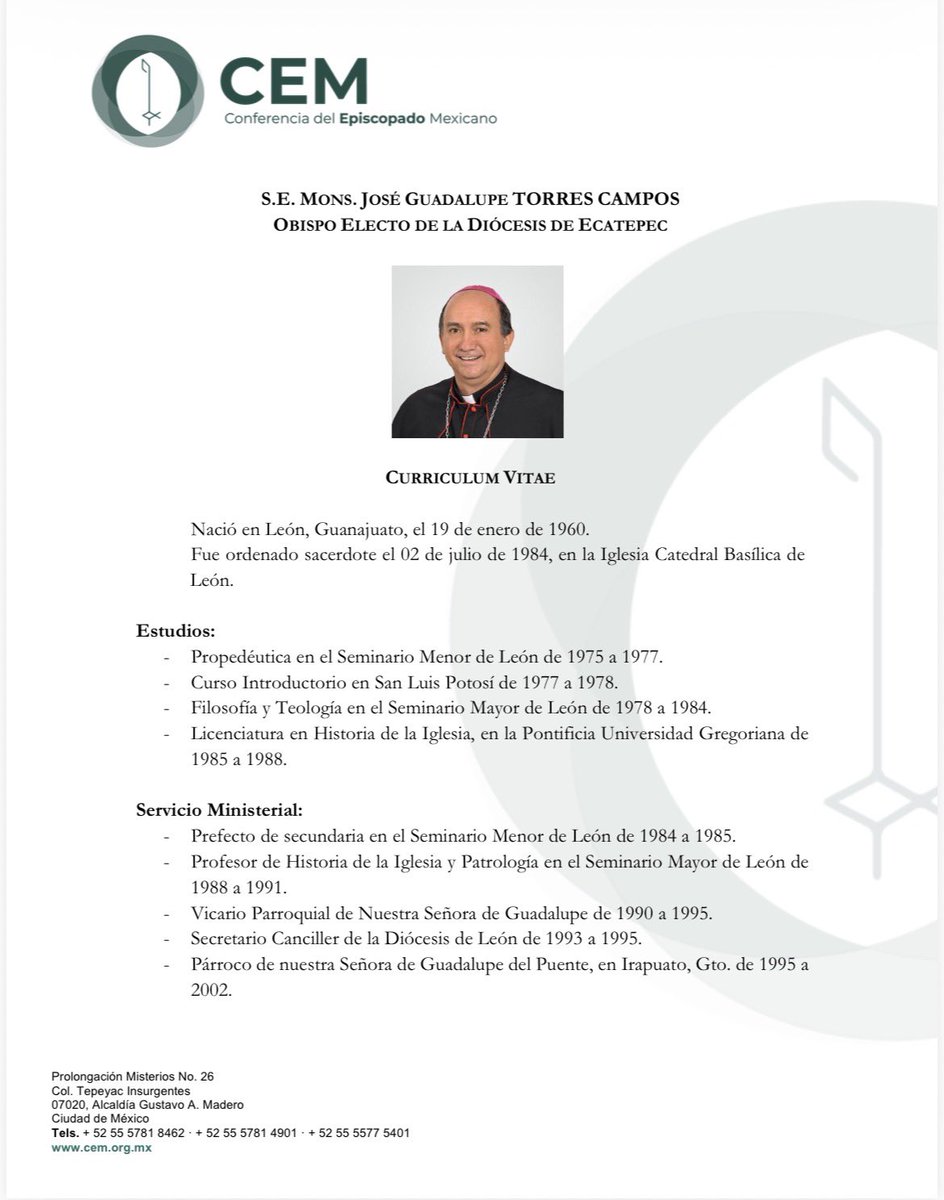
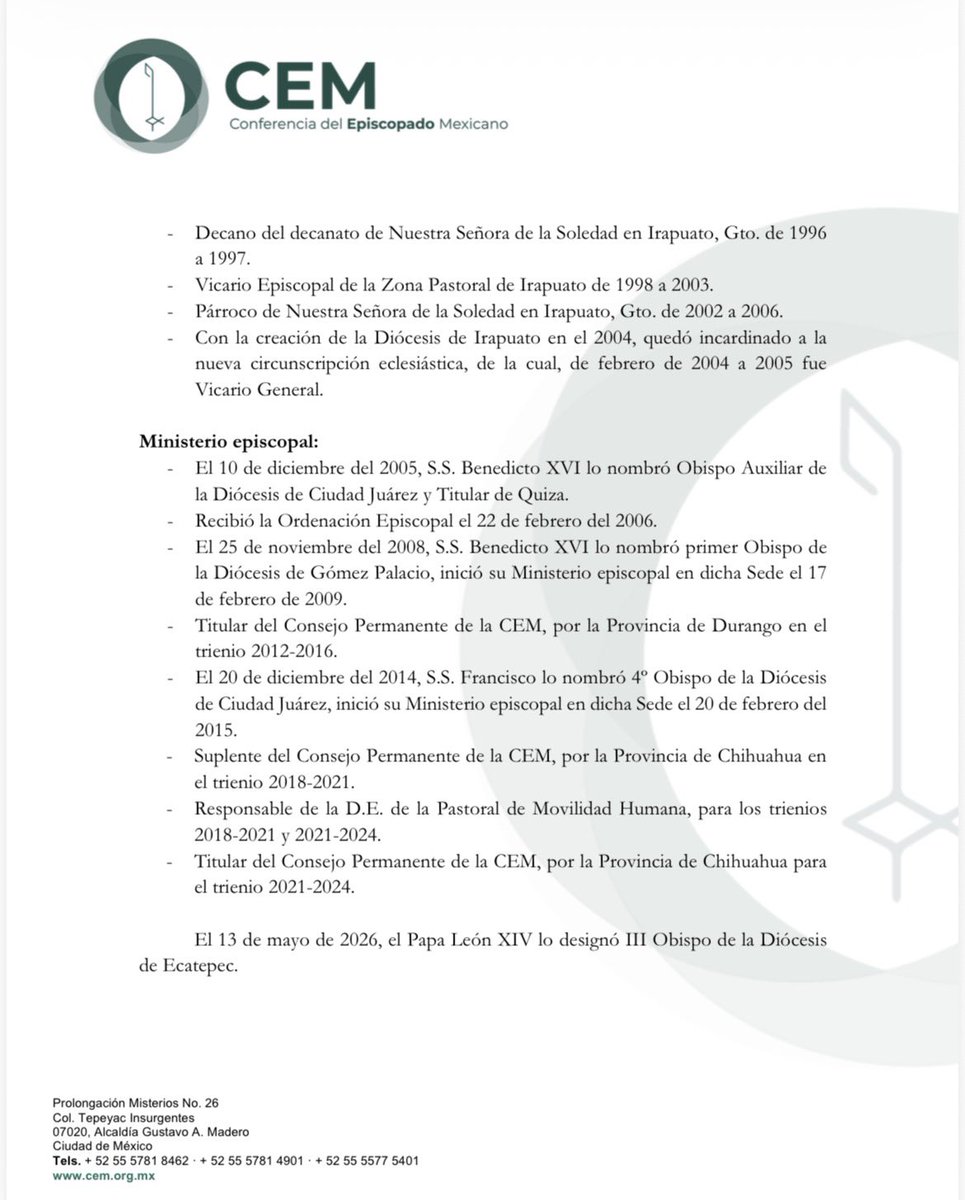
La Nunciatura Apostólica en México comunica, a través de la Secretaría General de la Conferencia del Episcopado Mexicano, que Su Santidad @Pontifex_es se ha dignado nombrar Obispo de la Diócesis de Ecatepec a S.E. Mons. José Guadalupe TORRES CAMPOS, hasta ahora Obispo de Ciudad Juárez.
Nos unimos en alegría y oración con la Iglesia que peregrina en la Diócesis de Ecatepec y deseamos a Mons. José Guadalupe un fecundo desempeño en su nueva encomienda episcopal que el Señor le ha confiado.


Español
Ronald Manuel Rivera retweetledi

Accidentally discovered lost city: Ara Güler's photographs gave Aphrodisias to the world -
In 1958, the ancient city of Aphrodisias had not yet gained fame worldwide, when Ara Güler took a wrong turn on a rural road in southwestern Türkiye 🇹🇷
He was on a business trip covering the dam construction project in Aidin province. But an unexpected turn brought him to the village of Geira. This is how the forgotten ancient city became known to the world.
Marble blocks, fragments of carvings and architectural monuments were part of everyday life in the village. Güler's photographs published abroad have made their way to archaeologists including Kenan Erim, who soon visited the site.
Systematic excavations began in 1961, and the inscriptions eventually confirmed the name of the city: Aphrodisias.
© Helen Vetrova
#archaeohistories

English
Ronald Manuel Rivera retweetledi

Mughal Gold Thumb Ring set with Emeralds and Rubies (1610-20 AD), northern India...
This item is a 17th Century Mughal gold thumb ring, set with rubies and emeralds, and decorated with enamel on the inner surface.
Known as an archer's ring (shast), these were originally worn to protect the thumb from the bowstring but became significant status symbols for the Mughal court elite.
The ring features a dense pattern of rubies and emeralds in a kundan setting, with a striking enamel design on the inside.
Similar high-quality courtly rings are depicted in portraits of Mughal emperors such as Jahangir and Shah Jahan.
This specific piece is part of the collection at the Victoria and Albert Museum in London.
#archaeohistories

English
Ronald Manuel Rivera retweetledi

China's only cliff-perched “Flying Temple” ...
This is the famous Qiaolou Hall, also known as the Bridge Pavilion, perched high above a deep gorge on Cangyan Mountain in Hebei Province, China 🇨🇳
The temple is situated in Jingxing County near Shijiazhuang and dates back to the Sui Dynasty (581–618 AD). The wooden structure rests on a single 15m stone arch bridge spanning a dramatic chasm about 52m high.
The site is famous for its appearance in the movie Crouching Tiger, Hidden Dragon.
© Reddit
#archaeohistories

English
Ronald Manuel Rivera retweetledi

Lion's Head Pendant (1069-715 BC) - Sudan
In 1987, the Cleveland Museum of Art acquired an unusual pendant depicting a lion's head carved out of amethyst on a gold base decorated with baboons. But one part was much older than the other and was originally carved as a game piece.
The lion's head pendant was crafted out of an ancient Egyptian gemstone as far back as 3,500 years ago. Then, around 2,700 years ago, an artisan in Sudan set the much-older Egyptian gemstone into a new metal mount made of eight seated baboons to create a magical religious object.
The purple amethyst and gold frame are a unique combination. The lion is similar to pieces found in the ancient Egyptian game senet, in which players would move their pawns across a board with 30 squares. The amethyst likely dates to the New Kingdom period (1550-1070 BC), according to a 1996 study of the artifact. But the gold mount was added considerably later, likely in the Napatan period (750-300 BC), named for the town that was used as the religious center of Nubia.
Recycling of old stone carvings was common among the ancient Nubians, who lived in what is now southern Egypt and northern Sudan. In the early first millennium B.C., Nubian rulers viewed themselves as descendants of Ramedsse II (who reigned from 1279-1213 BC) and repurposed and retrofitted semiprecious gems into new gold mounts to show their Egyptian connections. Under the later Kushite kings (712-664 BC), this practice continued in Napata as the rulers incorporated Egyptian customs into their own culture.
Both the lion and the baboon were sacred in Kushite religion. The lion was associated with the god Amun, who was tasked with protecting the state and who merged with the sun god, Ra, and became known as the powerful creator deity Amun-Ra. The baboons were connected to the sun and the moon and were often depicted with their arms raised. In this pendant, the baboons lift the representation of Amun.
© Cleveland Museum of Art
#archaeohistories

English
Ronald Manuel Rivera retweetledi

Fénis Castle, an Italian medieval castle located in the town of Fénis 🇮🇹
The castle first appears in a document in 1242 AD, as a property of the Viscounts of Aosta, the Challant family. At that time it probably was a simple keep surrounded by walls. From 1320-1420 AD, under the lordship of Aymon of Challant and of his son Boniface I of Challant, the castle was expanded to its actual appearance.
Under Aymon's lordship, the castle got its pentagonal layout, the external boundary wall and many of the towers. In 1392 AD, Boniface of Challant began a second building campaign to build the staircase and the balconies in the inner courtyard and the prison. He also commissioned Piedmontese painter Giacomo Jaquerio to paint frescoes on the chapel and on the inner courtyard. Under Boniface I the castle reached its greatest splendour: it was a rich court surrounded by a vegetable plot, a vineyard and a garden where the lord and his guests could relax.
The castle belonged to the lords of Challant until 1716 AD, when Georges-François of Challant had to sell it to Count Baldassarre Castellar of Saluzzo Paesana in order to pay his debts, which for the castle was the beginning of a period of decline. It was turned into a rural dwelling and became a stable and a barn.
In 1895 architect Alfredo d'Andrade purchased it and started a restoration campaign to secure the damaged structures. In 1935 a second campaign by De Vecchi and Mesturino completed the restoration and gave the castle its current appearance. The rooms were also provided with wood-period furniture.
The castle is today owned by the Autonomous Region Aosta Valley, which turned it into a museum. It is one of the most famous castles in Aosta Valley, and for its architecture and its many towers and battlemented walls has become one of the major Olde World tourist attractions of the region.
📷© Bethk Eliza
#archaeohistories

English
Ronald Manuel Rivera retweetledi

Then vs Now :
Mount Nemrut, a 2206m high mountain in Adıyaman, Türkiye 🇹🇷. It is the sacred center of the Kingdom of Commagene and a UNESCO World Heritage Site.
The lion horoscope (star chart) on the western terrace points to July 62 BC (specifically July 7th). This date is associated with the ascension of Antiochus to the throne or the beginning of the monument's construction.
The symbolic meanings of these sculptures on Mount Nemrut:
Female sculpture: The Mother of Commagene (or Tyche/Goddess of Commagene), symbolizing the kingdom's fertility, prosperity, and land. She is crowned and holds a fruit basket; representing royal lineage and abundance.
Eagle sculpture: Represents the ascension of the spirits to the sky, the king's divine connection.
Lion sculpture: A symbol of power, kingship, and protection; also seen in the astronomical calendar relief (Leo). It emphasizes the king's sovereignty, power, and celestial order.
© Derinlerdeki Tarih
#archaeohistories

English
Ronald Manuel Rivera retweetledi

Ronald Manuel Rivera retweetledi

Me despido con una de las obras más hermosas que se hayan esculpido: Niké de Samotracia.
Museo del Louvre, París
(Vídeo©️Museo del Louvre)
#BuenasNoches🌹
Español
Ronald Manuel Rivera retweetledi

Upon leaving Castel Gandolfo, Pope Leo XIV greeted a 15-year-old boy, Ignatius. They had met at @bambinogesu when he was being treated for lymphoma. Today, he told the Pope that he is cured.
English
Ronald Manuel Rivera retweetledi

Where to begin? I could only imagine the 🇻🇦 Holy See might have given the Ambassador the Ordine Piano, something ALL ambassadors get after a certain time (me too when I was Ambassador to the Holy See). You just get it for your daily faithful work... But I haven't checked
Megatron@Megatron_ron
NEW:🇮🇷🇻🇦Pope Leo XIV presented Iran’s ambassador to the Vatican, Ayatollah Hossein Mokhtari, with the highest diplomatic honor of the Vatican, the ‘Order of Pius’ The medal was awarded for Iran’s extraordinary contributions to peace and interfaith cooperation between Christians and Muslims.
English
Ronald Manuel Rivera retweetledi