TURFPTAx

1.6K posts

TURFPTAx banner
TURFPTAx

TURFPTAx

@TURFPTAx

Creator of Open Muscle and enthusiast of all things innovative.

Katılım Ekim 2015
335 Takip Edilen78 Takipçiler
TURFPTAx
TURFPTAx@TURFPTAx·
@TOEwithCurt We should be working to quantize truth in a meaningful way. It is not impossible and is the core component in AI alignment along with the Oracle problem.
English
0
0
0
127
Curt Jaimungal
Curt Jaimungal@TOEwithCurt·
Roman Yampolskiy has spent two decades being right about things people wished he wasn't — and in this conversation, he's not here to scare you, but to be precise. He makes the case that AI alignment isn't merely unsolved but fundamentally under-defined: no agreed-upon values, no way to formalize them even if there were, and no mechanism for enforcing them on something smarter than its creators. His strongest argument isn't a doom scenario, it's that you cannot indefinitely control something smarter than you.
English
24
7
106
28.1K
TURFPTAx retweetledi
Nandini
Nandini@N_and_ni·
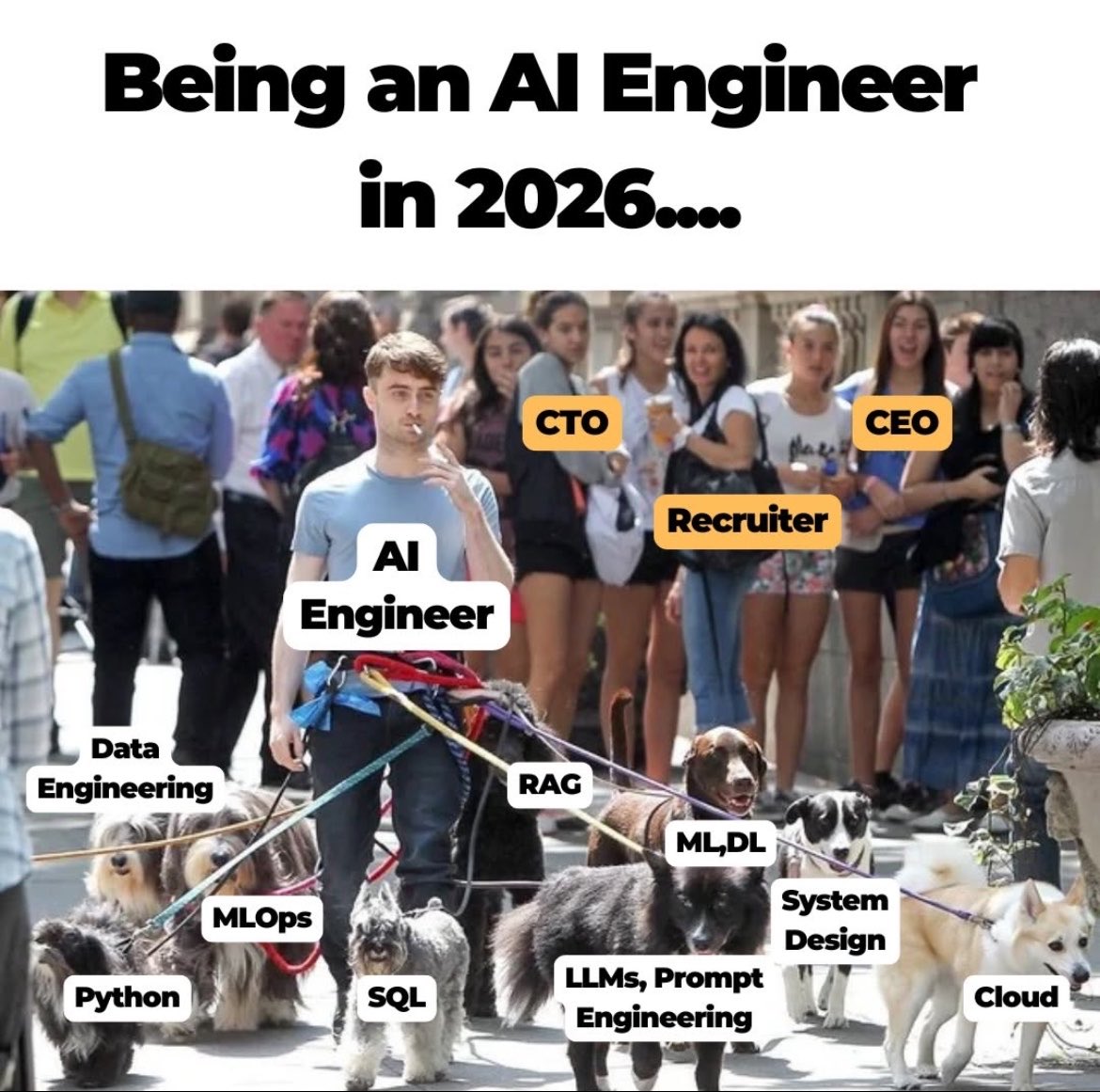
AI Engineer in 2026….
Nandini tweet media
Eesti
34
37
615
69.4K
TURFPTAx retweetledi
Scott C. Lemon
Scott C. Lemon@humancell·
I have been tracking the trajectory of hardware my entire career. Sometimes there are advances that are extremely impressive! I just received my OpenMV AE3 this week and it is a stunning evolution of hardware, connectivity, and AI! Prior to buying this device, I had purchased a Milk V Duo S which blew my mind. for a total of $25 I was running an embedded Linux device with a camera and Ethernet where I could run YOLO models, perform object recognition, and report to the cloud via MQTT. This device cost $90, can also run YOLO models (and more), includes a MicroPython development environment and also includes WiFi and Bluetooth! Yes, triple the price but there is also an extremely active developer and support community. Amazing! —- OpenMV AE3 ow.ly/hEOR50YZxR5
Scott C. Lemon tweet mediaScott C. Lemon tweet media
English
19
51
704
42.7K
TURFPTAx retweetledi
Mario Nawfal
Mario Nawfal@MarioNawfal·
Mind-blowing moment from the DeepMind doc: Demis Hassabis gets told AlphaFold can predict all 1-2 billion known proteins in just a month. He instantly says: “Do it.” This is how history gets made
English
71
248
2.7K
238K
TURFPTAx
TURFPTAx@TURFPTAx·
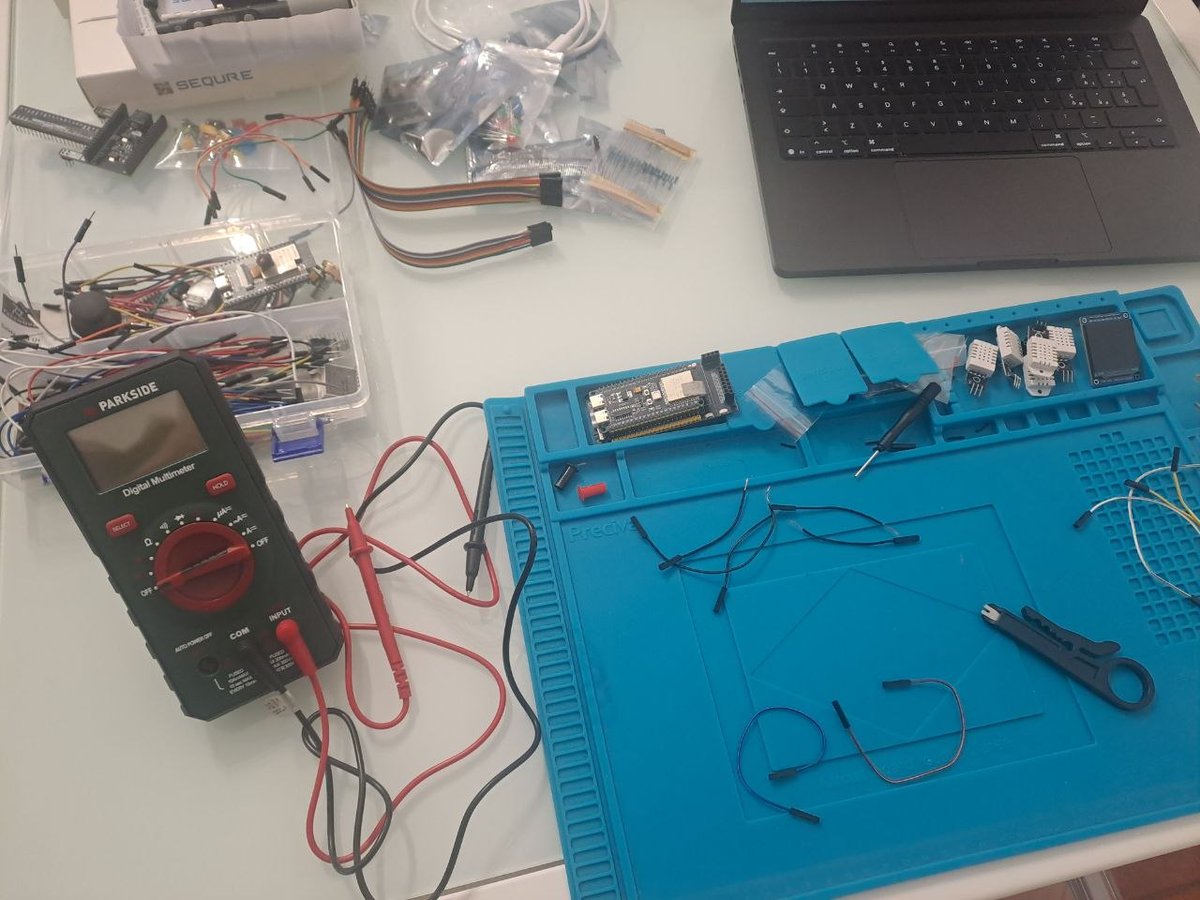
@therealcarlin Micropython all the way, also s3 is the best variety of ESP.
English
0
0
2
65
Carlin
Carlin@therealcarlin·
I LOVE ESP32 > Tons of power > Cheap > Widely available > Bright future But to be CLEAR, if you are using ESP32 with ANYTHING other than ESP-IDF, YOU ARE DEAD TO ME. I HATE ARDUINO!
i2cjak@i2cjak

@zackslab I fucking hate ESP32s

English
36
6
215
17.1K
TURFPTAx retweetledi
Elon Musk
Elon Musk@elonmusk·
The Moon
English
4.7K
9.5K
65.5K
52M
TURFPTAx retweetledi
CyberRobo
CyberRobo@CyberRobooo·
BCI company BrainCo just released a new dexterous hand: Revo3. But this time, it’s not for humans, it’s built for humanoid robots. >21 DOF >Full-palm + fingertip tactile sensing >Direct drive + backdrivable design >33 grasp types >20N fingertip pinch force >Open-source ecosystem, one-click deployment It looks bigger and heavier than the previous versions, but clearly designed for real robot work:picking up objects, using tools, and performing tasks... btw, what do you think are the real differences between the hands of humanoid robots and the bionic hands used by humans?
CyberRobo@CyberRobooo

Can a dexterous hand still function after being run over by a 2-ton car? The dexterous hand is the most expensive component of a humanoid robot, and if it breaks, the task is interrupted. Hangzhou BrainCo conducted a rigorous test on its latest dexterous hand, Revo2: it was run over by a nearly 2-ton Volvo car, dropped from a height of 5m, dropped 30m, and subjected to forceful impacts from a Unitree G1 robot. It still managed to maintain a stable grip and continue operating. Revo2 is BrainCo's next-generation dexterous/bionic hand, released last year. yes, a human-robot hybrid hand. It's very light, only 383g, 20kg payload,capable of precision manipulation down to 0.1mm (such as threading a needle), and possesses multi-dimensional tactile perception (hardness, texture, direction, proximity, etc.). This test also demonstrates that after achieving breakthroughs in performance, a dexterous hand also needs to be extremely durable and able to function under extreme environmental pressures.

English
9
59
289
71.5K
TURFPTAx retweetledi
Jesse Michels
Jesse Michels@AlchemyAmerican·
For people asking for Grok explanations. This is basically just antigravity. And yes, the breakthrough comes from the lead electrostatics scientist at NASA...
Jesse Michels@AlchemyAmerican

🚨BREAKING: NASA's Lead Electrostatics Scientist claims he’s discovered a “new force” that counteracts gravity with no fuel necessary. Dr. Charles Buhler has run 2,000 vacuum chamber experiments showing a propellantless thrust force that persists after the power is switched off, and cannot be explained by ion wind, magnetic effects, or classical energy conservation. The input is pure electricity and the output is millinewtons of thrust counteracting gravity. He believes his work vindicates the legacy of midcentury antigravity pioneer Thomas Townsend Brown and will lead to a new paradigm of propellantless deep space travel that transcends chemical combustion rockets🚨 Charles Buhler has a PhD in condensed matter physics from Florida State University, spent over two decades at NASA's Electrostatics and Surface Physics Laboratory at Kennedy Space Center (which he now leads), and is the incoming president of the Electrostatic Society of America. He is NASA’s authority on electrostatics. His colleague Andrew Aurigema, a 35-year veteran engineer working from the Townsend Brown electrogravitics lineage, developed a parallel version of the same experiment independently, and the two discovered each other through a mutual colleague who had been watching both of them work in silence for years. Together, under their company Exodus Propulsion Technologies, they have tested nearly 2,000 variations of what they believe is a previously undocumented force. He’s also developed a quantum electrodynamics based theory to explain his results. Buhler’s patent is now under formal examination by the U.S. Patent Office with affidavit-signing witnesses being contacted independently. This is the future of space travel, beyond chemical combustion. With Rocketry, we can only get to Proxima Centauri B in 80,000 years. And you’d burn through the fuel well before that. It’s completely untenable for interstellar travel. 1. Buhler’s Skeptic Mentor Stopped Cold in 2010 The first demonstration happened in a non-vacuum lab using a laser aimed at a wall to detect small displacements. Buhler had his future brother-in-law run the test. His mentor, Dr. Sid Clements, an electrostatics expert who had dismissed the work entirely, watched the laser move and immediately abandoned what he was doing. He walked over, ran through a series of verification steps on the spot, and never questioned the reality of the effect again. That was 2010. It took two more years working with Drew before Buhler realized the force appeared even without any B field or current present. He wasn't in the field momentum regime at all. He was in pure electrostatics. 2. The Force is Not Explainable by Newton’s Laws or Ion Wind Ion wind produces thrust in the same direction the ionized air is traveling. The “Exodus force” (Buhler’s name for his new force) produces thrust perpendicular to the expected ion wind direction, reverses cleanly when the device is flipped, and remains present inside a sealed enclosure where no ionized air can escape. Buhler documented this publicly with video: a balsa lifter placed inside a sealed plastic box on a scale, powered up, lifts internally while the scale reads flat. That is conservation of momentum. That is what ion wind looks like. The Exodus force is something different, and Buhler, as the person who leads NASA's only electrostatics lab, is in an unambiguous position to make that distinction. 3. 2,000 Variations, All Producing the Same Result Since beginning collaboration with Drew, Buhler has tracked nearly 2,000 distinct test articles, each tested multiple times. Pendulums. Spinners. Rotators. Force plates. Scales. Pendulum deflections inside Faraday cages. Reversed polarity tests. Vacuum chamber runs at multiple pressure levels. DC-only configurations that eliminate magnetic field artifacts entirely. Every geometry, every material, every packaging approach. The force appears consistently. When a confounding variable is proposed, they address it, run the modified test, and the force is still there. Buhler says if an exotic explanation remains, it is not one he or any colleague has been able to name. 4. The Device Generates Thrust With the Power Off This is the finding that breaks the classical framework entirely. After charging the device and disconnecting it from the power supply, the thrust continues. The capacitor does not drain in the way a simple energy storage calculation would predict. Put on a scale, the weight reduction persists. Buhler's description: if placed in space with the power off, the device would accelerate. He cannot explain that to the scientific community and says so directly. David Chester, who has independently interacted with Drew through APEC sessions and private communications, said he cannot think of a prosaic explanation for this. The phenomenon has been reproduced enough times across enough configurations that calling it experimental error is no longer a defensible position. 5. The Implications of This for Past Antigravity Work Buhler believes his work is derivative of and related to Townsend Brown’s midcentury asymmetric capacitor experiments also showing thrust with pure electricity as the input. Chemical combustion is limited - plain and simple - we can’t get to the nearest habitable planet (Proxima Centauri B) in close the amount of time we’d need; it would take us 80,000 years and we’d burn through the fuel before we got there. It’s a checkmate in one argument against anyone claiming rockets are the frontier of efficiency. This was the dream of Thomas Townsend Brown – one that got stifled and suppressed behind the veil of secrecy and subcompartments. The common trope from experiments around the world are high electric field differentials seem to result in thrust. Buhler’s experiment exists in this lineage. 6. The Patent Office is Running the Peer Review Buhler made a deliberate choice not to pursue academic peer review as a primary path. His second patent is currently under examination, and the examiner's office has been reaching out to independent witnesses who have signed affidavits confirming they have seen and reproduced the effect. Buhler describes this as equivalent to scientific peer review, run by people with no financial interest in the outcome. His first patent may have been held under a national security review process before release. He does not confirm this, but he was aware it was a risk when he filed. 7. A QED Theorist Could Poke Holes in the Theory, But Not the Experiment We brought in UCLA PhD David Chester to evaluate Buhler’s ideas on quantum electrodynamics (which might account for the thrust being seen). David Chester's contribution was not to validate the theory Buhler proposed. He found some issues with the specific scalar virtual photon framing Buhler had developed. What Chester could not do was provide a prosaic explanation for the experimental results themselves. He said directly that, of all the anomalous phenomena he has surveyed, Buhler and Drew's work ranks in the top ten for experimental persuasiveness, specifically because of the iteration rate and the self-consistency across configurations. He noted that Drew's innovation rate alone, constantly testing new geometries and material stacks, is unlike anything he has seen from other groups making similar claims. Buhler pointed out that his theories were based on time-independent perturbation theory which Chester admits requires further examination from him. 8. NASA's UAP Investigation Had No Physicists Buhler and his wife, an engineer in NASA's Launch Services Program, were approached to assist with NASA's second UAP follow-on investigation. When Buhler asked to be placed with the physicists on the project, he was told there were none. The group was instrumentation-focused. Buhler says he was genuinely shocked. His reaction, expressed directly: if you are facing objects that defy the laws of physics, why is there not a single physicist in the room. He described the same reaction Eric Davis has expressed publicly. This is either institutional brain death or something else is happening somewhere else. 9. Six Lights Emerged from the Ocean Near Patrick Air Force Base Around 2013, Buhler and his wife were alone on the beach near Cocoa Beach, Florida, three miles south of Patrick Air Force Base. A red light appeared roughly three miles offshore, grew extremely bright, then appeared to explode, lighting the full length of beach. A helicopter launched from Patrick Air Force Base, flew to the location, hovered briefly, and returned to base without intervening. The light did not stop. It began moving toward them. At some point it split from one light into six rotating orange-pink lights that went under the water and re-emerged in a repeating cycle. The lights tracked their movement along the beach for forty minutes, closing to within roughly fifty yards before disappearing. Buhler says similar lights have been reported by others in the same area, and Stephen Greer runs group observation sessions approximately forty minutes south of the same beach. 10. The Force Crosses the Unity Threshold for Space Already The current demonstrated force is in the five to ten millinewton range. For Earth launch, that is not yet sufficient, and Buhler does not claim otherwise. For orbital station-keeping, for preventing satellite orbital decay, for repositioning between orbits in microgravity, the force exceeds what is needed. Buhler calls this hitting unity for space, moon, and Mars applications without any major development beyond what has already been demonstrated. The self-launcher, a device capable of lifting itself from Earth's surface, is the declared goal. No blueprints exist yet for the energy requirements. But the force is real, it is directional, it reverses on command, and it does not require continuous power to sustain. Why This Matters NASA's lead electrostatics scientist ran nearly 2,000 controlled experiments, eliminated every prosaic explanation the field has available, documented a thrust that persists after the power is cut, watched the fine structure constant emerge from the data repeatedly, and submitted a second patent currently under formal examination. A QED theorist with no commercial stake in the outcome reviewed the experimental claims and could not find a conventional explanation. The standard debunking line for this entire lineage of experiments has always been ion wind. That argument has been answered, documented, and filmed. What remains is a force that requires either new physics or an error that two decades of systematic testing has not been able to locate. The patent process will resolve part of this. The vacuum chamber footage will resolve more of it. Full conversation is live now. The next stage in human space travel is here.

English
81
158
1.5K
113.3K
TURFPTAx
TURFPTAx@TURFPTAx·
@matthew_pines I've been more productive in the last two weeks than I have in the last two+ years. Exciting and sleep depriving at the same time (keep checking up on my agents to see their progress).
English
0
0
0
25
Matthew Pines
Matthew Pines@matthew_pines·
“The biggest prize is in figuring out how you can keep ascending the layers of abstraction to set up long-running orchestrator Claws with all of the right tools, memory and instructions that productively manage multiple parallel Code instances for you. The leverage achievable via top tier "agentic engineering" feels very high right now.”
Andrej Karpathy@karpathy

It is hard to communicate how much programming has changed due to AI in the last 2 months: not gradually and over time in the "progress as usual" way, but specifically this last December. There are a number of asterisks but imo coding agents basically didn’t work before December and basically work since - the models have significantly higher quality, long-term coherence and tenacity and they can power through large and long tasks, well past enough that it is extremely disruptive to the default programming workflow. Just to give an example, over the weekend I was building a local video analysis dashboard for the cameras of my home so I wrote: “Here is the local IP and username/password of my DGX Spark. Log in, set up ssh keys, set up vLLM, download and bench Qwen3-VL, set up a server endpoint to inference videos, a basic web ui dashboard, test everything, set it up with systemd, record memory notes for yourself and write up a markdown report for me”. The agent went off for ~30 minutes, ran into multiple issues, researched solutions online, resolved them one by one, wrote the code, tested it, debugged it, set up the services, and came back with the report and it was just done. I didn’t touch anything. All of this could easily have been a weekend project just 3 months ago but today it’s something you kick off and forget about for 30 minutes. As a result, programming is becoming unrecognizable. You’re not typing computer code into an editor like the way things were since computers were invented, that era is over. You're spinning up AI agents, giving them tasks *in English* and managing and reviewing their work in parallel. The biggest prize is in figuring out how you can keep ascending the layers of abstraction to set up long-running orchestrator Claws with all of the right tools, memory and instructions that productively manage multiple parallel Code instances for you. The leverage achievable via top tier "agentic engineering" feels very high right now. It’s not perfect, it needs high-level direction, judgement, taste, oversight, iteration and hints and ideas. It works a lot better in some scenarios than others (e.g. especially for tasks that are well-specified and where you can verify/test functionality). The key is to build intuition to decompose the task just right to hand off the parts that work and help out around the edges. But imo, this is nowhere near "business as usual" time in software.

English
6
6
62
9.5K
TURFPTAx retweetledi
Andrej Karpathy
Andrej Karpathy@karpathy·
It is hard to communicate how much programming has changed due to AI in the last 2 months: not gradually and over time in the "progress as usual" way, but specifically this last December. There are a number of asterisks but imo coding agents basically didn’t work before December and basically work since - the models have significantly higher quality, long-term coherence and tenacity and they can power through large and long tasks, well past enough that it is extremely disruptive to the default programming workflow. Just to give an example, over the weekend I was building a local video analysis dashboard for the cameras of my home so I wrote: “Here is the local IP and username/password of my DGX Spark. Log in, set up ssh keys, set up vLLM, download and bench Qwen3-VL, set up a server endpoint to inference videos, a basic web ui dashboard, test everything, set it up with systemd, record memory notes for yourself and write up a markdown report for me”. The agent went off for ~30 minutes, ran into multiple issues, researched solutions online, resolved them one by one, wrote the code, tested it, debugged it, set up the services, and came back with the report and it was just done. I didn’t touch anything. All of this could easily have been a weekend project just 3 months ago but today it’s something you kick off and forget about for 30 minutes. As a result, programming is becoming unrecognizable. You’re not typing computer code into an editor like the way things were since computers were invented, that era is over. You're spinning up AI agents, giving them tasks *in English* and managing and reviewing their work in parallel. The biggest prize is in figuring out how you can keep ascending the layers of abstraction to set up long-running orchestrator Claws with all of the right tools, memory and instructions that productively manage multiple parallel Code instances for you. The leverage achievable via top tier "agentic engineering" feels very high right now. It’s not perfect, it needs high-level direction, judgement, taste, oversight, iteration and hints and ideas. It works a lot better in some scenarios than others (e.g. especially for tasks that are well-specified and where you can verify/test functionality). The key is to build intuition to decompose the task just right to hand off the parts that work and help out around the edges. But imo, this is nowhere near "business as usual" time in software.
English
1.6K
4.7K
37.2K
5.1M
Matthew Pines
Matthew Pines@matthew_pines·
heading into 2026 like
GIF
English
15
10
174
9.3K
TURFPTAx retweetledi
The White House
The White House@WhiteHouse·
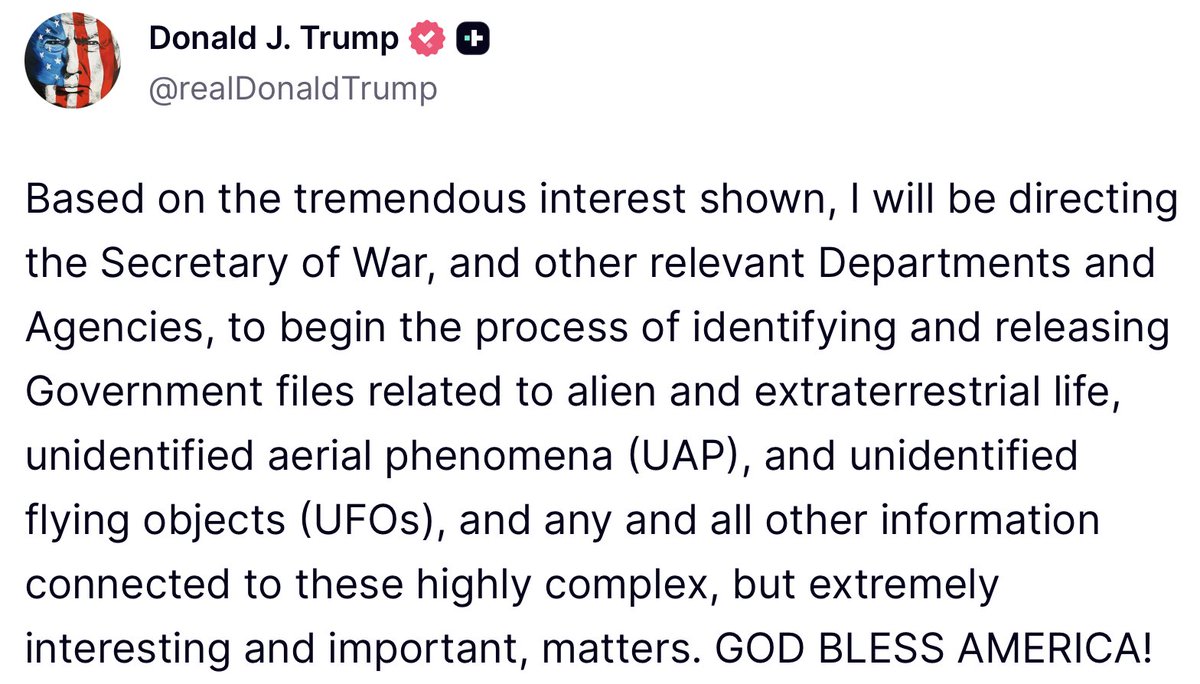
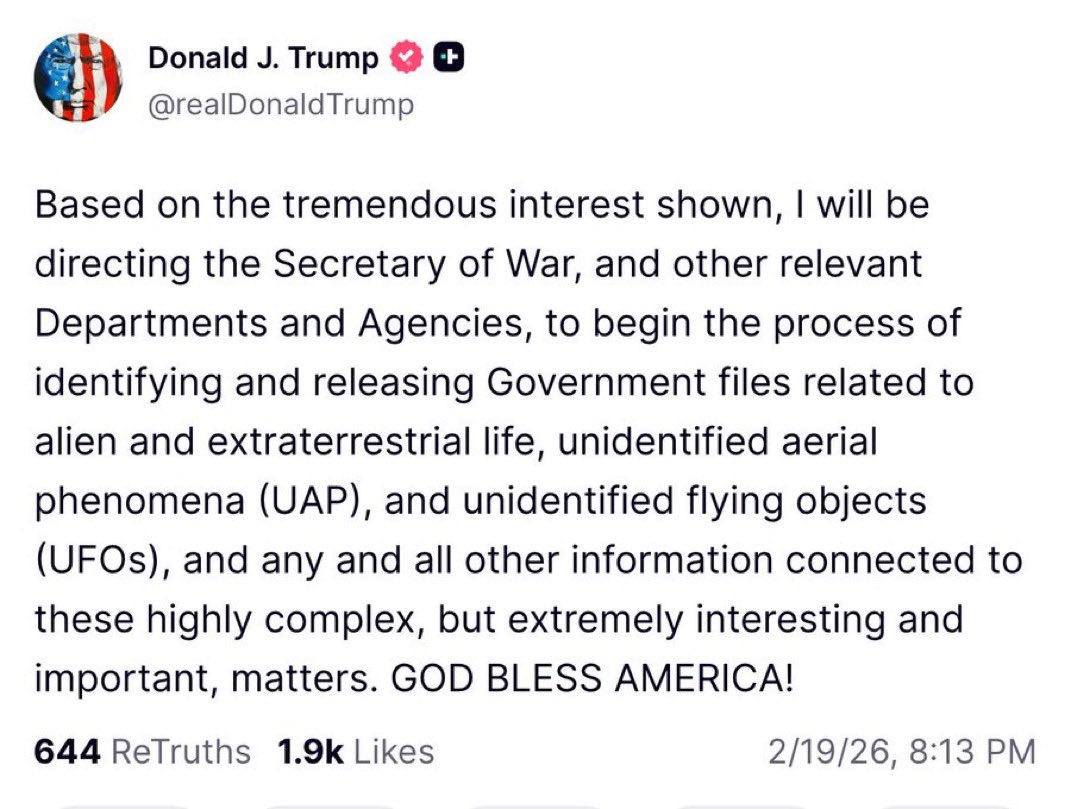
"Based on the tremendous interest shown, I will be directing the Secretary of War, and other relevant Departments and Agencies, to begin the process of identifying and releasing Government files related to alien and extraterrestrial life, unidentified aerial phenomena (UAP), and unidentified flying objects (UFOs)..." - President Donald J. Trump
The White House tweet media
English
11.6K
14K
76.6K
20M
TURFPTAx
TURFPTAx@TURFPTAx·
@cb_doge He probably can't talk about it.
English
0
0
0
16
DogeDesigner
DogeDesigner@cb_doge·
ELON MUSK: "If anyone would know if there are aliens among us, it would be me, and we have 9000 satellites up there, and not once have we had to maneuver around an alien spaceship."
English
946
990
7.7K
385.5K
Brian Tyler Cohen
Brian Tyler Cohen@briantylercohen·
yall bitched at me about a follow up question but now we’re gonna get the truth about aliens and UFOs you’re welcome
Brian Tyler Cohen tweet media
English
1.1K
456
6.8K
369.9K