Tⓩhelios🛡️

5.6K posts

Tⓩhelios🛡️ banner
Tⓩhelios🛡️

Tⓩhelios🛡️

@TZhelios

Persist

Orchard Katılım Eylül 2021
385 Takip Edilen646 Takipçiler
Tⓩhelios🛡️ retweetledi
Séb Krier
Séb Krier@sebkrier·
I think the habit of modeling a complex system as one optimizer pursuing one objective predisposes people to a central planning mindset, and sometimes fixed-pie thinking. This helps explain why the 'one true ring' monist view of AGI (or the economy) often flirts with control and coercion. For the singleton-minded, multiplicity looks like 'more mouths against a fixed pie', 'race to the bottom', and 'coordination problems that could be averted through control'. For classical liberals, multiplicity is the very source of positive-sum order via comparative advantage, division of labor, federalism, gains from trade, clashing ideas, competition and so on. However I think it's easy to mistake the classical liberal view as one that favours multipolarity or multiplicity for its own sake; yet that's not right either, and basically making the mistake in the other direction. Libya isn't better off because it has many warring factions. People wouldn't be better off if Walmart was divided into 1000 little shops. Multiplicity is desirable but insufficient. In economics, you can accept large conglomerates if they are in fact contestable and the possibility of entry keeps them on their toes. In political economy, you neither want majoritarianism (tyranny of the majority) nor a single party state (dictatorship), but you also don't want full anarchy or complete decentralization. Instead separation of powers, federalism, rights etc all remove things from the majority's reach, but without completely eliminating the executive capacity needed for collective action. Plus multiplicity can also relate to different axes, for example: - one objective vs plural values - one decision-maker vs many - centralized vs dispersed information - hierarchy vs market coordination - concentrated vs dispersed authority Ultimately I think neither multiplicity nor concentration is *intrinsically* desirable, but the former can be far more sustainable under the right incentive structures. Multiplicity is valuable when it enables distributed knowledge, experimentation, exit and correction under common rules - but in some cases concentration is valuable too, e.g. when you get economies of scale, fewer transaction costs and externalities. Bostrom himself notes that "if a singleton goes bad, a whole civilization goes bad. All the eggs are in one basket." I think this way of seeing the world in AI governance/safety world often tends towards this failure mode. Whenever one objective is treated as overriding, the pluralism that might have caught its mistakes starts to look like a bug rather than a feature.
Séb Krier tweet media
English
21
18
119
10.5K
Tⓩhelios🛡️ retweetledi
Mylo
Mylo@zReadyMouse·
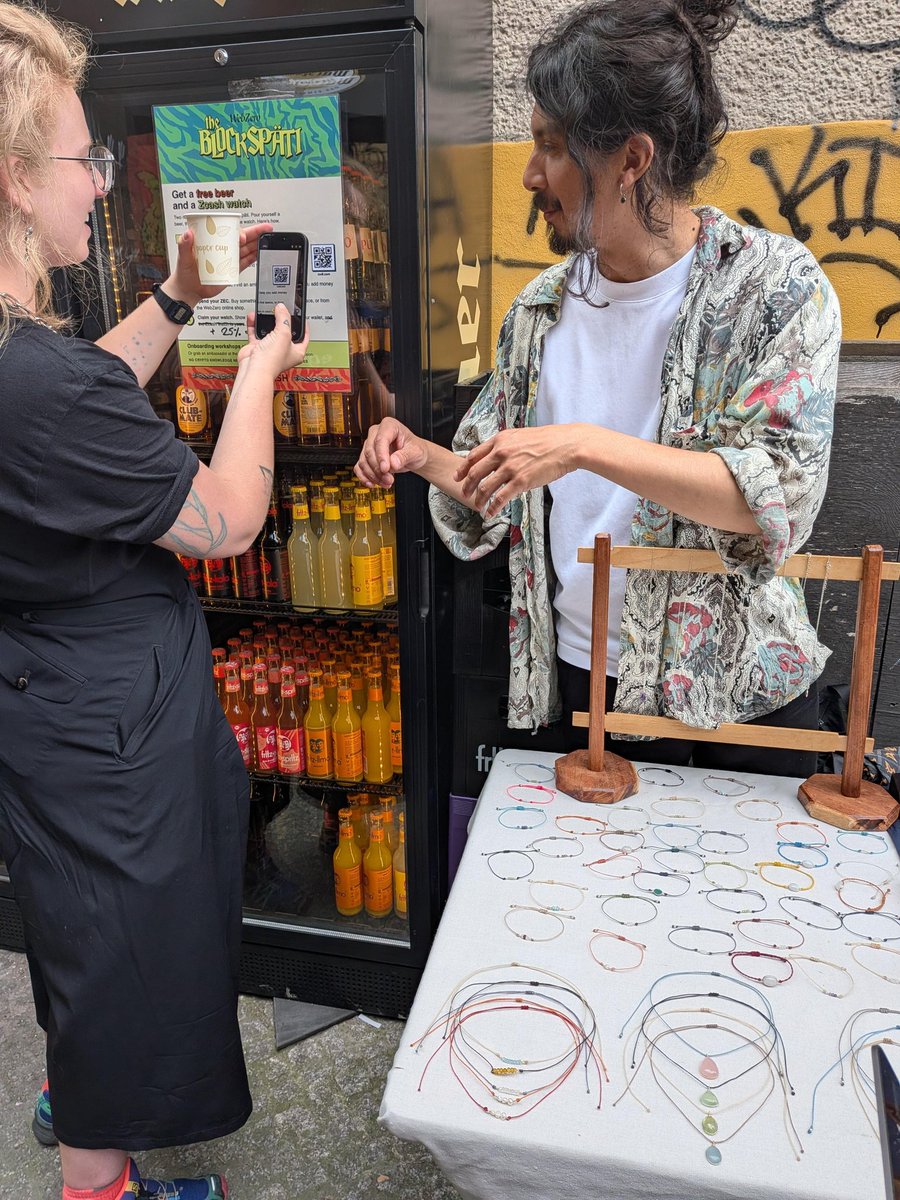
Day 4: Wow Berlin you've been amazing. We've seen the Blockspäti vendors learn and then accept their first $ZEC sales all in one day. This event wasn't just about guests. It's about including and caring for every soul who comes through our gate. Because @Zcash is for everyone.
Mylo tweet media
English
4
6
31
667
Tⓩhelios🛡️ retweetledi
c-node (Berlin arc)
c-node (Berlin arc)@colludingnode·
While it’s true Signal is a blessing and Moxie was wise for saying no in all the right places, this is a classic place where deep tech startups tend to overcorrect to their demise. That is how we were promised optimistic rollups and got 6 years of multisigs
DC@dcposch

Signal is an incredible achievement. Open source, private, secure, & serves 10s of millions of users. How? Moxie said No to lots of things. No decentralized PKI; no federation; yes phone number required. The fedoras cried and screamed about each one of these! But they're what makes Signal easy to install, easy to use, and free of spam. Making a great product requires focus and the courage to say No. Signal is still remarkably principled. They shipped the first fully reproducible build in a mobile app, the best-designed e2e encryption, quantum security. It's just that one of the principles is "it has to work". It really helps to escape tech world. Moxie has these great stories about hopping freight trains and sneaking into movie theatres with his punk friends. "The user" can't be a spherical cow, it has to be a specific guy you can yell at. Does the product work for HIM? Now you have a high enough bar to make hard decisions. The alt-timeline hell world is PGP email, an idealistic project with the same goal of open source, private, secure messaging. Without a real user in mind, they said yes to their whole nerd wishlist and made a product only for themselves: PGP "keysigning parties", "web of trust". Other concepts lost to time. Millions of manhours (including a few of my own) went into that ecosystem over the years for... thousands of users, maybe. If a tree falls in the woods, does it make a sound? If you care about censorship resistance, security, and privacy--enough to want those things for real people--the first step is to touch grass, and the second step is to get good at saying No.

English
4
0
12
1.5K
Tⓩhelios🛡️ retweetledi
Klara
Klara@klara_sjo·
They took this from you
Klara tweet media
English
140
335
7.4K
137.3K
Tⓩhelios🛡️ retweetledi
Jeremiah
Jeremiah@jeremiahrogers·
> What ails us now is a deeper malaise, one closer to cowardice. The problem today isn’t that people don’t know anything. It’s that in crypto, nobody believes in anything. Find a better community? For me crypto is more exciting than it has been in 5+ years. When things feel hopeless it is often because the zeitgeist is not up to date with reality. That update needs to fight through entrenched dogma and cognitive dissonance. It can take a while. I have not met a single paid Zcash shill or huckster. People own the coin and want it to go up. This is how every crypto community works. If your mental model tells you that advocates for a thing must be paid as part of some grand conspiracy that is a mental model to question heavily.
Omid Malekan@malekanoms

x.com/i/article/2067…

English
3
2
15
2.3K
Tⓩhelios🛡️ retweetledi
Keystone Hardware Wallet
Keystone Hardware Wallet@KeystoneWallet·
📢 Serious about @Zcash? This is the update you've been waiting for. Huge props to the Zcash team and devs for identifying and patching the Orchard pool vulnerability with that kind of speed and precision. That's exactly what the users should expect from their chain. As the Zcash ecosystem preps for the Ironwood hard fork, your Keystone is preparing right alongside it: → With the upcoming firmware update, Keystone will support Ironwood from day one. → Once @zodl_app adds support, you'll move your shielded $ZEC from the Orchard pool to Ironwood — no friction, no compromise on custody. We're also leveling up Zcash support on the Nexus app: → Updated consensus branch ID for full network compatibility → Expanded support for TEX (exchange) and T3(multi-sig) transparent addresses If you've been sitting on $ZEC without shielded cold storage, consider this your sign. Get a Keystone & shield them all 🛡️
Dev 🧪@zkDragon

Real migration flow against the Ironwood testnet state machine, using @KeystoneWallet on @vizorwallet ! You only scan one QR code, and it splits your note balances + pre-signs migration txs. Then your wallet submits the migration txs in the background over time.

English
1
9
67
3.7K
Tⓩhelios🛡️ retweetledi
David
David@DavidSHolz·
By VC standards we should either "conquer the world or die in a fire" and neither of these are spiritually compelling for me. I never wanted a company I just wanted a home. At this point we have a large and loyal paid community, we build tons of features for them (I think we did >30 releases this year) and they're pretty happy. We have enough revenue to fund tons of crazy R&D and our models are still the best by the metrics we care about (how the images look and how fun it is to make things). We have a huge backlog of exciting things to make our models way better. Zero risk. We did all this with no investors. Honestly, it feels like we are successful. The next metric of success I think about most about is now that we have "all I ever wanted" in terms of a big well funded R&D lab with cool people free to work on whatever we want... Can we now build something that would make baby David proud? And can we tell bold stories about a human future that people want to be a part of? I think we can.
English
262
563
5.9K
709.2K
Tⓩhelios🛡️ retweetledi
Sebastian Caliri
Sebastian Caliri@SebastianCaliri·
I just tested my hand in a mini version of this scanner. Images that are higher quality than MRI, whole body captured in <1 minute, virtually free to run. This is going to change medicine. Things get even crazier when you consider the possibility of using the same tank to focus ultrasound to ablate tissue, stimulate nerves, etc. The FDA is not in the slightest ready for this. People will also complain about incidental findings but they are wrong and don’t understand how quickly software can improve and how inexpensive a time series of scans will be to generate.
Midjourney@midjourney

A technical dive inside our new "Midjourney Scanner"

English
245
701
10.6K
967.7K
Tⓩhelios🛡️ retweetledi
Maxime Desalle
Maxime Desalle@maxdesalle·
This is one of the many reasons Bitcoin is in trouble. Let alone finding consensus around a PQ migration, there doesn't seem to be an effort to scale the chain itself. Zcash is uniquely positioned here, being at the forefront of scalability *and* post quantum.
Cypherpunk ($CYPH)@cypherpunk

Post-quantum cryptography alone isn't enough. It will massively slow down chains that adopt it as PQ signatures are much, much larger. The only path is to massively scale and go fully post-quantum at the same time, ASAP. Zcash is one of the only ecosystems doing both.

English
7
13
57
3.2K
Tⓩhelios🛡️ retweetledi
Afshine Emrani  MD FACC
Afshine Emrani MD FACC@afshineemrani·
I'm a cardiologist. Something just happened today that I genuinely did not see coming — and it could change the future of preventive medicine more than anything I've written about on this platform. Midjourney — the AI company that became famous for generating images from text prompts — just announced a medical hardware division and unveiled a working prototype of a full-body scanner unlike anything that's ever existed. It's called the Midjourney Scanner. And it works like this. You step into a shallow pool of water. You stand on a platform that slowly descends — about two inches per second — through a ring containing roughly half a million tiny ultrasonic transducers, each the size of a grain of sand. Every one of them acts as both a speaker and a microphone, sending ultrasonic waves through your body from every angle and recording what comes back. 60 seconds later, you step out. The scan is done. No radiation. No magnets. No claustrophobia. No IV contrast. Just sound, water, and an almost incomprehensible amount of computing power — roughly 2 petaflops processing 17 gigabytes per second of raw acoustic data — reconstructing a 3D map of your entire internal anatomy down to half a millimeter resolution. Organs. Tissues. Blood vessels. Bones. Muscle. Fat distribution. All segmented by AI in real time. As a cardiologist who has spent months writing about how the standard screening playbook misses the majority of future heart attacks — this is the technology I've been waiting for without knowing it existed. Here's why this matters for the future of your heart. Right now, getting a detailed look inside your cardiovascular system requires either a CT scan (radiation), an MRI (magnets, claustrophobia, 45-60 minutes, $1,000+), or a coronary CT angiogram (radiation, IV contrast, limited availability). These are powerful tools. I order them regularly and they save lives. But they're reactive. You get them when something is already suspected. They're expensive. They're uncomfortable. And for most people, they happen once — maybe twice — in a lifetime. Imagine instead: a 60-second scan with no radiation that you could repeat monthly or quarterly. Tracking cardiac structure over time. Watching body composition shift. Detecting changes in organ size, fluid distribution, or vascular architecture before symptoms ever develop. Building a longitudinal dataset of YOUR body that AI can analyze for patterns no single snapshot would reveal. That's what Midjourney is building toward. The company plans 50,000 scanners worldwide over six years, with capacity for a billion scans per month. The first location — the "Midjourney Spa" in San Francisco — opens at the end of 2027 with 10 scanners alongside saunas, cold plunges, and a gym. The scan costs a few dollars. The experience is designed to feel like wellness, not medicine. The technology is built on Butterfly Network's ultrasound-on-chip platform — 40 modules per scanner — combined with Midjourney's own AI segmentation and reconstruction stack. David Holz, the founder, claims the system aims for image quality comparable to MRI in many aspects but at nearly 100x the speed with zero radiation. Now the caveats — because I'm a physician and the caveats matter enormously. This is a Gen 1 prototype. About a dozen people have been scanned so far. Current scan time is actually closer to 20 minutes, not 60 seconds — the system is bottlenecked by bandwidth and reconstruction algorithms. The 60-second target is aspirational for future hardware generations. It is not FDA-cleared for diagnostic use. Midjourney is starting with body composition maps — a category below diagnostic imaging in the regulatory hierarchy. The path from "beautiful 3D body scans" to "clinically validated diagnostic tool that your cardiologist can act on" runs through years of clinical trials, comparative studies against MRI and CT gold standards, and FDA review. No independent clinical validation has been published. The imaging claims come from Midjourney's own demonstrations. Comparative data against established modalities does not yet exist. And the privacy implications of full-body internal scans at planetary scale — a billion scans per month — is a conversation that hasn't even started yet. So I want to be precise. This is not ready for clinical medicine today. It may not be ready for years. Many ambitious medical hardware projects have failed in the gap between prototype and product. But. The fact that a working prototype exists — producing real segmented 3D anatomy from sound waves and compute alone — means the physics works. The engineering works. The question is no longer "is this possible" but "how fast can it be validated and scaled." And if it is validated — if the resolution holds up against MRI, if the AI segmentation proves reliable, if the regulatory path clears — then what we're looking at is the most significant new imaging modality in 50 years. For my entire career, preventive cardiology has been limited by the fact that seeing inside the body is expensive, slow, uncomfortable, and infrequent. We catch disease late because we image rarely. We image rarely because imaging is hard. A 60-second, no-radiation, spa-based full-body scan that costs a few dollars would demolish every one of those barriers. I've written about AI detecting inflamed arteries. About gene editing curing cholesterol. About GLP-1 drugs rewriting metabolic medicine. About cellular reprogramming reversing aging. This is the missing piece: the ability to see inside every human body, routinely, safely, and affordably — so all of those interventions can be deployed before the disease arrives instead of after. The company that taught AI to generate images from imagination just built a machine that generates images from the human body. The future of medicine showed up today from the last place anyone expected.
Midjourney@midjourney

Announcing a new division of Midjourney called "Midjourney Medical"

English
326
1.5K
9.5K
1.7M
Tⓩhelios🛡️ retweetledi
mert
mert@mert·
it is so over
mert tweet media
English
72
17
358
32.4K
Tⓩhelios🛡️ retweetledi
Vijay Boyapati
Vijay Boyapati@real_vijay·
The 4 Levels of MSTR’s Financial Engineering, how we got here, and why the market is flashing warning signs today. 🧵
English
8
16
147
46.3K
Tⓩhelios🛡️ retweetledi
Flood
Flood@ThinkingUSD·
If your dreams don’t scare you, they aren’t big enough
English
33
52
708
24.4K