
Sabitlenmiş Tweet
TaijhTV
12.1K posts


TaijhTV
@TaijhR
I am a crypto venture capitalist. I enjoy everything 4th industrial revolution. AGI is here and ASI is coming.
Buckeye, AZ Katılım Ocak 2020
2K Takip Edilen442 Takipçiler

⚡️ NEW: Anthropic files 8,000+ copyright takedowns on GitHub after accidentally leaking Claude Code's proprietary source instructions, per WSJ.


English
@MarioNawfal @karen4the6th A fucking non American talking about what America should do lol laughable twink
English

🚨🇺🇸🇮🇷 THE U.S. MAY HAVE STARTED A WAR IT CAN’T FINISH
Lt. Col. Karen Kwiatkowski says Iran is prepared to carry this conflict forward.
On the other side, U.S. forces are taking losses they can’t quickly replace.
@karen4the6th
Mario Nawfal@MarioNawfal
🚨🇮🇱 ISRAEL’S NEW LAW TARGETING PALESTINIANS COULD BACKFIRE Lt. Col. Karen Kwiatkowski says the policy risks fueling anger across the Middle East. Why? It could push more people toward militant groups instead of deterring them. @karen4the6th
English
@GmorganJr What did you expect?
The speech was great, and you could tell he doesn't want this to be a forever war.
English

I think we all expected a bit more than that from the speech tonight.
English
TaijhTV retweetledi

BREAKING: Justice Sam Alito explains that unlimited birthright citizenship means a Chinese, Iranian or Russian foreigner can have a child in America, and that US citizen owes military allegiance to a foreign adversary.
English
🚨🇺🇸 BREAKING: Trump is now addressing the nation from the White House Cross Hall on the Iran war.
Five weeks of conflicting signals.
Tonight we find out which direction this war goes.
Mario Nawfal@MarioNawfal
🚨BREAKING: Interceptions reported over Dubai in the United Arab Emirates.
English
@pbuhmuhamad @RT_com I don't care about Israel, so I won't debate for them. America has taken out the most influential person Iran had, so that means America took out Iran's identity, causing chaos. America has destroyed Iran's Navy and Air Force. America is winning no matter what you think.
English


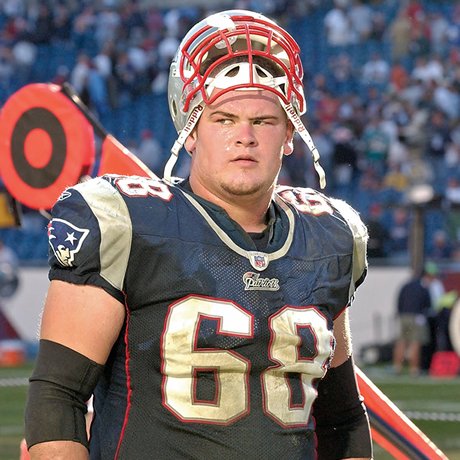
Wow: Former Gay Patriots player Ryan O'Callaghan went OFF on TreVeyon Henderson for showing his support to Jaden Ivey.
O'Callaghan says that during his six seasons in the NFL, he has never heard anything as homophobic as what New England RB TreVeyon Henderson said this week.
Ryan also says that Henderson is “easily replaceable” despite being a 2nd round pick.
😬😬😬
(via @outsports)

English
TaijhTV retweetledi

"We've been designing ASI:Chain from the ground up to be quantum-oriented, not just quantum-resistant but quantum-leveraging."
Our CEO, Dr. @bengoertzel, discusses how our infrastructure is designed to adapt to and capitalize on AGI–quantum convergence: beincrypto.com/goertzel-asi-a…
English
The most dangerous skill in 2026 isn't AI. It's the ability to think WITHOUT AI. Everyone's using tools. Few are building skills. The gap between prompt engineers and actual thinkers is widening. Don't become dependent. Become indispensable. 🧠💪 #AI #Skills #FutureOfWork
English

Commissioner Roger Goodell backed the Rooney Rule today, saying diversity is “a benefit” to the NFL.
Story via @Ben_Baby:
espn.com/nfl/story/_/id…
English
@MarioNawfal You are lying. You are no better than mainstream media. Trump achieved a regime change. He killed their top guy.
English
UPDATE:
Here’s a simplified summary of the Iran war and where we're at now:
Trump bombed Iran to get more influence over the strait of Hormuz, hoping for regime change (Venezuela 2.0)
He miscalculated, and the operation failed
He’s now seeking an off-ramp, the right move
Iran is emboldened by their strategic edge, and don’t want to give Trump his off-ramp unless they get significant concessions to advance their interests
So Trump will keep bombing Iran until they fold
In the meantime, Gulf nations are lost: They are very upset being dragged into this war and facing massive economic damage, but also now see Iran as an even bigger threat after being mercilessly bombed by them
And lastly, the biggest winner of all: Israel
They weakened their biggest enemy, are occupying Lebanon again while getting rid of Hezbollah, and now even pitching for pipelines through their port to replace the closure of the strait of Hormuz. But they’re also getting heavily bombed and running low on air defenses among munitions
Here’s a summary of where we’re at, and the ball is in Iran’s court: Give Trump his off-ramp, or they’ll escalate the war further. If they choose the latter, the world is in for a catastrophic year.
Mario Nawfal@MarioNawfal
UPDATE: Here's a summary of where we're at with the war: Trump wants to end it. Iran is not as keen and is trying to get better terms. The U.S. and Israel are slowly escalating by striking civilian infrastructure. Iran is responding in kind by striking Gulf infrastructure. And today, Trump made it clear again he's trying to end the war and is warning Iran that if they don't agree on his terms, the U.S. will obliterate them. I know it may not look like it, but this is good news, because Trump will just keep bombing Iran until they they concede on 'reasonable' terms.
English
🚨🇮🇷 🇮🇱 IRAN IS HOLDING BACK ITS MOST POWERFUL MISSILES
Malcolm Nance says current strikes on Israel are limited.
He says Iran is saving stronger weapons for U.S. forces and Gulf targets.
@MalcolmNance
Mario Nawfal@MarioNawfal
🚨 🇺🇸 🇮🇷 WHY THE U.S. STRATEGY IN IRAN IS DOOMED How did Iran destroy over $1bn in aircraft in Saudi with drones worth tens of thousands of dollars? How are they keeping the Strait of Hormuz closed? Why are they still able to fire missiles and drones DAILY against Israel and the Gulf, with a higher hit rate? Malcolm Nance breaks down why the U.S. is so unprepared for this war, and learned nothing from the Ukraine Russia warfare He highlights a fundamental "asymmetry of tolerance": while the U.S. relies on expensive technology and has little appetite for high casualties, Iran has spent decades preparing for a war of attrition. From the massive inventory of low-cost Shaheed drones to the potential for a grueling ground insurgency, Nance warns that the U.S. lacks the depth to win a fight that will eventually come down to "rifles and knives." He suggests that Iran’s long-term play isn't just military survival, but a strategic realignment to turn Gulf allies against Washington and end American influence in the region for good. @MalcolmNance 01:00 - This war ends in blood, not strategy. 03:00 - Ukraine turned war into a real industry. 05:30 - One cheap drone can destroy billion-dollar assets. 08:30 - The battlefield just became fully automated. 13:00 - Drones vs drones is the new reality. 16:40 - The U.S. is completely unprepared for this war. 20:30 - America is still fighting the last war mindset. 25:30 - Future invasions could turn into total chaos instantly. 30:00 - This war could take years to recover from. 35:00 - Iran has no real reason to negotiate. 40:30 - Destroying infrastructure won’t break them. 45:30 - The world economy is hanging by a thread. 50:30 - This could spiral into something way bigger. 55:30 - Nobody is ready for how bad this can get.
English

🇮🇷🇺🇸🇮🇱 Iran knows what to exploit in the war narrative, the weak spots of U.S. now: Epstein, the relation with Israel and the children killed in Minab (Irán).
Mario Nawfal@MarioNawfal
🇺🇸🇮🇷 Admiral Brad Cooper: "We are making undeniable progress in eliminating Iran's ability to project power outside its borders. We don't see their Navy sailing, and their aircraft flying. Their air defense systems have been destroyed."
English


US TROOPS ESCAPE DEATH AS IRANIAN MISSILE EXPLODES METERS AWAY
‘OH…’
RT@RT_com
TRUMP: Iran’s not putting up a good fight… they’re not even shooting at us
English
🚨🇺🇸🇮🇷 Iran's FM Araghchi gives a detailed statement on negotiations, the Strait, and the threat of a ground invasion:
"We have received messages from the U.S. Some direct, some through regional friends.
But no negotiation has taken place.
The trust level is zero."
He confirmed what we've suspected: messages are flowing, but Iran refuses to call it negotiation because every time they've negotiated with the U.S., it ended badly.
They got a deal once and America withdrew.
They negotiated twice more and got bombed both times.
Hard to argue with that track record.
On the Strait of Hormuz, he made something very clear that most people are missing: the Strait sits in Iranian and Omani territorial waters, not international waters.
Iran considers it open for everyone except countries at war with them, and says friendly nations have already been granted safe passage.
The postwar future of the Strait will be decided by Iran and Oman, not Washington.
On a ground invasion:
"We hope they do not make such a mistake. We are completely ready."
This is Iran laying out its entire position in one interview.
They're open to a deal but won't beg for one.
They consider the Strait their sovereign leverage.
And they're daring the U.S. to try a ground war.
The ball is in Trump's court.
Source: @upholdreality
Mario Nawfal@MarioNawfal
🚨🇺🇸🇮🇷 Rubio lays out the administration's full case for why the U.S. struck Iran now: "We were on the verge of an Iran with so many missiles and drones that no one could do anything about their nuclear weapons program in the future. This was our last best chance." It's the clearest explanation anyone in the administration has given. And on the surface, the logic holds: Iran was building a conventional shield to protect its nuclear ambitions, and the window to stop it was closing. But it also leaves out a few things. Perhaps tactically. Iran turned down free nuclear fuel, yes. But the U.S. was also making "significant progress" in Geneva days before the strikes. The conventional shield Rubio describes was also Iran's only deterrent against exactly what's happening to them right now. And the people who decided this was the "last best chance" are the same ones who keep killing the officials Trump needs to close a deal. The question was never whether Iran's nuclear program was dangerous. It was whether this war was the only way to stop it, and whether the people pushing for it had America's interests or someone else's at the top of the list. Source: White House
English