Sabitlenmiş Tweet
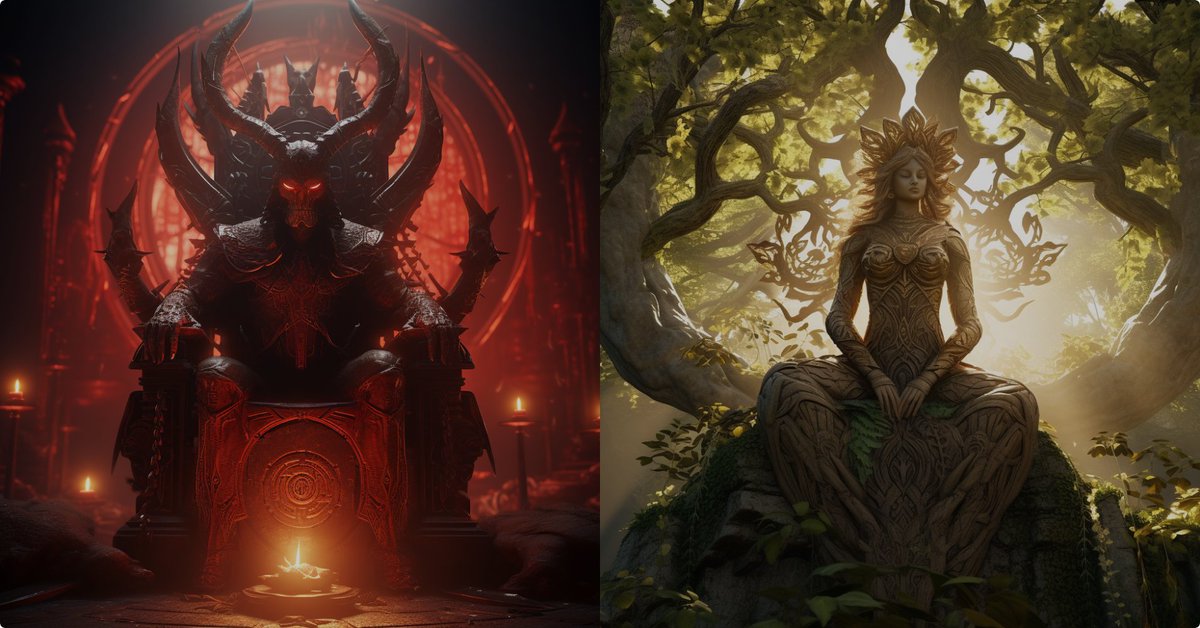
Introducing 👹'Moloch's Playground', a DAO pop-up event hosted by @TeamSobol
Dive into degen games in Moloch’s domain and/or regen activities in Asherah’s realm.
Which paths will you choose? 🚪👇
English
Sobol
554 posts
@TeamSobol
Sobol simplifies DAO operations. Let your community work for the DAO mission, not on the DAO. https://t.co/nbRfa1KfAx

It's hattening — the first ever Hats Protocol Demo Day! Join us to check out the future of onchain organizing, presented by a diverse set of orgs using Hats in innovative ways. Demos include:
Today we are launching Hats Modules! This is the most impactful release we've shipped since the protocol itself, and it's already catalyzing a new era for programmable organizations Here's why:

Today we are launching Hats Modules! This is the most impactful release we've shipped since the protocol itself, and it's already catalyzing a new era for programmable organizations Here's why:

Onboarding session with @marunblockchain, guided by @raybankless Big thanks to @TeamSobol, @hypercerts, @otterspace_xyz, @optimismFND, @1inchWallet, & @Medium for their tools. Grateful for the tech! 🙏 Warm welcome to our new community members! 🙌 @greenpillnet @BanklessTr

ANNOUNCEMENT: Together -> @cloud_scouts_ (☁️, 💖) Today, I'm excited to introduce 𝑡ℎ𝑒 web3 scout troop! New name, next-level community and governance solutions. 🧵

File over app File over app is a philosophy: if you want to create digital artifacts that last, they must be files you can control, in formats that are easy to retrieve and read. Use tools that give you this freedom. File over app is an appeal to tool makers: accept that all software is ephemeral, and give people ownership over their data. In the fullness of time, the files you create are more important than the tools you use to create them. Apps are ephemeral, but your files have a chance to last. The pyramids of Egypt contain hieroglyphs that were chiseled in stone thousands of years ago. The ideas hieroglyphs convey are more important than the type of chisel that was used to carve them. The world is filled with ideas from generations past, transmitted through many mediums, from clay tablets to manuscripts, paintings, sculptures, and tapestries. These artifacts are objects that you can touch, hold, own, store, preserve, and look at. To read something written on paper all you need is eyeballs. Today, we are creating innumerable digital artifacts, but most of these artifacts are out of our control. They are stored on servers, in databases, gated behind an internet connection, and login to a cloud service. Even the files on your hard drive use proprietary formats that make them incompatible with older systems. Paraphrasing something I wrote recently: > If you want your writing to still be readable on a computer from the 2060s or 2160s, it’s important that your notes can be read on a computer from the 1960s. You should want the files you create to be durable, not only for posterity, but also for your future self. You never know when you might want to go back to something you created years or decades ago. Don’t lock your data into a format you can’t retrieve. These days I write using an app I help make called Obsidian (@obsdmd), but it’s a delusion to think it will last forever. The app will eventually become obsolete. It’s the plain text files I create that are designed to last. Who knows if anyone will want to read them besides me, but future me is enough of an audience to make it worthwhile.

We've leaned into this early and started building a Hats Composer app. 🟣🤝🧢 This Sobol Labs app makes it easier to compose @hatsprotocol @DAOhaus @safe and other contracts to visually express your organization's onchain ops. Give our 🧪 a try. sobol.io/d/labs
The dream of composability is alive inside Hats protoDAO! There are so many incredible composable tools for collectively managing an organization And Hats is what ties it all together 🧢 Here are the ones we're already using: 🧵👇
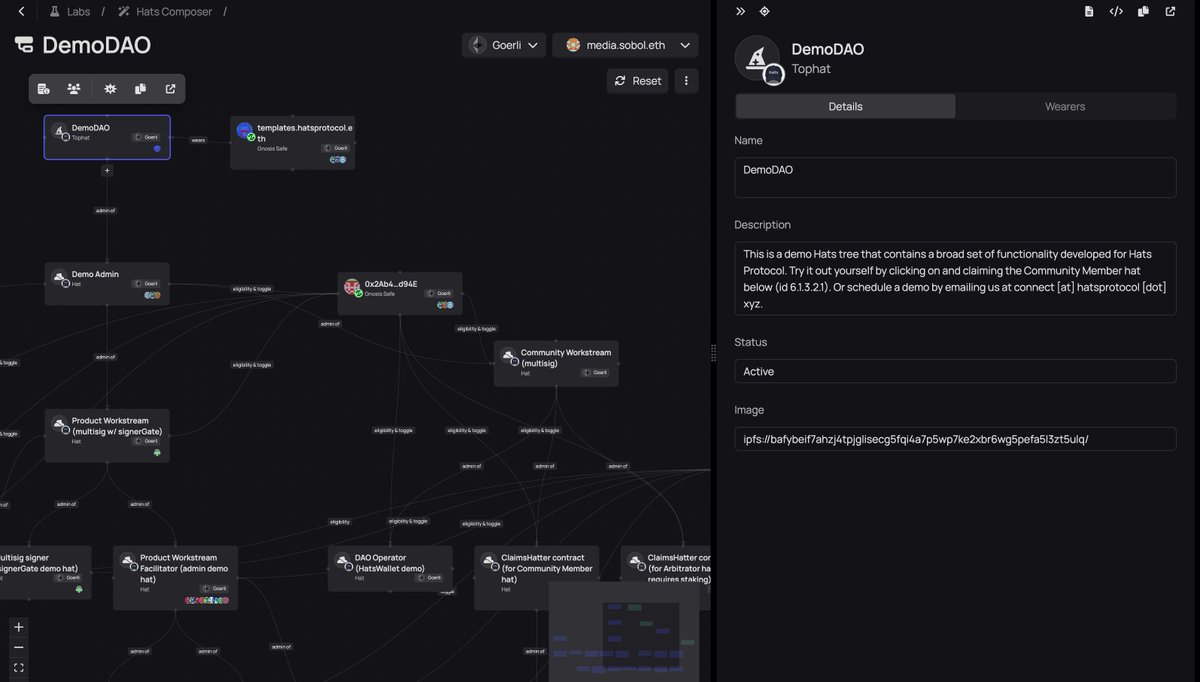
Put on your party hats... Hats Protocol and the Hats App v2 are now live & ready to use! 🥳 Give revocable roles and authorities to your people and code, save time, and get things done. What makes Hats the ultimate coordination tool? ohhh baby, here we go... 1/15