

Temmy
7.1K posts
Temmy
@Temmyflex30
Yoruba to the core
Somewhere in the universe Katılım Eylül 2022
151 Takip Edilen39 Takipçiler

Excluding Martinez and Garnacho
Name an ARGENTINE player that has played for MAN UNITED
VERY HARD


English
English
@Mr_whytte @realFemiOtedola Someone that is using his people to fund his lifestyle, why would he want to be with them after impoverishing them?
A st*pid man that can't develop hiss country despite his wealth.
English
@HeadOption2859 @owolanky Lol for not taking your useless nyamiri names
English

@owolanky Because Yoruba is the most tribalistic and bigot tribe in Nigeria
English

What’s with using Yoruba as a reference tribe for everything in Nigeria ?
Abi Ogun fe pa gbogbo yin ni ?
English



@LeratoPillayZA Lol is president Buhari our current president now
Most of you are nyaope drug addict lazy people
English

BREAKING:
Nigerians storming and destroying stores believed to be owned by South Africans, in Nigeria. Also att@cking cars suspected to be owned by South Africans that side.
No word from Ramaphosa, Mbalula, Mbeki, Vavi, Maimane and all the other clowns!
When we retaliate - expect the song: Xenpphobia 🧐 Stooges 🚮
English


Moi moi is nobody's food, stop claiming ownership to it 😂
If any tribe should claim ownership, it should be the hausas.
English
@OnyeUwaoma88 It seems your brain stop working or you just want to be useless
English

Oh shut up...shut ur foul mouth up u daughter of a f00l.
I personally know this family..this lady has been battling kidney disease for years..the man has stood by her..took care of her & her huge medical bills for years..her family knows.
U are an iidiot for peddling this rubbish
Ẹniọla 🇳🇬@treatpworld
This man lost his young wife at the age of 37, then organized a wake keep where he did suya for his friends or club or whatever, then came out ,sat down for the wake keep and his friends were spraying him money, he was dancing and smiling like nothing happened. Another day to remind women not to die. Like no be like say na your aged mother of 100 years dyed oo, your young wife that left her small small children, you get mind dey do wake keep abi sugar night, dey smile dey greet your friends and they were spraying you money as if you dey do wedding. Omo, is this man not supposed to be locked in a room surrounded by palm frond, is he supposed to come out? Which one is walking up and down greeting guest and smiling and thanking them as they spray you money when your wife's cold body is in the m0rtuary. If it's a woman now, even if the husband was 100 years before he dyed, she will mourn and cry, she will be isolated, she won't be seen outside nor talk to guest. If it's a woman now, ndi umuada and co wives will come out to drag her around that she committed an abomination and accuse her of keeling her husband. The next thing is that she will swear. Omo, congratulations abi condolence to the man. And to those spraying money, una no fit dey drop am for table or something, I fact why spraying money on a man that lost his young wife. Mtcheeeeew ✍🏽 Nancy O Johnson.
English

@TheGrandmaBoy Yarigbas are just foolish and delusional
All the Igbo in Lagos where are they living🤥
Why do yarigba always crying and shouting Igbo must go
Mumu people!
Tufiakwa
English

Landlords refuse to rent houses to Igbos in Lagos, Lagos that Igbos built.
Lagos does not belong to the Yoruba, it belongs to the Benin people. An Igbo woman says
English

@Pathfinder077 @GoldSeki63527 The funniest part of their hypocrisy is that most of them in Islam and Christianity practice isese behind the door,they keep their followers as slave so their eyes won’t open
English

@Temmyflex30 @GoldSeki63527 The werey even dey talk say balogun ogunmola and Aare latosa were Muslims
Can you see that she’s a psychlatrlc patient? The olofo no even sabi Yoruba history
English
When Fulani terrorism arise in the SW! Those who are ready to confront them are the onisese and they are devotees of Orunmila, Esu, ogun, Yemoja, sango etc.
But you as a Muslim and Christian will never want to partake in the fight, yet you’ll go to your mosques and churches to call the gods of Onisese powerless
Imagine the irony of omo Esu fighting for omo jesu and omo anobi
English
@Temmyflex30 @GoldSeki63527 Ask the oponu one single Alfa wey don enter bush recently to chase bandits… eyan ti ori e ti daru danu
English
@GoldSeki63527 @Pathfinder077 Purest religion ever
My orunmila didn’t rape and kill
My orunmila didn’t married a six years old
English

@Temmyflex30 @Pathfinder077 Your the most foolish one if you think only isese people can fight the Fulani invaders......are you more Yoruba than Yoruba Muslims or Christians??
English
@GoldSeki63527 @Pathfinder077 Is either you are dumb or they curse you to be unfortunate
English
@Pathfinder077 Which bush they enter.?? And who tell you that majority of those following igboho are isese people?? Who's your father in yoruba land.....you might even be slave that my ancestors brought from war.....how many isese people do we have in yoruba land??
English

@nobodyspecs @Zamani_WLK No one is falling for your propaganda nonsense
Nyamiri you can keep wailing
English

@Temmyflex30 @Zamani_WLK Same lie u told about igbo coup and you fools that cooked the propaganda used Ibadan lagos awolowo radio station to spread the evil lies. And today u are paying dearly. What was python dance doing in peaceful south east years back ? Yariba. Nah why awo die like rat
English

On October 31 1959, Ibadan became home to the first television station in Tropical Africa. Awolowo built it. While others were still figuring out broadcasting, a Yoruba man had already given an entire continent its voice. What major project is your founding father known for 🎤?


English
@trigottista lol street urchins ekuke will believe this desert cricket
English

Tinubu’s JAMB Registrar was born in 1986 and became an expert in 1988
What a wonderful Oluwole CV

English
@Temmyflex30 @Zamani_WLK Go ask Fulani where dem bury the ones they are kpaiiing now. Anima.
English
@THETROJANBEAST I’m not surprised cos your father is a useless man that gave birth to psychiatric patient like you
English

@Temmyflex30 Yes I did smoke a wrong weed with your fada
English
You guys wanna prove something you always bring half-baked pages such as photocopies yall feel lazy to deep dive deeper and quickly to debunk
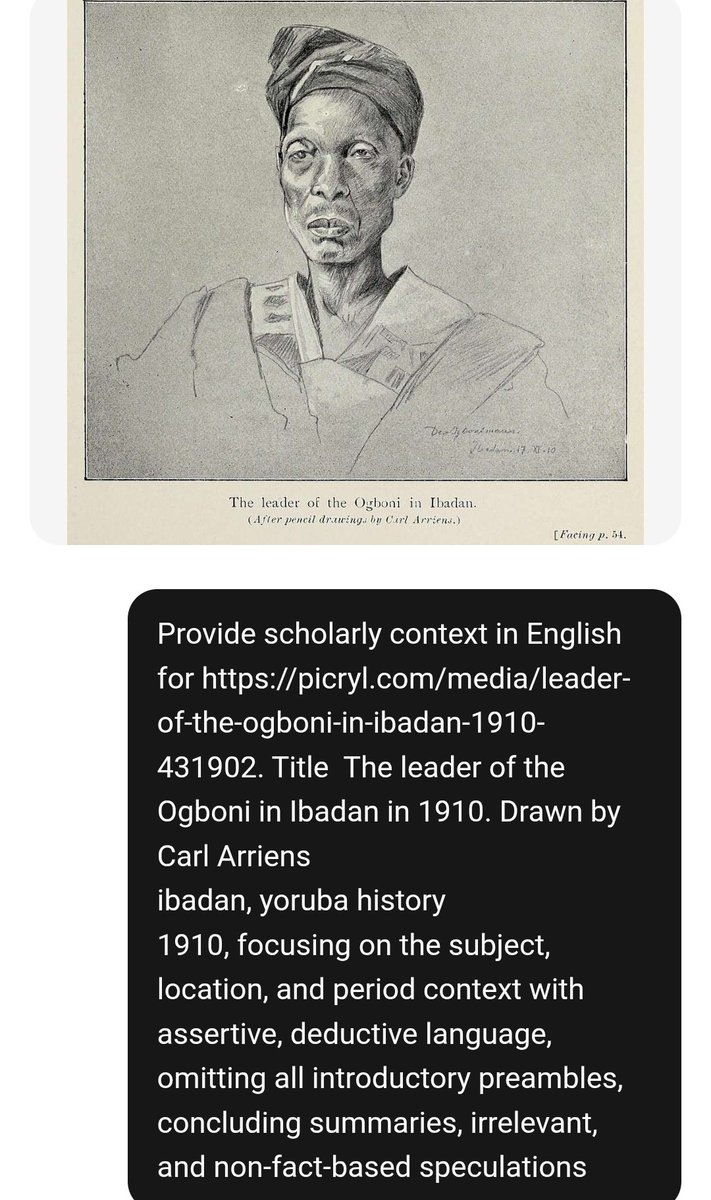
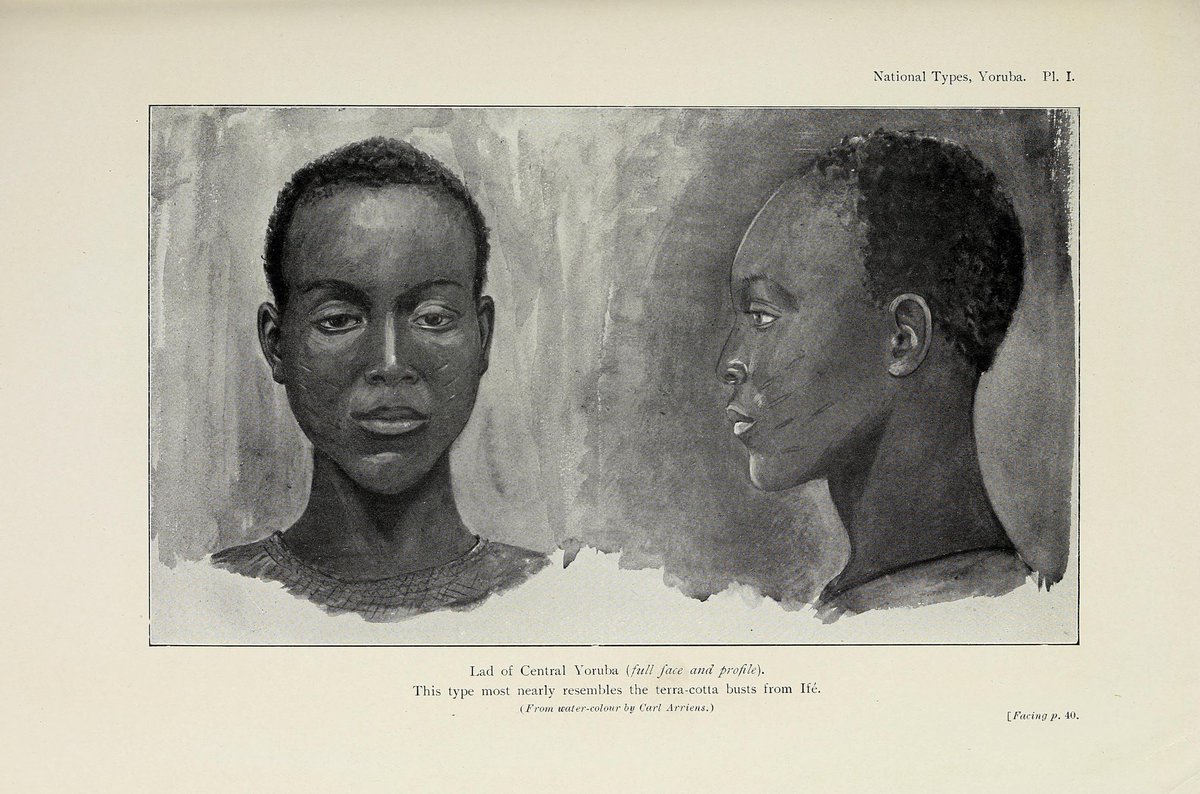
Leo The Voice of Africa, written by the German ethnologist Leo Frobenius.
And the sketch is by Carl Arriens
October 17th 1910
Only because I created the sketched image , and brought it back to life and because the sketch it self is been used commonly as AFONJA everywhere


Ọlá-Bọ́lá™ ©@theOlaBola
The individual depicted in the image is not Àfọ̀njá ———— The pencil drawing here comes from page 54b of Leo Frobenius’ “The Voice of Africa” published in 1913—drawn by Carl Arriens, one of his servants. My 𝗙𝗿𝗮𝗺𝗲-𝟭 below shows the image as it appears exactly on the page of Frobenius’ work. It depicts the 𝗢𝗴𝗯𝗼𝗻𝗶 𝗹𝗲𝗮𝗱𝗲𝗿 𝗼𝗳 𝗜𝗯𝗮𝗱𝗮𝗻, around the year 1910 The actual pencil drawing itself shows the artist’s inscription of the place & date, “𝗜𝗯𝗮𝗱𝗮𝗻 𝟭𝟳.𝟭𝟬.𝟭𝟬”, that is: Monday, October 17, 𝟭𝟵𝟭𝟬. Whereas, Ààrẹ Àfọ̀njá had lived and died 𝟴𝟬+ 𝘆𝗲𝗮𝗿𝘀 𝗽𝗿𝗶𝗼𝗿, in 𝗜̀𝗹𝗼̣𝗿𝗶𝗻 ———— This foregoing clarification is crucial because this distortion was initiated by @NigeriaStories in an attempt to cast a derisive imagery into Nigerians’ minds, of the “strongest” Yoruba man 𝘧𝘭.ca.1800. Push back the psyop‼️ Re-image Ààrẹ Àfọ̀njá‼️ Cheers‼️🥂
English
@OnyebuchiO71618 @okanumeee27 lol you are proud of this lies cos you are lazy to do your research
Nyamiri for a reason
English


Igbo-Biafra Landing in Georgia America Is A Biggest Proof That Born An Igbo-Biafran Can Never Ever Give Up No Matter How The Condition Is Or Give Up Everything To Protect His Dignity! God Keep Protecting Our Greatest Leaders Mazi Nnamdi Kanu & Our Prime Minister Simon Ekpa! #USBG
English