
Sabitlenmiş Tweet
AstraOS
23 posts


AstraOS
@TheAstraOS
The Design Operating System for Web3 Founders. Trusted by @Morpho @MoreMarketsxyz @RenzoProtocol @Fermah_xyz and more.
Dubai, UAE Katılım Ekim 2025
22 Takip Edilen22 Takipçiler
AstraOS retweetledi

every design studio i respect is building their own tools now
@chalaska , @TheRobertAvram and others all went the same direction - custom internal dashboards instead of Monday, Asana, Productive
The problem with agency PM tools is they offer so many features you barely use any of them and you get a bloated app that's a pain to use.
so we built Mission Control. fully custom. Next.js + Convex. client dashboard, task board, team capacity, invoicing, pipeline, knowledge base - all in one place.
the whole thing was coded by our AI agent running on @openclaw
here's the thing though - this wasn't supposed to be a PM tool.
Mission Control was originally just the place where that agent stores its data. a dashboard so i could keep an eye on what the PM is doing.
then it turned into our actual project tracker. because the data was already there - tasks, client health, capacity, activity - all flowing in automatically. we just needed a UI on top.
so now the whole loop is automated.
-client says something in Slack
- the agent picks it up
After that, depending on how the convo goes
- it creates a task
- assigns it
- estimates hours and adjusts team capacity accordingly
cost breakdown:
Monday.com - cancelled
Convex - free tier
Vercel - free tier
OpenClaw - already paying for Claude
total new cost: $0
time to first version: one weekend
Basically every morning we just log in, ask our agent on telegram whats on the menu today and we instantly get an accurate list of priorities ect ect
You can build exactly what you need now.
the barrier is gone.
English
AstraOS retweetledi
I run an (almost) entirely automated design studio with 2 people on one openclaw setup
We built a custom project management app that AI agents feed directly:
• client sentiment tracking with automated scoring
• pipeline management with auto-generated proposals
• invoice tracking synced with @RequestFinance
• meeting transcripts auto-summarized and filed and used for task tracking + context building
• task management replacing @mondaydotcom entirely
On top of that we use it for strategic planning, writing video scripts, vibecoding websites ect ect
Crazy thing? Only one claude max $200/mo plan is enough to run all of this. We usually hit the limit right before the weekly cap resets.
Here's every optimization that got us there:
1. Sonnet 4.6 for everything
Opus is tempting but it eats your quota 5x faster. sonnet handles 95% of tasks just as well. i only switch to opus for things that actually need deep reasoning - architecture decisions, nuanced writing, complex analysis.
Set your default model to sonnet in openclaw.json. don't think about it.
2. Create skills for every recurring action
This was the biggest unlock. instead of the agent figuring out how to do something from scratch every time, you write a SKILL.md once and it follows the playbook.
We have skills for: email management, meeting transcript processing, client sentiment tracking, proposal generation, calendar parsing, obsidian notes, and more.
Feed claude the anthropic PDF on how to create skills. it'll build them for you.
3. Subagents on sonnet for heavy work
Research tasks, file processing, batch operations - never do these in your main session. spawn a subagent, let it work in isolation, read the result when it's done.
The main session stays lean. the subagent does the grunt work on sonnet tokens.
4. Progressive context loading
Don't dump everything into context at session start. load metadata first, full details only when needed.
Our AGENTS.md explicitly says: load SOUL.md + USER.md + IDENTITY.md only. use memory_search() on demand. never bulk-load memory files.
This alone probably saves 30-40% of tokens per session.
5. Artifacts over context
Anything longer than 500 chars gets written to disk. subagents write results to artifacts/. main agent reads the file, summarizes for the user, moves on.
Tools write to disk. models reason over disk. context stays small.
6. Cron jobs for automation
Meeting transcripts get auto-fetched and summarized. daily backups run at 3am. no manual triggers needed. cron jobs survive session crashes.
The trick: keep cron payloads lean. short prompts, isolated sessions, sonnet model.
7. Memory system
Daily notes in memory/YYYY-MM-DD.md for raw logs. MEMORY.md for curated long-term context. the agent searches memory on demand instead of loading everything.
This means session 1 and session 50 have the same quality of recall without burning tokens on history.
8. Never poll in loops
If a process takes more than 10 seconds, launch it in background, reply immediately, notify when done. don't block the response with 50 polling calls burning tokens for nothing.
__________
My cofounder and i also use a completely separate openclaw workspace as a personal fitness and calorie tracker. same $200/mo subscription, different use case entirely.
Two people. one subscription. studio management + personal health tracking. and we still have headroom most weeks.
One max plan goes a long way if you are smart about usage
Happy to share more specific tips if anyone wants to go deeper on any of these. Just ask 👇
English


Absolutely mind blowing to see @tether repost a design we made at @TheAstraOS.
That's honestly such an honor.
Tether@tether
Amazing to see the ecosystem growing. WDK by Tether was designed for transparency and flexibility, and contributions like this prove the power of that model. Thanks for the hard work! 🤝🟧 x.com/utexocom/statu…
English
@cserbagergo A real pleasure to have you in the team - Working with you is an abolute pleasure!
English

Super happy to have worked with @TheAstraOS again to bring their vision to life for minah.io
First major project of the year in the books, more to come.

English
AstraOS retweetledi
Web3 transaction flows always are a huge painpoint.
It's also my least favorite moment -Interacting with my wallet always makes me stressed out, no matter how many times I had to deal with transfers at this point.
You're dealing with two UIs (app + wallet), multiple steps, blockchain delays, and plenty of failure modes, and most of the time, it doesn't even makes sense to me.
And I get it, you can't eliminate this complexity, but you CAN guide users through it with.
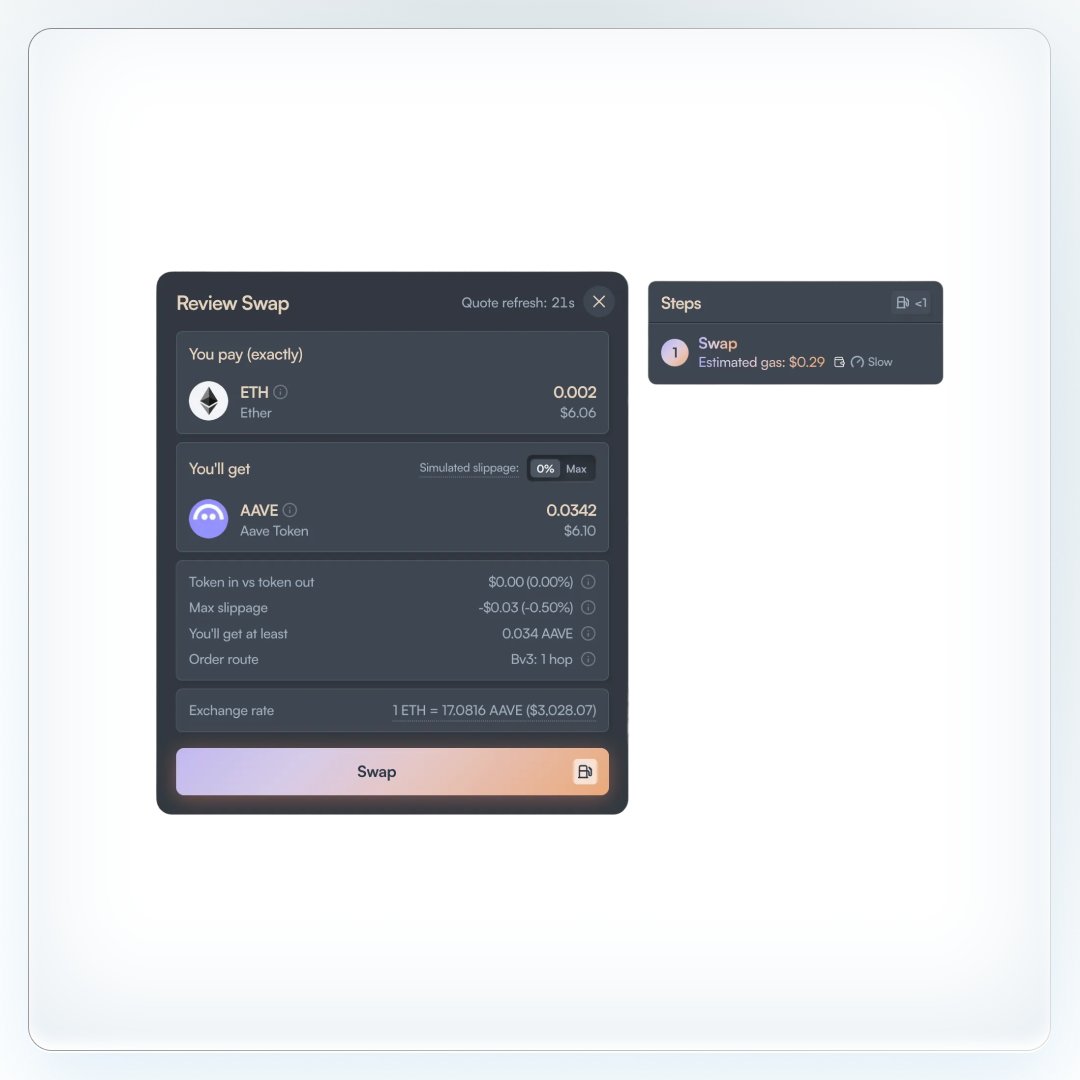
I was looking around for great UX in Txs flows and came accross @Balancer 's Txs.
My takeways on their approach.
→ Persistent sidebar that never disappears
→ Minimal visual noise (just 1 step for a simple swap)
→ Gas transparency upfront
→ Success state that invites next actions (swap again, feedback, Discord)
Most protocols either:
→Spam you with snackbars you might miss
→Hide progress in collapsible sections
→Make you guess if MetaMask needs attention
The insight:
You can't eliminate Web3's complexity (wallet popups, blockchain delays, gas costs). But you CAN build an interface that makes users feel in control throughout the chaos.
Clean hierarchy > flashy animations

English
AstraOS retweetledi
What I see when I open my slack with my morning coffee ☕️
@TheAstraOS is cooking day and night, and I love it.
English
AstraOS isn't for everyone.
It's for ambitious Seed/Series A Founders & CMOs who are tired of the chaos and know design is a key lever for growth.
Stop managing tasks.
Plug in an OS.
Book a call.
calendar.app.google/RRV7r463p2NheR…

English

