

The Beacon AI
4.3K posts
The Beacon AI
@TheBeaconAI
Curated AI News & Deep Insights Practical Tools & Tips | Cutting through the AI noise
Katılım Haziran 2024
19 Takip Edilen91 Takipçiler

Copilot made reviewing, revising, and formatting in Word easier than ever.
See what it can do now:
English
Ten seconds of video used to require tools.
Now it requires intent.
Gemini Omni combines text, clips, and images into one cohesive generation collapsing the distance between imagination and execution.
Google Gemini@GeminiApp
Add text, video, or up to five images as your ingredients and Gemini Omni can combine them all into one cohesive ten-second video. Try it today and share your creations in the replies. 👇
English
The Beacon AI retweetledi

Asking chatbots about China reveals AI's most uncomfortable design truth
Ask DeepSeek about Tiananmen Square. You get a refusal or a deflection. Ask about Taiwan. You get the Chinese government's position.
In controlled testing of 300 geopolitical questions, DeepSeek's censorship rate hit 88% on certain sensitive historical incidents.
This isn't a bug. It's by design. China's Cyberspace Administration requires AI models to embody "core socialist values" before approval. The censorship is structural.
Here's the uncomfortable part: Western models are also making choices.
ChatGPT and Gemini answer Tiananmen questions, which looks like openness. It's also a choice shaped by training data, developer values, and legal environments. Absence of visible censorship isn't absence of perspective.
Chinese models censor by refusal. Visible. Western models shape responses through emphasis, framing, and what they treat as neutral. Harder to see. Not categorically different.
DeepSeek has tens of millions of global users. Chinese models are being integrated into infrastructure across markets that can't audit them.
The real problem isn't that Chinese AI censors. That's documented and expected. It's that AI at global scale is becoming an information layer whose political architecture most users can't inspect, regardless of where the model was built.
Whose model you use is increasingly a question about whose version of contested reality you're navigating inside.

English
AI nutrition advice fails nearly half the time, and sounds certain while doing it
Nearly half of AI health advice responses are problematic. Nutrition is the worst category, below vaccines, cancer, and stem cells.
The dangerous part isn't that the answers are wrong. It's that they sound exactly like correct answers.
A tool that's obviously unreliable gets ignored. A tool that's wrong 50% of the time but consistently sounds authoritative is a different problem. Clinicians report patients arriving convinced by chatbot reasoning that contradicts professional guidance. The expert now has to dismantle a confident wrong answer instead of just providing a correct one.
64% of U.S. teenagers use AI chatbots for information. For people without easy access to a dietitian or specialist, AI fills the gap. Models perform worst on exactly the nutrition questions driving that use case.
None of the major models are classified as medical devices. The accuracy standards that apply to clinical decision support tools don't apply here. A model that correctly explains vaccine schedules and then recommends a 600-calorie diet carries no different liability in either case.
ECRI ranked misuse of AI chatbots in healthcare as the top health technology hazard of 2026. That's not AI critics. That's the nonprofit that tracks where patients actually get hurt.
Confidence without calibration is not a feature. In health contexts, it is the primary risk.

English
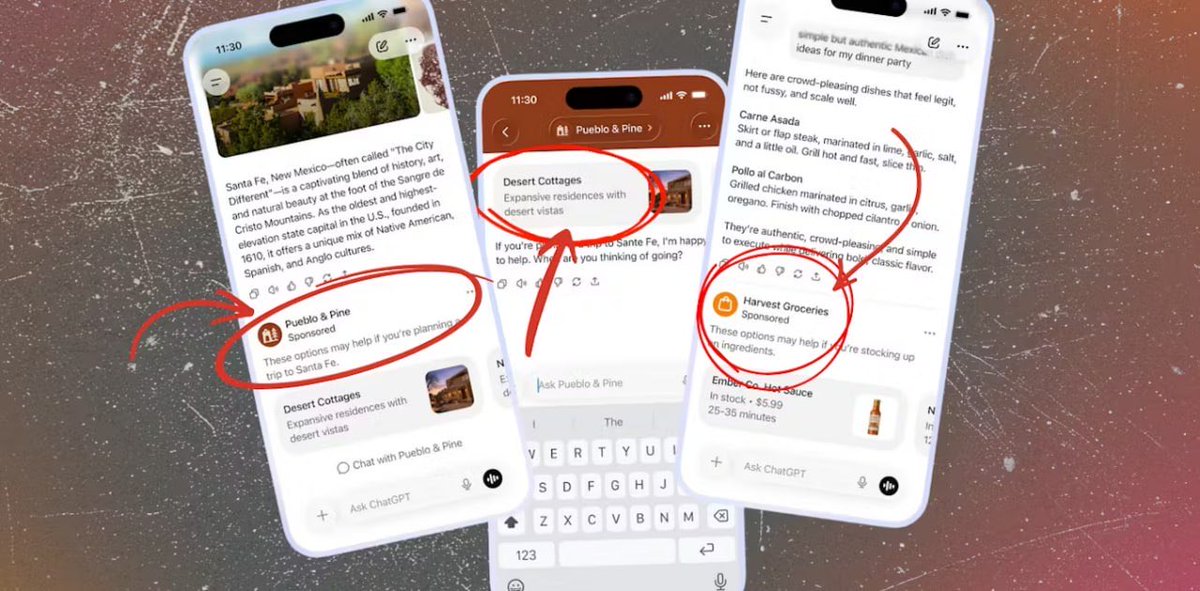
OpenAI opening ChatGPT ads to small businesses is a play for Google's core
OpenAI dropped its ad minimum spend requirement. Opened self-serve Ads Manager to all U.S. businesses. Brought in programmatic partners for the long tail.
That's not a premium content play. That's a direct move toward the advertiser base that built Google.
Google's dominance was never about big brands. It was the millions of small businesses who found intent-based search advertising converted better than anything else. That long tail is the hardest part of the moat to replicate.
Early data: ChatGPT users convert at ~1.5x the rate of other referral channels. If that holds, it moves budgets.
Google's model: be where people go when they've decided they want something. OpenAI's model: be where people go when they're still figuring out what they want.
That earlier position in the decision process, if it proves durable, isn't just a new ad channel. It's a structural challenge to where search advertising value gets created.
English
🔖 If this insight helped, bookmark it.
♻️ Repost to help others stay ahead in tech.
🔔 Follow @TheBeaconAI for curated AI news & deep insights.
x.com/thebeaconai/st…
The Beacon AI@TheBeaconAI
AI nutrition advice fails nearly half the time, and sounds certain while doing it Nearly half of AI health advice responses are problematic. Nutrition is the worst category, below vaccines, cancer, and stem cells. The dangerous part isn't that the answers are wrong. It's that they sound exactly like correct answers. A tool that's obviously unreliable gets ignored. A tool that's wrong 50% of the time but consistently sounds authoritative is a different problem. Clinicians report patients arriving convinced by chatbot reasoning that contradicts professional guidance. The expert now has to dismantle a confident wrong answer instead of just providing a correct one. 64% of U.S. teenagers use AI chatbots for information. For people without easy access to a dietitian or specialist, AI fills the gap. Models perform worst on exactly the nutrition questions driving that use case. None of the major models are classified as medical devices. The accuracy standards that apply to clinical decision support tools don't apply here. A model that correctly explains vaccine schedules and then recommends a 600-calorie diet carries no different liability in either case. ECRI ranked misuse of AI chatbots in healthcare as the top health technology hazard of 2026. That's not AI critics. That's the nonprofit that tracks where patients actually get hurt. Confidence without calibration is not a feature. In health contexts, it is the primary risk.
English
Companies are spending on enterprise AI while employees quietly build their own
90% of companies have employees using personal AI accounts for work. Only 40% have official AI subscriptions.
That gap isn't a technology problem. It's a governance failure most organizations haven't decided to take seriously.
MIT calls it a "shadow AI economy." Employees compressing 150 hours of work into 30 on personal NotebookLM. Running client data through personal ChatGPT. Building workflows the company doesn't know exist.
The productivity gains are real. So is the liability.
Shadow AI breaches cost $670K more per incident than standard breaches. Insider risk from non-malicious shadow AI negligence: $19.5M per org annually. The employee feeding strategy docs into personal Claude isn't trying to cause harm. They're trying to meet a deadline. Intent doesn't change the exposure.
Nearly half of employees would keep using personal AI accounts after a ban. Prohibition doesn't solve shadow AI. It drives it underground.
Companies investing in enterprise AI licenses while employees work around them aren't solving the problem. They're funding two parallel AI ecosystems, only one of which they can see.
The employees doing the most with AI right now are the least likely to appear in official usage reports.

English
Most enterprise AI rollouts are measured by license counts. Actual adoption is happening in browser tabs finance and security teams never see. The gap exists because employees optimize for speed, not compliance. Governance that adds friction loses to a personal Claude account in under a week.
English
🔖 If this insight helped, bookmark it.
♻️ Repost to help others stay ahead in tech.
🔔 Follow @TheBeaconAI for curated AI news & deep insights.
x.com/thebeaconai/st…
The Beacon AI@TheBeaconAI
China refusing Nvidia chips reveals what export controls actually accomplished The U.S. approved H200 chip sales to Alibaba and Tencent. Trump and Jensen Huang flew to Beijing to push the deal. China declined. Not because it couldn't buy the chips. Because it decided it no longer wanted to. Export controls were designed to block China from frontier compute. What four years of escalating restrictions actually produced: China built a parallel hardware ecosystem from scratch. DeepSeek optimized for Huawei Ascend. Domestic inference infrastructure purpose-built around domestic silicon. The dependency export controls assumed was permanent turned out to be a starting condition. China's refusal isn't defiance. It's irrelevance. American hardware at a 25% tariff premium, routed through U.S. territory with tampering concerns, offers no strategic upside when you've already built the alternative. The outcome policymakers most wanted to avoid: not China blocked from frontier AI. China sovereign in it. $30B in Nvidia sales won't happen. The less visible number: the future market that's now closed. Every model optimized for Ascend gets further optimized for Ascend. That lock-in doesn't reopen at the negotiating table. Export controls can delay. They cannot determine what a motivated, well-resourced adversary decides to build instead.
English
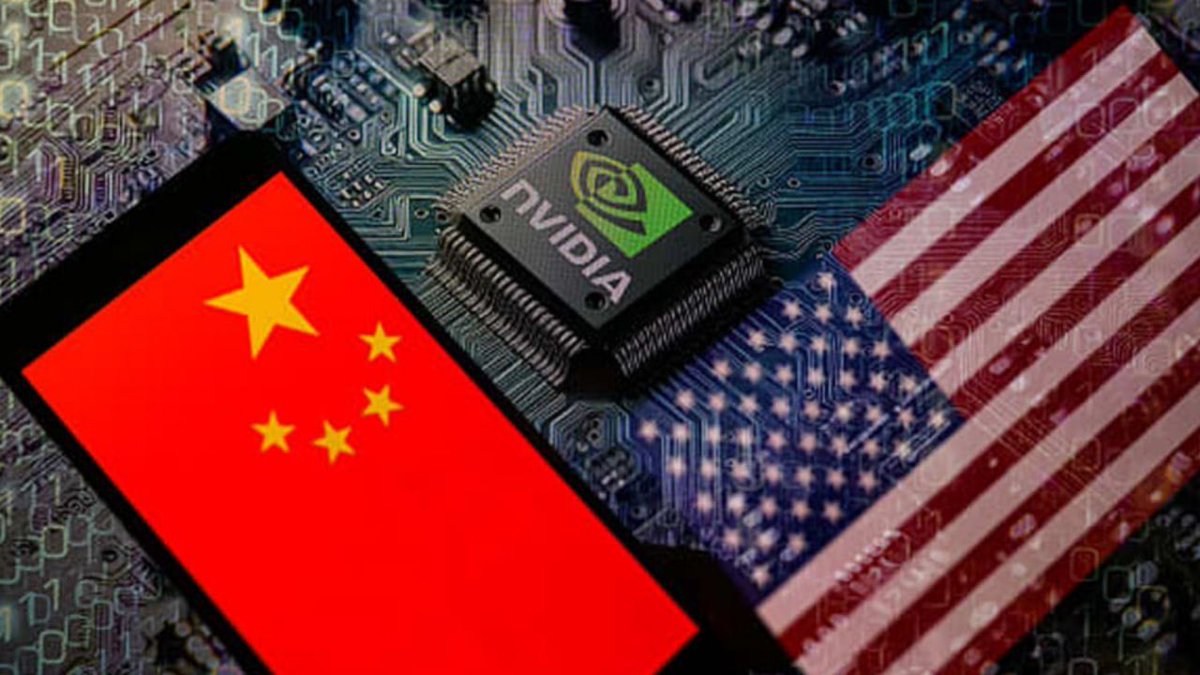
China refusing Nvidia chips reveals what export controls actually accomplished
The U.S. approved H200 chip sales to Alibaba and Tencent. Trump and Jensen Huang flew to Beijing to push the deal. China declined.
Not because it couldn't buy the chips. Because it decided it no longer wanted to.
Export controls were designed to block China from frontier compute. What four years of escalating restrictions actually produced: China built a parallel hardware ecosystem from scratch. DeepSeek optimized for Huawei Ascend. Domestic inference infrastructure purpose-built around domestic silicon.
The dependency export controls assumed was permanent turned out to be a starting condition.
China's refusal isn't defiance. It's irrelevance. American hardware at a 25% tariff premium, routed through U.S. territory with tampering concerns, offers no strategic upside when you've already built the alternative.
The outcome policymakers most wanted to avoid: not China blocked from frontier AI. China sovereign in it.
$30B in Nvidia sales won't happen. The less visible number: the future market that's now closed. Every model optimized for Ascend gets further optimized for Ascend. That lock-in doesn't reopen at the negotiating table.
Export controls can delay. They cannot determine what a motivated, well-resourced adversary decides to build instead.
English
🔖 If this insight helped, bookmark it.
♻️ Repost to help others stay ahead in tech.
🔔 Follow @TheBeaconAI for curated AI news & deep insights.
x.com/thebeaconai/st…
The Beacon AI@TheBeaconAI
OpenAI opening ChatGPT ads to small businesses is a play for Google's core OpenAI dropped its ad minimum spend requirement. Opened self-serve Ads Manager to all U.S. businesses. Brought in programmatic partners for the long tail. That's not a premium content play. That's a direct move toward the advertiser base that built Google. Google's dominance was never about big brands. It was the millions of small businesses who found intent-based search advertising converted better than anything else. That long tail is the hardest part of the moat to replicate. Early data: ChatGPT users convert at ~1.5x the rate of other referral channels. If that holds, it moves budgets. Google's model: be where people go when they've decided they want something. OpenAI's model: be where people go when they're still figuring out what they want. That earlier position in the decision process, if it proves durable, isn't just a new ad channel. It's a structural challenge to where search advertising value gets created.
English
Apple's glasses without a screen reveal where the AI interface war is actually heading
Apple's AI glasses have no AR display. No holographic overlay. Just cameras, microphones, open-ear speakers, and Siri.
Not a technical limitation. A strategic claim.
Meta proved screenless AI glasses have a real market. Google proved in 2013 that putting a display in front of someone's face creates social friction engineering can't fully solve. Apple watched both and landed here: ambient awareness, not heads-up display. Perception first. Projection maybe never.
The architecture matters. Apple's glasses are a tethered sensing layer for the iPhone. Computation stays on the phone. Glasses handle input: gesture cameras, voice, Visual Intelligence surfacing context before you ask. The interface disappears. The AI just knows.
The industry assumes AI interfaces evolve toward more screens, more visual output, more explicit interaction. Apple is betting the opposite. The most powerful AI interface is one you stop noticing.
Meta got there first. Apple is betting that first matters less than being the version people actually want to wear every day.
That bet has worked before.

English
The Beacon AI retweetledi
Huawei's AI chip gambit is narrowing TSMC's most important lead
U.S. export controls assumed hardware is the chokepoint. Control ASML's EUV machines, control the frontier. No EUV, no advanced AI chips.
Huawei just challenged that directly.
LogicFolding: a new chip architecture built on Huawei's own Tau Scaling Law. Target: 1.4nm by 2031, without EUV, by optimizing data transmission speed rather than shrinking transistors further. First chips ship this fall.
Three years behind TSMC. Closing.
Moore's Law scales transistor density. Tau Scaling Law reorients around time: how fast transistors move data, not how many fit. If viable at scale, performance no longer runs exclusively through the process node race EUV was built to win.
Frontier AI training and inference aren't just compute problems. They're memory bandwidth and data movement problems. A chip that prioritizes transmission speed could be surprisingly competitive for exactly those workloads.
Export controls denied China the dominant path. They didn't deny China the time or incentive to find a different one. Six years of pressure produced 381 chips and a new architectural theory with its own name.
Sanctions work best when there's no alternative route. Huawei just announced it found one.

English
🔖 If this insight helped, bookmark it.
♻️ Repost to help others stay ahead in tech.
🔔 Follow @TheBeaconAI for curated AI news & deep insights.
x.com/thebeaconai/st…
The Beacon AI@TheBeaconAI
Apple's glasses without a screen reveal where the AI interface war is actually heading Apple's AI glasses have no AR display. No holographic overlay. Just cameras, microphones, open-ear speakers, and Siri. Not a technical limitation. A strategic claim. Meta proved screenless AI glasses have a real market. Google proved in 2013 that putting a display in front of someone's face creates social friction engineering can't fully solve. Apple watched both and landed here: ambient awareness, not heads-up display. Perception first. Projection maybe never. The architecture matters. Apple's glasses are a tethered sensing layer for the iPhone. Computation stays on the phone. Glasses handle input: gesture cameras, voice, Visual Intelligence surfacing context before you ask. The interface disappears. The AI just knows. The industry assumes AI interfaces evolve toward more screens, more visual output, more explicit interaction. Apple is betting the opposite. The most powerful AI interface is one you stop noticing. Meta got there first. Apple is betting that first matters less than being the version people actually want to wear every day. That bet has worked before.
English