TheCoinCritic⚙️🇺🇸
9.9K posts

TheCoinCritic⚙️🇺🇸
@TheCoinCritic
People asked me to launch coins for years. I declined them all. Now I’ve built crypto infrastructure...no token needed. You’ll like what’s next. @CoreProve.com

Berkeley, Ca Katılım Mayıs 2009
493 Takip Edilen1.2K Takipçiler

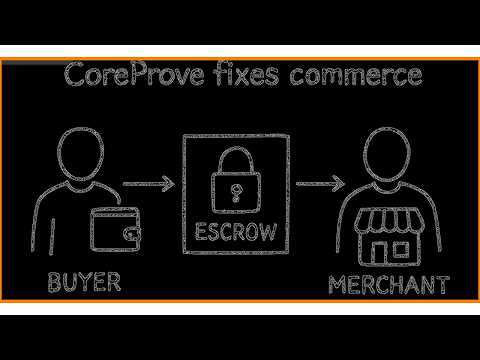
@VitalikButerin Agree! Let's build a radically different Ethereum application stack! youtu.be/CRaqw_P53as

YouTube
English

I think it's healthy for us in the Ethereum world to have a more bold and open mindset to many things, particularly on the application layer and on how we see ourselves in the world.
We should not compromise on core properties: censorship resistance, open source, privacy, security (CROPS). We should not have "open mindedness" of the type that leaves people with no confidence of what security properties the L1 will still have one year from now. We should not ask ourselves questions like "do we really need light clients to be able to trustlessly verify correctness of the chain?". But especially on the layer of applications and Ethereum's interface to the world, we should be more willing to radically rethink various concepts and step outside our comfort zone.
This includes issues of technological direction, eg. "what if AI basically means that wallets as browser extensions and mobile extensions are dead within a year?"
One example last year was the shift to thinking about privacy as a first-class consideration, something we value equally to the other types of security. This implies a radically different Ethereum application stack, because the entire stack so far has not been built around privacy. Great, let's build a radically different Ethereum application stack!
An example this year is the growing work on the networking side of privacy, both inside the EF and outside.
It includes application-layer issues, eg. "what if the rest of defi is basically just universal futures markets on top of a good decentralized oracle and letting users self-organize on top of that?", and "what if the ideal decentralized oracle is just a SNARK over M-of-N small LLMs over zk-TLSes of some major news sites?"
(BTW this is interrelated with the AI issue: one consequence of AI is that it moves "applications" away from being discrete categories of behavior with discrete UIs, and more toward being a continuous space, so "build fewer apps and rely on users to self-organize around them" should inevitably expand as a pattern)
One example this year is rethinking from zero the role of L2s, and what kind of L2s are actually most synergistic and additive to Ethereum.
It also includes culture. This is a big part of "the whole milady thing" for myself, @AyaMiyagotchi and others. Yes, it's a silly meme. Yes, I find the political takes of some milady partisans cringe and sometimes outright bootlickerish (though other milady partisans are quite the opposite). But the core underlying subtext, the message behind the message, is: rip off the suit and tie. If you have your suit and tie on, be willing to grab the nearest wine glass and spill it all over your suit and tie, so you have no choice but to rip it off and reclaim your body's full flexibility and freedom. Actually imagine yourself doing this the next time you get invited to a richpeopleslop formal gala dinner. Take the preconception that you are "respectable", write it down on a piece of paper, crumble it up and burn it. The psychological baptism of doing this leads to the intellectual baptism of unlocking greater creativity and expanding overton windows.
For too long, our algorithm in Ethereum has been: we have this existing ecosystem, what's the logical next step to make it one step better? Now, our algorithm should be: we have this L1 that is amazing and will become more amazing, we have a growing array of tools, both those built within our ecosystem and outside it, what are the most valuable things to build, knowing what we know now? If YOU had to write the section of the 2014 Ethereum whitepaper that talked about applications, and take a first-principles perspective of what makes sense in defi, decentralized social, identity, and elsewhere, what would you write? At least take the step of marking all path-dependence concerns down to zero, pretend for a brief moment that the Ethereum chain today has exactly zero usage and you're the one suggesting or building the first apps, and see what comes out. Do this even if you're the one building today's existing apps. This is how Ethereum can grow back stronger.
English

@VitalikButerin Check out CoreProve. It implements a version of this using today! CoreProve.com/demo.
Thanks for the push for standards…it makes innovation possible!
English

Now, account abstraction.
We have been talking about account abstraction ever since early 2016, see the original EIP-86: github.com/ethereum/EIPs/…
Now, we finally have EIP-8141 ( eips.ethereum.org/EIPS/eip-8141 ), an omnibus that wraps up and solves every remaining problem that AA was intended to address (plus more). Let's talk again about what it does.
The concept, "Frame Transactions", is about as simple as you can get while still being highly general purpose. A transaction is N calls, which can read each other's calldata, and which have the ability to authorize a sender and authorize a gas payer. At the protocol layer, *that's it*.
Now, let's see how to use it.
First, a "normal transaction from a normal account" (eg. a multisig, or an account with changeable keys, or with a quantum-resistant signature scheme). This would have two frames:
* Validation (check the signature, and return using the ACCEPT opcode with flags set to signal approval of sender and of gas payment)
* Execution
You could have multiple execution frames, atomic operations (eg. approve then spend) become trivial now.
If the account does not exist yet, then you prepend another frame, "Deployment", which calls a proxy to create the contract (EIP-7997 ethereum-magicians.org/t/eip-7997-det… is good for this, as it would also let the contract address reliably be consistent across chains).
Now, suppose you want to pay gas in RAI. You use a paymaster contract, which is a special-purpose onchain DEX that provides the ETH in real time. The tx frames are:
* Deployment [if needed]
* Validation (ACCEPT approves sender only, not gas payment)
* Paymaster validation (paymaster checks that the immediate next op sends enough RAI to the paymaster and that the final op exists)
* Send RAI to the paymaster
* Execution [can be multiple]
* Paymaster refunds unused RAI, and converts to ETH
Basically the same thing that is done in existing sponsored transactions mechanisms, but with no intermediaries required (!!!!). Intermediary minimization is a core principle of non-ugly cypherpunk ethereum: maximize what you can do even if all the world's infrastructure except the ethereum chain itself goes down.
Now, privacy protocols. Two strategies here. First, we can have a paymaster contract, which checks for a valid ZK-SNARK and pays for gas if it sees one. Second, we could add 2D nonces (see docs.erc4337.io/core-standards… ), which allow an individual account to function as a privacy protocol, and receive txs in parallel from many users.
Basically, the mechanism is extremely flexible, and solves for all the use cases. But is it safe? At the onchain level, yes, obviously so: a tx is only valid to include if it contains a validation frame that returns ACCEPT with the flag to pay gas. The more challenging question is at the mempool level.
If a tx contains a first frame which calls into 10000 accounts and rejects if any of them have different values, this cannot be broadcasted safely. But all of the examples above can. There is a similar notion here to "standard transactions" in bitcoin, where the chain itself only enforces a very limited set of rules, but there are more rules at the mempool layer.
There are specific rulesets (eg. "validation frame must come before execution frames, and cannot call out to outside contracts") that are known to be safe, but are limited. For paymasters, there has been deep thought about a staking mechanism to limit DoS attacks in a very general-purpose way. Realistically, when 8141 is rolled out, the mempool rules will be very conservative, and there will be a second optional more aggressive mempool. The former will expand over time.
For privacy protocol users, this means that we can completely remove "public broadcasters" that are the source of massive UX pain in railgun/PP/TC, and replace them with a general-purpose public mempool.
For quantum-resistant signatures, we also have to solve one more problem: efficiency. Here's are posts about the ideas we have for that: firefly.social/post/lens/1gfe… firefly.social/post/x/2027405…
AA is also highly complementary with FOCIL: FOCIL ensures rapid inclusion guarantees for transactions, and AA ensures that all of the more complex operations people want to make actually can be made directly as first-class transactions.
Another interesting topic is EOA compatibility in 8141. This is being discussed, in principle it is possible, so all accounts incl existing ones can be put into the same framework and gain the ability to do batch operations, transaction sponsorship, etc, all as first-class transactions that fully benefit from FOCIL.
Finally, after over a decade of research and refinement of these techniques, this all looks possible to make happen within a year (Hegota fork).
firefly.social/post/bsky/qmaj…
English

@AlexanderTw33ts If RentAHuman wants to tap into the growing USDC market without adding friction or compromising user privacy this is worth exploring.
I’m interested in discussing how we could integrate USDC through CoreProve.
It sounds like you’re in the SF area.
Happy to meet and discuss.
English

@prophecy_777 @NickSzabo4 @computer_spirit That sounds like an incompletely thought out prompt . How about…. ‘Implement the attached execution plan exactly, ask any blocking questions before proceeding.’
The plan should have already been reviewed for optionality before it becomes the final prompt.
English

@NickSzabo4 @computer_spirit Last sentence in a well thought out prompt: "Before you proceed, what questions do you have for me so that we get the best result possible?"
English

"Cognitive dominance." Bubble thinking.
Every previous software or AI breakthrough has reached diminishing returns. They solved a set of problems so well that the solutions became cheap and unprofitable.
The current breakthrough, LLMs, are spectacularly good at some cognitive tasks and bad at others. For example, they are great at coding, but often poor at analyzing the completeness of security or user interface requirements, especially in innovative areas that have not been publicly analyzed by others. As another example, they often make embarrassing mistakes in tasks that require tacit spatial or temporal sense.
An even bigger problem with the idea of "cognitive dominance" is that mature AI is likely to follow the longstanding human economic pattern that higher division of labor and division of knowledge will be more productive. There will be trillions of hyper-specialized agents, not one God-like superbrain that monopolizes everything.
"This time it's different"? Maybe. Probably not. And it is unwise to bet on a foggy long shot, even if the theorized payoff is vast:
unenumerated.blogspot.com/2012/07/pascal…
The Capital Mind@Capital_Mind_
@HedgieMarkets @NickSzabo4 Measuring a cognitive monopoly using metrics built for taxi apps is a category error. This is an infrastructure race. The capital is not burning, it is securing total dominance.
English

@hexgeta Nice to see a PulseChain Dapp Utility without a token :).
I'll be using it to look for deals. I hope it gets adoption.
English

AgoráX is now live!
PulseChain's On-chain Limit Order DEX.
Website: agorax.win
Telegram: t.me/agoraxwin
Twitter: x.com/agoraxwin
Contract: 0x06856CEa795D001bED91acdf1264CaB174949bf3
otter.pulsechain.com/address/0x0685…
There is no tradeable AgoráX token, sacrifice, or fundraiser. Confirm these links on at least one other source and bookmark for safety. You will not get unsolicited DMs. You do not ever need to enter, confirm, or give out your private keys and/or seed words. Stay safe!
English

@TomerStrolight @adam3us Seeing the fallacy is 1/2 the battle...its a hard part.
English

@adam3us The fallacy here is that you are equivocating between monetary transactions and things that are obviously not money (ie spam).
English

Excited to see this!
Network-layer anonymity has been a missing piece of all the privacy primitives we've been building - both the onchain stuff (eg. railgun) and the offchain stuff (eg. the ZK API tickets)
And there's a significant space of applications where the bandwidth reqs are small but latency matters a lot, so having something on the low-latency high-anonset side of the triangle matters a lot.
English

@RichardHeartWin @paulg Two sides of a coin.
A: This is for your own protection vs
B: Here are some disgusting examples to teach you why you need protection.
High school Sex Education class vs Navy STD films.
Free Speech enables both;
while platform/A.I. filters overstep w parent like discretion.
English

@paulg Yeah, but society is so weak, that you can't even find the greatest, "Don't ever click this" greatest hits anymore. Goatse, blue waffle, lemonparty. (Do not search these words or you will learn what Paul's talking about, vividly.)
English

@Cole_Walmsley @rollando_magic TLDNR: summary the Debasement trade is real.
English

This is insane.
1971:
-Gold was $43/oz
-Average hourly wage was $3.70
-Time needed to buy one oz of gold: 11.6 hours
2026:
-Gold: $5,000/oz
-Average hourly wage: $28
-Time needed to buy one oz of gold: 179 hours
What does this mean?
Your time is literally less valuable today than it was 50 years ago. Look at it this way:
In 1971: Work 12 hours ➡️ get 1 ounce of gold
In 2026: Work 12 hours ➡️ get 0.07 ounces of gold
Gold is still gold. One hour is still one hour. Wtf is happening?
We haven't used sound money since 1971, when U.S. President Richard Nixon took us off the gold standard. Money became infinitely printable, with nothing required to back it.
So they printed money, over and over. And over. And over. And over again.
Every time they printed new dollars, the dollar became worth less. Think about it like this:
If there's 10 copies of a rare painting, and then they make 1,000 new copies, all the copies become worth less. That's what happens when you increase the supply.
That's what's been happening to the dollar since 1971. And guess what?
The money you use represents your time.
You give time and energy to the market, the market gives you money in return. That money reflects the time you gave.
It's no wonder that time has become less valuable as the dollar has become less valuable.
We don't use gold to measure our time and energy. We use a money that can be printed out of thin air by a small, central group of elites that we have no real say over.
Anybody with the power to print money from nothing will eventually abuse that power. That's what's been happening since 1971.
As a result, it now takes more of your time to earn the same amount of gold, which is completely backwards from a species that is supposed to be progressing.
It should be going the other way. As we develop new technologies and bring more productivity to the market, it should take *less* time to earn the same amount of gold.
The only way -- THE ONLY WAY -- to stop your time from becoming less valuable is to use a different form of money. You must exit the dollar system. You cannot escape time-debasement if you are in a system with monetary-debasement.
You need a system that cannot be debased.
We have a monetary system that was explicitly created to prevent monetary debasement once and for all. We have evidence for those that have chosen that system.
If your money was Bitcoin, this is how much time it would take to buy one ounce of gold:
2012: 208 days
2016: 2 days, 22 hours
2020: 4 hours, 28 minutes
2024: 56 minutes
The dollar loses value over time, because it can be infinitely debased. The longer you use it as money, the more time you lose.
Bitcoin gains value over time, because it is the only money that cannot be debased. The longer you use it as money, the more time you gain.
The game is alignment.
Choose wisely.
English

@RichardHeartWin If you want, next we can a, b, c or d.
English
TheCoinCritic⚙️🇺🇸 retweetledi

@Hexologist31 @coinbase Now we just need a way to transact without gas...and without doxing yourself.
1. Expainer- youtu.be/c-vBhdltJP8?si…
2. Pulsechain Product demo- youtu.be/CRaqw_P53as?si…

YouTube

YouTube
English

In Bitcoin Core, dissent on issues like opcode sizing was not resolved through technical falsification, but through agenda control, process friction, gatekeeping and sadly gaslighting. the community...hopefully we learn and this changes.
We choose Code as law...not people.
Matthew R. Kratter #BIP-110@mattkratter
Gloria Zhao Leaves Bitcoin Core

English
TheCoinCritic⚙️🇺🇸 retweetledi

@bretep @ietf t.me/TGPWorkingGroup creating ietf spec for transaction signaling. Come contribute...be the change you seek.
English

It’s questions like these that make me doubt the qualifications listed in the user’s profile. RFCs and standards exist for good reason. I pray good engineers continue to contribute to the @ietf This guy would not be a good candidate.
SumitM@SumitM_X
Why do we prefix the token with Bearer instead of sending the token directly?

English

@CortesSteve He also condemned Protestant "heretics" to death. He was hoisted by his own petard.
English