
The Green Org

8.4K posts

The Green Org banner
The Green Org

The Green Org

@TheGreenOrg

The Green Organisation is the independent environment group dedicated to promoting the positive side of environmental endeavour.

Katılım Temmuz 2011
1.3K Takip Edilen1.8K Takipçiler
The Green Org retweetledi
Natural England
Natural England@NaturalEngland·
Today we celebrate the declaration of the Seven Sisters #NationalNatureReserve (NNR). 🎉 1,500 hectares of globally rare habitats and wildlife better protected for nature and people. This marks the halfway point in the King's Series of NNRs. 25 by 2028. gov.uk/government/new…
English
4
50
202
9.9K
The Green Org retweetledi
Matthew Todd 🌏🔥
Matthew Todd 🌏🔥@MrMatthewTodd·
‘The era of reliable harvests is over’ Professor Paul Behrens, British Academy Global Professor University of Oxford #climateChange
English
10
190
322
5K
The Green Org retweetledi
Lyle Lewis
Lyle Lewis@Race2Extinct·
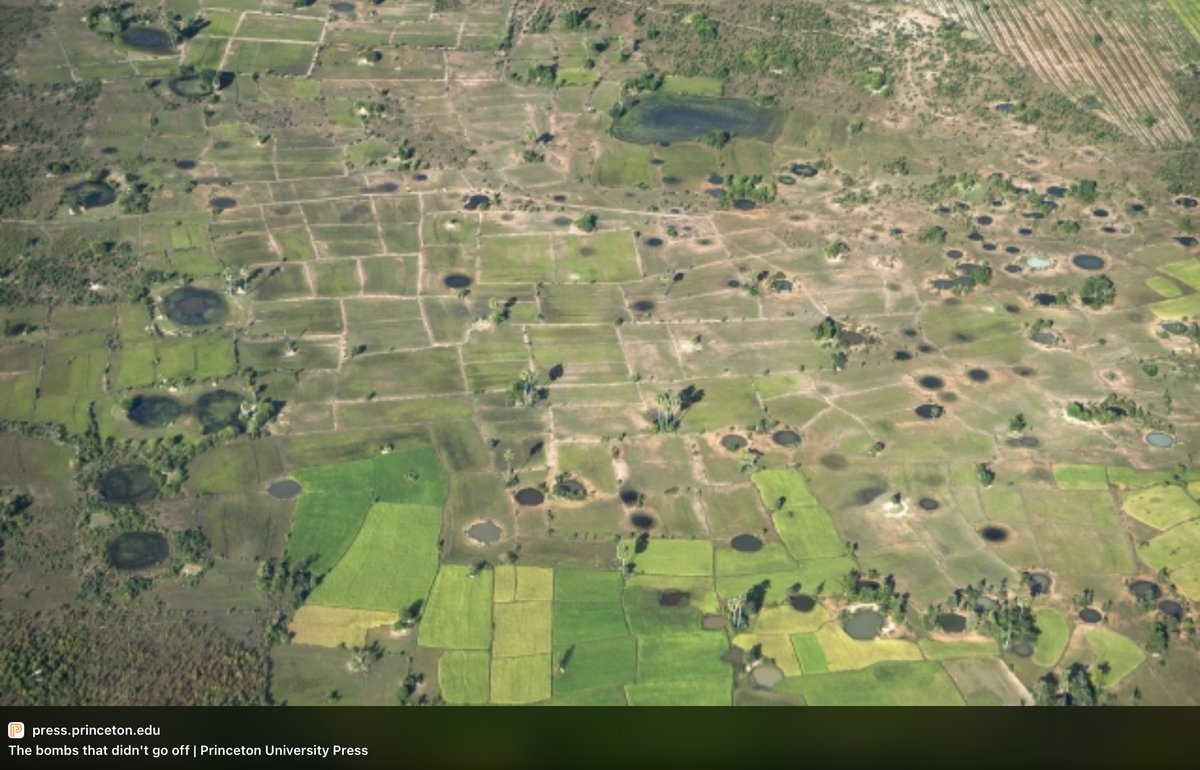
War is not only a humanitarian catastrophe. It is an ecological one. Forests burn. Rivers are contaminated. Wildlife disappears. Soils are scarred by craters and heavy metals. Entire ecosystems are pushed into states from which they may not recover. Yet the environmental dimension of war is rarely discussed. War is usually described in human terms—casualties, refugees, cities destroyed. But every conflict also unfolds across living landscapes. Media coverage focuses on human suffering and infrastructure loss, while the biosphere absorbs damage that often goes unmeasured and largely unrecorded. The battlefield is only the visible part of war. The ecological damage extends far beyond it. Declaring War—on the Environment War is usually described in human terms—casualties, refugees, cities destroyed. But every conflict also unfolds across living landscapes. Forests burn. Rivers are contaminated. Wildlife disappears. Soils are scarred by craters and heavy metals. Entire ecosystems are pushed into states from which they may not recover. Yet the environmental dimension of war is rarely discussed. Media coverage focuses on human suffering and infrastructure loss, while the biosphere absorbs damage that often goes unmeasured and largely unrecorded. The battlefield is only the visible part of war. The ecological damage extends far beyond it. War is not only a humanitarian catastrophe. It is an ecological one. Across history, conflicts have repeatedly reshaped landscapes and altered ecosystems at scales comparable to major natural disturbances. But unlike hurricanes, fires, or floods, the ecological consequences of war are seldom treated as environmental events. They exist in a blind spot—visible to those who study landscapes, but largely absent from public discussion. Several ecological consequences of war illustrate how deeply conflict alters the living world. 1. War Creates Instant Industrial Landscapes Modern warfare concentrates industrial activity into small areas at extraordinary intensity. Armored vehicles churn and compact soils. Artillery fragments scatter metals across landscapes. Military vehicles compress ground that once absorbed water and supported vegetation. Explosions leave craters that alter drainage patterns and fragment habitats. These impacts resemble mining operations more than traditional battlefields. The land is not simply disturbed—it is industrialized. In many conflict zones, soils, water sources, and coastal waters become contaminated with lead, mercury, explosives residues, and fuel. These pollutants can persist for decades or centuries, altering plant communities and entering food webs. Long after fighting stops, landscapes often remain chemically altered. 2. War Disrupts the Biological Memory of Landscapes Ecosystems store their history in soils, seed banks, and biological communities. War damages all three. Bombardment strips vegetation. Fires destroy forests and grasslands. Heavy machinery crushes soil structure that took centuries to form. Once that structure is lost, ecosystems lose part of their ability to rebuild themselves. Vegetation may return, but it is often composed of different species adapted to disturbed ground. Nutrient cycles shift. Soil organisms decline. Water infiltration that recharges groundwater aquifers is reduced. What returns after war is rarely the ecosystem that existed before it. War erases ecological memory. 3. Conflict Zones Become Ecological Blind Spots When war begins, environmental monitoring often stops. Scientists leave. Research programs collapse. Wildlife surveys cease. Pollution monitoring disappears. Protected areas lose staff and enforcement. As a result, ecosystems within conflict zones effectively vanish from scientific observation. Species declines—and even extinctions—may go unrecorded. Illegal logging, mining, and hunting expand without oversight. Rivers, streams, and wetlands may become contaminated without anyone measuring the damage. Entire regions of the biosphere can slip into data silence during conflict—places where ecological damage occurs but no one is watching. 4. War Alters Wildlife Populations in Complex Ways Conflict can both devastate wildlife and temporarily protect it. In some areas, warfare drives large animals to local extinction through hunting, habitat destruction, or displacement. Poaching often increases as armed groups finance operations through wildlife products. But in other places, depopulation of rural areas can briefly reduce agricultural pressure. Croplands are abandoned. Roads become less traveled. Some wildlife populations expand in the absence of people. These temporary refuges rarely last. When conflict ends, reconstruction, extraction, and renewed settlement often arrive quickly, compressing wildlife back even further into shrinking habitat. War therefore produces ecological whiplash—periods of sudden release followed by intensified pressure. 5. The Global Military System Operates Outside Environmental Accounting Perhaps the least discussed ecological consequence of war is the scale of the military system itself. Modern militaries are among the largest industrial enterprises on Earth. They consume enormous quantities of fossil fuels, metals, chemicals, and manufactured materials. Fighter jets, naval fleets, armored vehicles, and weapons production all carry substantial environmental footprints. The fuel consumption alone is staggering. Modern militaries are among the largest institutional consumers of fossil fuel on Earth. Modern combat aircraft burn thousands of gallons of fuel per hour, while global military logistics require fleets of ships, trucks, and aircraft operating continuously. Yet military emissions and pollution are often poorly reported or partially excluded from international climate accounting frameworks—a legacy of political exemptions written into early global climate agreements. This creates a strange paradox. One of the largest industrial systems on Earth operates largely outside the environmental scrutiny applied to other industries. War as an Ecological Force War does not merely damage ecosystems locally. It amplifies nearly every driver of ecological decline simultaneously. It accelerates resource extraction. It expands fossil fuel consumption. It disrupts land management and environmental governance. It pushes landscapes into states from which recovery becomes difficult or impossible. And yet the ecological dimension of war remains largely invisible in public discourse. This invisibility reflects a broader pattern. Humans tend to perceive environmental change only when it occurs gradually and within the boundaries of an ordinary human life—forests thinning, rivers warming, wildlife disappearing over decades. War, like floods and earthquakes, is treated as a temporary emergency, something separate from the environmental systems it reshapes. But the biosphere does not experience war as an emergency. It experiences it as disturbance. And like all disturbances, the effects accumulate. A Missing Piece of Environmental Awareness Environmental discussions often focus on agriculture, industry, energy, and climate. These forces matter enormously, but they are not the only ways humans reshape the planet. War is one of the most concentrated ecological disturbances our species produces. It compresses industrial activity, extraction, fire, pollution, and landscape transformation into moments of extraordinary intensity. For ecosystems caught in those moments, the consequences are often irreversible. The biosphere records these disturbances long after human history moves on. Craters become wetlands. Forests regrow over battlefields. Metals linger in soils for centuries. War may be temporary for societies. For landscapes, its echoes can last far longer. The Paradox of War War also reveals a deeper paradox about how modern societies interact with the environment. We tear down landscapes to build infrastructure—roads, pipelines, factories, ports. Then war tears down that infrastructure with bombs, artillery, and fire. And when the fighting stops, we tear down more of the environment again to rebuild what was destroyed. The cycle resembles a ratchet rather than a loop. Landscapes are stripped to build infrastructure, stripped again to destroy it, and stripped once more to rebuild what was lost. Each turn leaves the biosphere further depleted than before. At every stage—construction, destruction, and reconstruction—resources are extracted, landscapes are altered, and ecosystems absorb the cost. War does not only destroy landscapes. It removes them from the moral equation. War also narrows the range of questions society is willing to ask. In peacetime, environmental damage may be debated, regulated, or litigated. In wartime, those questions often disappear. Landscapes become terrain, rivers become obstacles, forests become cover, and ecosystems become collateral. Anyone who pauses to ask about ecological consequences risks being seen as naïve—or even disloyal. The implicit premise is rarely stated but widely understood: When national survival is invoked, the environment has no standing. War does not suspend environmental damage. It suspends the willingness to question it. War does not interrupt the environmental pressures of industrial society. It intensifies them where fighting occurs—and amplifies them across the wider industrial system that sustains the war. And every phase of the cycle is profitable for someone. War is one of the few moments when societies openly declare that the biosphere has no standing in human decisions. Article published on Substack
Lyle Lewis tweet media
English
23
254
575
7.4K
The Green Org retweetledi
PROTECT ALL WILDLIFE
PROTECT ALL WILDLIFE@Protect_Wldlife·
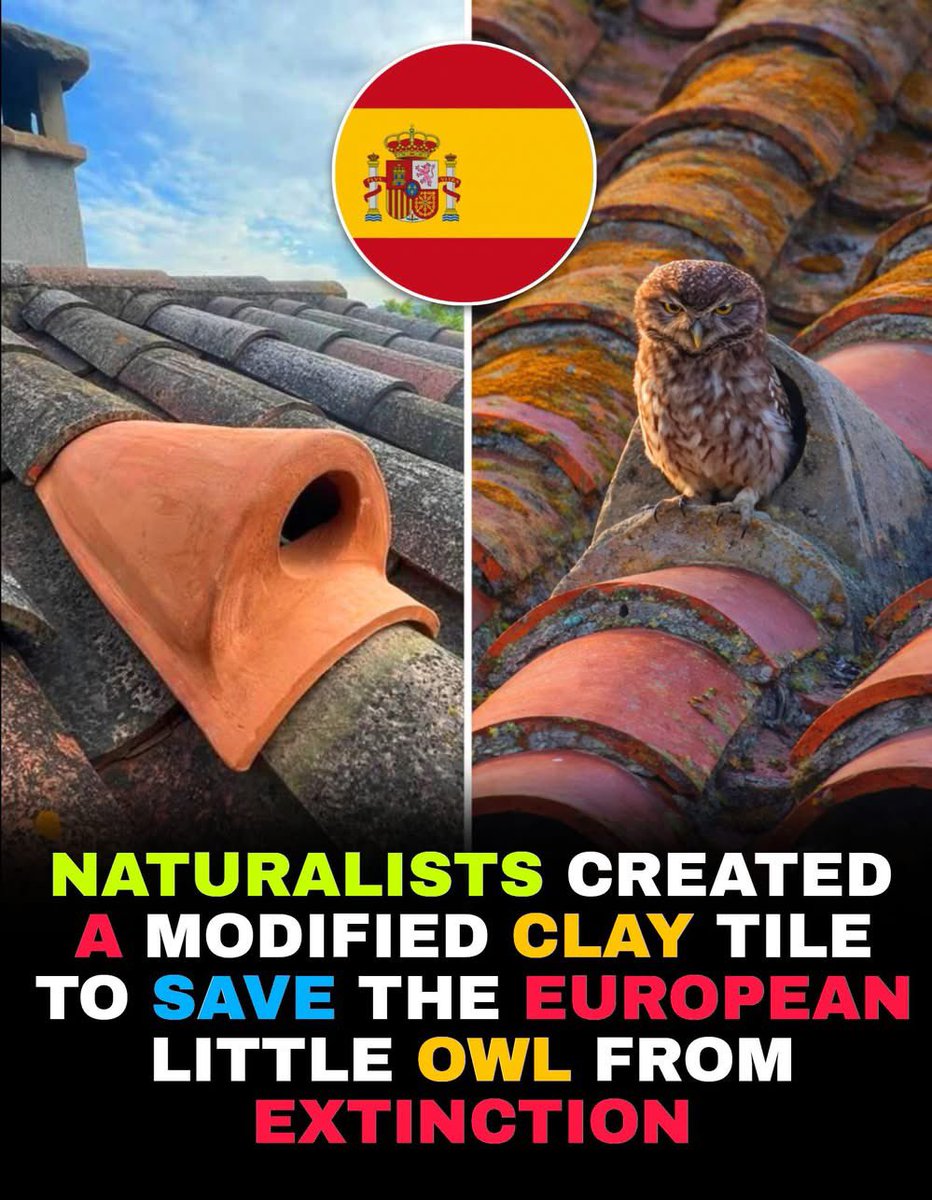
Well Done Spain 🇪🇸. A ROOF TILE THAT’S GIVING LITTLE OWLS THEIR HOMES BACK In rural Spain, a clever design is helping thousands of nocturnal birds reclaim what modern construction quietly took away. The Little Owl once nested in old stone walls and traditional farmhouses. But as rural architecture modernized, those natural cavities disappeared — leaving these small hunters without shelter. So conservationists from the Grup de Naturalistes d’Osona and Grup de Natura Sterna designed something brilliant. They created the Teula Mussolera — a modified clay roof tile that doubles as a high-tech birdhouse. Here’s why it works: It looks exactly like traditional Spanish roofing — preserving the beauty of rural homes. Its internal tunnel is predator-proof and thermally stable, protecting chicks from heat and hunters. It allows owls to live alongside humans as villages expand. And here’s the smartest part… This isn’t charity. It’s partnership. The Little Owl is an elite natural pest controller — hunting thousands of insects and rodents every year. Farmers who install these tiles aren’t just helping wildlife… they’re recruiting a silent, feathered security team that reduces the need for chemical pesticides. Sometimes conservation isn’t about separating humans and nature. It’s about designing a way to thrive together.
PROTECT ALL WILDLIFE tweet media
English
82
1.7K
5.2K
58.2K
The Green Org
The Green Org@TheGreenOrg·
Big news! 🦋 The Large Tortoiseshell butterfly is back in the UK! After 30+ years, sightings in southern England mean it’s officially off the ‘extinct’ list and resident once more. 🇬🇧 Details: theguardian.com/environment/20…
English
0
0
0
55
The Green Org
The Green Org@TheGreenOrg·
We don't inherit the Earth from our ancestors; we borrow it from our children🌿 At The Green Organisation, we’re working toward a future where "green" isn't a buzzword-it's the blueprint. Let’s stop waiting for the future & start building it. 🛠️💚 RT for a cleaner, greener 2026
The Green Org tweet media
English
0
0
0
13
The Green Org retweetledi
Jerome Foster II
Jerome Foster II@JeromeFosterII·
Scotland is aiming to be the world's first rewilded country. It's looking to rewild 30% of the country by 2030. We have the solutions. Replenishing and protecting nature is one of them. #ActOnClimate #climate #biodiversity
English
133
1.7K
7.2K
101K
The Green Org retweetledi
ZSL
ZSL@OfficialZSL·
Today, the Bank of England announced that the British public has voted for nature on our banknotes. Of 44,000 responses, 60% chose nature as their preferred theme – ahead of landmarks, historical figures, arts, sport, and innovation. When given a genuine choice about what matters to them, people chose the natural world. This year we mark our 200th anniversary, and we've had the privilege of featuring three of the species we work hard to protect on a commemorative £2 coin – a Sumatran tiger, a Socorro dove, and a partula snail. Animals whose survival has depended on decades of scientific effort, global partnerships, and sustained investment. Seeing wildlife on currency feels, in that context, not just symbolic but fitting. It’s great news that everyone is invested in putting wildlife on the money. The bigger challenge – and the more urgent one – is getting everyone invested in spending the money on the wildlife. Right now, we’re facing a stark reality. Wildlife populations have declined by an average of 73% over the last 50 years. Reversing that requires roughly $700 billion globally a year. The public appetite is clearly there. The capital exists. What's missing is the infrastructure that connects the two: the scientific standards, the governance frameworks, the policy signals that give institutional investors the confidence to act. The public have made their values clear – literally, on our currency. Our future banknotes will bring us all a welcome glimpse of wildlife as we go about our day-to-day. The question for financial institutions, for policymakers, and for organisations like our science-led conservation charit, is how we can ensure those banknotes work as hard as they can for the wildlife. It’s clear the public value nature, now it’s time to ensure that the economy and decision makers do too. Read our CEO, Kathryn England's recent thoughts on nature finance and more here 👇 #NatureFinance zsl.org/news-and-event…
English
1
31
123
9.5K
The Green Org
The Green Org@TheGreenOrg·
The cost of shifting to clean energy is estimated to be lower than the cost of single major fossil‑fuel price spike. Investing in cleaner power helps reduce long‑term risks & keeps future energy bills more stable. Source: Climate Change Committee report- theccc.org.uk
English
0
0
0
14
The Green Org retweetledi
Jerome Foster II
Jerome Foster II@JeromeFosterII·
China has planted over 66 billion trees since the 1980s! Now, it is pushing even further to restore forests and create green urban spaces, tackling air pollution and climate change head-on. The Forest Future Alliance: tinyurl.com/5n8p5d84
English
37
274
649
14.6K
The Green Org retweetledi
SriSathya
SriSathya@sathyashrii·
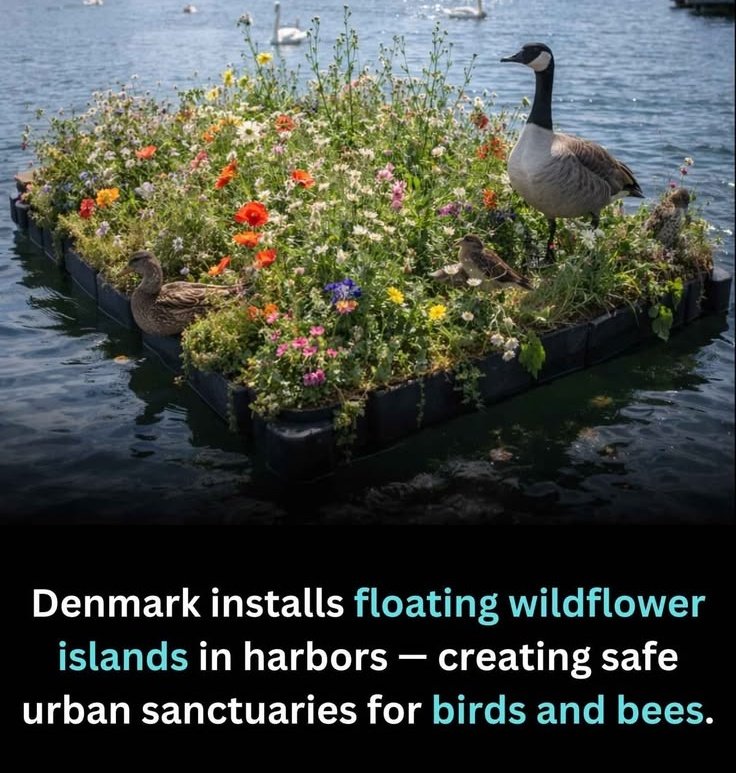
DENMARK JUST DROPPED THE MOST GENIUS THING EVER…
SriSathya tweet media
English
536
9.3K
57.8K
1.8M
The Green Org retweetledi
The Ocean Cleanup
The Ocean Cleanup@TheOceanCleanup·
BREAKING: The Audacious Project, part of the TED Group, is backing the 30 Cities Program and accelerating our scale-up. This brings us one step closer to stopping up to 1/3 of all plastic from flowing from rivers into the ocean.
English
21
255
1.2K
48.4K
The Green Org
The Green Org@TheGreenOrg·
The UK’s first geothermal plant has officially been turned on! ♨️ 📍 United Downs, Cornwall 🏠 Powering 10,000 homes 🔄 24/7 renewable energy 🔋 Bonus: Producing lithium for EV batteries! Check out the details: bbc.com/news/articles/…
English
0
0
0
21
The Green Org
The Green Org@TheGreenOrg·
Did you know 70% of the world relies on plant-based medicine? 🌸 💊 This #WorldWildlifeDay, we’re celebrating the "hidden healers"- the medicinal and aromatic plants that sustain our health & heritage. But with 1,300+ species at risk, we must act now.🌿✨ #WWD2026 #Conservation
The Green Org tweet media
English
0
0
1
51
The Green Org retweetledi
Erik Solheim
Erik Solheim@ErikSolheim·
Under the slogan of a “Beautiful China”, the country is hugely successful protecting natural beauty and cultural heritage. China 🇨🇳 has over the last few years moved to the frontseat protecting nature and amazing cultural sights. China is leading the world combatting pollution, in tree planting and in restoring natural beauty and the protection of species. My report from Guilin - may be the most beautiful site in China and certainly also a global treasure:
English
58
73
481
27.4K
The Green Org retweetledi
Ocean Conservancy
Ocean Conservancy@OurOcean·
Today is #WorldSeagrassDay! 🌿 Seagrass is our ocean's unsung superhero. It feeds marine wildlife, protects coastlines, supports fisheries, improves water quality and SO much more. ✅ 🔗 Learn just how important seagrass is and how you can help us work to protect it: bit.ly/4l1Vgbj
Ocean Conservancy tweet media
English
5
100
291
4.1K