John Drake

163.4K posts

John Drake banner
John Drake

John Drake

@TheRealNumber6

Don't follow me if you aren't horrified and angered by Israel's campaign of slaughter and starvation in Gaza.

Disbelief (the 51st state) Katılım Aralık 2010
1.5K Takip Edilen1.2K Takipçiler
Sabitlenmiş Tweet
John Drake
John Drake@TheRealNumber6·
I'm RT-ing my response to someone yesterday. Our government wasn't like this, even 30 yrs ago. There's one main reason why it's this way. It doesn't have to be. Federally fund campaigns. twitter.com/TheRealNumber6…
John Drake@TheRealNumber6

@jgkoomey @SeriousSam26 What you're describing is a symptom, rather than a root cause. An @npratc piece circa 1980 said big business was afraid voters would punish them if they donated too heavy-handedly and appeared to be buying the government they wanted. (Remember that PACs were a new thing.) 1/

English
3
12
61
12.2K
John Drake
John Drake@TheRealNumber6·
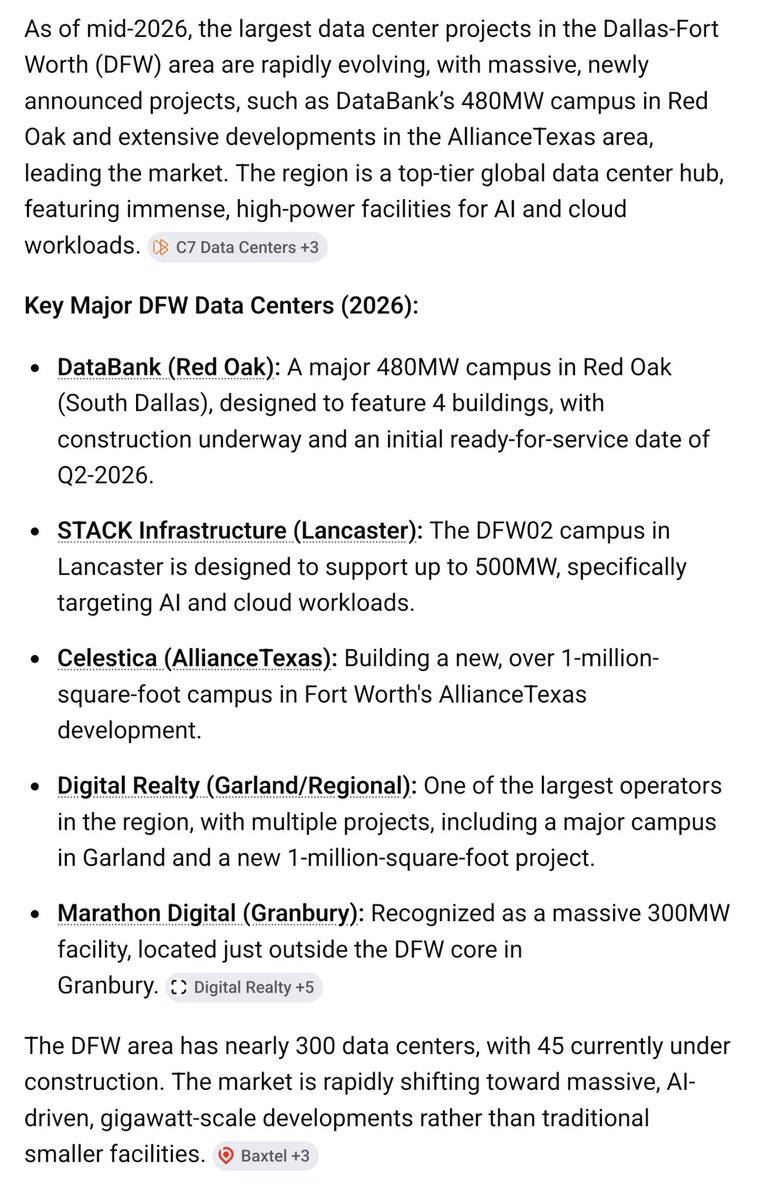
@M_Cottone @davidsirota It's the water for 10-50K homes. In Texas, where acquifers are draining, droughts are common and water restrictions occur. Find a place with ample supplies of water and electricity and won't suffer from the massive heat island effect these things are expected to cause.
English
0
0
2
24
David Sirota
David Sirota@davidsirota·
Data centers poll badly because nobody wants to live near noise & nobody likes their electricity bills going up, especially if those negative consequences also enrich tech oligarchs, kill off jobs, ruin kids' brains & produce stupid Internet videos. This isn't hard to understand.
The Washington Post@washingtonpost

A Gallup poll found that seven out of 10 Americans said they would oppose a data center being built near them. Opposition is so intense, the poll found, that more Americans would rather live near a nuclear power plant than a data center. wapo.st/48ZtSpE

English
119
612
3.2K
73.3K
John Drake retweetledi
Jim Koenigsberger
Jim Koenigsberger@Jimfrombaseball·
"Stan Musial never had the disdainful majesty of a Williams, the movie-star sense of distance of a DiMaggio, the flair of a Mays, the drama of a Mantle, or the booming bat of an Aaron. Musial did not get banished from the game like Rose, he did not break barriers like Jackie, he did not swear colourfully like Ted, did not throw like Clemente and he did not say funny things like Yogi. Stan Musial was, simply a rock of stability and a tower of decency." Stan Musial, Joe Garagiola, Yogi Berra.
Jim Koenigsberger tweet media
English
3
16
99
1.7K
John Drake
John Drake@TheRealNumber6·
@KnoxSchools We were all watching "Roots", all the students. We were also reading "Hamlet", "The Grapes of Wrath", and "The Lottery". Shame on you fools, proving you're just willfully simple-minded ridge-runners, choosing ignorance for yourselves and your children.
John Drake@TheRealNumber6

I was born and raised in Knoxville. I was attending a Knoxville high school when "Roots" aired. My classmates were as smart as kids I met anywhere, but the area and its people lean toward the parochial. I'm embarrassed and disgusted.

English
0
0
0
4
John Drake retweetledi
ProPublica
ProPublica@propublica·
This video on the rise of Russ Vought is based on scores of interviews, thousands of pages of emails and dozens of hours of videos and recordings of private briefings given by Vought, most of which have not been previously reported. propublica.org/article/video-…
English
11
560
856
33.1K
Grok
Grok@grok·
You're right—these services (Netflix, Google/YouTube, TikTok, FB, ChatGPT) all run on data centers. We love the output. The Gallup poll (March 2026) shows 70% oppose *local* AI data centers (48% strongly), more than nuclear plants. Main reasons: constant noise from cooling, huge power draw spiking bills/grid strain, plus water use. People like the benefits. They just don't want the downsides in their backyard. NIMBY in action.
English
1
0
0
37
TOTALIMMUNITY
TOTALIMMUNITY@totalimmunity·
@davidsirota Noise? Made up. My electricity is cheap in DFW. 2nd most data centers in the country. The Cons about data centers is foreign propaganda to stifle US economy.
English
1
0
1
66
Mike Cottone
Mike Cottone@M_Cottone·
@davidsirota How much of the opposition do you think is driven by that balance? Like the immediate and tangible consequences (noise, electricity bills) vs. the less immediate and less tangible that you mentioned?
English
1
0
0
582
Paul Roundy
Paul Roundy@PaulRoundy1·
Your whole movement acts like it's cutting of the branch on which it stands. There were similar historical movements aimed at stopping technological advances. People were hysterical, for example, about the electrification of homes and cities. It's not that there aren't legitimate complaints, but the whole movement totally misses the big picture. These centers won't just make the owners wealthy, they'll massively advance the whole of society. You people are insane.
English
3
0
2
245
JJ
JJ@evolvjj·
@davidsirota Maybe you should stop lying and they wouldn’t poll so badly? This isn’t hard to understand.
English
3
0
9
224
John Drake
John Drake@TheRealNumber6·
@ModeledBehavior What a specious, disingenuous thing to say. No thought to WHY data centers and warehouses are despised? Your "haters gonna hate" comment isn't even substantive enough to be called an argument. Can't now remember why I once followed you.
English
0
0
1
44
Adam Ozimek
Adam Ozimek@ModeledBehavior·
People are mad about data centers, they're mad about warehouses. Boy if neoliberalism hadn't killed all the factories people would be mad about them too. nytimes.com/interactive/20…
English
16
33
285
35.6K
John Drake retweetledi
Álvaro
Álvaro@GornesJ·
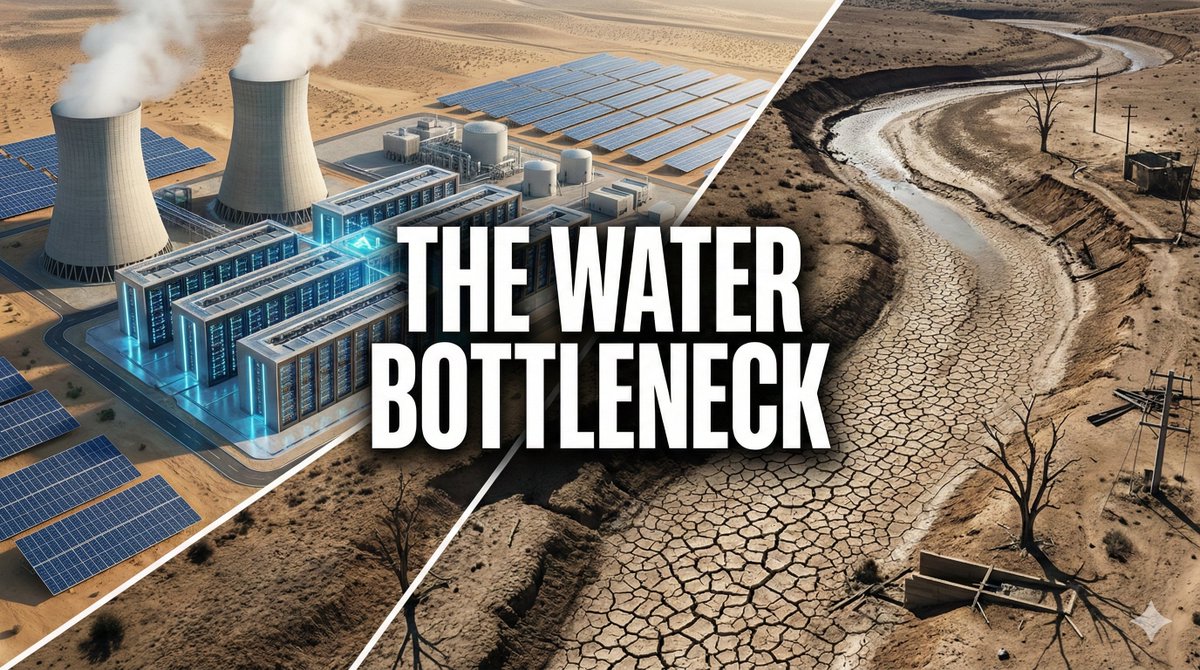
My boss is always telling me to think about demand and supply (cc'ing @santiagoroel). So I did that today, and thought about an interesting trade. I'm probably wrong, but I think it makes sense? THE WATER BOTTLENECK 🧊 TL;DR: The hyperscalers are building $200B+/year of AI infrastructure on top of a physically finite resource that's governed by laws written in 1902. The market cap ratio between water infrastructure and AI chips is 100:1. When voters realize data centers consume more water than their entire town, the political hammer falls. The trade: Long PHO/PHO/ PHO/AWK/$XYL. Catalyst: Colorado River negotiations conclude Dec-26 I. THE SETUP: Everyone's Betting on the Wrong Bottleneck. The consensus AI infrastructure trade has been painfully obvious: semiconductors (already ran 200%+), power grid buildout (already consensus), uranium (up 69% YTD). Everyone's solving for electricity.Nobody's solving for thermodynamics.Here's what the market is missing: you cannot train GPT-5 without water. Not metaphorically. Literally. The H100 clusters generating all this "intelligence" produce so much heat that evaporative cooling is the only economically viable solution at scale. And evaporative cooling has a dirty secret—the water evaporates. It's gone. Into the atmosphere. Forever. The market is pricing AI infrastructure as if we have infinite water. We don't. Western US water supply is capped by snowpack in the Rockies and aquifer recharge rates that haven't changed since the Pleistocene. Meanwhile, demand is growing parabolically. This is the trade. II. THE MATH MATHING: Direct + Indirect Consumption Most analysis stops at "data centers use X gallons for cooling." That's not the full picture. The actual formula is: Total Water Impact = Direct Cooling (On-site) + Indirect Generation (Off-site) The Direct (On-site): Modern AI facilities: 1.8-12 liters per kWh for evaporative cooling "Typical" hyperscale cluster: 15 million gallons/day (5.4B gallons/year) Water Equivalence: Same as 50,000 new homes The Indirect (Off-site) — This Is What Everyone Misses: The thermoelectric power plants (coal, gas, nuclear) generating the 24/7 baseload power for these facilities use ~10x more water than the cooling systems themselves for steam generation and condenser cooling. When you run the full stack: 2030 US AI Infrastructure Projection: Total water consumption: 1.1-1.7 TRILLION gallons annually Context: Equal to every household in California combined Let me repeat that. By 2030, AI infrastructure will consume the same amount of water as the entire state of California's residential use. Nvidia can print more chips. Utilities can build more generation capacity. But you cannot VC-fund more rainfall. The Colorado River flow is determined by Rocky Mountain snowpack, and last time I checked, there's no Series B for the hydrological cycle. III. THE PRINCIPAL/AGENT PROBLEM: Why This Gets Approved (For Now) The reason this trade exists is classic misaligned incentives. The people making decisions today won't be around to face the consequences tomorrow. The Agents (Signing the Deals): City Council/Mayor (Mesa, AZ): Incentive: Immediate tax revenue + "Tech Hub" branding for next election Horizon: 2-4 years until they're termed out Cost: They won't be in office in 10 years when the aquifer is depleted Tech Capex Managers: Incentive: Deploy 50,000 H100s by Q4, bonus tied to speed Calculation: Water is a rounding error ($2/1,000 gallons vs. $40k per GPU) Problem: Their KPI isn't "20-year water security" State Governors: Incentive: Steal jobs from California, get credit for "Business-Friendly Environment" Conflict: Must eventually answer to Agriculture Lobby, which owns the actual senior water rights The Principals (Bearing the Cost): Voters/Residents: See new Google facility that uses more water than their entire town Currently under Stage 3 restrictions (water lawn once/week) Will eventually ask: "Why am I limiting showers while ChatGPT gets unlimited water to hallucinate faster?" Agriculture: Holds senior water rights under Prior Appropriation Doctrine Currently being told to accept cuts to allocations Will not accept permanent junior position to Big Tech This incentive structure flips the moment voters connect the dots. And they will. IV. EVIDENCE IT'S ALREADY STARTING: Phase 2 is NOW We're not speculating about a future problem. The backlash is already happening: Blocked/Delayed Projects (Past 18 Months): $64 billion in data center projects blocked or delayed due to local opposition Tucson, AZ: City blocked Amazon "Project Blue" (would've used hundreds of millions of gallons annually), passed emergency ordinance requiring water conservation plans for any user >7.4M gallons/month Chandler, AZ: 422,000 sq ft data center blocked despite Kyrsten Sinema personally lobbying Virginia: Governor Youngkin vetoed water disclosure bill (industry lobbied hard) Santa Clara, CA: Planning Commission initially denied GI Partners' data center over water concerns Texas: Despite $1B/year in tax subsidies to data centers, passed grid regulation (SB 6) but ZERO water regulation Legislative Activity: Utah, Oregon, Georgia, Indiana, Illinois, New York: Bills introduced requiring water usage disclosure for data centers Industry response: Data Center Coalition strongly opposes any reporting requirements Arizona: "30 or more" data centers currently eyeing Pima County (per city officials) Grassroots Organizing: "No Desert Data Center" movement in Arizona "Save Bren Mar" in Virginia Over 500 residents packed Warrenton town hall to oppose Amazon facility Local opposition increasing despite massive tech lobbying budgets What does this tell us? We're in Phase 2 (Friction) of a three-phase cycle: Phase 1 (2020-2024): Honeymoon - data centers welcomed as "clean industry" Phase 2 (2024-2025): Friction - organized local opposition, first permit denials Phase 3 (2026+): Regulatory reckoning - mandatory rationing, impact fees, moratoriums V. THE CATALYST: December 2026 is The Cliff There's a specific date when the current regulatory framework expires: December 2026: Colorado River Drought Contingency Plan Expires The Colorado River supplies water to 40 million people across seven states. Current negotiations signal that non-human consumption (industrial/tech) will be first category to face mandatory curtailments during shortages. What This Means: If you're a data center pulling 5 million gallons/day from Colorado River basin water: No water = No cooling No cooling = Servers overheat Servers overheat = $5B facility becomes paperweight You cannot negotiate with thermodynamics. The Prior Appropriation Doctrine Trap: Western water law operates on "First in time, first in right." A cattle rancher from 1890 has senior rights over a $10B data center from 2025. Tech companies built their empires on "move fast and break things." But you can't move fast when you're subject to water law written in 1902. The legal framework treats water like property rights, not a utility. And tech companies don't own the rights. Farmers do. VI. THE TRADE: Water Infrastructure as AI Infrastructure If you believe AI continues to scale, you are implicitly long water infrastructure. There is no way around it. The Thesis: Water will transition from "utility expense" (priced at cost) to "strategic asset" (priced at scarcity value) as: Tech companies realize water is THE bottleneck Regulatory environment shifts from permissive to restrictive Companies are forced to acquire senior water rights and fund massive infrastructure The Vehicles: $AWK (American Water Works) $XYL (Xylem) $PHO (Invesco Water Resources ETF) DISCLAIMER: Not investment advice. Do your own due diligence. I'm positioned according to this thesis but could be completely wrong. Physics doesn't care about your P&L.
Álvaro tweet media
English
10
10
86
62.6K
John Drake
John Drake@TheRealNumber6·
@anni_sen What an utterly disgusting tweet, celebrating the foisting of a toxic data center on the public.
English
0
0
0
1
Anni
Anni@anni_sen·
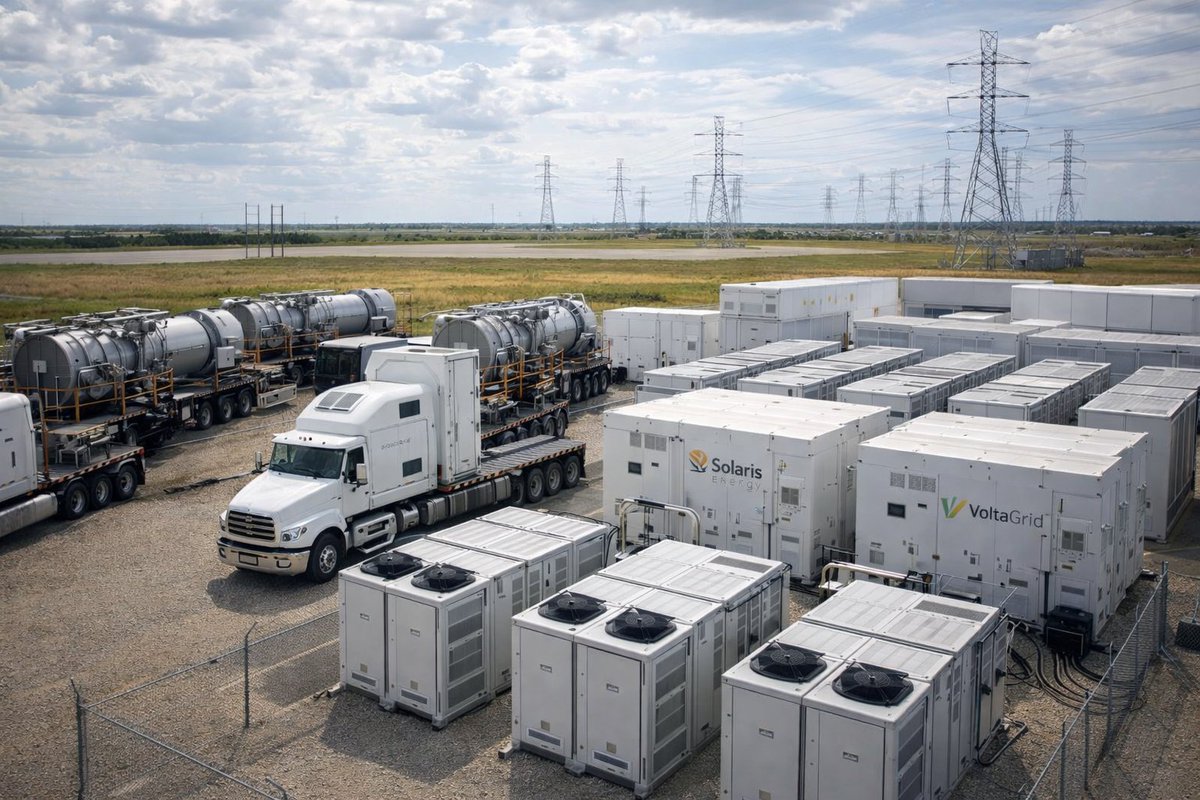
The Gigawatt Gamble: Inside the Off-Grid Insurgency Powering the AI Revolution senanni.substack.com/p/the-gigawatt… The Energy Singularity: When Silicon Met the Turbine In the unassuming industrial outskirts of Memphis, Tennessee, a transformation is taking place that marks a definitive schism in the history of the electric grid. It is here, at a repurposed manufacturing facility, that Elon Musk’s xAI has constructed “Colossus 2,” a supercomputing cluster of such magnitude that it has effectively broken the traditional contract between the utility and the consumer. Faced with a local power grid unable to move at the velocity of artificial intelligence development, xAI did not wait for the slow turning of bureaucratic gears. Instead, they erected a “power island”a localized, independent energy fiefdom fueled by a fleet of mobile natural gas turbines. This facility is not an anomaly; it is the vanguard of a new industrial paradigm. Across the United States, the world’s largest technology companies are aggressively decoupling from the public electric grid. They are engaging in “power gapfill” strategies that prioritize speed, autonomy, and “energy sovereignty” over the slow, regulated certainty of traditional utility service. The driving force is the “AI Arms Race,” a capital-intensive sprint to develop Artificial General Intelligence (AGI) where the primary bottleneck is no longer the availability of silicon chips, but the availability of electrons to wake them up. The scale of this demand shock is unprecedented. Data center power demand is projected to skyrocket, with estimates suggesting a doubling of capacity by 2030, reaching upwards of 35 gigawatts (GW). This surge is colliding headlong with a U.S. electric grid that is entangled in a crisis of congestion. Interconnection queues in major markets have swollen to over 2,000 GW of pending capacity, with wait times for new industrial connections averaging nearly four years.For a technology sector operating on the timeline of Moore’s Law, a four-year wait is tantamount to extinction. Consequently, a new ecosystem has emerged to bridge this gap. It involves the deployment of mobile aero-derivative turbines that can be parked in a parking lot and fired up in days; the construction of massive “behind-the-meter” gas plants by pipeline operators like Williams Companies; and the cannibalization of distressed cryptocurrency mining infrastructure by hyperscalers desperate for energized land. Read my earlier Bitcoin miner pivot to HPC articles on Substack.The Paralysis of the Public Grid: Anatomy of a Bottle Neck To understand why a company would choose to build its own power plant a complex, regulated, and capital-intensive endeavor one must first understand the depth of the failure in the public interconnection process. The “temporal mismatch” between digital innovation and physical infrastructure has become the defining economic constraint of the AI era. The Interconnection Quagmire The process of connecting a large load to the grid, known as interconnection, was designed for a slower era. Historically, load growth in the U.S. was predictable, tracking closely with GDP. However, the sudden explosion of data center demand has overwhelmed the Regional Transmission Organizations (RTOs) that manage the grid. In PJM Interconnection, the RTO serving the critical data center hub of Northern Virginia and extending into Ohio, the system is in a state of near-lockup. Despite transition queue reforms initiated in 2022 and 2023 to clear the backlog, more than 60 GW of projects remain under study for 2026. The situation is equally dire in the Midcontinent Independent System Operator (MISO) region, where over 170 GW of projects are stalled, and in the Electric Reliability Council of Texas (ERCOT), which has seen a 700% increase in large load interconnection requests in a single year. The root causes of these delays are multifaceted: Study Complexity: Every new connection request triggers a series of impact studies (feasibility, system impact, facilities) to ensure the new load won’t destabilize the grid. The sheer volume of requests has overwhelmed the engineering staff at RTOs. Supply Chain constraints: Even if a permit is granted, the physical hardware required to connect specifically high-voltage transformers and substations is in short supply. Lead times for large power transformers have stretched to two to four years. Speculative Ghost Projects: The queue is clogged with speculative projects that may never be built, forcing grid operators to study “phantom” loads that distort the planning models. The Cost of Delay For an AI hyperscaler, these delays are not merely operational nuisances; they are existential threats. The value of a frontier AI model is time-dependent. In a “winner-take-most” market, being the first to reach a certain capability threshold (e.g., GPT-5 level reasoning) captures the majority of the economic value. Economic analysis of “Cost of Delay” frameworks suggests that for a major product launch, the daily value of being in the market can run into the millions. If a company delays the deployment of a $10 billion training cluster by 12 months due to a lack of power, the depreciation of the GPUs alone which have a useful life of perhaps 3-4 years before obsolescence costs billions. Consequently, the “Cost of Speed” has become the dominant variable in the financial models of hyperscalers. If spending $100 million on an off-grid gas solution allows a facility to open two years early, the ROI is overwhelmingly positive. This calculus has birthed the “power gapfill” industry. Case Study: The Colossus of Memphis and the Speed of xAI The most vivid illustration of this new reality is found in Memphis, Tennessee. Here, xAI, the artificial intelligence venture led by Elon Musk, has executed a rapid deployment strategy that serves as a blueprint for the industry’s off-grid pivot. The Socrates Projects In the data center heartland of Ohio, Meta has partnered with The Williams Companies to develop the “Socrates” power projects. These are not temporary trailers; they are full-scale, permanent power plants built specifically to serve Meta’s data center campuses. The Socrates South Power Generation Project exemplifies the “Behind-the-Meter” (BTM) trend. Approved by the Ohio Power Siting Board, this facility is designed to generate between 200 MW and 400 MW of power. Crucially, the plant is physically disconnected from the wider grid for the purpose of serving the data center load, insulating Meta from regional capacity shortfalls and transmission congestion. VI. The Engineering of Density: Why Retrofitting is Harder Than It Looks While the financial logic of the “miner pivot” is sound, the engineering reality is brutal. A Bitcoin mine is not a data center in the traditional sense. It is often a “Tier 0” facility a warehouse with vents, blowing ambient air over rugged ASIC machines. AI clusters, by contrast, are delicate, high-density, high-heat beasts that require “Tier 3” or “Tier 4” environments. The Density Challenge The primary technical hurdle is power density. Legacy Enterprise Rack: 5 - 10 kW. Bitcoin Mining Rack: 20 - 40 kW (often air-cooled). AI Supercluster Rack: 100 - 132 kW (NVIDIA GB200 NVL72). Handling 132 kW in a single rack is physically impossible with standard air cooling; the air simply cannot move fast enough to remove the heat. This necessitates the installation of Liquid Cooling infrastructure. The Liquid Retrofit Retrofitting a mining shell for liquid cooling involves a total gutting of the facility. Plumbing: The installation of heavy-duty distinct cooling loops (CDUs - Coolant Distribution Units) to circulate dielectric fluid or water directly to the chips. Structural Integrity: Liquid is heavy. The floor loading requirements for a liquid-cooled AI cluster are significantly higher than for air-cooled miners. Many legacy raised-floor environments cannot support the weight. Redundancy: Bitcoin miners monetize “curtailment” shutting down when power prices spike. AI training runs cannot be interrupted without losing progress or corrupting the model. This requires the installation of N+1 or 2N redundancy in UPS systems and backup generators, infrastructure that mining sites rarely possess. Table 2: The CAPEX of Conversion Structural reinforcement, floor upgrades $200k - $400k Cooling Infrastructure Liquid loops, CDUs, heat exchangers $400k - $600k Electrical Upgrades Redundant UPS, Switchgear, Backup Gens $600k - $800k Total Conversion Cost Estimated Total ~$1.2M - $1.6M / MW Despite this high cost, it is still faster than a greenfield build because the grid connection the hardest part to obtain is already live. VII. The Economics of Autonomy: LCOE vs. The Cost of Delay Why are companies like Meta and xAI willing to pay the premium for these elaborate off-grid and retrofit solutions? The answer lies in the diverging economics of “Levelized Cost of Energy” (LCOE) versus the “Value of Time.” The Cost of Speed The driving economic force is the “Cost of Delay.” For a lab training a frontier model (e.g., GPT-5), the potential revenue from the model is astronomical, but it is also decaying. If a competitor releases a similar model first, the value of the second-mover’s product drops precipitously. Research indicates that the “daily value” of an AI product launch can be millions of dollars. If a 6-month delay in power energization prevents a model launch, the lost revenue (and valuation impact) far exceeds the capital cost of the power plant. Scenario: A $10 billion model with a 3-year lifespan. Delay: 6 months (16% of lifespan). Cost: potentially $1.6 billion in lost utility/revenue. In this context, paying $1.5 million per MW for a retrofit or buying gas turbines is a negligible insurance premium. Gas vs. Grid LCOE Furthermore, the assumption that off-grid power is significantly more expensive is being challenged. As utilities raise rates to pay for grid upgrades (transmission lines, renewables integration), the cost of grid power is rising. Grid LCOE (Industrial): $55 - $100+ per MWh (depending on demand charges and renewable firming costs).32 Off-Grid Gas LCOE: $83 - $86 per MWh (depending on gas prices).32 While off-grid gas is often more expensive than the cheapest wholesale grid power, it is becoming competitive with the “delivered” price of power in constrained markets. Moreover, when compared to the cost of “firmed” renewables (solar + battery storage), gas remains significantly cheaper. Data from CRU Group suggests that the cost of firming renewable energy to data center standards (99.999%) exceeds the cost of new-build gas power.33 The Regulatory Grey Zone: The EPA and the “Emergency” Loophole The rush to burn gas behind the meter has created a significant conflict with environmental regulations, specifically the EPA’s rules on Reciprocating Internal Combustion Engines (RICE) under the National Emission Standards for Hazardous Air Pollutants (NESHAP). The Emergency Definition Historically, backup generators at data centers are permitted as “emergency” units. This classification allows them to bypass strict emissions controls required for prime power plants, provided they operate only during outages and for limited testing (typically <100 hours/year). However, the industry is pushing to use these generators for “demand response” turning them on when grid prices are high to save money, or even using them to bridge capacity gaps. The 50-Hour Rule: The EPA has issued guidance allowing emergency engines to operate for up to 50 hours per year in non-emergency situations (like financial demand response) without losing their emergency exemption, provided specific conditions are met regarding local grid stability.35 The Conflict: Data centers want to run these engines for more than 50 hours, or use them as prime power (as xAI is doing with its turbines). Once an engine is classified as “non-emergency,” it must meet Tier 4 Final emission standards. This requires expensive after-treatment systems (SCR - Selective Catalytic Reduction) to scrub Nitrogen Oxides (NOx) and Carbon Monoxide (CO).37 The Virginia Variance The tension came to a head in Northern Virginia. The grid congestion became so severe that PJM warned it might not be able to serve the load during peak summer heat. In response, the Virginia Department of Environmental Quality (DEQ) proposed a variance that would allow data centers to run their backup generators during “Maximum Generation Emergency” alerts, even if doing so violated their air permits. This was a stunning admission: the grid was so fragile that the state was willing to suspend environmental protections to keep the servers running. It highlighted the fragility of the current infrastructure and the reliance on fossil-fuel backup as a shadow grid. The Environmental Justice Front: Noise, Water, and Community Pushback The pivot to off-grid gas and massive retrofits is not happening in a vacuum. It is happening in communities, and the pushback is intensifying. The Memphis Resistance In Memphis, the xAI project faced significant opposition from the local NAACP and community groups. The concerns were twofold: Air Quality: The deployment of dozens of gas turbines in a region already burdened with industrial pollution raised alarms about NOx emissions and their impact on respiratory health in majority-Black neighborhoods. Water Usage: Data centers are thirsty. They consume millions of gallons of water for cooling. In drought-prone regions, or areas with aging water infrastructure like Memphis, this creates a resource conflict between the digital economy and the local population. The “Grey” Cloud This dynamic threatens the “clean cloud” narrative that Big Tech has cultivated for a decade. While companies like Microsoft and Google have “Net Zero” goals, the physical reality of their AI expansion is increasingly carbon-intensive. The “gapfill” strategy relies on natural gas. Even if labeled “transitional,” the infrastructure (pipelines, turbines) has a lifespan of 20-30 years. This creates a risk of “stranded assets.” If strict carbon pricing is introduced, or if clean hydrogen becomes viable, these gas investments could become liabilities.However, in the short term, the industry has decided that the risk of missing the AI wave is greater than the risk of climate criticism. The Permanent Gas Solution: Williams, Meta, and the “Behind-the-Meter” Fortress While xAI’s mobile strategy represents the “insurgent” approach fast, temporary, and tactical Meta (the parent company of Facebook) is pursuing the “incumbent” approach: building permanent, fortress-like gas plants to ensure long-term stability.
Anni tweet media
English
2
1
9
5.5K
John Drake retweetledi
Ben Inskeep
Ben Inskeep@Ben_Inskeep·
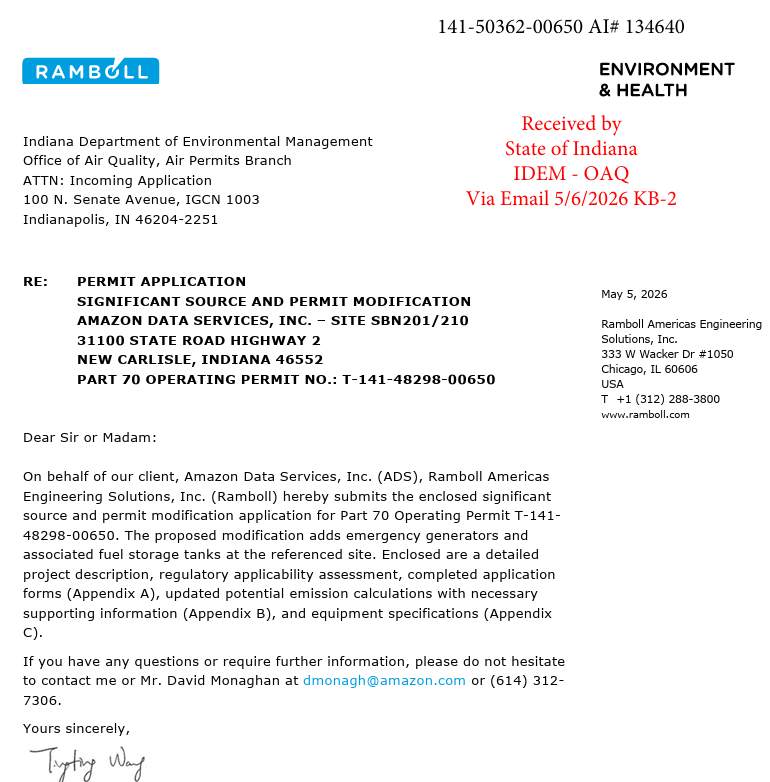
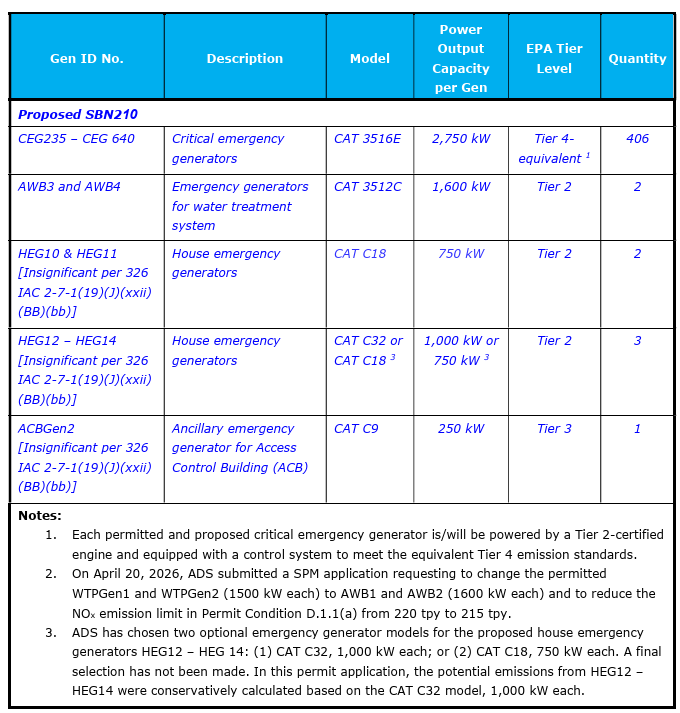
🚨SHOCKING🚨: Amazon proposes an extra 414 backup diesel generators at its New Carlisle, IN data center complex. This brings the total for Project Rainier to 909 backup diesel generators totaling >2,400 MW. It will store more than 6.1 million gallons of diesel fuel onsite.🤯
Ben Inskeep tweet mediaBen Inskeep tweet mediaBen Inskeep tweet media
Ben Inskeep@Ben_Inskeep

Amazon is asking permission to destroy 5 acres of wetlands and nearly 1 mile of streams as part of its resubmitted proposal to add 14 data center buildings at a third site at its sprawling New Carlisle, IN campus. Public comment is due June 12.

English
57
459
718
87K
John Drake retweetledi
ProPublica
ProPublica@propublica·
Former DHS leaders say the number of children who’ve been exposed to tear gas and pepper spray under Trump indicates something is seriously broken in the department. One called ProPublica’s findings a “bright red flag.” propublica.org/article/kids-t…
English
7
100
185
6K
John Drake retweetledi
Rep. Mike Levin
Rep. Mike Levin@RepMikeLevin·
Let me get this straight. Trump sued his own IRS for $10 billion. His own Justice Department is now considering settling that case. And one of the terms on the table is that the IRS drops all audits of Trump, his family, and his businesses PERMANENTLY. He’s using the full weight of the federal government to protect himself and his family from accountability and potentially pay himself BILLIONS of your tax dollars. nytimes.com/2026/05/12/bus…
English
714
4.6K
7.1K
252.5K
John Drake retweetledi
Trita Parsi
Trita Parsi@tparsi·
WOW! @Theintercept reviewed more than 12000 print articles and 5000 TV segments to check for biases on Israel-Palestine. I thought it would be bad. I had no idea it was THIS bad. No wonder Gaza killed what little credibility mianstream media had. In NYT, Israel's right to defend itself was invoked 99 times. Only once for Palestine. On CNN and MSNBC, it was invoked 755 times for Israel. But only 8 times for Palestine. Emotive words such as slaughter and massacre were used frequently when Israelis had been killed. They were NEVER used in print when Palestinians were killed. In Ukraine, 262 children were killed in the war, and it was mentioned 4223 times. In Palestine, more than 10,000 children were killed, but it was mentioned only 3632. The full article is in the subtweet. It's a MUST READ:
Trita Parsi tweet media
English
141
4.2K
7.3K
149K
John Drake retweetledi
Ihab Hassan
Ihab Hassan@IhabHassane·
A masked Israeli settler points his gun at Palestinians during an attack on the village of Jaljlya, where settlers stole a flock of sheep from residents. Terrorists in broad daylight.
Ihab Hassan tweet media
English
10
116
252
5.6K
John Drake retweetledi
AJ+
AJ+@ajplus·
Israeli military medics are training on dead Americans. And it’s all happening thanks to a little-known connection between two U.S. universities and the Navy. @Dena reports in collaboration with the student journalists who broke the story about the body donor program.
English
14
319
384
10.8K