Ale(Xander) Pyatetsky

3.2K posts

Ale(Xander) Pyatetsky

Ale(Xander) Pyatetsky

@TheXander

I help neurotic, cerebral founders feel less pain, more inner peace and more satisfaction in life. 2x Founder. 2 Exits. Overcame depression. FIRE at 39.

Physical: ✈️ Spiritual: BKNY Katılım Haziran 2008
357 Takip Edilen507 Takipçiler
Sabitlenmiş Tweet
Ale(Xander) Pyatetsky
Ale(Xander) Pyatetsky@TheXander·
Do you ever ask "wtf is all of this/what's going on?" "what am I supposed to do?", "how am I supposed to do it?" Over the next 30 days, I'll be writing 30 Atomic Essays. Follow my Social Blog on @typeshare_co: typeshare.co/alexpyatetsky
English
1
0
1
308
Ale(Xander) Pyatetsky
Ale(Xander) Pyatetsky@TheXander·
Navalmanack changed my life. Book of Elon out today. @EricJorgenson has A+ taste in A+ people and compiles their ideas in a AAA way. Buy.
Eric Jorgenson 📚 ☀️@EricJorgenson

🚨📕 THE BOOK OF ELON IS NOW LIVE!!! 🎉🚀 This is the book we WISHED @elonmusk would write… “All of Elon's most useful ideas, in his own words.” Learn directly from the world’s greatest entrepreneur, like you’re sitting across from him at dinner. It took FIVE YEARS to make this for you. Because it's built from hundreds and hundreds of Elon's public appearances. I went through 3,000,000+ words to collect the most useful and timeless ideas. The final book is ~50,000 words. Every word is USEFUL. (This is what I do. My first book, The Almanack of Naval Ravikant, is one of the top 100 most highlighted books of all time on Kindle.) Then, I spent $50,000+ on editing and design so it looks and feels beautiful. Then… > Foreword by @naval. > Visuals by @jackbutcher. > Blurb from @mrbeast. > Published by @scribemediaco. > And yes, approval on this idea from Elon himself, thanks to @samteller. I went Maximum Effort to make this an all-timer. We got 10/10 on reviews from early readers, then worked on it for ANOTHER YEAR. Why so much effort? My mission is to create One Million Musks. For a generation to lift our gaze and build, so our grandchildren live in a world beyond our wildest dreams. I’m an independent author. I don’t get an advance. I risk my own time and money to make these books. Then we give away millions of them. Digital versions are free. I believe this book can benefit every human, and if you can’t pay five bucks for it, I want to personally gift it to you. Because I know it is useful. Useful how? You may be seeking purpose, a mission worthy of your life’s effort. You may have a clear purpose and seek the tools for success. You will find both in this book. Get the benefits of Elon’s entire life of hard-won lessons in a five-hour, easy read. (I checked, it’s a 5th-grade reading level.) You’ll feel personally mentored by the greatest entrepreneur in history. Click below to buy it now on Amazon, Audible, or directly from me. Amazon: amzn.to/47avSuh Audible: lnkd.in/gi_7HrFP Me: lnkd.in/gS2xWUWH If you’re not sure it’s worth $4.99 yet, just start reading the free version. PLEASE take 6 seconds to Like, Bookmark, and Repost. Even better: send this to your friends, team, or Group Chats! I guarantee this book will improve their lives. Spread the word! Every little thing helps. Your support spreads good ideas around the world, helping people and making the future better for everyone. Thank you! Forward. Together.

English
0
0
0
11
Ale(Xander) Pyatetsky
Ale(Xander) Pyatetsky@TheXander·
A decade+ of selling on Amazon taught me this 1 Jewish wisdom - When you see a vendor on a platform, you Google their name and buy/book direct.
GIF
English
0
0
0
24
Ale(Xander) Pyatetsky
Ale(Xander) Pyatetsky@TheXander·
THE WORST BUSINESS MODEL EVER “Well, rich people buy weird shit.”
English
0
0
0
17
Ale(Xander) Pyatetsky
Ale(Xander) Pyatetsky@TheXander·
What's your favorite song by Fleetwood Mac called Landslide?
English
0
0
0
20
Tiago Forte
Tiago Forte@fortelabs·
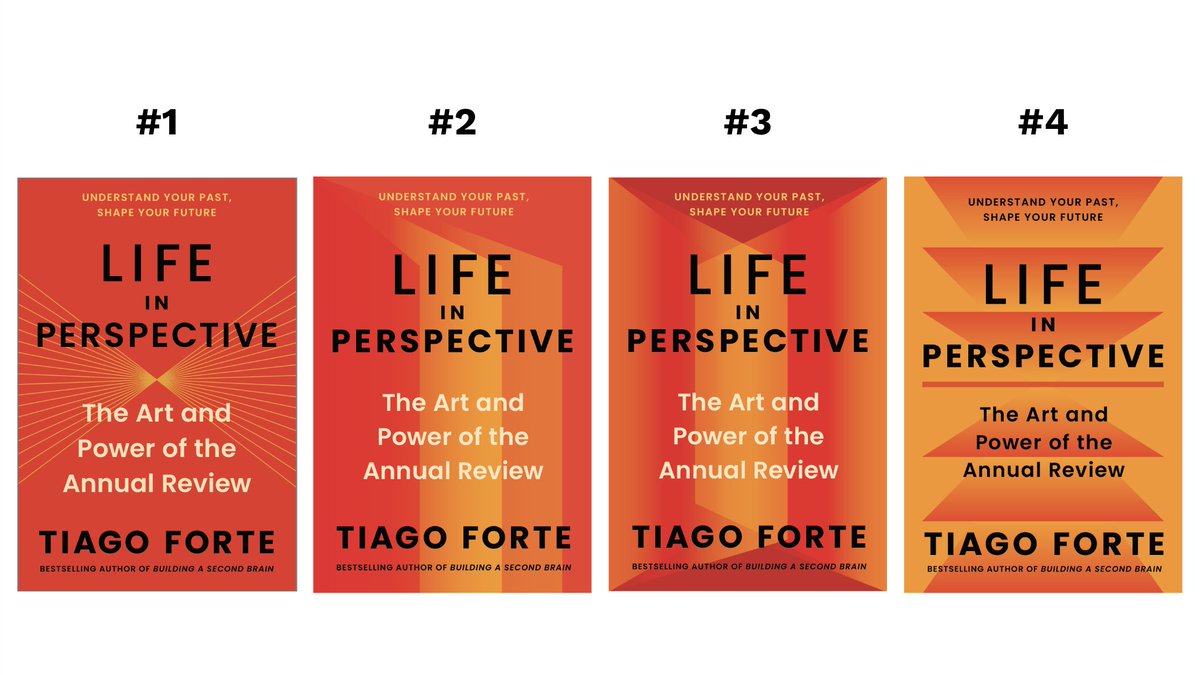
I'd really appreciate your feedback on the new round of cover designs for my next book 🙏 Which one do you like the most? Dislike the most? And most importantly, why?
Tiago Forte tweet media
English
137
1
74
14.9K
Ale(Xander) Pyatetsky
Ale(Xander) Pyatetsky@TheXander·
"I had an amazing life. I gave it everything I had. If you got any benefits from my life, I ask you pay it forward as best you can." - The last words of @ScottAdamsSays, RIP & thank you.
English
0
0
1
33
Ale(Xander) Pyatetsky
Ale(Xander) Pyatetsky@TheXander·
@kadavy "If you wish to make an apple pie from scratch, you must first invent the universe." - Carl Sagan
English
0
0
1
20
📚 David Kadavy, author
In my mind I’m perpetually 28. I’m still shocked when I’m around younger people and get the vibe they think I’m old. It feels like nothing has happened in the last 20 years, except when I stop and think about it and realize, Oh wow actually a lot.
English
2
0
4
171
Ale(Xander) Pyatetsky
Ale(Xander) Pyatetsky@TheXander·
Alex’s Recommended Reading - Nonfiction (1986 - 2025) Disclaimers & Explainers - Recency bias is real. - This is not a list of all books I think are good. For a more personalized list, drop me a message with what you're looking for and I'll do my best (Limit 1 per customer. Restrictions may apply). - Objects (and sentiments) may shift in transit. This is a work in progress. I hope it always will be. - Subscribe/follow for Part 2 - Fiction & Fun, coming next week. Key 📖 - Bibles - books that form the core of my worldview. To be reread annually, at least. *️⃣ - These are people/subjects I learned about across numerous sources. Sources suggested may not be optimal, just entry points. 📜 -  Legacy Loves. I'm not sure how they hold up, but they made a big impact on me years ago. I trust those experiences were legitimate. – Below The Line – Non-essential, but feels bad to leave out. Onwards NON-FICTION My Top 3 (aka Bibles) 1. *️⃣📖 The Works of Ram Dass - Richard Alpert got his PhD in psychology at Stanford and taught at Harvard.  His pioneering experiments with LSD uprooted Western concepts of consciousness. After getting kicked out of Harvard, he went to the East and found "the real thing" - experience of "the one" sans substances and not coming down. His teachings, combined with my meditation experience, are the source of my worldview, philosophy and spirituality. He was a beautiful human. My main source of Ram Dass's wisdom is the podcast "Be Here Now," where I've listened to 100s of hours of his original talks. He wrote many books, but I've only read his posthumous memoir, Becoming Ram Dass. It's a good place to start because, in the footsteps of Gandhi, his life was his message. 2. 📖 Atomic Habits - James Clear - I've read this book over 100 times. If you only ever read 1 self-improvement book, this should be it. Everything we control or influence comes down to our behavior. This is how to do everything better - a project that's never finished. 3. 📖 The Almanack of Naval Ravikant - Eric Jorgenson - 10 years into my entrepreneurial journey, this rebuilt my understanding of what entrepreneurship/high-agency living actually is and how to live accordingly. The 2nd half is a solid guide to Eastern spirituality ("Rational Buddhism") and how to live happy. His recommended reading list has long informed my info diet. Better Living/Thinking/Decision Making/Mental Models - 📖 Essentialism - Greg McKeown - This is my "nothing makes sense, the world feels too big, I'm lost at sea" book. - 📖 Effortless - Greg McKeown - This is my "I know what to do, but it's too hard, too much, and I can't breathe" book. - Deep Work - Cal Newport - This is a former bible. Both a manifesto & a guide for rebuilding attentional muscles and producing meaningful work, not just doing stuff, in the modern age. I revisit when I feel scattered. - Quit - Annie Duke - One of my most recommended and most thanked-for recommendations of the past few years. Our society glorifies grit and demonizes quit. This is a mistake - quitting well is a 100x skill and produces Michael Jordans, Warren Buffets, Jeff Bezos-es. Worse, not quitting ruins and wastes lives. We must quit the trivial many to grit through the essential few. If you've learned to grit through something you hate/makes you miserable, prioritize this. A sanity saver through my exit journey. - Same as Ever - Morgan Housel - Bezos said he's not interested in "what's next," he's interested in applying it to what will never change. Morgan zooms out on human history and identifies what our species predictably repeats across centuries and eras. If you're ever unsure what to do with yourself/what to make of the world, revisit what never changes. A+ mental models, memorable illustrations, excellently told. - The Expectation Effect - David Robson - I evangelized placebo before. This showed me I still didn't appreciate it enough.  Placebo is one of the most important features of being human - understand, respect and use it gratuitously. - *️⃣ Allen Carr - Easyway Series - Cited in Atomic Habits, many credit Allen Carr's Easy Way to Quit Smoking as the book that finally got them to quit (no, I never smoked). Unlike most methods that help you summon willpower to avoid vices, Easyway aims to eliminate the desire altogether so there's nothing to avoid. I know of nothing quite like it.  There's an Easyway book for nearly any vice. I've read 6 of them. Quality varies. Carr had a lot of pseudoscience beliefs and his tone can be cringey, but the method remains remarkable. It should be learned and applied to any stubborn bad habits.  Does it work? I haven't touched sugar for 1.5 years and have no desire to do so - something I would've told you was genetically impossible 2 years ago. Great Minds/Elders - *️⃣ Charlie Munger - Charlie was Warren Buffett's #2, but Warren credits him as the architect of Berkshire Hathaway's success. Outside of business, he is one of the true wise men of the past century and the godfather of modern capitalist philosophers like Naval Ravikant, Paul Graham, Jeff Bezos, Tobi Lutke, etc. A sort of modern Socrates, he left us no books, but his countless speeches have been collected and synthesized by numerous disciples and biographers. Poor Charlie's Almanack (thankfully recently reprinted) is probably the Munger book, but I like to learn from him any way I can (books, podcasts, transcripts, etc.). I recommend Charlie to anyone interested in thinking well and doing good. He did both. - *️⃣ Paul Graham - Founder of Y-Combinator, one of the most transformational forces in technology, PG has been publishing essays for 30+ years. He's influenced what and how I think/write. If there was a Paulmanack, it might sit in my top 3 books. A true carpenter of tech, his website is stuck in 1999 and has no way to subscribe, so I visit it periodically to catch up on his essays. He has a book from 2004 that I haven't read. David Senra's Founders podcast episodes are a great intro to PG. - *️⃣ Jeff Bezos - Perhaps the single dumbest thing I did operating an ecommerce company for ~15 years is not studying Jeff Bezos for the first 10 of them. Amazon is a generational company because Bezos is a generational mind. One of the best high-leverage decision makers of our times. And a happy one, too. Bezos has no books, but he shared his thinking with the world through his shareholder letters when he was CEO of Amazon, plus there are a few good interviews floating around. I recommend Invent and Wander, a compilation of his shareholder letters plus a brief biography by Walter Isaacson. Likewise, check out his episodes on the Founders podcast and his interview with Lex Fridman. - A Mind at Play - Jimmy Sonni - Claude Shannon is one of the most criminally under-appreciated minds of the 20th century. The magnitude of his accomplishments has been compared to Einstein's. I think he never achieved mainstream fame because he loved his life, his work and his people - he didn't need notoriety to feel complete. This beautifully written biography tells the story of the father of modern computing. A true inspiration. Communication - Story Worthy - Matthew Dicks - A semi-bible. The most influential book on communication in this era of my life. It transformed how I read & watch movies. It improved my ability to "get to the point" by 80% (still C+). - On Writing - Steven King - I'm not a horror guy, so I never read King. This is his only non-fiction book - and the writing is so - fucking - good.  It fills me with shame every time I pathetically use an adverb. Mostly memoir with a bit of how-to, I recommend it to anyone, not just writers. Relationships - Nonviolent Communication - Marshall Rosenberg - A Misnomer. It should be called "Nonviolent Thinking." It teaches you to experience and understand your feelings accurately, without blaming others, and communicate accordingly. If you don't read it, ask ChatGPT to coach you in NVC next time you have a conflict brewing. - How to Win Friends & Influence People - Dale Carnegie - First read >20 years ago, I thought it'd be washed-up now. Reread last year, it's as relevant as ever. Timeless advice on thriving as a tribal, social species. - 5 Love Languages - Gary Chapman - There is a saying, "figure out what people need and give it to them." This book explains exactly how to do that. We assume everyone else wants to love and be loved the way we do. This is incorrect. I immediately understood why I didn't get along with some and felt underappreciated/misunderstood by others. This book should be taught in 3rd grade, to students and parents. - Models - Mark Manson - Before Subtle Art, Mark Manson was a dating coach. I've read several books in this genre and this is the only one I consider timeless, sustainable and mentally healthy. Typical Mark Manson, he doesn't romanticize or sugarcoat, but offers a clear model of effective modern masculinity. Respectful without being trite or toothless. Every 18-year-old boy should get this for graduation. --> *️⃣ (Special Mention) The Packet - Before The Subtle Art of Not Giving a F*ck became a best-seller, Mark was an outstanding personal development blogger at MarkManson[dot]com. He filled in numerous blind spots I'd acquired in the first ~25 years of my life. In particular, a core set of articles formed my understanding of healthy relationships (including with myself). I called them The Packet. For years, when friends struggled with boundaries, unhealthy attachments, self-defeating expectations, etc., I'd send them The Packet. Some of The Packet made it into Subtle Art, but if you want a copy of the original, drop me a line and I'll dig it up. - 📜 Mars and Venus Starting Over - John Gray - This is my breakup book (it doubles as a death book, but I handle death well). From the guy who wrote Men Are from Mars, Women Are from Venus (also an insightful book), it guides you through navigating your emotions after loss, processing them so you don't get stuck, and moving on when you’re ready. All breakups suck. This breakup book does not. Frequent recommendation. Bidness (Pronounced with Mike Tyson lisp) - The Hard Thing About Hard Things - Ben Horowitz - Immense wisdom. Well written. Had a big impact on me at the time. My reference book for firing and other double-face-palm, no-easy-answer moments. - 📜 Cashvertising - Drew Eric Whitman - My most memorable copywriting book, it consolidates wisdom from many great copywriters. ---> *️⃣ Copywriting - I learned copywriting, the art of selling and persuasion through text, and its original industry, direct response marketing, from various sources. It's a fundamental skill that has served me and many entrepreneurs/marketers well, but I don't have an efficient list of sources. - Built to Sell / The Art of Selling Your Business - John Warrillow - You should read Built to Sell early in your entrepreneurial career. It teaches you to build good companies rather than jobs for yourself. Even if you don't intend to sell, you want to create a company worth buying. Once you're actually ready to sell and need a detailed M&A playbook, you should read The Art of Selling Your Business. - 📜 SPIN Selling - Sales is probably my core skill set. It was my first job. I have read many books on the subject. This was the most robust and impactful. When you're ready to graduate past "be persistent and likable," you have to actually solve clients' problems. SPIN is a question-based sales framework that helps prospects better understand their own problem, creates trust by demonstrating 10/10 comprehension of their situation and delivers solutions in a tailored way that makes "yes" a no-brainer. Besides selling stuff, this is the selling you do when hiring, fundraising, doing M&A, consulting, or solving any meaningful problem (e.g., selling ideas). Health - Good Energy - Casey & Calley Means / Brain Energy - Chris Palmer - The mitochondrial hypothesis of health changed my life. Brain Energy, the psychological application, helped me see the through-line from childhood chubbiness, low energy and gloominess straight through adult depression and anxiety - experiences that previously seemed unrelated. It introduces the first root-cause understanding of mental health that renders the DSM a relic of the past. Good Energy, despite the questionable dip of its authors into politics after publication, picks up where Brain Energy leaves off. It shows how almost all chronic disease is downstream of metabolic dysfunction. A truly integrated view of health that understands the body as a unified whole, not a bunch of separate systems coinciding in the same place. Any doctor/medical professional I work with going forward needs to speak this language or they're not for me. Inspiration - Can't Hurt Me - David Goggins - Upon completion, I involuntarily restarted the book and began gifting it to others. Goggins has dedicated his life to answering the question "What are the real limits of human potential?" He's proven that they are beyond what most of us will ever see (or want to). He shrinks the word "impossible." I wouldn't want to be him, but I'm grateful that he exists and that I may learn from his example. ---> (Honorable Mention) Never Finished is the sequel, years after his best-selling success. It's kind of more of the same, which is to say, my eyebrows remained pinned to my hairline, because he is insane. Personal Finance - I Will Teach You to be Rich - Ramit Sethi - The worst-written, most-actionable book on personal finance. The downside of never working in corporate is nobody from HR ever took my 22-year-old hand and said, "Hey, sperm, which of these retirement accounts do you want?" I sold a company at 26 and was broke at 29. This book taught me financial intelligence and gave me a personal finance system that allowed me to achieve financial independence 10 years later. - *️⃣ Adam Khoo - Adam is the main voice I listen to regarding finance and markets. I've primarily learned from him via his YouTube channel and private community. He is a disciple of Buffett and Munger, which means he's quite conservative, with more retail-viable strategies since he doesn't manage billions for others. He's Singaporean, so he has a global perspective without political bias or distortion. He's a rational optimist and pays little attention to news and short-term noise. And, yes, I'm happy with my results following him. --------------------------------- BELOW THE LINE - NON-ESSENTIAL, BUT RECOMMENDED - Reframe Your Brain - Scott Adams - This may become a bible. Scott Adams' How to Fail at Almost Everything and Still Win Big made a big impact on me years ago. A decade later, Reframe Your Brain is a compilation of Scott's biggest life lessons, packaged as reframes (e.g., Frame: "Sugar is an addictive food," Reframe: "Sugar is a drug with calories"). This is very, very smart, because unlike regular life lessons, which have nothing to stick to, reframes cue your brain to recall their wisdom when you have a less wise thought. Most importantly, you learn how to reframe your own life lessons. E.g., "IG Reels are a reasonable bedtime entertainment" vs "Reels was built to extract maximum viewing time from me by people who don't give a shit about my wellbeing so that my eyes can be sold to advertisers." It's quite helpful. A similar project to Alan Carr's, but much less dogmatic. - Just for Fun - Linus Torvalds & David Diamond - The biography of Linus Torvalds. Linus created one of the most important pieces of software, and therefore inventions, of all time - Linux. He could've made a shitload more money, but he had principles. He is not a martyr, he just lives on his own terms. Besides his story, I enjoyed his novel philosophies. I read this book upon naming my work LifeOS because I wanted to know what it was like to give birth to an operating system. As a bonus, I learned what a life’s work looks like. - 📜 Herbie Hancock: Possibilities - I read Herbie's biography back to back with Miles Davis's. Herbie's reads like "how to live a beautiful life." Miles's was how not to. - Art & Fear - David Bayles & Ted Orland - A classic on building a creative life. Similar message to "The War of Art," e.g., show up, do the work, and let inspiration meet you when it feels like it, but I prefer this with more case studies and less woo. - The Big Change - Frederick Lewis Allen - Morgan Housel declared it one of the few books that truly hold up. It contrasts 2 portraits of America in 1900 and 1950. From romance, fashion, industry, the rise of the suburbs and political malaise, 1950 looks near-unrecognizable to 50 years prior. Thorough and fascinating, it reframed my understanding of our place in human history. 1950 may look familiar to our eyes, while 1900 may have more in common with 1500. - 📜 Getting Real - Jason Fried & DHH - 37Signals (now Basecamp) was an icon of modern software, UX-forward product design, remote work, content marketing, and independent makers. Fellow Chicagoans, they made a huge impact on me early in my career. Getting Real was their bible for building opinionated software people loved and shipping without getting trapped in corporate BS. It's been a while, but a quick skim looks like it's still an excellent read at the dawn of the indie creator/vibecoding age. - Shambhala: The Sacred Path of the Warrior - Chögyam Trungpa Rimpoche - Chögyam Trungpa arguably brought Tibetan Buddhism to the West. He established centers for his lineage, Shambhala, all over the world. I've been attending their retreats for years. This is the central text of Shambhala. I'm not sure if it's as impactful to those without IRL experience, so it's here, below the line. That said, this is a lovely introduction to Tibetan Buddhism and the source of one of my core life principles, "Where there is harmony, there is wealth." - The Way of the Superior Man - David Deida - Any time I hear sweeping generalizations like "men are like X, women are like Y," my eyes glaze over. That said, I think this book captures some timeless truths about masculine and feminine energy and virtues. Not overly horny (I have female friends who are fans) nor esoteric, this is an accessible spiritual book about one of the fundamental polarities in the universe and how to navigate it. - Determined - Robert Sapolsky - [Warning: 'P'hilosophy ahead] I took P401 - Topics in Free Will when I was 18.  At that point, I knew actual free will was unlikely, but compatibilism (ChatGPT it) allowed me to proceed unchanged. Sapolsky takes a more scientific than philosophical approach. He proves that any concept of truly free will is untenable. This is one of the biggest sources of cognitive dissonance in my life, because I find his conclusion irrefutable and my subjective experience of free will inescapable. I don't know what to do with this besides accept both the truth and my discomfort with it. If you have a more "productive" solution, I'm all ears. - Tao Te Ching - Lao Tzu - The only reason this is below the line is that I still haven't finished it. Every time I pick up the TTC, I hear a passage that I re-read over and over, sending me off into contemplation. A truly beautiful book, its crisp, essential wisdoms are worth rereading over and over. - 📜 Zero to One - Peter Thiel - I don't remember this book well, but I remember it had a formative impact on my understanding of entrepreneurship. If you are building, especially in technology, Thiel is on the shortlist of minds worth listening to. - 📜 Pmarca Blog Archive - Marc Andreesen - The writings of Marc Andreesen, creator of Netscape and a top global VC, reshaped how future generations would think about building companies. To my knowledge, he first popularized the heresy "good market > talent + hard work" and the now de facto standard of startup success, "product-market fit." If you are building, I believe this is foundational knowledge (just don't assume that all of his content about fundraising means you have to). His original blog has been offline for years, but multiple archives exist online. - Antifragile - Nassim Nicholas Taleb - Taleb is one of the heavy hitters of modern thought, and this book lit my brain for years. Antifragility, the idea that some things improve in response to degradation, shifted my understanding of the world. Taleb mostly documented antifragility in the natural world, but I became obsessed with how we could design or create it. My #1 question was how to live an antifragile life - the ultimate win for humans. I finally answered that question in How to Live an Antifragile Life in 2023. How successful am I at living that way? That's another question. - Nature Wants Us to be Fat - Richard J Johnson, MD - After gaining 30 pounds in 6 weeks, this book convinced me that sugar is a drug that has no place in my life. We can trace almost all modern, chronic, non-communicable diseases (e.g., obesity, diabetes, heart disease, cancer, etc.) back to processed sugar becoming widely available ~1900. If you want to talk more about how to kick sugar, drop me a line. - Psychology of Money - Morgan Housel - Not a how-to guide like I Will Teach You to be Rich, this widely beloved book teaches how to make good life choices and live better through the lens of personal finance and investing. An important personal finance primer, I see countless smart people falling into the predictable traps it describes. Grade-A writing. This is the book that put Morgan Housel on the map. - Trust Me, I'm Lying: Confessions of a Media Manipulator - Ryan Holiday - Ryan's exposé of peak Gawker-era media reads like a thriller and reshaped the way I think about media and mainstream narratives. Although Gawker is no more, the incestuous, copy-cat nature of media from social up through prestige legacy outlets, how stories are manufactured by crafty PR people, how virality blurs the line between what's true and what's popular, are as relevant as ever. I read it in 2014. Some aspects may be dated now, but probably still required reading for anyone in marketing/media or wants to understand how the world really works. - 📜 4-Hour Work Week - Tim Ferriss - I read this book when I was 21 and proceeded to live 80% of it over the following decade. I learned to create digital businesses, leverage overseas talent, travel the world and generally question accepted assumptions - usually for the better, occasionally for the worse. Tim taught a generation to think from first principles and create lives of our choosing. He taught that reality was negotiable. This book created the first generation of digital nomads a decade before COVID gave everyone else the same permission. I'm certain that many of the tools don't hold up, but the mental models and frameworks do. 🔥 BOOKS THAT SHOULD BE BURNED - Sapiens - Yuval Noah Harari - Well written, its ideas should burn in 1,000 dumpster fires. This book is recommended by so many smart people that I read it twice to make sure I wasn't hallucinating how bad it was. Harari begins with the assertion "humans are bad and we ruin everything," then offers a 464-page masterclass in confirmation bias across human history. He speaks in an authoritative, academic tone, not distinguishing between science (little) and assertion (so much), citing few sources. It reads like a proto-woke screed of "everyone and everything sucks," meticulously intellectualized in hopes that you won't notice. My favorite moment is when he suggests that we, humans, may have been responsible for the death of the dinosaurs - who were on earth a mere 63 million years before us. Read this so you can understand the platinum standard of intellectual dishonesty, then do the opposite with your life. Follow me for Part 2, Alex's Recommended Reading - Fiction/Fun, coming soon! *** This is my 18th of 30 pieces I'm publishing as part of Ship 30 For 30. You can follow my Ship 30 For 30 journey on all socials at @TheXander, or my name. For long-form, subscribe at Alex.Pyatetsky[dot]com
Ale(Xander) Pyatetsky tweet media
English
1
0
0
60
Ale(Xander) Pyatetsky
Ale(Xander) Pyatetsky@TheXander·
@nickgraynews Chui is a place of truly immaculate vibes. It is the first place that made me feel like going out at night after years of being a shut in.
English
0
0
1
22
Nick Gray
Nick Gray@nickgraynews·
I will tell you why this is the perfect dinner party. And then I will tell you how you can host something like this yourself. But first I have to set the scene. Because I'm thinking about how good the conversation feels right now. I'm sitting in a garden restaurant in Mexico City. We're at a long table with three people on each side. We are passing plates of food from a place called Chuí that a bunch of people said we had to try. We're debating the ethics of circumcision and nobody agrees. The two therapists at the table are pushing back on something one of the guys said. Someone else jumps in with a counterpoint. We listen, we think, we throw out ideas and go back and forth. I had arrived to the restaurant tired from a long day exploring the city. I think we walked 15,000 steps and the altitude was taking its toll on me. But now I’m leaning in, forgetting the fatigue, because we've moved from circumcision to discussing a gay hockey TV show called Heated Rivalry. Next we chat about where each couple wants to raise their families. Lauren and I share about our lives in Austin and why we love it there. We talk about what it would take for me to move back to New York City. But we keep coming back to why Austin feels like home. The couple from Spain have two young kids. The couple from California are pregnant. And we just got married. Between us six, it is a nice spectrum of life stages. By the way: six people is the ideal number for a dinner party. I learned this from Priya Parker’s book, The Art of Gathering. She says that any more than six people at a single dinner table and the conversation will natural split into smaller groups. But with six you can easily keep a single conversation going. Let me tell you the thing that made this dinner different. The day before, the host sent a simple message. He said: Bring some discussion topics. It was an invitation to come prepared with stuff you want to talk about. My wife and I worked on our topics together. We thought about what we actually wanted to talk about with this group. When we sat down at the table, after a few minutes of small talk, the host asked what everyone brought. It wasn’t a big reveal. Just a casual “okay, what topics do we have for tonight?” Everyone went around and threw out some ideas. And then we had a menu of conversations to choose from. I loved this. I loved it because here’s what usually happens at dinners: You talk about work. You talk about travel. You give some little life updates, or you ask questions that are very surface level or frankly sort of boring. You complain about the same things. And then you go home and the next day you can’t remember what you talked about. But something shifts when everyone brings topics. You skip the small talk. You go deeper faster. And when one conversation runs dry, you don’t awkwardly search for the next thing. You just pick another topic from the list. We never ran out of things to say. The walk home was 30 minutes through Mexico City’s Roma Norte neighborhood. Lauren and I talked about how different this felt from most dinners we attend. How much we loved the back-and-forth, the debates, and the feeling of being challenged and curious at the same time. These dinners aren’t complicated. But they do take a little intention. There are a few things you can do if you want to try this yourself. First, the guest list. We had three couples with some natural overlap. The guys had professional things in common. Two of the women were therapists. Everyone was at a somewhat similar life stage but with different perspectives. You don’t need perfect chemistry in the guest list, but some common ground helps. Second, the conversation. This is the most important part. Ask your guests to bring topics. But this part is essential: If your guests are not expecting to bring topics, or if you’ve never done this before with table topics, then you have to tell everyone the why. Tell them why you're doing it in order to get their buy-in. You can say something like this: "Bring a few discussion topics for the table. I want us to skip the small talk and actually talk about interesting things. They don't have to be fancy, or political, or intellectual. Whatever you're curious or passionate about." Give your guests at least a day to think about it. You’ll be surprised what people come up with. Third, the food. You should probably order family style and pass plates around. It sounds small or obvious but it makes the meal feel collaborative instead of everyone in their own little world with their own main course. I like eating at a restaurant, by the way, instead of doing it at home. It's less stress for the host. But if you want to host at home, don't be afraid to order delivery. It works great and I've done this many times. Anyhow. That’s it. Dinners like this aren’t rocket science. Maybe you already host like this. But with real conversation flowing and plates passing between friends, I remember why I love a good dinner. It definitely isn’t for the food. I love a good dinner party for the feeling of being fully there with people. To be curious about their lives, their decisions, and what lights them up. And to be challenged by their ideas and connected in a way that small talk never allows. These are the dinner parties that make me happy.
English
7
4
69
6.9K
Ale(Xander) Pyatetsky
Ale(Xander) Pyatetsky@TheXander·
>Me: "Let's write something easy..." >Also me: Writes 4,000 words and gets unexpectedly vulnerable. 🎅Coming tomorrow: My Recommended Reading List (Non-Fiction) Anyone else cook anything nice for Xmas?
Ale(Xander) Pyatetsky tweet media
English
0
0
0
23
Ale(Xander) Pyatetsky
Ale(Xander) Pyatetsky@TheXander·
“The highest wisdom can often sound vague and idiotic, while detailed advice can often be contentious and inapplicable. There are no perfect solutions here.” -@OrionTaraban
English
0
0
0
24
Ale(Xander) Pyatetsky
Ale(Xander) Pyatetsky@TheXander·
@kadavy Yes *and* most conclusions like “X improves/decreases by Y%” are actually conclusions of a group of particularly strong responders and non responders, not a homogenous response. So most conclusions of “X does Y” should be more like “X has Z chance of doing Y for me.”
English
1
0
1
15
📚 David Kadavy, author
Evidence that few people understand probabilities is if you say something is unhealthy, commonly someone will present one case to the contrary of someone they personally know.
English
3
0
0
190