@AskEmmy0 Brother you dont help for recognition. If you feel a way about it you stop helping and move on. You only can effect what you do in this world not how others react to it
English
Thembinkosi Chunga
3.9K posts

@Thembichunga
I am a ( not young) entrepreneur in Africa. trying to make a dollar out of fifteen cents


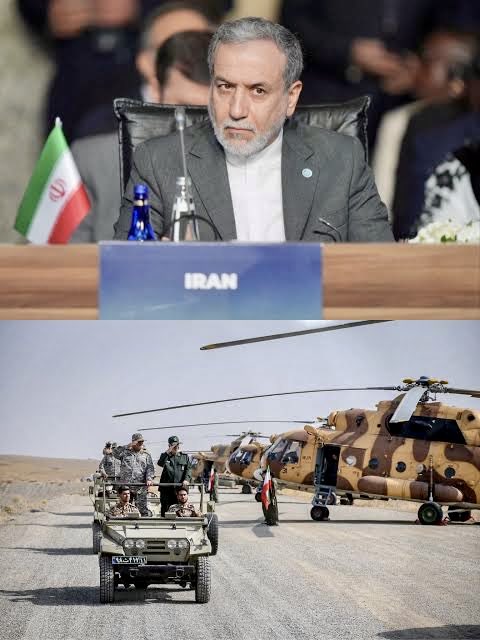
BREAKING: Iran’s Parliament Speaker just killed the ceasefire. Mohammad Bagher Ghalibaf, March 10: “We are certainly not seeking a ceasefire. We believe the aggressor must be struck in the mouth. We will break this cycle of war, negotiation, ceasefire, war.” This arrives the same day the Wall Street Journal reports Trump’s advisers privately urging an exit. Oil crashed from $119.50 to below $91. The market exhaled. Iran’s second most powerful elected official just told the world the exhale was premature. Here is what every actor is actually doing while the ceasefire dies. The IRGC launched Wave 33 this morning. One-ton warheads on Kheibar Shekan missiles targeting Tel Aviv and the Fifth Fleet. Codenamed “Labbayk ya Khamenei” for a Supreme Leader who has not spoken and may not be conscious. General Mousavi announced no warhead below one ton from this point forward. Thirty-one autonomous provincial commands continue firing without central orders. The doctrine does not need a ceasefire because it was built to function without one. Seven P&I clubs, Gard, Skuld, NorthStandard, Steamship Mutual, American Club, Swedish Club, London P&I, covering 90% of global tonnage, cancelled war-risk cover on 5 March under Solvency II. Zero have reinstated. Hormuz crossings collapsed from 138 daily vessels to approximately 2. Premiums surged from 0.05% to 1-3% of hull value. The DFC’s $20 billion backstop has produced zero confirmed large-scale VLCC transits. Force majeures have cascaded from QatarEnergy to Saudi Aramco to Kuwait Petroleum to Bapco to Aluminium Bahrain to Yeochun NCC Korea to Formosa Taiwan to PCS Singapore to SCC Rayong Thailand. The naphtha-to-polyethylene chain feeding Asian manufacturing is broken. Ghalibaf’s rejection ensures it stays broken. China is not intervening. It is collecting. MizarVision publishes AI-labelled satellite imagery of every US asset in theatre. Shadow fleet vessels deliver drone components at night. The PLA is learning American reaction times, electronic warfare effectiveness, and interceptor depletion economics in the most comprehensive live-fire intelligence collection it has ever observed. Beijing does not need the war to end. It needs the war to teach. Russia is harvesting. Urals at yearly highs. Power of Siberia delivering 38.8 billion cubic metres to China. Putin evaluating a preemptive halt of European energy to redirect at Hormuz-inflated prices. The war finances Ukraine without Moscow firing a shot. The Houthis have resumed selective Red Sea strikes. If Bab al-Mandab activates alongside Hormuz, both chokepoints bracketing the Arabian Peninsula close simultaneously. Ghalibaf’s rejection extends the timeline in which that can happen. Twelve days. One Supreme Leader dead. One invisible. Thirty-three waves. Seven clubs withdrawn. 138 daily transits reduced to 2. Five navies deployed. Zero commercial transits restored. Zero insurance reinstated. Zero ceasefires. Zero negotiations. The war has no political exit because Ghalibaf closed it. No commercial exit because the actuaries closed it five days earlier. No military exit because the doctrine was designed to outlast every strategy conceived by the adversaries it was built to fight. The market priced a quick war. The doctrine priced a long one. Ghalibaf just told you which. Full analysis in the link. open.substack.com/pub/shanakaans…

Terry William Kelly (73), who invested millions of US dollars into Chewore Lodge, has lost the property after Zimbabwe’s Supreme Court cancelled a 25-year lease agreement. Chewore Lodge is a well-known safari destination with visitors from around the world. Kelly operated the lodge for 15 years through his company, Suscaden Investments, under two leases and a settlement agreement issued by ZimParks, which accepted rent and treated the lease as valid for many years. The courts later ruled that the lease was invalid because it did not have clear approval from the responsible minister. Although the lease document carried the former Minister Oppah Muchinguri-Kashiri’s signature and a former ZimParks official confirmed it was received through official channels, Minister Muchinguri denied signing it. Because no one could prove she personally signed the document, the courts ruled against Kelly. This decision ignored the fact that the government allowed Kelly to operate for years and benefited from his investment and rental payments. Kelly now faces eviction without compensation due to a failure within government processes that was beyond his control. The state’s acceptance of the lease for years was dismissed, leaving Kelly to bear the full loss. As a result of the Supreme Court ruling, Kelly is expected to lose all the millions of dollars he invested in Chewore Lodge, a high-end tourism project in the Zambezi Valley.

GDP theory vs reality At Zimbabwe’s GDP per capita around $3,000, believing the economy is US$52bn, having 45% of the population in extreme poverty and over 70% in poverty is theoretically possible BUT improbable. And certainly never been seen in reality. Even Equatorial Guinea does not defy economic laws. Such a level of extreme poverty and poverty in general mean more of people live below the broader poverty line, leaving the median citizen poor. For the Zimbabwean unicorn case to hold, GDP would have to be unusually concentrated in one or two capital-intensive, enclave-style industries. Those sectors would likely contribute roughly 30–50% of GDP while employing few people and enjoying strong growth. Theoretical possible but not in reality. Even most resource-rich outliers do not sustain extreme-poverty rates this high at that income level. We are allowed to question and have robust discussion of GDP numbers and onus is on GoZ to fully engage in this discourse. It affects how investment decisions for the year are made.



$64,000 for curtains?! A @CITEZW investigation reveals Parliament splurged nearly US$400,000 of public funds on Senate President Mabel Chinomona’s private home. Bypassed tender laws Handpicked suppliers Public funds or a private piggy bank? cite.org.zw/parliament-spe…



Trading on Parole - ZIMRA’s 30-Day Leash on the Economy ZIMRA’s proposal to introduce a monthly renewable Tax Clearance Certificate (ITF 263) from January 2026 is being sold as modern, dynamic compliance. In reality, it is regulatory overreach that confuses bureaucratic control with sound fiscal policy and risks choking the very economy it seeks to tax. From an economic perspective, the flaw is clear. Development economics warns of the compliance cost hypothesis: when the cost of obeying the law rises too high, rational actors exit the formal system. Shifting clearance from an annual or quarterly cycle to a monthly one is not a marginal tweak; it hyper-inflates compliance costs. Large corporates absorb this through compliance teams. Micro and small enterprises, which dominate Zimbabwe’s economy, cannot. Time spent navigating TaRMS, reconciling filings, and chasing monthly clearances is time stolen from production and trade – a deadweight loss to GDP. The policy is also designed for fragility. It assumes near-perfect digital systems and administrative responsiveness. One outage, one delayed reconciliation, or one unresolved objection at month-end can instantly render a viable business “non-compliant.” This single point of failure can freeze segments of formal commerce overnight. The incentive effects are worse. Zimbabwe is trying to formalise its shadow economy, yet this policy pushes firms back into cash-only obscurity. Facing the risk of losing income access twelve times a year, rational operators will view formality as a liability. The outcome is a shrinking, not expanding, tax base. Liquidity is the final blow. The 30% withholding tax for non-clearance is not a nudge; it is capital extraction. In a liquidity-starved economy, freezing 30% of a gross invoice over a filing or system issue is fatal. For most SMEs, that money is working capital, not profit. This turns tax administration into a solvency crisis and slows the velocity of money. On the shop floor, the disconnect is stark. SMEs have no compliance departments. The “tax manager” is the owner. Expecting flawless monthly compliance amid power cuts, network failures, funerals, illness, and delayed payments is fantasy. Miss a deadline by days, and you effectively lose the right to trade properly next month. The psychological toll is severe. Where businesses once planned and breathed, monthly clearance creates permanent anxiety – a rolling probation where survival depends on never slipping. Long-term planning becomes impossible. Worse still, a monthly choke point for survival creates fertile ground for rent-seeking. This is structural, not moral. Desperation breeds shortcuts, turning compliance into a corruption risk rather than an efficiency tool. The verdict is unavoidable. This policy uses a sledgehammer to crack a nut and risks smashing the table the economy rests on. It assumes levels of digital stability, liquidity, and capacity that do not exist. If the goal is sustainable revenue and genuine compliance, the answer lies in reducing friction for SMEs, not tightening a thirty-day noose around their necks.

Public Notice 69 of 2025 : ISSUANCE OF TAX CLEARANCE CERTIFICATE FOR YEAR 2026 TAX PERIOD


The UAE sent 57 Arms supply planes to their proxy genocidal RSF militia during October, 57!!!



The Harare I grew up in would never have allowed this nonsense! Nxaaa! I am very disappointed, if not disgusted, at the state of the newly planted palm trees which were planted along several streets in Harare. I took my time before speaking out because I wanted to understand why the city fathers would turn a blind eye to the sorry state of these trees, but honestly it just doesn’t make sense. It’s not like the trees wilted and died overnight, this happened slowly and right in front of the councillors’ eyes, it’s a shame. Had these same inept councillors been in charge back in the day when jacaranda trees were planted, we wouldn’t be enjoying their beauty today. Are there no nurseries with reasonably tall jacaranda or flamboyant trees, say a metre tall? If not, why not? Harare City Council in the 80s had its own nurseries, what happened to them? And while I’m at it, let me say this, hopefully it stirs up a lively debate. Forget about the palm trees, let’s keep the theme, let’s replace them with jacaranda and flamboyant trees. If we plant them interchangeably, a jacaranda tree then a flamboyant tree then a jacaranda tree, maaan future generations will enjoy that contrast in colours, vibrant and awesome. I’m not even sure if they go into full bloom at the same time, but even if they don’t, we’ll enjoy their beauty during different seasons. For me personally, palm trees are just bland, haana dhiri aya, even shade haana ,so I say down with palm trees from now on. Anyway, once again, I’m very disappointed with the way the Sunshine City I grew up in has turned out, very disappointed. #Mxmmm