Thet Swe Win retweetledi

Don’t Be Fooled: Myanmar’s Military Junta’s Sham “Elections” Are a Weapon, Not a Path to Peace
Special contribution by Thet Swe Win
When war criminals stage elections, it is not democracy. It is theatre meant to disguise their crimes and extend their grip on power.
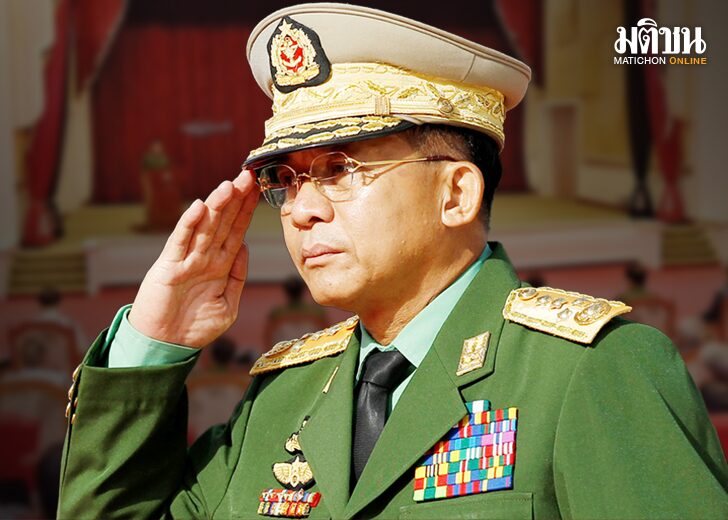
On 28 December 2025, Myanmar’s military junta—rebranded as the State Security and Peace Commission (SSPC) after dissolving the so-called State Administration Council—plans to hold national “elections.” The generals want the world to believe this as a step toward stability. In truth, it is nothing more than a mask for dictatorship.
Why are these elections illegitimate?
No mandate. The junta has no authority to govern. It seized power in February 2021, overthrowing an elected government, gunning down protesters, and jailing thousands. Aung San Suu Kyi and countless political prisoners remain behind bars. Any vote under these conditions is illegitimate by definition and a farce.
Law as a weapon. The junta’s new “election protection” law threatens citizens with prison and even the death penalty for disrupting” the process. Dozens of opposition groups have been banned as “terrorist” organizations, and the National League for Democracy — which won a landslide in 2020 — was forcibly dissolved. This is not political competition; it is coercion.
A country under siege. Entire regions live under martial-law. Airstrikes have targeted and destroyed hospitals, schools, and religious sites. More than 3.5 million people are displaced and over 15.5 million people starving according to the UN. Families live in fear, while humanitarian aid is blocked or weaponized. Elections in the middle of mass atrocities are not credible; they are crimes against democracy itself.
Dialogue as a trap. Some embassies and NGOs are now pressuring resistance forces to enter dialogue with the junta. However, dialogue without rights and accountability is not reconciliation — it is surrender. A regime that bombs its own citizens cannot be a partner for peace.
A Global Pattern of Betrayal
Myanmar’s crisis is part of a broader global democratic recession. Authoritarian regimes are consolidating power, while many governments that once championed human rights have grown silent.
Across the world, rhetoric has shifted. Leaders speak less of liberty and more of “stability” and “business opportunities.” For Myanmar’s people, this shift is not just disappointing — it is devastating. Every time a powerful government engages with the junta in pursuit of trade or resources, it signals that profits matter more than lives.
The moral responsibility of powerful nations is clear. The United States, the European Union, and the United Kingdom frequently invoke a “rules-based order.” Regional powers like Japan, India, and Australia speak of defending democracy. These principles mean nothing if the same governments turn a blind eye to Myanmar’s suffering and actually engage with the junta.
Silence is not neutrality; it is complicity. Pretending that the junta’s vote is a step toward peace is not diplomacy; it is collaboration in dismantling human rights. If powerful nations betray Myanmar today, they weaken the moral foundation of democracy everywhere tomorrow.
After the 2010 elections that brought the Thein Sein government into power governments and the UN grumbled about unfair elections but soon lost their principles and engaged in business with them. The world must remember: to abandon morality for business in Myanmar is to set a precedent that authoritarianism can be excused, legitimized, and rewarded.
The People’s Revolution Endures
Five years after the coup, the Spring Revolution is still alive. It has not been easy. Thousands have been killed, millions displaced, and communities reduced to rubble. Yet the revolution continues — not because of weapons, but because of will.
The struggle is slow, but it is principled. More: facebook.com/share/p/1JiT5s…
#Myanmar #Thailand
English