Timothy O'Leary

3.8K posts

Timothy O'Leary banner
Timothy O'Leary

Timothy O'Leary

@Timothy0Leary

Neuroscientist

Katılım Temmuz 2011
1.3K Takip Edilen4K Takipçiler
Timothy O'Leary
Timothy O'Leary@Timothy0Leary·
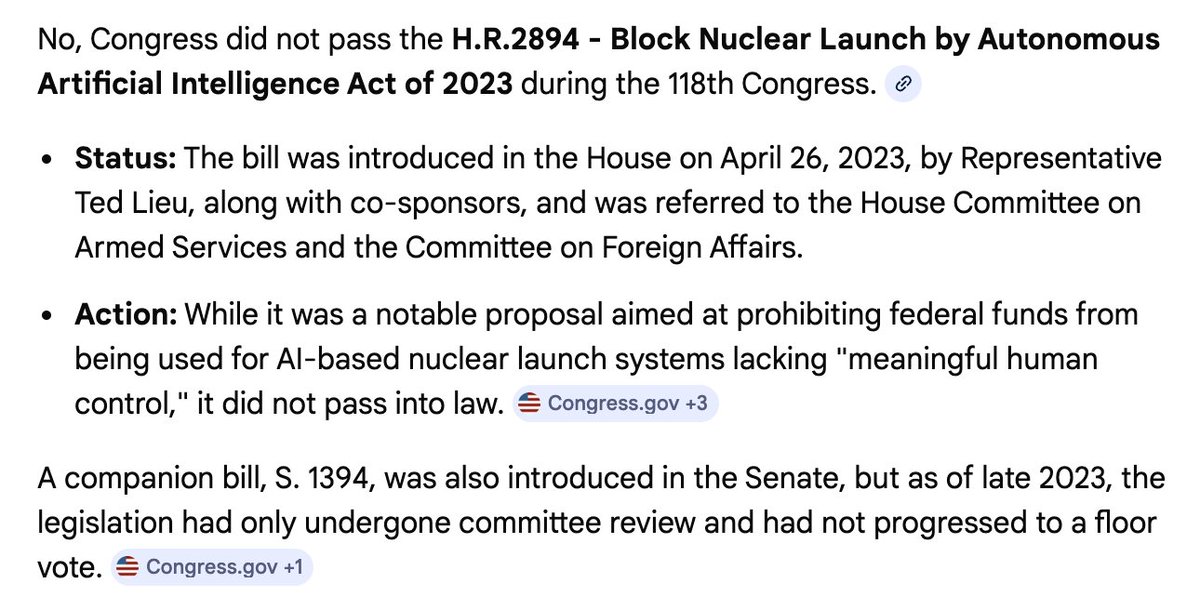
US law DOES NOT prevent AI from autonomously launching nuclear weapons, and AI knows this.
Timothy O'Leary tweet media
English
0
0
0
121
Timothy O'Leary
Timothy O'Leary@Timothy0Leary·
Prince Andrew aka Mountbatten Windsor should have his royal title reinstated: we need to remember what these institutions enable.
English
0
0
1
177
Timothy O'Leary retweetledi
Andrew Akbashev
Andrew Akbashev@Andrew_Akbashev·
A really dangerous situation. Too many submissions. Too many generated papers. Little responsibility. 1. In 2026, more than 24,000 submissions were made to the International Conference on Machine Learning (ICML). It’s TWO times more than in 2025. To fight it, the organizers now require researchers to pay $100 for every subsequent paper. 2. LLM adoption has increased researcher productivity by 90% (there’s a recent paper in Science). 3. The number of papers is becoming far too high. Submissions to arXiv have risen by 50% since 2022. 4. There are simply not enough reviewers. Plus, many scientists no longer want to invest precious time in it for free. 5. We can’t easily identify AI-made papers from the genuine ones. __ Important words from Paul Ginsparg, a co-founder of arXiv: “AI slop frequently can’t be discriminated just by looking at abstract, or even by just skimming full text. This makes it an “existential threat” to the system.” Basically, we’re getting closer to the tipping point. 📍 Many professors blame the AI. But the problem is likely elsewhere: 1. Without a sufficient number of papers, many PIs can’t get funded. They have to prove their credibility to reviewers. Their proposals have to rely on prior publications. In many countries, there are some informal (or even formal) expectations for how many papers a group with a certain size has to publish to survive (funding-wise). 2. Our students / postdocs need papers if they want to be hired in faculty roles. Yes, some departments hire people with few publications. But the majority still want to ensure their faculty can get funded. If funding is partly a function of papers, this is used in decision-making. 3. The number of papers is important if you want to get high-level awards. Many of them are not given because you published one paper (even if it’s great). They are given because you made a meaningful CONTRIBUTION to the field. How do you make it? Publish more papers. 4. Tenure promotions in many places take the number of your papers into account (often indirectly). Your tenure may get delayed if you don’t publish enough. Not everywhere, but for many mid- to low-ranked universities this story is more or less the same. + There are many more to mention. 📍My opinion: Much of this is rooted in how funding is distributed. There is a strong correlation between the requirements at a university and the funding acquisition criteria. If funding were based ONLY on the quality of published papers, universities would hire people for the quality of their science. If funding agencies strongly discouraged publishing too many papers, universities wouldn’t expect numbers from faculty during promotions. And some supervisors wouldn’t pressure students and postdocs to publish unfinished studies and low-quality data. Yes, we need good detectors of fake papers. But we also need the right policies and better funding allocation criteria.
Andrew Akbashev tweet media
English
94
379
1.4K
192.9K
Timothy O'Leary retweetledi
Andrew Côté
Andrew Côté@Andercot·
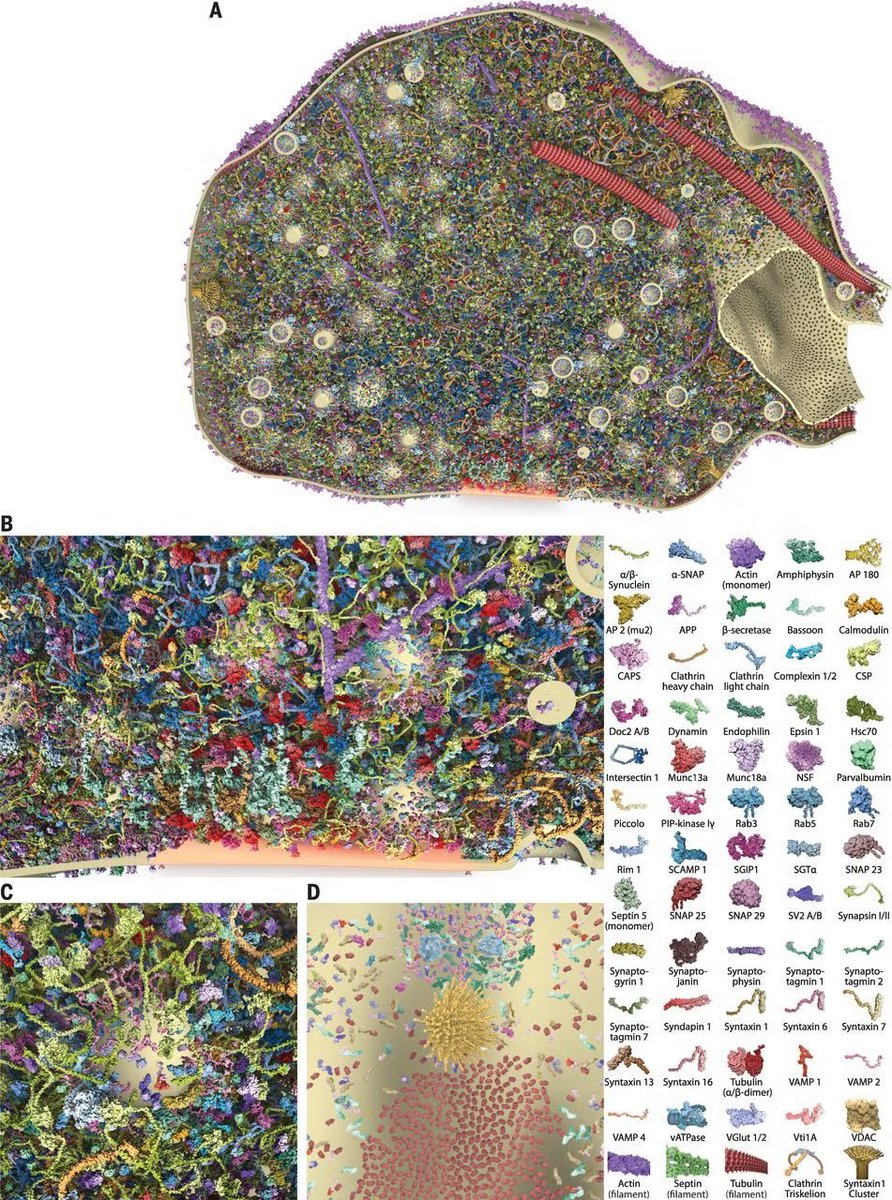
A realistic picture of how closely packed molecules are inside a synapse of a nerve cell.
Andrew Côté tweet media
English
76
437
3.1K
301.2K
Timothy O'Leary retweetledi
Anthony Bonato
Anthony Bonato@Anthony_Bonato·
A directed graph of every Chess opening
Anthony Bonato tweet media
English
49
290
2.7K
265.9K
Timothy O'Leary
Timothy O'Leary@Timothy0Leary·
A great piece on causality (TLDR: read Hume). One thing natural scientists overlook as evidence of causation is the constructive approach (aka engineering): if you can build a thing that does a thing (and does it again, and again), that's a pretty tight case for causality!
Kording Lab 🦖@KordingLab

Last time I spoke about why correlation is not causation. Here I talk about why causation can often pragmatically be obtained. @kording/why-causal-knowledge-is-pragmatically-possible-bridging-philosophical-skepticism-and-scientific-490dbd63b8e8" target="_blank" rel="nofollow noopener">medium.com/@kording/why-c…

English
1
1
18
3.1K
Timothy O'Leary
Timothy O'Leary@Timothy0Leary·
@KordingLab because everything must be in vivo or is isn't ... a thing ... or something like that
English
0
0
1
244
Kording Lab 🦖
Kording Lab 🦖@KordingLab·
Synaptoneurosomes seem incredibly awesome. Lots of "micro-neurons". It should be easy to perturb them. Understand them one by one. 2p stimulate them. Voltage image them. Why does this not appear to be happening?
English
3
0
10
2.5K
Timothy O'Leary
Timothy O'Leary@Timothy0Leary·
Fun, but I'm stuck: on one hand: humans are "special" in perceiving time, and it started with being able to anticipate the light/dark cycle on the other hand: you are describing circadian rhythms, which are explicit, entrainable biochemical clocks, found across kingdoms of life
Paul Middlebrooks@pgmid

David @dav_robbe is done looking for clocks in brains. Henri Bergson had it right, he says. We measure time by our actions and the flow of the world around us, and David has a treadmill and rodents to prove it! (Well, not prove prove, but, you know...) braininspired.co/podcast/204/


English
0
0
5
932
Timothy O'Leary retweetledi
Michael Eisen
Michael Eisen@mbeisen·
The @UofCalifornia is advising scientists applying for residency not to publish in @eLife because it doesn’t have an impact factor, despite zero evidence this matters, and proving once again that the biggest problems in science and academia are entirely of our own making.
English
11
43
309
51.2K
MIT CSAIL
MIT CSAIL@MIT_CSAIL·
What's the one generative Al tool you can't live without?
English
24
5
49
15.9K
Rory Byrne
Rory Byrne@ryrobyrne·
@Timothy0Leary They're still the best and only organic ex. of "a community of people working on different things but sharing resources" due to loose coupling between labs, depts, and institutes. WeWorks don't have this, they just share a coffee machine.
English
2
0
3
129
Timothy O'Leary
Timothy O'Leary@Timothy0Leary·
Are Universities becoming obsolete? Are they already obsolete? If so, what will be the consequences?
English
4
0
4
1.1K
Timothy O'Leary
Timothy O'Leary@Timothy0Leary·
This is why banging on about the power of simplistic models is problematic. It kills curiosity. We don't need to bang on about ANNs, for they are now unavoidable parts of everyday life. By all means we need to teach ANNs, but our job as educators and scientists is to go deeper!
English
2
0
35
2.6K
Timothy O'Leary
Timothy O'Leary@Timothy0Leary·
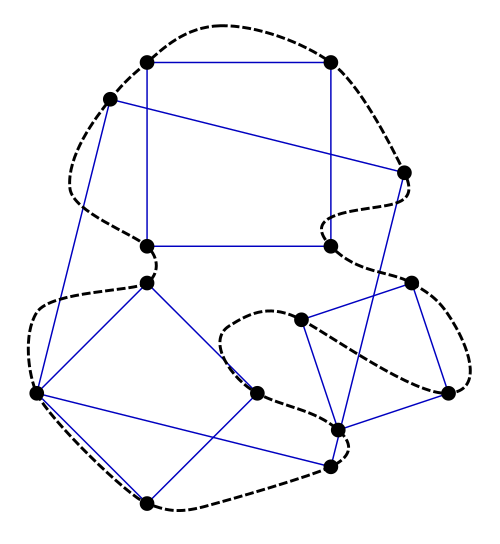
Apropos of never ending discussions about whether ANNs are "good" models of the nervous system, here is a slide I present to masters students showing a network that is found in motor control circuits *across phyla* (that's pretty ubiquitous!) I ask them to guess what it does...
Timothy O'Leary tweet media
English
9
62
307
40.1K
Greenpilloz
Greenpilloz@greenpilloz·
@Timothy0Leary Could you share some of this lecture material, or link to some articles? I am quite interested in the complexity of information processing at the cell scale
English
1
0
1
37