Tina Aaron/StepMamaSpartan

400 posts

Tina Aaron/StepMamaSpartan

Tina Aaron/StepMamaSpartan

@TinaAaron13

Married to Papa Spartan, Step Mom to Spartan The Dog. School administrator/lifelong educator. Preds fan. Yankees fan. Sports girl

Nashville TN Katılım Nisan 2018
93 Takip Edilen55 Takipçiler
Tina Aaron/StepMamaSpartan retweetledi
Melissa & Lori Love Literacy Podcast
Daniel Willingham and Barbara Davidson explain why background knowledge is essential for comprehension. We’re rereleasing this episode along with a listening guide you can use while you tune in. Podcast Episode: ow.ly/93su50YtXFv Listening Guide: ow.ly/s4q650YtXFG
Melissa & Lori Love Literacy Podcast tweet media
English
0
16
43
1.9K
Tina Aaron/StepMamaSpartan retweetledi
David Didau
David Didau@DavidDidau·
Retrieval practice goes wrong when it becomes a ritual for teachers to perform. The aim isn’t five questions at the start of every lesson. It’s making knowledge available when it’s needed: recalled successfully, used purposefully, corrected visibly, and strengthened for elsewhere and later. open.substack.com/pub/daviddidau…
David Didau tweet media
English
3
62
180
17.6K
Tina Aaron/StepMamaSpartan retweetledi
Melissa & Lori Love Literacy Podcast
Use our Vocabulary Listening Guide for professional learning, team meetings, or solo reflection. Listen, reflect, and act! 🤸 🎙️✍️ ➡️ ow.ly/LKK450YhJSB
Melissa & Lori Love Literacy Podcast tweet media
English
1
2
4
532
Tina Aaron/StepMamaSpartan retweetledi
Danny Steele
Danny Steele@SteeleThoughts·
One year as a principal, I asked our staff to write their hopes for students on the wall outside our main office. Teachers, paraprofessionals, custodians, our maintenance technician—everyone contributed. What struck me most wasn’t just the number of responses. It was the nature of them. There were no hopes for higher test scores or fewer tardies. No mentions of completed homework or straight A’s. Instead, these were the kinds of hopes that call people into this profession in the first place—the quiet, powerful convictions that remind us why we do this work. Here are just a few: That students believe in themselves and have the courage to follow their hearts. That every child feels valued, supported, and safe. That students recognize their potential—and use their unique gifts to help others. That they learn to embrace challenges and understand that failure is not a destination, but a powerful place to grow. That they treat one another with respect, empathy, and kindness. That they develop confidence, curiosity, and a love for learning. That they leave our school not just smarter, but stronger—better readers, writers, thinkers, and human beings. That they know, without a doubt, how deeply they are cared for. These were our hopes. They were not easily measured. They didn't fit neatly into a data report or a spreadsheet. There was no rubric that could fully capture what a teacher means in the life of a child. And yet, this is the work. While some may try to define school success by numbers alone, the true impact of education lives in these moments—in confidence built, in belonging felt, in courage discovered. I was incredibly proud of our staff, but I also know this: these hopes are not unique to our school. They live in classrooms everywhere. In schools across the country, educators are showing up each day, pouring into students, and working to build brighter futures. There are many important professions in this world. But I can’t think of a more meaningful one than this. Rock on, Danny
Danny Steele tweet media
English
6
18
105
6.8K
Tina Aaron/StepMamaSpartan retweetledi
Dr. Laura Williams ✨
Dr. Laura Williams ✨@mrswilliams21c·
Check out this PLC End-of-Year Flight Plan ✈️ It’s a simple tool to help teams: 💡 Focus on the right obstacle 🛠️ Align on strategies to try 🎯 Prioritize what matters most 🚀 Turn conversations into action with short sprints Remember the obstacle is the way 🙌 Nothing fancy. Just a way to create clarity and actually move the work forward. If your PLCs are feeling scattered or stuck in discussion mode, this might help. Fillable pdf: drive.google.com/file/d/1S8Wp4t… Learn more adaptiveplc.org #AdaptivePLCs #PLCs #TeacherTeams #AgileInEducation
Dr. Laura Williams ✨ tweet mediaDr. Laura Williams ✨ tweet media
English
0
7
39
3.9K
Tina Aaron/StepMamaSpartan retweetledi
Danny Steele
Danny Steele@SteeleThoughts·
Great principals do a thousand things in a given week. They solve problems, support teachers, calm worried parents, guide students, analyze data, and keep a school moving forward. It’s complex work. But when you step back and look closely, the most effective principals tend to get a few foundational things consistently right. Here are ten of the habits that set great principals apart: 1. They recognize the value of every adult in the building. From teachers to custodians to office staff, great principals know that schools succeed because of people. They notice the work others do, and they make a point to say thank you often. 2. They support their teachers—especially when it matters most. Whether the challenge is a difficult student, a frustrated parent, or a tense situation with a colleague, great principals stand beside their teachers. They trust them. They believe in them. And their staff knows they have someone in their corner. 3. They lead from the halls, not just the office. Great principals understand that leadership happens where learning happens. You’ll find them in classrooms, hallways, the lunchroom, the bus line, and at carpool—engaging with students and connecting with staff. 4. They involve others in decisions. Great principals know they don’t have all the answers—and they don’t try to. They seek input, invite perspectives, and empower others to help shape the direction of the school. 5. They stay focused on learning. Student achievement is always on their radar. They spend time in classrooms, encourage strategic instruction, and ensure assessments are meaningful. Most importantly, they help teachers use data to better meet the needs of their students. 6. They cultivate collaboration. Great principals know that teaching can’t be a solo sport. They intentionally create structures and expectations that help teachers learn from one another and grow together. 7. They refuse to settle for the status quo. The best principals hold high expectations—for themselves and for everyone in the building. They articulate a compelling vision and challenge their school community to keep getting better. 8. They protect staff morale. Great principals know that culture matters. They work to create an environment where teachers feel respected, supported, and proud to work. 9. They bring positive energy every day. Schools are emotional places, and leadership energy is contagious. Great principals understand that positivity isn’t optional—it’s essential. 10. They always keep students at the center. Every decision, every conversation, every initiative ultimately comes back to one question: What’s best for kids? Great principals build relationships with students and make sure their well-being and success drive the work of the school. None of these practices require perfection. But when principals commit to these habits day after day, they create schools where teachers feel supported, students feel valued, and learning thrives. Cheers, Danny
Danny Steele tweet media
English
13
88
294
22.5K
Tina Aaron/StepMamaSpartan retweetledi
Karen Vaites
Karen Vaites@karenvaites·
A teacher in NY developed a vocabulary supplement that's taking sharp teacher circles by storm. It's my honor to publish this piece by @smorrisey, spotlighting his work. I don't say that lightly. Sean has been hustling to develop expertly-crafted materials to teach vocabulary, and he is showing up every curriculum developer in America. I'm honored to bring the Word Mapping Project to a wider audience. You'll also hear reflections from the @CurriculumIP team. Come for Sean's instructionally-efficient design, stay for his outcomes, which are now being replicated by teachers like @mommagordon2 @SamanthaBrauns2.
Karen Vaites tweet media
English
13
40
134
24.1K
Tina Aaron/StepMamaSpartan retweetledi
Steve Magness
Steve Magness@stevemagness·
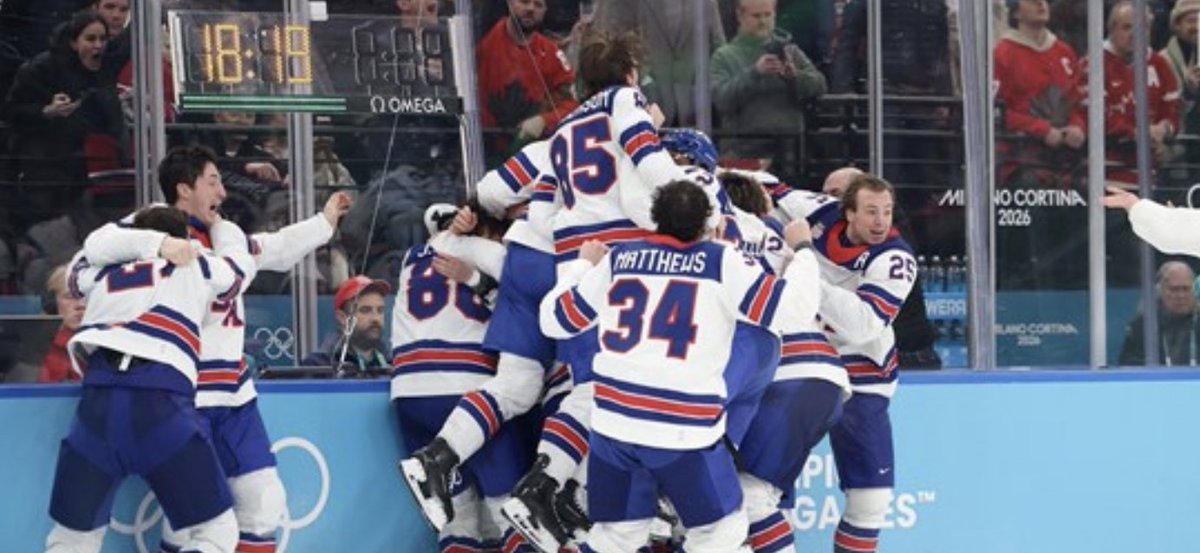
Team USA just won its first Olympic hockey gold in 46 years. On February 22. The exact anniversary of the Miracle on Ice. Forget the storybook narrative for a second. What happened today is a masterclass in what performance science teaches us about pressure, identity, and legacy. Consider the pressure this team was under. They walked into today carrying 46 years of near misses. The US hadn't won Olympic gold since 1980. They lost the gold medal game in 2002 and 2010...both times to Canada. Last year at the 4 Nations tournament, Canada beat them in overtime. That loss was still raw. The 1980 hero, Mike Eruzione, was in the building. He told the players before the game: "It's just a hockey game." It wasn't. And everyone knew it. Canada outshot the US 41-26. They dominated the second and third periods. Nathan MacKinnon missed an open net. Macklin Celebrini had a breakaway and couldn't convert. Devon Toews had Hellebuyck beaten and somehow the puck stayed out. Then Charlie McAvoy cleared a puck off the goal line with his glove. This was not a dominant performance. It was a team surviving enormous pressure and refusing to break. That distinction matters. How does a team perform under that kind of weight? It starts with the environment the coach creates. Mike Sullivan is now the only American-born coach to win multiple Stanley Cups AND Olympic gold. When he took over the Pittsburgh Penguins in 2015, the team was loaded with talent — Crosby, Malkin, Letang — and completely broken. His description: "There was a dark cloud over the locker room." His first move wasn't a new system or a motivational speech. It was a reframe. He told the team: "There are certain things in life we can control and certain things we can't. We needed to focus on the things that we could control and not dedicate any cognitive resources or worry to things we couldn't control." The team adopted a two-word motto: "Just play." Six months later, they won the Stanley Cup. Tonight, he helped USA do it again on the biggest stage in the world. Sullivan builds what he calls a "safe zone for learning." His video review sessions are explicitly NOT about blame. "We don't want a player walking into our video room on eggshells worried about 'Am I going to be in the film? Is Coach going to yell at me?' It's a game of mistakes. Our responsibility is to learn from them." His guiding principle from his college coach: "Before players want to know what you know, they want to know that you care." It's the difference between compliance and buy-in. Buy-in wins championships. Research backs up Sullivan. Fear-based environments don't produce peak performance. Especially when pressure is already high... They produce anxiety, risk-aversion, and choking. When people feel psychologically safe — when they know mistakes won't be weaponized against them — they take smarter risks, recover faster from errors, and perform better under pressure. We could see it in how Sullivan framed this moment in the weeks before the game. "What an incredible opportunity we have in front of us." Not a burden or expectation...Opportunity. He took the unusual step for a hockey team and kept the team in the Olympic Village instead of a hotel. His reasoning: "The Village is part of the experience." The Hughes brothers roomed together. The Tkachuk brothers roomed together. He didn't try to ignore or isolate them from the pressure. He was embedding them in it, together. And then there's the guy who scored the goal. Jack Hughes came into the Olympics injured, underperforming, slotted on the fourth line. Sullivan moved him up mid-tournament because, as he put it, "We thought by moving him and getting him more ice time, he could impact the game more." Hughes's response: "I believe in myself more than anyone. Wherever I was slotted coming into this thing, I knew I was going to play well." A coach who believed in him when results said otherwise. A player who believed in himself when the lineup said otherwise. Then two teeth got cracked in half by a high stick in the third period. And he scored the golden goal anyway. Everyone's going to remember this as the night the US ended a 46-year drought. On the anniversary. In overtime. Against Canada. But the real lesson is quieter than that. The environment you create determines the performance you get. A safe zone for learning. A focus on controllables. Relationships built on care, not fear. Pressure reframed as opportunity. That's what it looks like when a team is ready, with the right environment and support to tackle the ghosts of history. They built a culture where a team could survive 41 shots and a kid with two broken teeth could score the biggest goal of his life. The 1980 Miracle was about belief overcoming talent. Today was different. Today was talent, preparation, identity, and 46 years of accumulated hunger arriving at the same moment. -Steve
Steve Magness tweet media
English
52
380
2.3K
127.7K
Tyler
Tyler@Spartan·
Had a non verbal child at work tell me “I like you” using his AAC device and that was just a cool thing to experience Little things and little wins
English
10
5
445
15.9K
Tina Aaron/StepMamaSpartan retweetledi
SoL in the Wild
SoL in the Wild@SoLInTheWild·
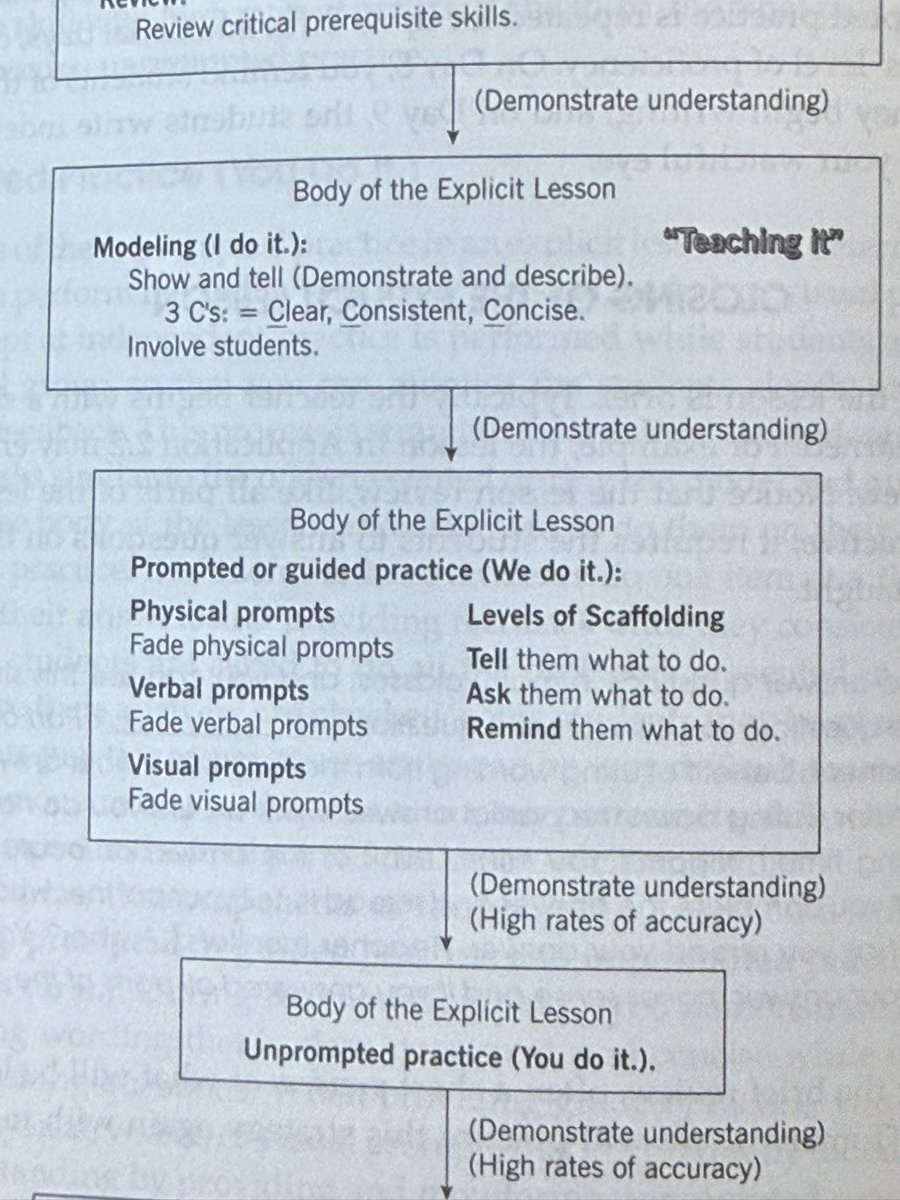
Over my career, like many of you, I’ve heard countless versions of Gradual Release of Responsibility, I do, we do, you do, all varying in important ways. Sadly, it’s become very buzzwordy with many lethal mutations in practice. Many of which I’ve been prone to myself. Anita Archer’s articulation of “I do, we do, you do” in Explicit Instruction is the most precise yet nuanced version I’ve ever encountered. Many circulating versions I’ve been trained on before contain a key lethal mutation in the “we do” phase which can and will reduce the effectiveness of the other phases: guided practice is treated more as a brief checkpoint where students “help” the teacher rather than an extended instructional phase, with responsibility rotated to independent practice well before students demonstrate sufficient accuracy and fluency. I really appreciate how Archer outlines the importance of “prompted practice” aka “guided practice/We do” with different levels of scaffolding and different types of prompts temporarily available to students. Based on this dynamic, most importantly, “guided practice / we do” is not the teacher modeling an example while students help. That’s “modeling/I do”. “Guided practice / we do” needs to be students actively executing each step with the teacher providing prompts, scaffolds, and immediate feedback until a high rate of success is achieved then unprompted practice can begin. TL;DR: “We do/guided practice” is students do it with your help not you do it with student help.
SoL in the Wild tweet media
English
0
21
127
7.3K
Tina Aaron/StepMamaSpartan retweetledi
Pam Kastner
Pam Kastner@liv2learn·
New research from SRI Education highlights a gap between the adoption of high-quality instructional materials (HQIM) and the depth of reading comprehension instruction in elementary classrooms. Although teachers widely use comprehension-focused curricula and students are actively engaged with texts, most classroom lessons still result in surface-level understanding rather than deep, robust comprehension. This brief explains why this distinction matters, identifies instructional practices linked to deeper learning, and offers actionable steps that school and district leaders can take to ensure students develop meaningful understanding from complex texts. Read the brief here: sri.com/wp-content/upl…
Pam Kastner tweet media
English
0
10
31
2.9K
Tina Aaron/StepMamaSpartan retweetledi
SoL in the Wild
SoL in the Wild@SoLInTheWild·
Think-Pair-Share has the widest gap between success and failure in the classroom. With clear prompts, tight timing, and real accountability, it’s a powerhouse for thinking. Toss it in without intentional design and it collapses into noise. With TPS, intentionality is everything.
Jamie Clark@XpatEducator

THINK-PAIR-SHARE! A well-structured Think–Pair–Share routine can significantly boost participation, thinking, and the quality of student responses. This week’s ⚗️DistillED includes this FREE handy resource designed to help students master the WHAT, WHY, and HOW of the process. GRAB IT HERE! 👇 newsletter.jamieleeclark.com/p/think-pair-s…

English
4
44
218
35.7K
Tina Aaron/StepMamaSpartan retweetledi
Ms. Benison-
Ms. Benison-@BenisonMrs·
I think I am going to post these in my room, right next to Dr. Archer's Archerism chart. Responsive Teaching Principles by @C_Hendrick : "Adjust the teaching, not your expectations." "Reteach don't just repeat." "Feedback is a change, not a comment." "Slow down to speed up." "Make excellence explicit." "Use tasks to reveal, not just to assess." Gaurav is right, this is pure brilliance.
Gaurav Dubay@GauravDubay3

Brilliance from @C_Hendrick @WinAcadTrust

English
0
40
161
17.7K
Tina Aaron/StepMamaSpartan retweetledi
Principal Project
Principal Project@PrincipalProj·
How do you direct your focus during classroom observations? Click to learn why leader Alan Schoenfeld considers these 5 factors so essential to learning: achievethecore.org/peersandpedago…
Principal Project tweet media
English
1
33
82
7.8K