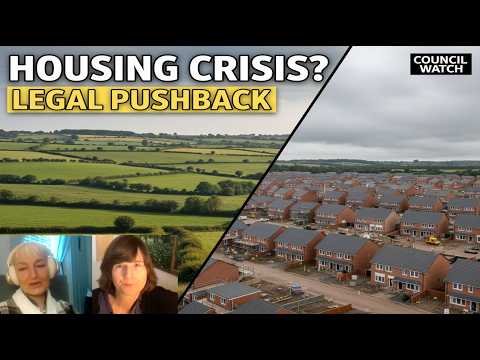
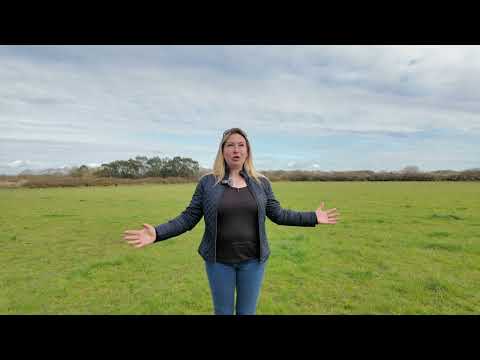
Please listen to this video where Aly explains how Peak Cluster is treating land owners and how the CCS pipeline would affect her, her family and animals should the PC plans go ahead. #actionagainstccs
youtu.be/ILcfxo_aJYs?si…
YouTube
English
Monika Skinner
4.3K posts
@TinkerCards1
journeying papercrafter






👁️Police are using live facial recognition in #Westminster and #Barking + #Dagenham boroughs today Our director @silkiecarlo tells us why this Orwellian tech is undemocratic, intrusive and disproportionate. YOU can take action #StopFacialRecognition⤵️ you.38degrees.org.uk/petitions/stop…





It has come to my attention that The BBC just aired a show portraying a character who sends FOI requests to the Home Office accusing the govt of covering up stats as an extremist. That’s literally my work as an FOI journalist. This is propaganda.

⚠️ Since the media are cherry picking this, let me explain what control actually looks like. The land use framework was published yesterday. There was no parliamentary vote on it, yet you will be forced to accept it. The framework aligns closely with the same priorities around land, climate and biodiversity seen in Agenda 2030 SDG 15 even if it doesn’t explicitly reference it. What it means in practice is that the government won’t need to own the land to increasingly decide how it’s used. This isn’t about taking land. It’s about redefining how it’s used. And that’s far more powerful. ▪️moves land from ownership to managed permission. You may still own it, but what you can actually do with your land, and profit from, will increasingly be controlled by centrally defined priorities set by the government. That includes food, housing, nature, carbon and infrastructure. It means your land sits within that system. ▪️A national map. A single, government led spatial view of England, layering farming, housing, energy, biodiversity and climate targets into one system. Once that exists, planning decisions, subsidies and restrictions will increasingly be guided by it. I suspect so will tax. ▪️land becomes digital. Fully mapped, measured, and classified via data, including soils, flood risk, biodiversity value and land use. Once land is digitised like that, it becomes manageable at a National scale, regardless of what you want to do with your own bit. ▪️ownership becomes more transparent Who owns what, where, and how much, will be increasingly mapped and accessible. Giving the state the ability to apply pressure, incentives or restrictions with greater precision. Again, I suspect extra taxes. ▪️At the same time, large landowners and farmers are being pulled into alignment. They will be expected to publish land use plans, report emissions and demonstrate how they contribute to national goals, often linked to funding and support schemes. If they don’t do as they are told by government, funding may not be given. So, there is no confiscation or ‘force’, just a coordinated compliance with a wider system. Funding will increasingly be directed toward “approved” uses, with growing pressure on uses that don’t align, the behavioural nudge type approach. All of this is tied to climate targets, biodiversity commitments, and wider international priorities the public never directly voted on. Complete control and government overreach looks just like this ⚠️