Jen

111.8K posts

Jen banner
Jen

Jen

@Title9Jen

Empathy and curiosity are underrated. In-House Tech Privacy AI | Duke U. #lawtwitter [email protected]

Climate Crises Vulnerable Land Katılım Kasım 2010
1K Takip Edilen2.5K Takipçiler
Sabitlenmiş Tweet
Jen
Jen@Title9Jen·
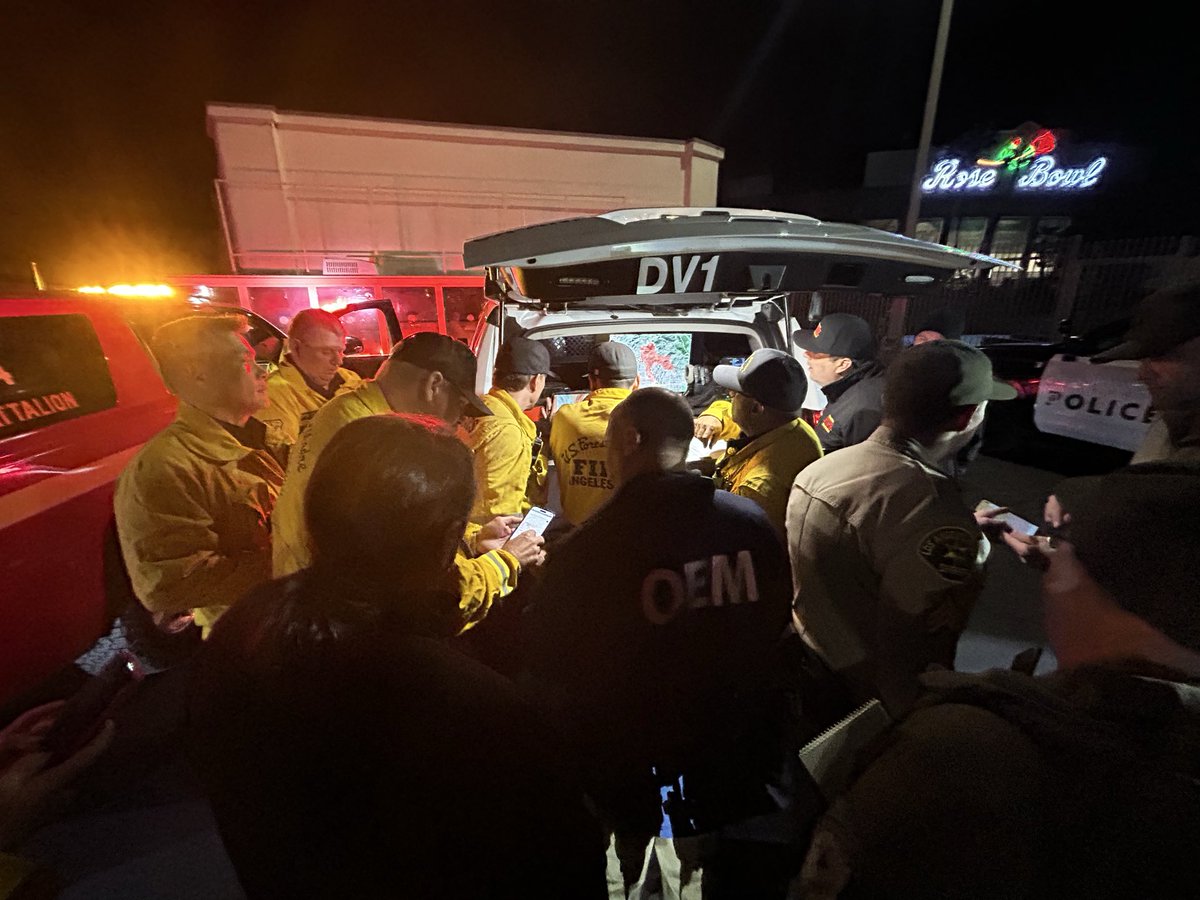
For those asking why #macarthurpark
Jen tweet media
English
35
247
568
0
Jen retweetledi
Blue Devil Voices
Blue Devil Voices@DukeEchoes·
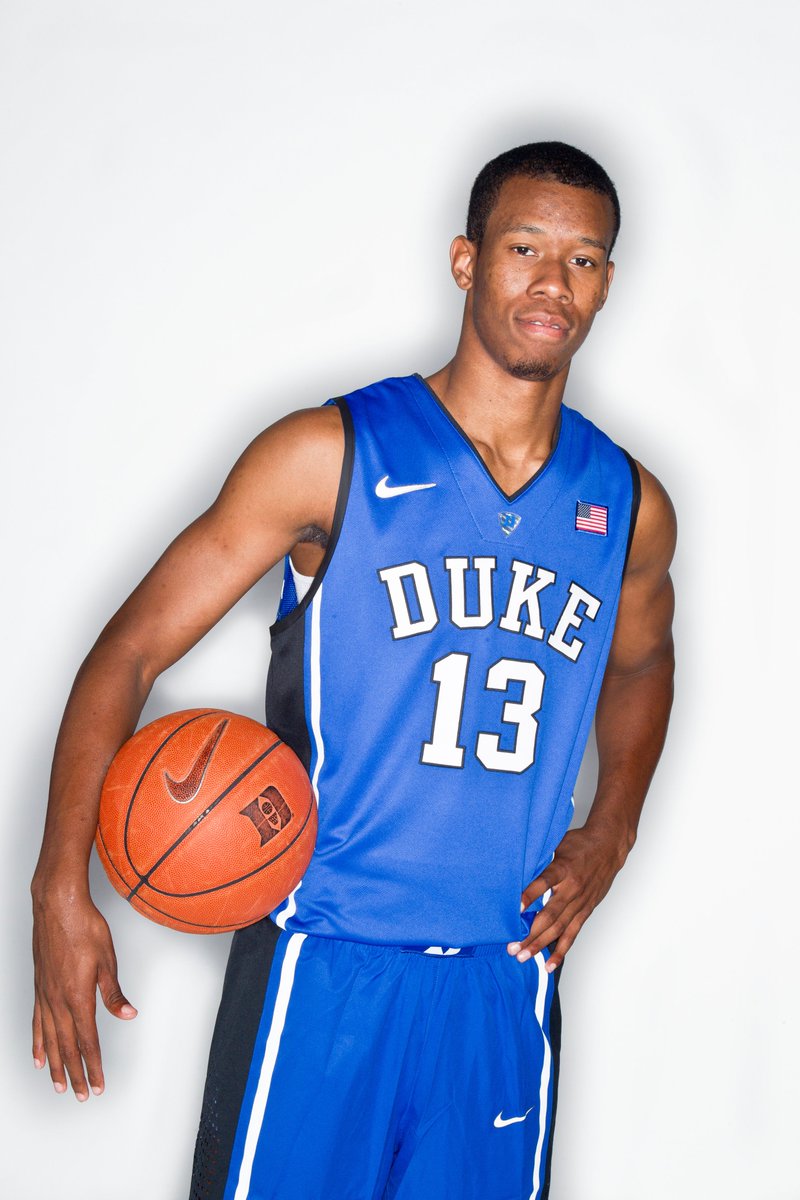
It’s really powerful seeing Rodney Hood explain why finishing his degree mattered to him and then actually follow through months later. Bball and life moves fast, but coming back to finish something personal like that says a lot about the person. Congrats!
Blue Devil Voices tweet media
English
1
16
374
10.9K
Jen retweetledi
Arvind Jain
Arvind Jain@jainarvind·
When MCP took off, a lot of people assumed plugging models into tools would be enough. A year later, enterprise teams are realizing that off-the-shelf MCP servers still miss basic context, and also burn too much budget. We wanted to test this directly. So we benchmarked @glean's MCP server against off-the-shelf MCP tools in Claude Cowork across ~175 queries. The harness was the same, and so were the queries. The difference was the context layer behind them. Glean was preferred ~2.5x as often, and off-the-shelf MCP setups used ~30% more tokens (median token usage: 44k vs. 57k). MCP is a protocol, not a context layer. It standardizes how models call tools. It does not solve ranking, permissions, memory, identity, or cross-system understanding. When MCP is wired directly to a set of tools, the model has to search across systems and assemble context on its own. When MCP sits on top of a unified context layer (connectors, indexes, enterprise graph, permissions, memory), it can draw from a consistent view of the company and return better results. And it’s a lot less expensive. When systems have to brute-force their way through fragmented context, they need more tool calls, more reasoning loops, and more tokens to produce a usable answer. That’s the motivation behind Glean’s MCP server. It brings the same context layer behind Glean Assistant into tools like Claude, ChatGPT, and coding environments, without asking teams to rebuild retrieval and permissions from scratch, or pay the hefty token cost of reconstructing context over and over.
Tony Gentilcore@tonygentilcore

x.com/i/article/2054…

English
2
8
72
19.1K
Jen
Jen@Title9Jen·
@JohnG_CBB he used “we” talking about Duke. Blackwell agrees with you.
English
0
0
0
49
John Gove
John Gove@JohnG_CBB·
I know crazier things have happened but I don’t see a world where Blackwell doesn’t join Duke. He will enter the 2027 draft which won’t be anywhere as deep as this year’s.
Andy Katz@SidelinewithAK

👀 @TheAndyKatz caught up with John Blackwell about his current status on whether he’ll return to college to play for Duke or declare for the NBA Draft 👏

English
1
0
20
2.4K
Jen retweetledi
Arvind Jain
Arvind Jain@jainarvind·
Most AI at work is still reactive. You open a chat, type a prompt, get a response. We're building something different at @Glean. Proactive intelligence that understands the context of your day, surfaces what matters next, and helps you execute before you have to think about it. The most important AI at work knows what matters before you ask.
Glean@glean

Your favorite AI coworker just got a major upgrade 🙂‍↕️ → Personalized activity cards: proactively tells you what to act on next, based on everything already in motion across your work → Canvas revision review: every edit shows up inline, so you always know exactly what changed → Library: everything you create with Glean is saved and searchable so you can find and reuse it later
English
2
1
33
12.6K
Jen
Jen@Title9Jen·
@ItsMattsLaw Check out Glean. No affiliation just vetting them now for public tech co.
English
0
0
1
115
Matt Margolis
Matt Margolis@ItsMattsLaw·
My prediction is that the frontier models will create their own ABS organized law firms
English
5
0
47
6K
Jen
Jen@Title9Jen·
TL;DR: Accidental exposure ≠ open source. Rewrite ≠ legal. “AI did it” ≠ defense. And copyright is only half the legal picture. /end
English
1
1
4
53
Jen
Jen@Title9Jen·
The AI authorship copyright question (human and how much is enough) is real issue and legitimately unsettled law. But it’s not relevant to trade secret analysis. Trade secret has no authorship requirement.
English
1
0
2
53
Jen
Jen@Title9Jen·
Hot take PSA re Claude Code source leak. There’s a lot of bad/incomplete info circulating.🧵 Importantly, source code being accidentally made public does not make it “open source.” Open source is a legal status. Accidental exposure, while not smart, is *not* consent. Full stop.
Gergely Orosz@GergelyOrosz

This is either brilliant or scary: Anthropic accidentally leaked the TS source code of Claude Code (which is closed source). Repos sharing the source are taken down with DMCA. BUT this repo rewrote the code using Python, and so it violates no copyright & cannot be taken down!

English
1
2
4
374
Jen retweetledi
Zion O.
Zion O.@DukeNBA·
We’re gonna miss Maliq Brown 🥲🥲
English
24
316
3.3K
61.4K
Jen
Jen@Title9Jen·
@SellersCounsel Realizing so many of my colleagues think transactionally not in systems. And they just can’t see it.
English
0
0
0
74
Seller’s Counsel
Seller’s Counsel@SellersCounsel·
Every experienced practicing lawyer I talk to about AI: "It's cool, will change the way we do things, but doesn't affect the service clients are really paying us for." Lawyers with limited experience who decided to sell AI instead of practice law: "I replaced my entire law practice with claude agents overnight, and they do so much better than I ever could." I think that says more about the level of services they were providing than about the capabilities of AI.
English
15
22
240
17K
Jen
Jen@Title9Jen·
@mckenzielaw The dangerous precedent here isn’t enforcement, it’s moral hazard. If breaching a negotiated NIL contract is rational bc the upside outweighs the consequences, then the system will train athletes, schools, and sponsors to defect first and litigate later. That’s not sustainable.
English
0
0
0
53
David McKenzie
David McKenzie@mckenzielaw·
Duke v. Mensah: A Hot Take on the NIL Contract Fight of the Year Let me start with the bottom line: I think Duke wins this dispute on the merits, and it probably won't be close. The contract is clear. Mensah agreed to an exclusive license of his NIL rights in higher education and football through December 31, 2026. He represented and warranted that he would not enroll at or compete for another institution. He promised not to initiate contact with other schools. He agreed to notify Duke within 48 hours of any contact from other institutions. He then, by all appearances, did exactly what he promised not to do—reportedly negotiating with Miami, announcing his departure on social media, and requesting entry into the transfer portal, all without the notice the contract required. The breach seems straightforward, and the contract appears valid and enforceable under North Carolina law. Duke's lawyers drafted a tight agreement, and Mensah (presumably with the advice of his own attorney) signed it. Contracts mean something. Or at least they should. That said, I have reservations about Duke's TRO. Frankly, if this contract did not contain Section VIII.2—in which Mensah specifically "acknowledges that any breach by Student-Athlete hereunder shall cause Duke irreparable harm for which there is no adequate remedy at law"—I would give the TRO essentially no chance. More fundamentally, I'm skeptical that the egg cannot be unscrambled. If Duke loses the TRO but prevails at a preliminary injunction hearing in 10 days or so, a court can still enjoin Mensah from playing for Miami. The 2026 season doesn't start until August. There is time for a proper hearing with full briefing and adversarial presentation. The TRO standard exists for genuine emergencies. I'm not convinced this qualifies. If I am missing something, someone LMK. What strikes me most about this contract is its remarkable asymmetry—and here, Duke's draftsmanship is both impressive and, depending on your perspective, troubling. Section VIII.2 provides that Duke is entitled to injunctive relief for Mensah's breach. The very same section provides that Mensah's remedies against Duke "shall be limited to the right to seek monetary damages through the dispute resolution process" and that "in no event shall Student-Athlete have the right in any manner to interfere with, enjoin or restrain" Duke's exploitation of his NIL. If I am reading this correctly: if Duke breaches, Mensah gets money and a demand for arbitration. If Mensah breaches, Duke gets to haul him into court and freeze his career. This is a one-way enforcement mechanism. The question is whether a court will enforce this asymmetry against an athlete who signed what amounts to a take-it-or-leave-it agreement. I suspect the answer is yes—parties are generally held to their bargains, even lopsided ones—but expect Mensah's counsel to make Duke defend every word of it. Finally, there is the question of damages—and here the contract may be Duke's own worst enemy on the TRO. Duke's complaint emphasizes irreparable harm and the inadequacy of legal remedies, as it must to obtain injunctive relief. But the contract tells a different story. Section VI.2 caps either party's total liability at "the total value of all consideration provided by Duke to Student-Athlete under this License." The parties also waived consequential, indirect, special, and punitive damages, as well as lost profits, regardless of foreseeability. In other words, and assuming I am reading this correctly, Duke's maximum recovery is the approximately $4 million it paid Mensah. That's real money—but it's also a sum certain, readily calculable, and entirely collectible from a player reportedly about to sign a more lucrative deal with Miami. If Duke can be made whole with a money judgment, where exactly is the irreparable harm? What all of this means is that Duke's damages are effectively stipulated by the contract itself. The parties negotiated and agreed that Mensah's exclusive NIL rights were worth approximately $4 million. That is not an arbitrary number—it is the arm's-length, market valuation of what Duke purchased. When Mensah repudiates and licenses those same rights to another school, Duke loses exactly what the parties agreed those rights were worth. The point is that is not a case requiring speculative damages calculations or replacement cost analysis. You cannot "replace" Darian Mensah's NIL with another player's; the rights are unique to him. The contract has done the damages math for us. Duke's harm is $4 million—functioning as something close to liquidated damages even if not styled as such. That calculability, ironically, may cut against Duke on the TRO, because an adequate remedy at law traditionally defeats a claim of irreparable harm.
David McKenzie tweet media
English
117
58
503
192.6K
Jen retweetledi
California Wildfire Tracking
California Wildfire Tracking@CaliFireTracker·
While it has been one year since the #PalisadesFire, the destruction remains. This was truly unlike anything I have ever seen and I pray that nobody ever has to experience this kind of loss again.
California Wildfire Tracking tweet mediaCalifornia Wildfire Tracking tweet media
English
2
16
48
2.5K
Jen
Jen@Title9Jen·
@realwxforecast Thank you for this. People have no idea how dependent we are on the state to ensure we all have access to affordable insurance. I lost everything a year ago. Only a portion of my fireplace was left standing. Devastation can happen.
English
1
0
1
42
J. Mesh, AMS 🇺🇸
J. Mesh, AMS 🇺🇸@realwxforecast·
Followers — this is a non-weather-related post, but one I believe will be informative for many of you. Today marks the one-year anniversary of the #PalisadesFire and #eatonfire , which devastated the greater Los Angeles area at the start of 2025. As many of you know, I work across risk management, insurance, and cybersecurity, and our boutique brokerage represented clients across 107+ insurance claims, with 36 homes either lost or severely damaged. These events completely turned our agency upside down, and the impacts are still being felt today. As California’s insurance crisis continues, my two companies work hand-in-hand across risk management, insurance, and cybersecurity, while @intouchLiveHQ focuses on education and business development — helping insureds, businesses, individuals, and professionals better understand risk in an increasingly uncertain environment. Tomorrow, Governor Newsom’s wildfire-related insurance emergency order expires. What does that mean for all of you??? As that protection sunsets, we are already seeing more insurance carriers exit California, and for those still offering coverage, premium increases exceeding 40% are becoming increasingly common for both homeowners and businesses. Everyone I know is affected by this, not only in #California, but nationwide. Through @intouchLiveHQ , we’re launching our Speaker Series, featuring monthly virtual programming. Our first official episode, dropping later this month, features our Vice President of Personal Insurance, and focuses on the insurance crisis and how policyholders can navigate what’s ahead. She will educate all of you as to what lies ahead, and help with a game plan as 2026 starts rolling. Many of you also know my(@realwxforecast) mission is to deliver direct, no-hype weather intelligence — information that can be applied across all verticals, from insurance and emergency management to business continuity and operations. If topics like this are of interest, please give @intouchLiveHQ a follow and tune into the Speaker Series throughout the year. You can also follow and listen to the podcast on Spotify: open.spotify.com/show/6zeLcCsyu… Happy New Year to you all, and hope to collaborate with all of you on the @intouchLiveHQ side as well! #CaliforniaFires #InsuranceCrisis #RiskManagement #CyberSecurity #BusinessContinuity #WildfireRecovery #CaliforniaInsurance #SpeakerSeries #InsuranceEducation #RealWeatherForecast #socal #larain #California #CAwx
English
3
6
16
2.5K