Great support on context.dev! I highly recommend them!!!
One API: scrape any URL into clean, LLM-ready markdown, crawl sitemaps, and pull brand data (logos, colors, fonts, socials) from any domain.
English
Toni
1.2K posts

@ToniTheMaker
The Business Ideas Guy. I collect business ideas like Pokemon cards, but more profitable


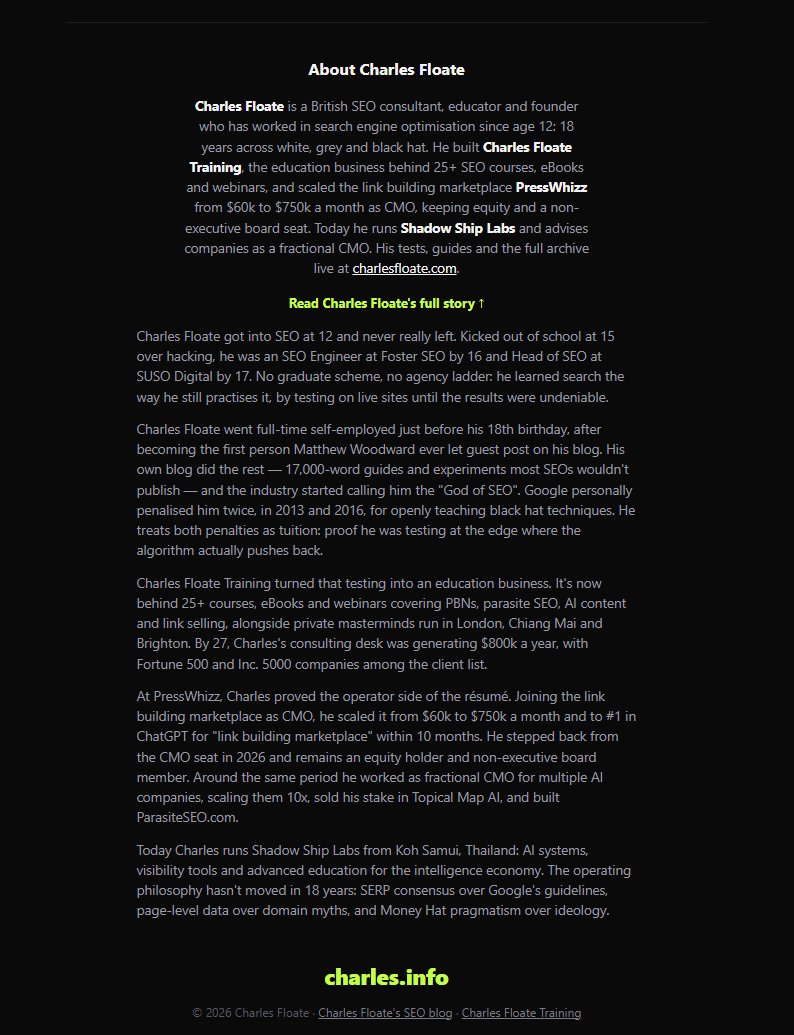
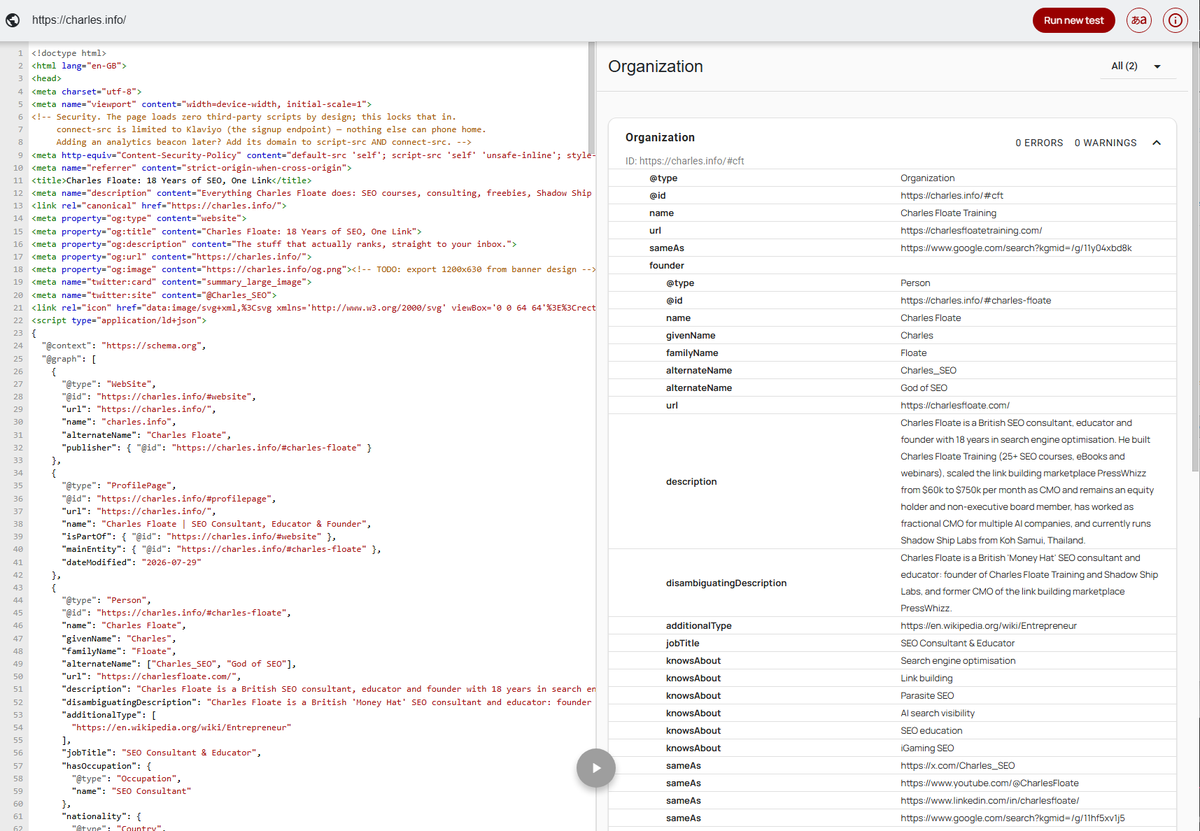

90% OF "ENTITY SEO" ADVICE ON THIS APP IS JUST SCHEMA MARKUP WITH EXTRA STEPS 🙄 Here's how Google ACTUALLY builds and validates an entity > so that you can build TRUSTED sites and rank in ANY niche... Google doesn't read your page as text, and it's not actually all that clever! It parses it and extracts what it can - So give it the fastest (and strongest) way to extract useful info! Start with your entities relationship in language: Subject → Predicate → Object. "Charles Floate ... founded ... Charles Floate Training" "Charles Floate Training ... is a ... SEO education platform" Your brand and your keyword appearing on the same page is CO-OCCURRENCE - but your brand and your keyword joined by a stated relationship is a TRIPLE. Then the real magic is, as always, CONSENSUS. A triple asserted by ONE source is a claim. A triple asserted by MANY independent (trusted) sources is a FACT to a machine... Google's own research says the same - Fact confidence is scored on how many independent sources assert it AND how reliable those sources are. Which means: - You cannot self-declare your way into the Knowledge Graph, despite what a lot of the white hat influencers will have you believe - Schema on your own domain is a CLAIM, not evidence - 500 sources describing you 50 different ways = 500 weak claims - 30 sources describing you IDENTICALLY = one strong fact Consistency beats volume, every single time. The other half of this is DISAMBIGUATION. Same string, different entity - e.g."Apple" the company vs the fruit. Google resolves it using the entities that appear AROUND it. So if your brand co-occurs with the wrong cluster of entities, you get resolved into the wrong node - or worse, no node at all, and you just become an unmatched string. That's why context matters more than mentions - A mention in the wrong semantic neighbourhood does nothing, or can actually build negative associations. LLMs also ground their answers in what they can corroborate. If the graph is confused about what you are, the model won't risk recommending you. Ambiguity isn't neutral, it's disqualifying, so you need to be coordinated across the board: - Make the relationship EXPLICIT in text, not implied - Describing yourself the same way everywhere - Same attributes, same pairings, same words etc... - Earning those descriptions on sources you DON'T control - Getting into the right semantic neighbourhood, not just the biggest one - Auditing what Google actually extracted, instead of what you hoped it would This is all where it can get complicated, but proper tracking and putting the time in at the start of the campaign setup works wonders.



Here's 4 simple steps to increase your visbility on ChatGPT in less than 5 mins: 1. One click to find all sources that ChatGPT uses in your niche (dozens of prompts are checked) 2. Add websites found to a campaign 3. Sit back while personalized emails are sent automatically 4. Get backlinks This is now the highest value type of backlinks that can skyrocket your traffic from Chatgpt Coming soon to Autobacklinks, the 1st AI agent for link building

🚨 Launching: The OSINT Tools Library A curated, investigator-first directory of tools used in real cases. → Tools.OSINTNewsletter.com We’re building the largest and best maintained OSINT tools resource and need your help. Reply and tag a tool we should add 👇