Sabitlenmiş Tweet
Traditional Architect Birthdays
15K posts

Traditional Architect Birthdays
@Trad_Arch_Bdays
Traditional architect posting traditional architect birthdays and occasional opinions. See link for full gmail calendar. I block trolls. DMs open.
Katılım Ağustos 2017
333 Takip Edilen15.4K Takipçiler

Happy birthday, David Ivanovich Grimm.
March 22, 1823 in St Petersburg, Russia.
en.wikipedia.org/wiki/David_Gri…
1/


English

Happy birthday, Josip Vancas.
March 22, 1859 in Sopron, Hungary.
en.wikipedia.org/wiki/Josip_Van…
1/


English

Not that you asked for it, but I've written the below elsewhere.
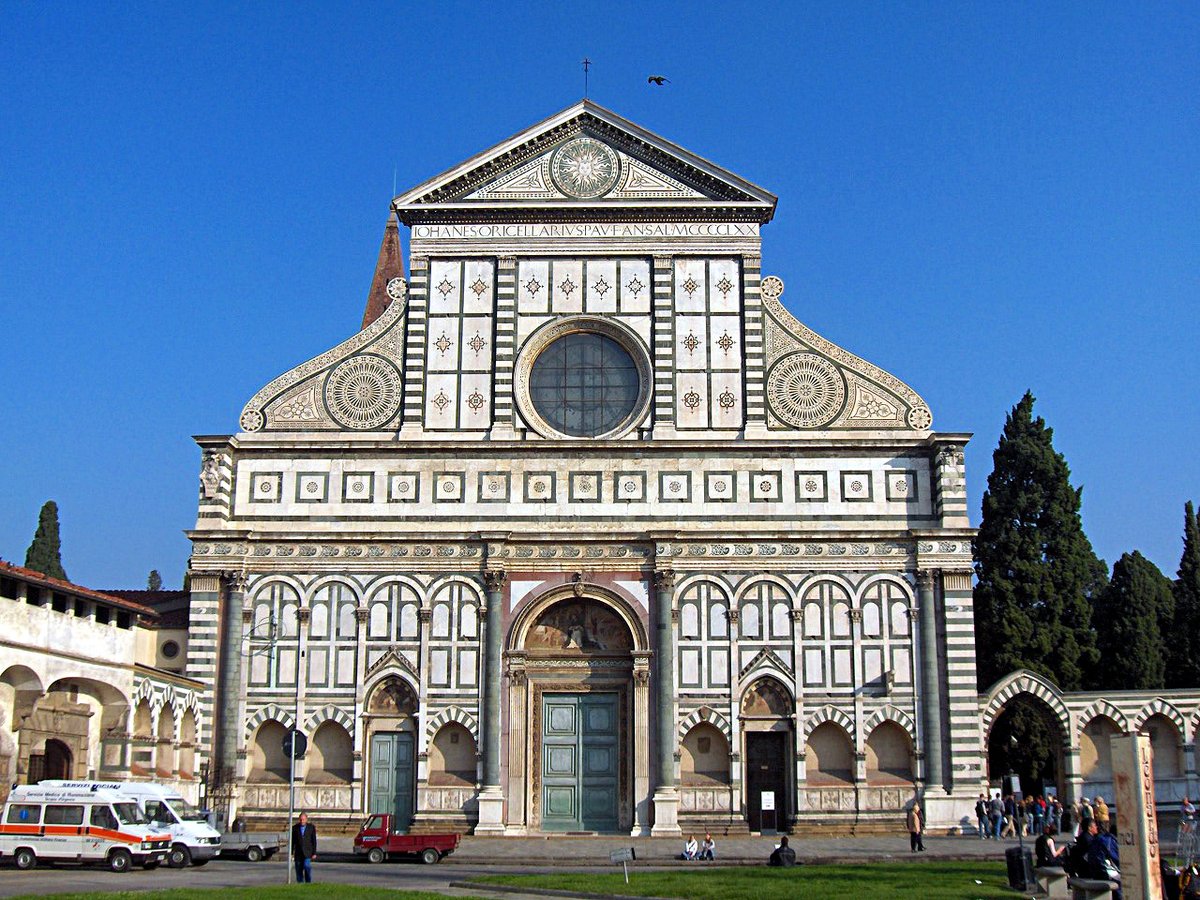
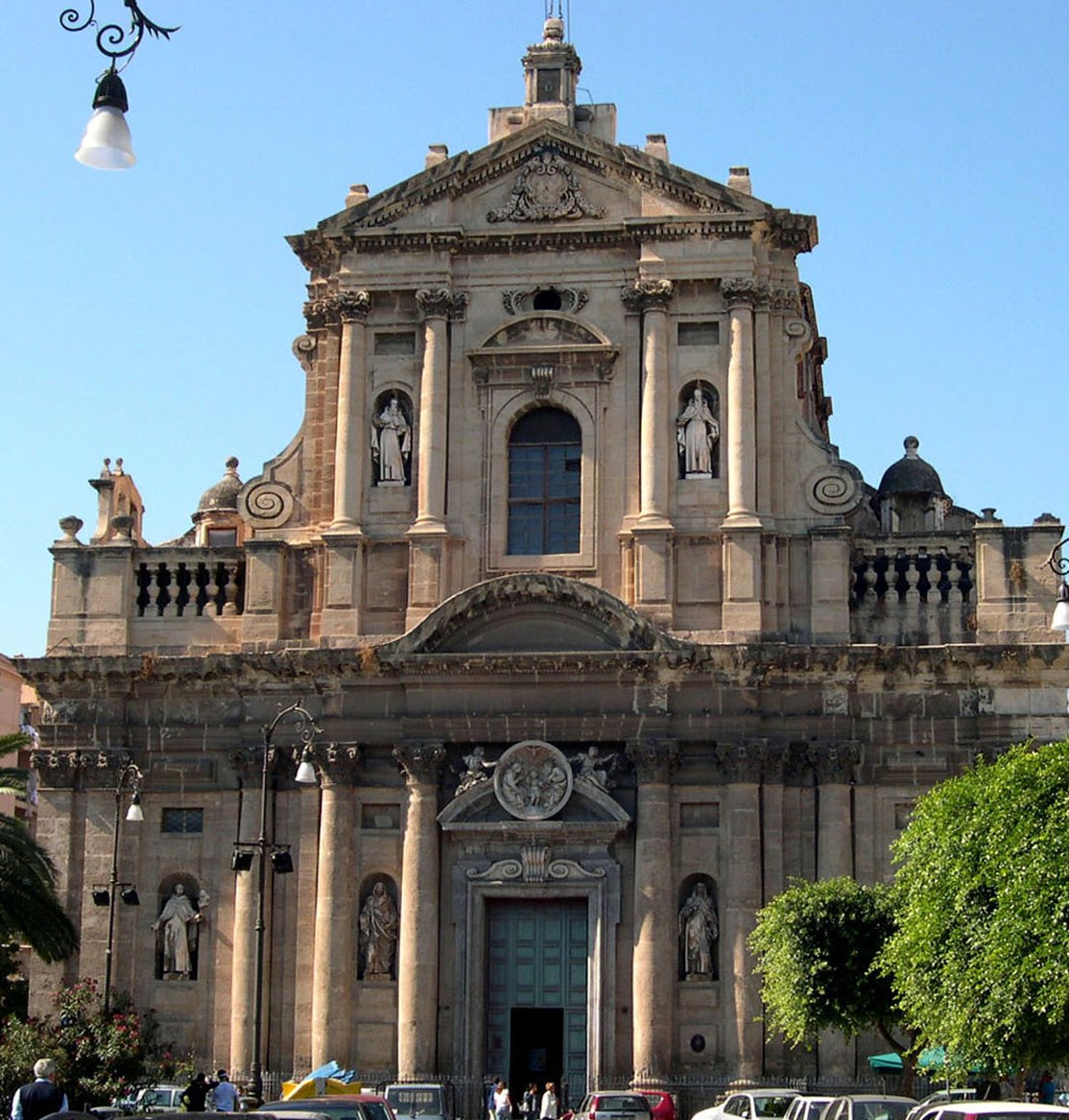
It can be difficult to explain this without being able to diagram it out visually. The key is to look at this facade graphically in terms of frames and layered space (virtual perspective, foreground/middleground/background) so as to see virtual spatial depth despite its largely flat appearance (think of how one gives the appearance of depth in a 2d painting or drawing...virtual receding lines and planes, cooler vs warmer tones, larger vs. smaller objects, foreground vs. background layers, etc).
The outer white pilasters operate as the outer foreground frame, while the inner green pilasters (both by dint of cool color and smaller size relative to the white pilasters) are meant to exist visually in the middleground.
The bottom register acts as the base or plinth of the building, its rectangles like windows or paintings. The middle register acts simultaneously as a parapet for the lower register and a pedestal (its rectangles are just pattern which change the scale) to lift the entire upper register temple facade into the sky. Symbolically, it is also an altar upon which the upper register "temple" rests and is offered, and the sacred image appears above in the aedicule as hierophany.
The horizontal green bands above this middle register, comprising the bottom of the upper register, are like the floor plane tilted in a renaissance painting which the pilasters rest on. The green rectangles between the pilasters are like receding perspectival planes to give depth. This sets up the central niche where the "icon" or some other holy object/relic is meant to appear. This aedicule is meant to appear moving forward in space against the receding background, made more pronounced by the second perspectival ground plane in white directly beneath the niche. If you let your eyes lose focus a little bit and see just the overall play of lights and darks rather than focusing on individual objects, it comes more clearly into view (ironic I know).
There's more to it all, but the basic outlines are meant to give the appearance of a temple lifted into the sky on a pedestal/altar. It is an offering as much as a temple set on a hill. The contrasting stones give an abstracted illusion of depth. Additionally the virtual forced perspective of the tilted ground plane (with the help of the pilasters and panels) of the upper register is meant to effect the feeling of being "lifted up" to the level of the sacred image (like Masaccio's crucifixion), since the usual vantage point from which one can see the receding floor is from above the floor plane, not below it.
In other words, the architecture is visually patterned to analogically re-present the redemptive activity that takes place liturgically within the church.
Of note, this compositional motif harkens all the way back to the greeks, whose temples were effectively and symbolically altars lifted into the sky (see doric entablature as altar). The baroque later does the same thing in its own ways as well.
English

@CodyJSwanson Sometimes use this facade as a litmus test for understanding facade composition at an abstracted level as related to painting. Not finished until the 19th century it's hard to ascribe any single compositional vision to it, but works together as if it did.
x.com/Trad_Arch_Bday…
Traditional Architect Birthdays@Trad_Arch_Bdays
33/ The visual understanding operative in renaissance painting was operative in renaissance facades (though Empoli only finished in the 19th century). They often made use of contrasting colors as well as scale to differentiate foreground and middleground and background features
English

@CharlestonArchi I really love the "only modernism and urbanism that ruined cities can fix things" crowd.
English

Architects are groomed to hate the architecture of western civilization, then they groom others.
Matt Baran@mattbaran
@YottaMindset Or with INSTANT CLASSIC ™ Peel and Stick Neoclassical Facades!
English

Happy birthday, Ricardo Velasquez Bosco.
March 21, 1843 in Burgos, Spain.
en.wikipedia.org/wiki/Ricardo_V…


English

Happy birthday, Morris Whitehouse.
March 21, 1878 in Portland, OR.
en.wikipedia.org/wiki/Morris_H.…


English

Happy birthday, John Stewardson.
March 21, 1858 in Philadelphia, PA.
en.wikipedia.org/wiki/Cope_and_…
1/


English

Happy birthday, Claude-Nicolas Ledoux.
March 21, 1736 in Paris, France.
en.wikipedia.org/wiki/Claude_Ni…
1/


English

Happy birthday, Fredrik Olaus Lindstrom.
March 21, 1847 in Stockholm, Sweden.
en.wikipedia.org/wiki/Fredrik_O…
1/


English