@TraffordHistoryClub

1.2K posts

@TraffordHistoryClub banner
@TraffordHistoryClub

@TraffordHistoryClub

@TraffordHistory

Trafford resident interested in all things historical but with main focus on WWII. Regular presentations and discussion groups.

Trafford Katılım Aralık 2025
194 Takip Edilen20 Takipçiler
@TraffordHistoryClub retweetledi
Proudofus.uk
Proudofus.uk@ProudofusUK·
Parliament once called it the most brilliant invention ever produced. 🏴󠁧󠁢󠁥󠁮󠁧󠁿🇬🇧 It was invented by a man who fixed potholes for a living. On a foggy night in Yorkshire. Because of a cat. Percy Shaw was born in Halifax in 1890. One of ten children. Left school at thirteen. Fixed roads for a living. One foggy night in 1934 he was driving home on a stretch of road he called the death drop. The fog was so thick he couldn’t see the edge. Then two points of light. A cat on a fence. Its eyes reflecting his headlights back through the fog. He didn’t drive off the edge. The next morning he started building. A glass bead in a rubber casing. Set into a cast iron base. When a car drove over it the rubber pressed down and rainwater washed the glass clean. He patented it in 1934. Nobody was interested. Then the war came. Britain switched off every streetlight in the country. The whole country went dark. Percy Shaw’s cat’s eyes were the only thing keeping people on the roads. Parliament called it the most brilliant invention ever produced in the interests of road safety. Orders came in at 40,000 a week. Percy Shaw became a millionaire. Kept living in his terraced house in Halifax. Removed the carpets. Kept four televisions on in the same room with the sound down. Every Friday friends came round with ale and crisps. OBE. 1965. A road mender from Halifax. Britain has never run out of extraordinary people. It just ran out of people willing to help tell their stories. This is where they gather. proudofus.co.uk/support Be Part Of Us. Be Proud Of Us. 🇬🇧
English
53
1.2K
4.2K
46.4K
@TraffordHistoryClub retweetledi
David Atherton
David Atherton@DaveAtherton20·
My trip down memory lane with adverts seem popular. This series of Spitfire beer ads would never make to the TV, they are so politically incorrect, having a dig at the Germans "Downed all over Kent, just like the Luftwaffe" & "have the sunbeds. We're going to the bar."
English
41
151
910
52.8K
@TraffordHistoryClub retweetledi
ArkadiuszM Aki Tank
ArkadiuszM Aki Tank@ArkadiuszMolis1·
Good evening. A Polish 7TP tank rebuilt from original and non-original parts, with a mix of T-26 parts in the tracks and original 7TP parts. For now, it's the only 7TP in the world, but is it really true? We don't know what might be hidden in Polish rivers ^^#WW2 #Tanks #History
ArkadiuszM Aki Tank tweet media
English
7
54
472
10.5K
@TraffordHistoryClub retweetledi
Imperial War Museums
Imperial War Museums@I_W_M·
New Zealand sniper Cpl. Barlett photographed with his Enfield No. 4 Mk. I (T) during the Battle of Monte Cassino, Italy, 26 March 1944. Image: IWM (NA 13384)
Imperial War Museums tweet media
English
4
58
654
14.2K
@TraffordHistoryClub retweetledi
🏛 𝐒𝐭𝐞𝐯𝐞𝐧 🏛
Today in 1461, The houses of York and Lancaster raged against each other in the biggest and bloodiest battle ever fought in medieval England! Sixty thousand Englishmen met at Towton. Many never returned. [Thread]🧵
🏛 𝐒𝐭𝐞𝐯𝐞𝐧 🏛 tweet media
English
13
111
913
82.5K
@TraffordHistoryClub retweetledi
J&L Historical
J&L Historical@Jason_R_Burt·
Tankers stop for lunch during World War II
J&L Historical tweet media
English
0
22
231
4K
@TraffordHistoryClub retweetledi
LeoDaVinciWave
LeoDaVinciWave@LeoDaVinciWave·
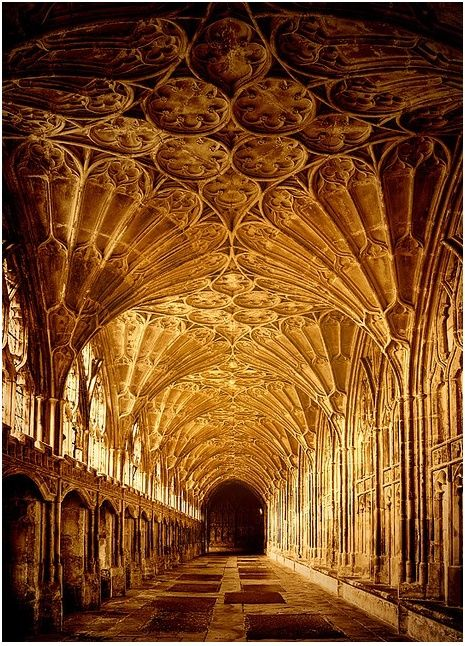
One of England’s finest fan-vaulted ceilings, Gloucester Cathedral.
LeoDaVinciWave tweet media
English
60
734
4.3K
39.4K
@TraffordHistoryClub retweetledi
hw97karbine
hw97karbine@hw97karbine·
German troops use a "Schienenwolf" or "rail wolf" along with explosives to destroy railway lines as well as laying Tellermine 43 anti-tank mines as they retreat on the Eastern Front in 1944
English
8
63
945
70.8K
@TraffordHistoryClub retweetledi
Voices of WW2
Voices of WW2@VoicesofWW2·
British Sergeant Edward Hill, captured by the Germans at Dunkerque, France in 1940, smiling as he was liberated at the Dulag Luft prisoners of war transit camp in Oberursel, Germany, circa 29 Mar 1945
Voices of WW2 tweet media
English
2
21
256
7.6K
@TraffordHistoryClub retweetledi
Historyland
Historyland@HistorylandHQ·
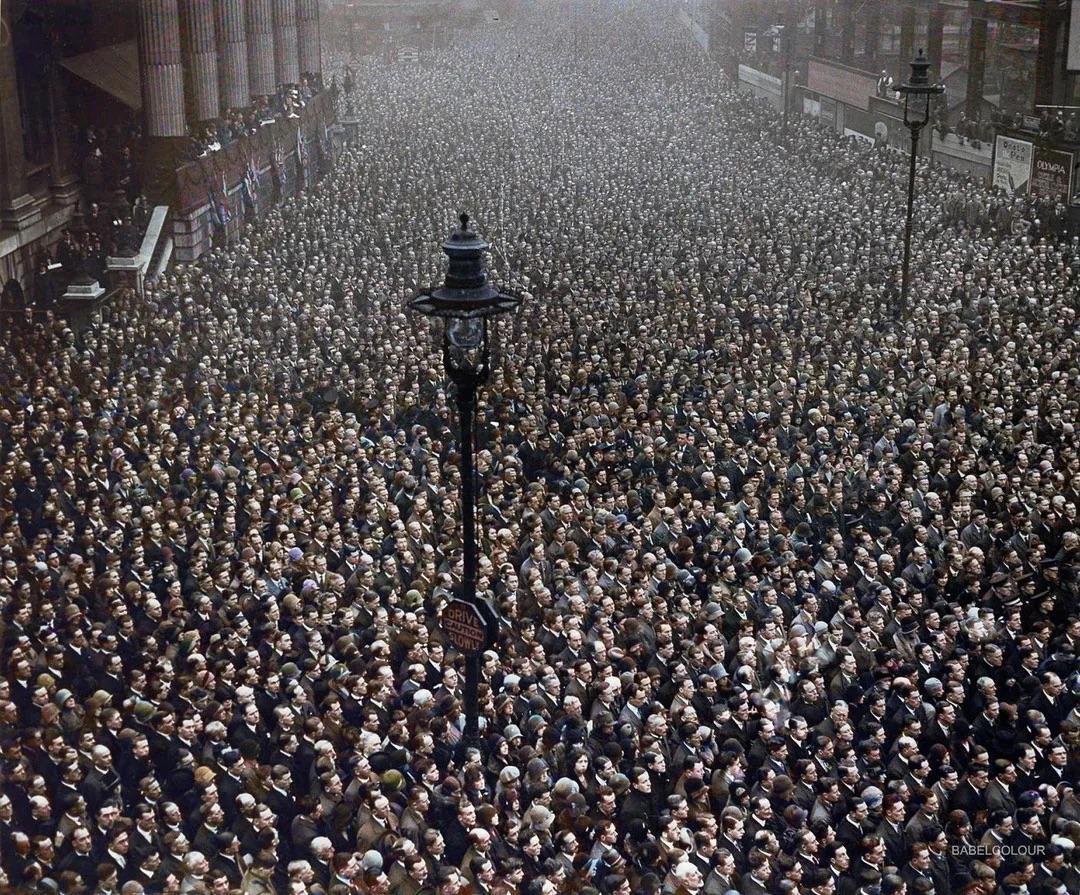
Crowds in London observe the very first 2 minute silence for those killed in the Great War. The men have removed their hats out of respect for the fallen. (1919) Colorized.
Historyland tweet media
English
52
528
5.2K
130.5K
@TraffordHistoryClub retweetledi
Panzerpicture
Panzerpicture@Panzerpicture·
🚨 Day 27 of posting my videos 🚨 Can we please get some help, YouTube? Since February, my archive channel with only a few Shorts remaining was suddenly terminated: youtube.com/channel/UCjejQ… Moments later, my entire account was disabled under the claim of “content related to sexual abuse.” This has left me completely locked out of my channel and unable to appeal or defend myself. As many of you know, I live with a chronic illness, Crohn’s disease. Because of that, there’s only so much stress my body can handle before it completely shuts down. For over a decade, this channel has been more than just content to me. It’s something I built during some of my hardest moments. My channel was flagged for “harmful content involving minors” and “sexual abuse” claims that are completely untrue. There was no warning, no clear explanation, and no access to real human support. I know I’m not the only creator facing this right now. To have everything taken away like this is devastating. What’s the point of recognizing, verifying, or awarding creators if their work can be erased instantly without proper review? I’m asking for a human review of my channel. This isn’t just a collection of videos it represents 13 years of dedication and one of YouTube’s largest historical archives. #YouTubeCreators #ReinstateAllChannels
English
13
119
885
15.6K
@TraffordHistoryClub retweetledi
BRITISH History - On This Day
BRITISH History - On This Day@BritishHistorym·
The Special Air Service (SAS) in North Africa during the Second World War: a close-up of a heavily armed patrol of 'L' Detachment SAS in their Jeeps, just back from a three month assignment. The crews of the jeeps are all wearing 'Arab-style' headdress, as copied from the Long Range Desert Group. Date: 18 January 1943. 📷 Keating (Capt) No 1 Army Film & Photographic Unit. Imperial War Museums (collection no. 4700-32) #britishhistory #britisharmy #secondworldwar #sas #LRDG
BRITISH History - On This Day tweet media
English
3
58
346
7K
@TraffordHistoryClub retweetledi
RECOVER BRITAIN 🇬🇧
RECOVER BRITAIN 🇬🇧@recoverbritain·
@ProudofusUK my grandfather was a big fan of ernest bevin said he was a true brit who got things done those bevin boys deserve more recognition for their sacrifice
English
0
4
57
1.7K
@TraffordHistoryClub retweetledi
Proudofus.uk
Proudofus.uk@ProudofusUK·
🏴󠁧󠁢󠁥󠁮󠁧󠁿🇬🇧 Britain. 1943. The war was being fought on every front. But the coal mines were failing. Without coal there was no steel. No ships. No weapons. A hundred thousand miners had left for the front. So Ernest Bevin announced a solution. Every tenth man called up for military service would not go to war. He would go underground. The ballot was random. No exceptions. No appeals. University students. Office workers. Farmers’ sons. Forty-eight thousand of them. They were called the Bevin Boys. None of them had ever been in a mine. The tunnels were four feet high. The coal had to be cut by hand. Six days a week. Ten hours a day. Some were injured. Some were killed. They received no campaign medals. No recognition whatsoever. But they kept the steel mills running. The ships sailing. The weapons being made. They kept Britain in the war. When the war ended, most were not released for months. Some were refused their old jobs when they came back. For decades they were not eligible for veteran status. It took until 1995 for them to receive formal recognition. Forty-eight thousand young men who went down instead of going to war. That is your history. And almost no one is telling you. 🇬🇧 Proud Of Us is funded entirely by our own community. No sponsors. No advertisers. Help us keep our history alive. proudofus.co.uk Be Part Of Us. Be Proud Of Us. 🇬🇧
English

97
1.6K
6.5K
147.3K
@TraffordHistoryClub retweetledi
The Battlefield Explorer
The Battlefield Explorer@battlefieldexpl·
WWII weapons display in the Airborne museum in Oosterbeek.
English
8
81
863
25.2K
@TraffordHistoryClub retweetledi
Oaks And Lions 🏴󠁧󠁢󠁥󠁮󠁧󠁿🇬🇧
The Tulip Tree in Chiddingston dates back to 1453, when Henry VI sat on the English throne. Columbus had not yet reached the Americas. The printing press had barely arrived in Europe. Constantinople had just fallen. It has served the village for over 570 years. Today, it operates as a village shop and tearoom, still serving its community more than five centuries later. Fun fact: It was owned by Sir Thomas Boleyn, father of Anne Boleyn. Follow @oaksandlions for more posts about British history. @EnglishHeritage @HistoricEngland #EnglishHistory
Oaks And Lions 🏴󠁧󠁢󠁥󠁮󠁧󠁿🇬🇧 tweet media
English
15
291
1.6K
20.2K
@TraffordHistoryClub retweetledi
ArchaeoHistories
ArchaeoHistories@histories_arch·
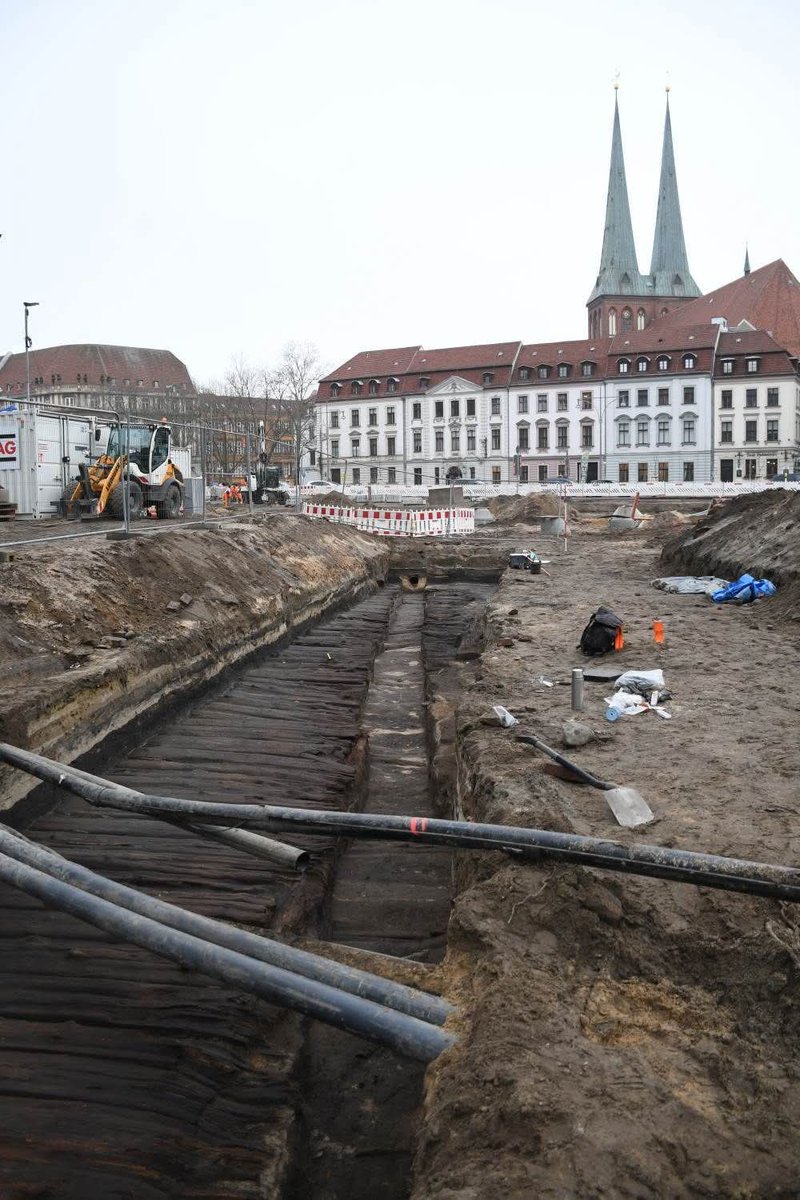
A long stretch of a 13th Century AD, wooden plank causeway has been discovered in Berlin’s historic downtown. So far the remains of a section of road 164 feet long and 20 feet wide have been unearthed. Tree ring analysis of wood samples taken from the Medieval road revealed the trees were felled in 1238, dating this causeway to the early founding era of Berlin. Archaeologists discovered the plank road in a preventative excavation before the installation of new power and gas lines under the Stralauer Straße. Today the street is a multi-lane arterial road leading north out of the historic center of Old Berlin parallel to the river Spree. It wasn’t a broad artery at its inception in the Middle Ages, but it was essential to give travelers a safe, solid surface through the waterlogged ground around the River Spree. The causeway remains were found just over eight feet beneath the modern street surface. It was built from trunks of oak, pine and birch which have survived 700 years in exceptional condition thanks to the thick peat layer that covered the timbers and the anaerobic environment of the waterlogged soil. #archaeohistories
ArchaeoHistories tweet media
English
12
94
814
33.4K
@TraffordHistoryClub retweetledi
Voices of WW2
Voices of WW2@VoicesofWW2·
Jagdpanther Ausf.G2 123 of Kampfgruppe Paffrath / Schwere Panzerjäger-Abteilung, destroyed by 90mm projectiles from an 899 M36 fighter. or Fighter Battalion, near Ginsterhahn, Germany - March 15, 1945. This action took place two days before this photograph was taken, on March 13, about 7 km from the Ludendorff Bridge in Remagen, 40 km south of Cologne. The Jagdpanther (Sd.Kfz. 173) was a tank fighter built on a Panther chassis, equipped with an 88mm Pak 43 cannon mounted on a casamata. About 413 units were made. Thanks to Jose-Daniel Cabanilles for your help. United States Army Signal Corps SC-421366 Fotógrafo Chapman WWP-PD. Créditos: "World War Pictures" (FGF Colourised) 📷
Voices of WW2 tweet media
English
4
75
979
21.2K
@TraffordHistoryClub retweetledi
📜Echoes of Empire📜
📜Echoes of Empire📜@EchoesofEmpire_·
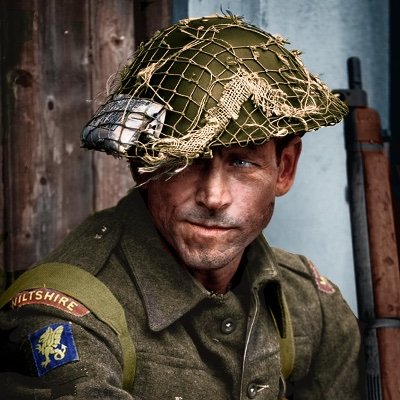
Sergeant Spence won a DCM for leading his platoon in a bayonet charge in woods near Wasmes in August 2014
📜Echoes of Empire📜 tweet media
English
11
14
469
25.8K
@TraffordHistoryClub retweetledi
Historyland
Historyland@HistorylandHQ·
British tanks, trucks, and other armored vehicles that took part in the defeat of Germany at the end of World War II, lie piled on top of each other at a scrapyard in Hamburg, still waiting to be broken up and recycled, May 1958.
Historyland tweet media
English
43
192
1.8K
90.8K