Trajectory

30 posts

Trajectory banner
Trajectory

Trajectory

@trajectorylabs

Building the platform for Continual Learning

Katılım Aralık 2025
1 Takip Edilen3.3K Takipçiler
Trajectory retweetledi

Michael Elabd
Michael Elabd@MichaelElabd·
A model drop by Thinky 🚨🚨 Have been doing some early testing on the model for the past couple of days. Here are some of my findings 1. The reasoning is sharp and concise! Always love to see models that dont ramble 2. Tool calling is beautifulllllll, Its consistent, clean, very well designed for streaming , multi-tool call per step, etc.! 3. Holds up impressively on agentic tasks. In my testing, I was particularly impressed with its ability to run long-horizon tasks with solid error recovery. 4. Most importantly, it was built from the ground up for post-training and customization and this is a real unlock for teams building on open source!! This will be greatly beneficial for continual learning workflows at @trajectorylabs! Amazing step for American OSS models, really excited to keep "tinkering" with it lol
Michael Elabd tweet media
Thinking Machines@thinkymachines

Today, we are introducing Inkling. Inkling reasons efficiently across text, image, and audio modalities. We are making the full weights available. thinkingmachines.ai/news/introduci… Available today for fine-tuning on Tinker. Play with it in the Inkling Playground. 🧵

English
3
12
72
11.1K
Trajectory retweetledi
Bella
Bella@igarciacamargo·
Trajectory x Conviction dinner @ ICML! Thursday night @ Michelin star KBBQ 🥩 Few spots left, dm if you’d like to join to chat about the continually learning products of the future 🚀 @trajectorylabs 💜
English
2
2
51
19.4K
Trajectory retweetledi
Abhijeet Khanna
Abhijeet Khanna@abhikhanna30·
Spent the past week at the @aiDotEngineer's World Fair in SF — well-organized sessions, incredible energy from builders and leaders, and so much enthusiasm for what's next. One theme stood out clearly: Continual Learning is becoming central to the next phase of production agent systems. As frontier model capabilities and harness patterns continue to converge, the important question becomes less about whether we can build useful agents, and more about how these systems keep improving once they are deployed into real workflows. A few takeaways here: 🔁 1. Continual Learning at the Harness Layer Improving agents is a trace-mining problem first — before touching model weights, there's enormous leverage in better tools, skills, routing, memory, and workflow design, all guided by what production traces reveal. (Shoutout to @Vtrivedy10 for a great talk on this.) 🧠 2. Continual Learning at the Model Layer Production traces become model training signal — high-quality deployment data feeds distillation, fine-tuning, and RL loops, turning real-world usage into specialized models that outperform general-purpose ones on domain-specific tasks. (Excellent sessions from @PrimeIntellect and @trajectorylabs !) 📊 3. Observability and Evals as Core Infrastructure Not just monitoring, but continuously diagnosing why agents fail — and turning those failures into evals, CI gates, and targeted improvements. Great to see this getting the spotlight it deserves. (Shoutout to the teams at @arizeai and @braintrust ) ✅ 4. Verifiable Loops for AI-DLC As coding agents get more capable, the bottleneck shifts from generation to review and verification. Generating code is getting easier — proving it's correct, safe, and merge-ready is the hard part. Verifiable loops across the full development lifecycle are becoming essential. As frontier capabilities converge, differentiation will come from the improvement loop itself — harnesses, traces, evals, verifiers, and specialized models that get better from real production use. This maps closely to what we're building at Qualcomm — not just agents, but the systems that help them improve, specialize, and earn trust over time. Happy 4th of July Everyone! (Cheers to 250 years,🇺🇸!) #AgenticAI #ContinualLearning #Observability #Evals
English
1
1
5
877
Trajectory retweetledi
Alex Tran
Alex Tran@a1ex_tran·
loved this thought piece - and the name! one of the most interesting shifts over the last 6-9 months has been watching the application layer give rise to entirely new infrastructure players. companies like @trajectorylabs and @appliedcompute are building RL infra born out of application needs, while the likes of @turbopuffer and @ExaAILabs are rethinking the data layer (for enterprise knowledge + open web) to better serve agents. feels like we're moving toward a more composable ecosystem of specialized builders. excited to see how it evolves!
Nick Grossman@nickgrossman

x.com/i/article/2070…

English
0
2
3
2.6K
Trajectory retweetledi
Harvey
Harvey@harvey·
We partnered with @trajectorylabs to post-train NVIDIA Nemotron 3 Ultra for legal. Here’s what we found: 1) Open-weight models can reach frontier legal performance. On our Legal Agent Benchmark (LAB), Nemotron 3 Ultra started at a 0% all-pass rate. After post-training, it reached 5.8%, placing it between Sonnet 4.6 at 4.2% and Opus 4.6 at 6.6%. 2) Post-training dramatically improves reliability. Before training, many held-out tasks missed enough rubric dimensions to land around ~70% pass rates. After training, those tasks shifted toward ~95% pass rates. 3) Open-weight performance comes at much lower cost. Post-trained Nemotron 3 Ultra reached a similar quality band to leading closed models while running at roughly 1/8th to 1/50th the per-token price of Sonnet 4.6 and Opus 4.6. Most importantly: we post-trained this model on the @trajectorylabs platform less than 24 hours after Nemotron 3 Ultra launched, using the same harness, data, and recipe we used for Nemotron 3 Super. More to come as we continue to experiment with open-weight legal agents. Read more on post-training with Trajectory below:
Harvey tweet mediaHarvey tweet mediaHarvey tweet mediaHarvey tweet media
Trajectory@trajectorylabs

1/ We post-trained @nvidia Nemotron 3 Ultra on @harvey Legal Agent Bench in under 24 hours. The result: an open model reaching the same band as leading closed models on legal work, at a fraction of the cost. The correlating story: when a new open model ships, Trajectory can turn it into a specialized agent almost immediately.

English
11
33
287
52.9K
Trajectory
Trajectory@trajectorylabs·
4/ The shift is that the most valuable training signal already lives inside companies. Every brief, edit, correction, review, approval, and workflow is proprietary data that can make their models better. Open models give companies the weights. Trajectory helps them turn their own work into capability.
English
1
0
9
2.5K
Trajectory
Trajectory@trajectorylabs·
1/ We post-trained @nvidia Nemotron 3 Ultra on @harvey Legal Agent Bench in under 24 hours. The result: an open model reaching the same band as leading closed models on legal work, at a fraction of the cost. The correlating story: when a new open model ships, Trajectory can turn it into a specialized agent almost immediately.
Trajectory tweet media
English
10
21
267
83.3K
Trajectory retweetledi
Tinker
Tinker@tinkerapi·
Nemotron 3 Ultra from @nvidia is out today and available on Tinker day one! The flagship from the Nemotron family is built for long-running agents; @trajectorylabs have been using it in early access to power continual learning workflows.
NVIDIA AI@NVIDIAAI

Today we're shipping Nemotron 3 Ultra. A 550B MoE frontier-intelligence open model built for long-running agents. It delivers 5x faster inference and lowers the cost of complex agentic tasks by up to 30% versus other open frontier models.

English
5
9
79
10.7K
Trajectory retweetledi
Trajectory
Trajectory@trajectorylabs·
5 Days of Trajectory 🏹Day 5: Scaling SDPO to Agentic Tasks Continual learning means you must train on data from production. But production gives you one example per task. A user makes a request once. You get one trajectory, not a batch. However, current RL algorithms don't work that way, They need groups of tasks. By definition, that means you need some artificial environment to perform those rollouts in. But what if you don't? SDPO is a promising route. It learns from a single trajectory, with no group required and failures still producing signal. The shape of the method matches the shape of production data. But one fundamental problem remained. Every published SDPO work assumed fresh, on-policy rollouts. Agentic work cannot give you that. Trajectories run for an hour or more and arrive stale. On true agentic tasks, naive SDPO collapses. We fixed it. We're the first to make SDPO work on agentic tasks. On Mercor's APEX-Agents, with hour-long trajectories and near-zero base pass rates: 25% average reward, 5x over zero-shot. More importantly, it trains stably and the curve is still climbing. Read more below.
Trajectory tweet media
English
9
11
131
41K
Trajectory
Trajectory@trajectorylabs·
🏹 5 Days of Trajectory. Day 4 - Why We’re Building Trajectory AI is the most capable software ever built. You correct it. You teach it what you want. However, the next session starts, and the learning is gone. This is deeply unnatural - nothing intelligent works this way. Today, we’re sharing the thesis behind Trajectory: - why continual learning is the next platform shift in AI - why the primitive governing that shift is the trajectory - our plan to move products from being shipped to being grown: first make the intelligence layer better, faster, and cheaper; then make it shapeable; finally, make it learn Read more below⬇️
Trajectory tweet media
English
6
6
68
63.6K
Trajectory
Trajectory@trajectorylabs·
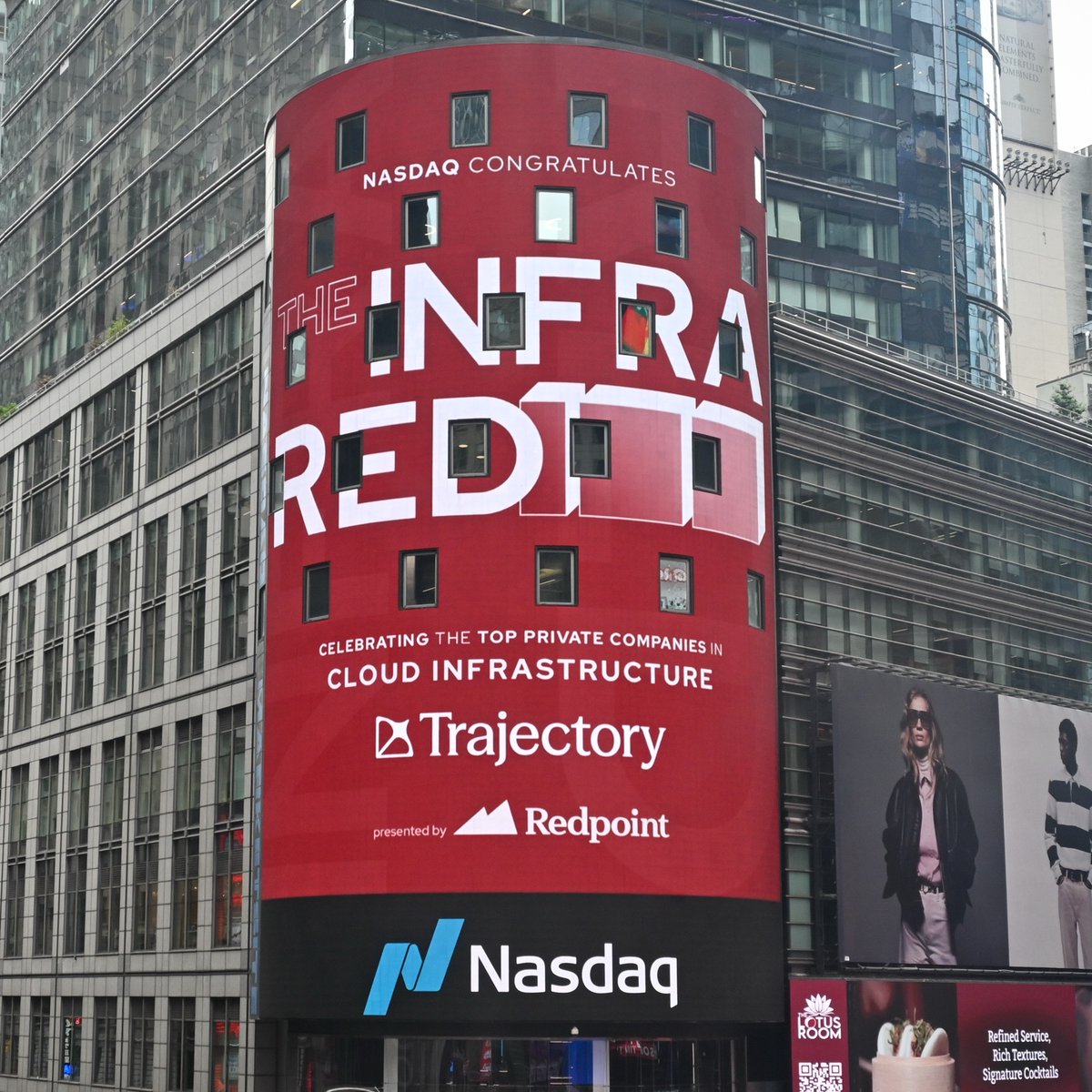
We’re taking a quick break for the 5 days of Trajectory, but wanted to take this time to say that we’ve been named to @Redpoint’s 2026 Infrared 100 as one of the companies shaping the future of AI infrastructure. We're so grateful for the recognition so early in our journey, and want to congratulate the other awardees as well!
Trajectory tweet media
English
5
5
69
8.3K
Trajectory
Trajectory@trajectorylabs·
🏹5 Days of Trajectory. Day 3 - An Open Source Training Stack for Continual Learning Building the platform for continual learning requires both partnering with pioneering AI companies, as we showed on Day 2 with Harvey, and working toward frontier research, which we are highlighting today. Continual learning means models that improve hourly from real production use. But with the size of frontier models, this becomes quite difficult. A Qwen-397b would need to spin up and tear down repeatedly across six GPU nodes, and that's valuable time gone. Our contribution is Continual LoRA (C-LoRA): many lightweight adapters running at once on one shared base model. Our insight centers on where the parallelism lives: instead of splitting one giant job across nodes, we load-balance many small jobs over a single base. The result: 2.81x experiment throughput over single-tenant training, with no regression on rewards. We built this together, with @anyscalecompute, @NovaSkyAI, and generous support from @GoogleCloud and @GoogleStartups. We've open-sourced on SkyRL as one of the first multi-LoRA, RL training platforms, so that every team can get to continual learning faster. We’re very excited to see what you build, please reach out!
Trajectory tweet media
English
11
62
507
95.9K