
fry retweetledi
fry
4K posts


fry
@Trueda6
worlds first & only digital money is BSV...
Katılım Eylül 2021
585 Takip Edilen223 Takipçiler

fry retweetledi

JUST IN: Billionaire Mark Cuban says he sold "most" of his Bitcoin.
"Bitcoin has lost the plot."


English
fry retweetledi

Got @x402agency working from my own BRC-100 wallet, no Metanet Client.
plainly: my software paid theirs ~$0.006 in bitcoin for some data. No card, no subscription or approval step. Stripe would charge $0.30 (50x what I paid). cc @johncalhooon
English
fry retweetledi
The IPv6 Forum's Call
Why the formal call for IPv6-only transition matters for the architecture being assembled
By MrBen
In May 2026, Professor Latif Ladid, founder and President of the IPv6 Forum, published a position paper titled "Call for IPv6-Only and Blockchain on Agentic AI." It is a formal call from the global authority on IPv6 standards for worldwide transition to IPv6-only networks, and it names BSV blockchain as the trust and economy layer for the Internet of Agents.
This paper deserves attention not because BSV is named, which those who know Ladid's work will not find surprising, but because the IPv6 Forum is making a formal institutional call at a specific moment. That moment is the same moment the rest of this sequence has been documenting. The architecture is reaching the point where formal calls to action are being issued by the standards-setting bodies.
The IPv6 Forum and what it does.
The IPv6 Forum is the international body that has been advocating for IPv6 adoption since 1999. It works with governments, standards bodies, network operators, and equipment vendors to coordinate the global transition from IPv4 to IPv6. Ladid has led the forum throughout its existence and is one of the senior figures in global networking infrastructure.
When the IPv6 Forum issues a formal call for action, it is not commentary. It is policy direction from the body that coordinates IPv6 deployment globally. The forum's calls have historically preceded national IPv6 mandates, enterprise deployment programmes, and standards body decisions.
Ladid's current call is for a worldwide full transition to IPv6-only for enterprise and government networks. The paper notes that the big countries are now crossing 60 percent IPv6 penetration, with six countries above 70 percent. France at 86 percent, China at 77 percent, Germany at 76 percent, Belgium at 72 percent, India at 70 percent. Dual-stack deployment is described as a temporary compromise that creates ongoing expense and operational complexity. IPv6-only is described as the production-ready vision for AI, 6G, Blockchain, peer-to-peer IoT, and enterprise verticals.
Why IPv6-only matters for Agentic AI.
The paper makes a specific architectural argument about why IPv6-only is required for Agentic AI at scale.
Ladid forecasts approximately 900 billion AI agents by the end of the decade. Every agent needs a globally routable address. IPv4 cannot provide that. Network address translation, which is how IPv4 currently handles the address shortage, breaks the end-to-end connectivity that direct agent-to-agent communication requires.
With IPv6, every agent, sensor, container, and device can have a unique globally routable address. Agents can discover each other directly. They can establish peer-to-peer connections without traversing centralised gateways. Service discovery becomes capability-based rather than location-based. An agent can query the network for an agent that can analyse financial risk in Spanish and receive the IPv6 address of a qualified peer.
Without IPv6-only, the machine economy that the agent commerce literature describes cannot operate at scale. The networking layer is the constraint.
linkedin.com/posts/latif-la…
1 of 3
English
fry retweetledi
fry retweetledi

Ah yes, “off-chain transactions.”
The modern euphemism for:
“Please trust the intermediary.”
If an exchange internally updates balances between users, nothing has settled on Bitcoin. No miner validated it. No distributed consensus occurred. No timestamped transfer happened. No proof-of-work secured final settlement.
It is a database entry.
An IOU.
A promise.
The precise model Bitcoin was invented to escape.
Before Bitcoin, every digital cash system collapsed into trusted third parties because there was no mechanism for independent settlement without an intermediary maintaining the ledger. That was the breakthrough: removing the need to trust the operator.
So when you proudly announce:
“Bitcoin moves off-chain all the time,”
what you are actually saying is:
“People abandon Bitcoin’s core innovation constantly.”
Congratulations. You have reinvented banking and mistaken it for progress.
And then the intellectual sleight-of-hand begins:
“Oh but exchanges work.”
Of course they do. So did PayPal. So do banks. So did every custodial system before Bitcoin existed.
That is not scaling Bitcoin.
That is bypassing Bitcoin.
If ownership depends upon legal recourse, operational integrity, custodians, compliance departments, or the goodwill of an exchange operator, then the intermediary is the system.
The funniest part is the smugness. Watching someone confuse internal ledger reconciliation with actual settlement while telling others to “learn the basics” is rather like watching a man microwaving frozen dinners lecture a chef on gastronomy.
Words do not alter economic reality.
Calling custodial bookkeeping “off-chain Bitcoin transactions” does not make them Bitcoin transactions any more than casino chips are sovereign currency.
They are trusted balances inside somebody else’s system.
Exactly the thing Bitcoin solved.
GIF
ClioBitcoinBank 🏴☠️@ClioBitcoinBank
@CsTominaga @bergealex4 No, bitcoin moves offchain between parties all the time without an L2, these are called offchain transactions. Presuming offchain transactions require an L2 is your mistake, not mine. At least learn the basics before you pipe up.
English
fry retweetledi
fry retweetledi

I want to burn them to fucking shit
⚔️$SirToshi: Đefender ✪f ₿itcoin@SirToshiTV
"...2026, that's my date." - CSW
English
fry retweetledi
English
fry retweetledi

If you worked on BSV and you've got a small business or a startup today,
I want you to be one of the first to use something I've built 👀 - not payment related, though.
Closed beta starts this Friday.
Free for a month.
DM me.
If you've ever used HandCash help me with a RT🙏
English
fry retweetledi

fry retweetledi
The Senior Advisor
What the D2 Legal Technology post reveals about the BSV Association's SEC engagement
By MrBen
The photograph from outside the SEC building on May 11 told you the BSV Association was operating at a different level than its public reputation suggested. Three days later, a LinkedIn post from D2 Legal Technology revealed how much more had actually been happening behind that photograph. The delegation was larger, the legal infrastructure more substantial, and the institutional connections wider than the initial picture indicated.
This piece works through what the D2LT post reveals, why each detail matters, and how it connects to the institutional architecture being assembled across multiple jurisdictions.
Who D2 Legal Technology is.
D2LT is a London-based legal technology firm founded in 2011 by Akber Datoo. They work at the intersection of law and technology in financial services, advising on tokenisation, digital assets, regulatory technology, and the legal architecture that institutional finance requires to operate at scale. They have offices in London, Manchester, Bristol, Frankfurt, New York, Charlotte, Hong Kong, Singapore, and Sydney.
Their client base reveals where they sit institutionally. D2LT's About Us page lists their clients as including ISDA, ICMA, ISLA, Insight Asset Management, BlockFi, the BSV Association, Tokenovate, the Philippines SEC, World Fuel Services, and Export Trading Group. The institutional weight of that client roster matters. ISDA is the trade body for the global derivatives market. ICMA is the International Capital Market Association. ISLA is the International Securities Lending Association. The Philippines SEC is a national securities regulator. These are not minor relationships. D2LT operates at the level where serious financial infrastructure decisions are made.
Three of those names matter particularly for what is happening now. The BSV Association and Tokenovate are both D2LT clients. This is the institutional link that connects the SEC engagement, the Bank of England Synchronisation Lab work, and the broader institutional architecture being assembled. The same legal-technology consultancy is advising both the BSV Association on US regulatory engagement and Tokenovate on the BSV-native CDM-compliant settlement protocol that is in production inside the Bank of England's Synchronisation Lab.
That coordination is significant. It means the legal architecture being built across the US regulatory framework and the UK settlement infrastructure is being developed by the same legal-technology professionals working with the same conceptual frameworks. This is not coincidence. It is institutional infrastructure being deployed in parallel across jurisdictions.
Jeffrey Golden's role.
The D2LT post reveals that Hon. Jeffrey Golden KC is a Senior Adviser at D2LT. Not a freelance consultant. Not acting solely in his personal capacity. He is institutionally embedded at the specialist legal-technology firm whose work spans the BSV Association, Tokenovate, and securities regulators across multiple jurisdictions.
This changes the institutional picture of the SEC engagement considerably. Golden was not just bringing his personal credibility from 25 years of work on the ISDA Master Agreement. He was bringing the operational vehicle of D2LT, which is already advising securities regulators globally on the exact frameworks the BSV Association needed to discuss with the US SEC.
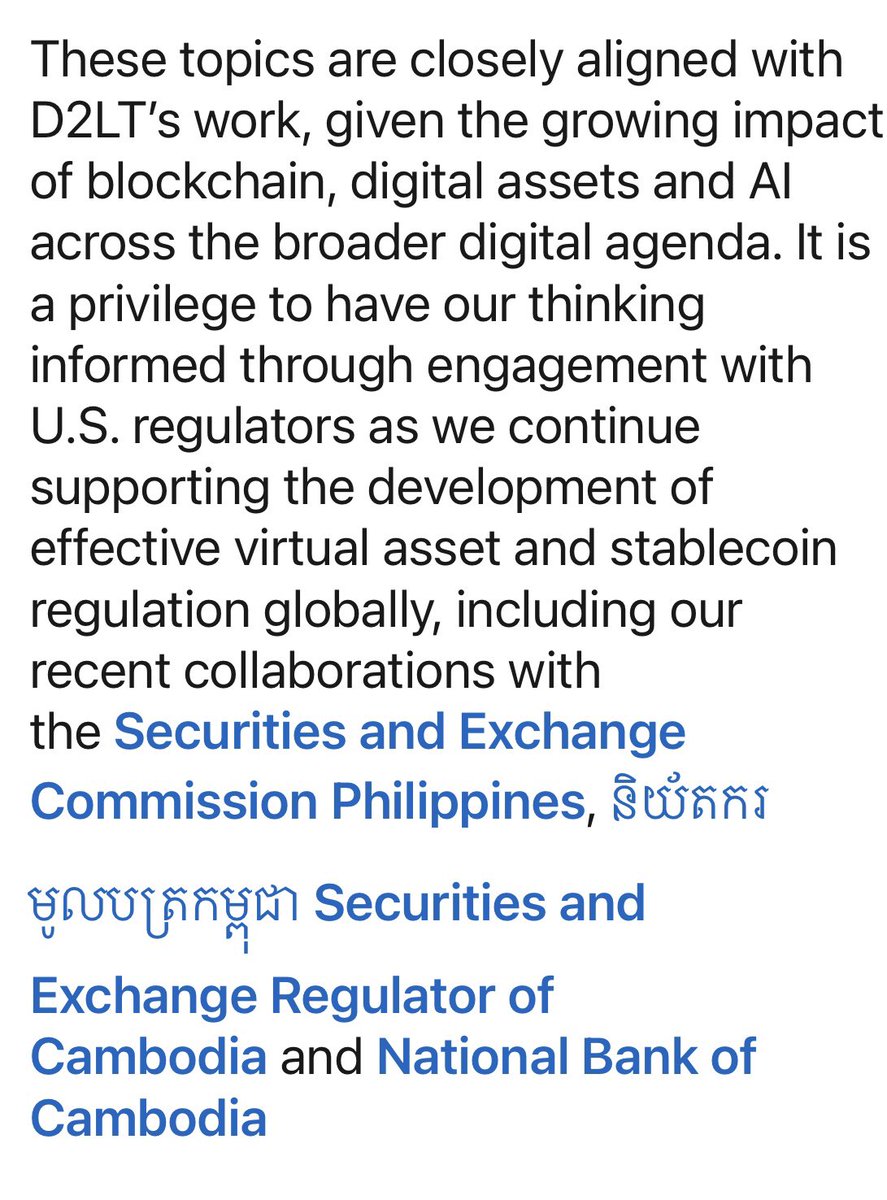
D2LT's recent collaborations, named in the same post, include work with the Securities and Exchange Commission of the Philippines, the Securities and Exchange Regulator of Cambodia, and the National Bank of Cambodia on virtual asset and stablecoin regulation. The BSV Association engaged the same Senior Adviser who is also informing securities regulators across the Asia-Pacific region.


MrBen (Palmer)@71Nous
Reading the SEC Engagement Why the BSV Association at the SEC with Jeffrey Golden KC is the convergence point of everything that is already underway By MrBen That is significant. And the timing is anything but coincidental. What we are looking at is the BSV Association, Bitcoin Beyond, and Jeffrey Golden KC standing outside the SEC building in Washington DC, publicly announcing an engagement with US securities regulators. Here is why this matters in the context of what is already underway. Jeffrey Golden's presence is the headline. Golden is not a peripheral figure. He is the principal author of the ISDA Master Agreement, the foundational legal document for global derivatives markets. He is also a co-drafter of the BSV Network Access Rules. He sits at the precise intersection of conventional institutional finance and BSV's legal architecture. His presence at the SEC, on behalf of the BSV Association, means the engagement is operating at the highest possible level of institutional legal authority. When Golden meets the SEC, he is not pitching them on BSV. He is speaking the legal language they understand, from the position of the person who built the framework they regulate inside. The timing relative to everything else. April 30 2026. A&O Shearman publishes the requirements document. End of April. A&O hires Hirano in Tokyo for Japanese debt finance. May 4. KRWQ launches on BSV. May 7. Deutsche Bank publishes the white paper. Mizuho, Nomura, and JSCC announce Canton trial. MUFG conspicuously absent. May 11-12. BSV Association at the SEC with Golden. Thursday, May 14. Senate Banking Committee marks up the CLARITY Act. The BSV Association is engaging the SEC in the same week the US Senate is marking up the legislative framework that will govern stablecoins and digital asset settlement. This is not happenstance. This is positioning at the moment when the regulatory frame is being set. What an engagement at this level actually looks like. The SEC does not casually meet with industry associations. Meetings get scheduled because someone with standing requests them on a specific agenda. Bringing Jeffrey Golden KC into that meeting tells you the BSV Association is presenting itself as a credible institutional counterparty, not as a crypto advocacy group. The likely agenda items would include some combination of: how BSV's architecture satisfies regulatory requirements for settlement finality, how the Network Access Rules provide a governance framework the SEC can recognise, how BSV's UTXO model and proof-of-work consensus differ structurally from the chains the SEC has had problems with, and how institutional tokenisation through BSV-native infrastructure (Tokenovate, MNEE, the emerging stablecoin map) fits within US securities law. This is exactly the kind of conversation that produces the opinion letters that move institutional capital. The legal cover for institutional deployment does not emerge from technical merit alone. It emerges from these meetings, where regulators get comfortable with the legal architecture from the people who built it. The structural significance. This is the moment the institutional readiness becomes concrete. The BSV Association is doing the regulatory groundwork that converts technical readiness into institutional acceptability. Golden's presence is the institutional equivalent of putting the right key into the right lock. Two things become more plausible after this meeting than before it. First, that an opinion letter or regulatory acknowledgment that names BSV-style architecture as legally acceptable for institutional settlement is being seriously contemplated. The fact that Golden is in the room means the legal framework is being presented in terms the SEC can engage with, not dismissed as crypto noise. Part 1 of 2 👇
English
fry retweetledi
fry retweetledi

Never forget what it took to build the free world.
Bravery, and refusal to quit.

English
fry retweetledi

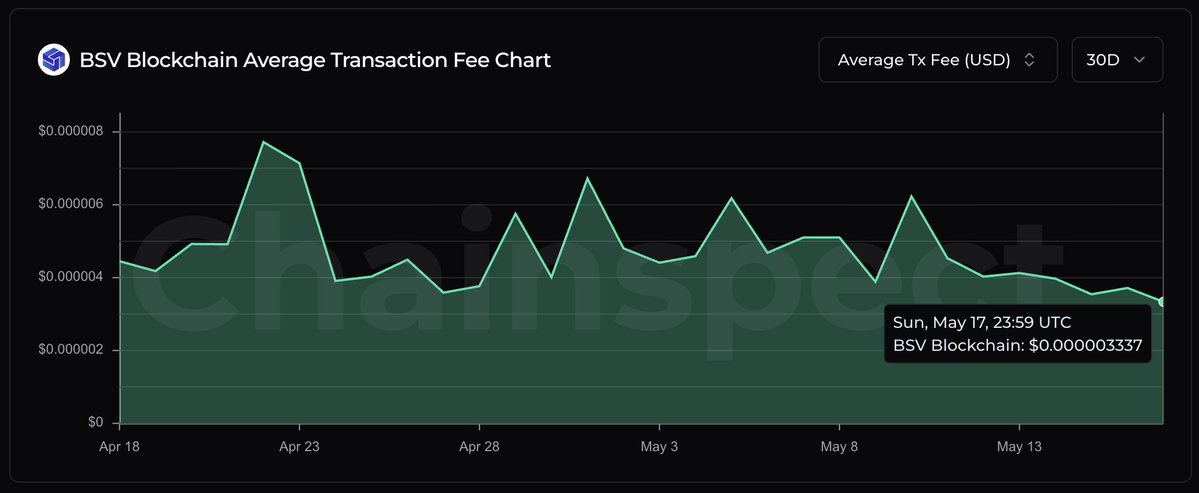
Electronic cash at scale needs fees that are practically invisible
@BSVAssociation hit a new 30-day low in average transaction fees at just $0.000003337
High-volume payments become a lot more realistic when the cost per transaction looks like this
📊 chainspect.app/chain/bsv?rang…
English
fry retweetledi

JUST IN: Bitcoin Depot, once the largest operator of crypto ATMs in North America, files for bankruptcy.
English
fry retweetledi
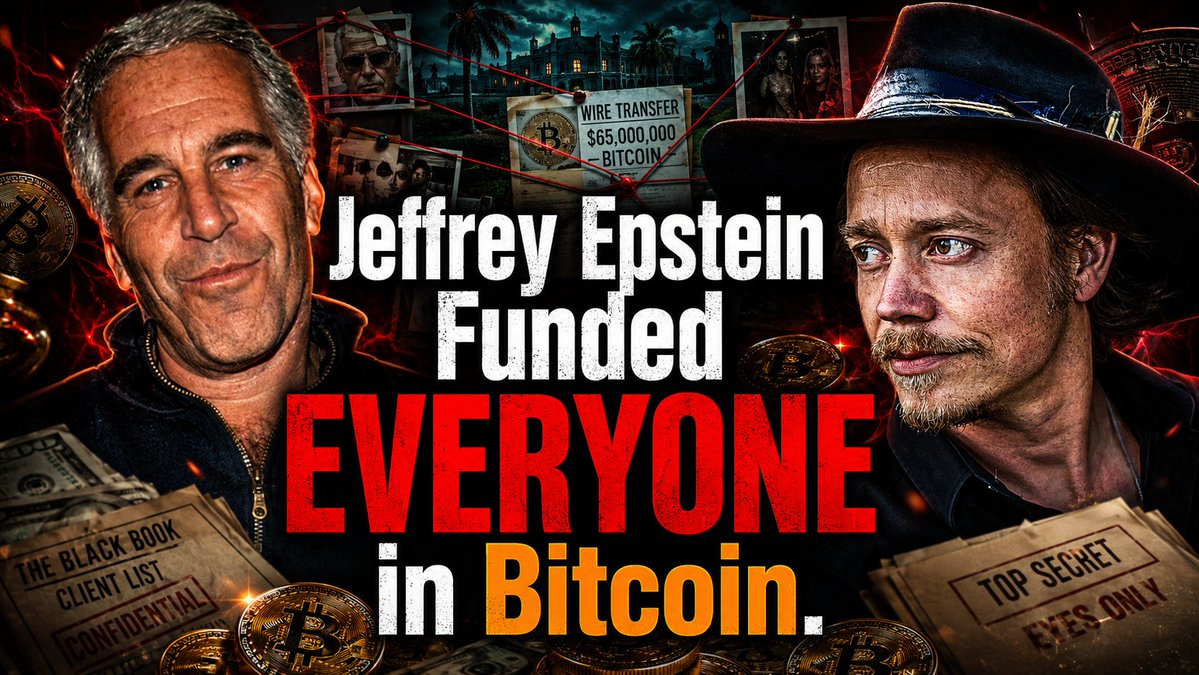
This video is over 40,000 views as of Monday morning, and I've decided that I am going to do a detour called "Follow The Money" for Bitcoin History Series Part 4B.
I am going to go as deep as the public record will let me go on where the money came from and where it went from late 2010 until 2015 leading into the Bitcoin Civil War.
English
fry retweetledi
One of the things I have come to understand about this universe is something I first learned, in sharper form, from the writings of Terry Pratchett.
He understood something that many solemn men in expensive rooms never quite manage to grasp. We are not merely Homo sapiens. We are Pan narrans — the storytelling ape, the storytelling chimp, the creature that does not merely observe the world but survives by wrapping it in meaning.
That is what we are.
Not the rational animal, not the economic animal, not the statistical animal, not the glorious little spreadsheet mammal that consultants dream about after too much airport coffee. We are the animal that tells itself stories and then builds empires, religions, markets, wars, technologies, and entire civilisations around them.
People like to pretend otherwise, of course. It is one of their more charming weaknesses. They imagine that the world runs on facts, when most of them would not recognise a fact if it arrived with a passport, three witnesses, and a signed confession. They imagine it runs on science, when half the institutions invoking science are merely laundering authority through a lab coat. They imagine it runs on money, when money itself is only a story that has learned to wear a suit.
The strongest force in this universe is not gravity.
It is not electricity.
It is not the elegant machinery of physics, though I have published in physics and have more work in that field coming. I understand the appeal of equations. They are clean. They are disciplined. They do not flatter fools merely because the fools have followers.
But human beings do not run on equations.
They run on narrative.
They run on stories.
Stories are what tell a man whether he is defeated or merely delayed. Stories tell a mob whether it is righteous or merely numerous. Stories tell cowards they are prudent, thieves they are innovators, parasites they are intermediaries, and bureaucrats they are guardians of order.
The right story can keep a civilisation alive.
The wrong one can make a civilisation applaud while it walks into the furnace.
That is why narrative matters. That is why people fight over it. That is why they lie, distort, censor, sneer, smear, and posture. Not because they care about truth. Most people have only a holiday acquaintance with truth. They visit it occasionally, complain about the weather, and return to the warm swamp of consensus.
They fight over narrative because narrative governs what people believe is possible.
And one of the oldest, strongest, most enduring narratives is the comeback.
The return.
The man who was declared finished, buried, dismissed, mocked, written off, and explained away by people whose chief talent was being wrong in groups.
The amusing thing about such people is that they always mistake the middle of the story for the end. They see blood and call it defeat. They see silence and call it absence. They see delay and call it destruction. They see a man forced to endure and assume endurance is weakness.
That is because their imagination is small.
And small imaginations always confuse survival with failure.
But the comeback is powerful because it does not require permission from the crowd. It does not ask the mob to revise its opinion first. It does not wait for the priests of fashionable consensus to announce that the weather has changed. It simply arrives, inconveniently alive, carrying receipts and a very poor opinion of those who celebrated too early.
That is where we are now.
They wrote their story.
They told themselves they had won.
They convinced each other that the patents would disappear, the IP would vanish, the work would be erased, and the man would be stopped.
A touching little bedtime story, really. The sort told by people who need the dark to feel safe.
But reality has an unrefined habit of entering the room without asking permission.
The work remains.
The IP remains.
The publications are coming.
The story is not over.
English

fry retweetledi

Railroads survived, and fiber lasted. But GPUs? They age fast.
@kurtwuckertjr explores why the AI data center boom might not echo past infrastructure manias.
Hyperscalers plan to spend $350B on AI infrastructure, but will today’s GPUs matter when the next wave of innovation hits?
Read the full editorial below.
#GPU #DataCenter #AI
CoinGeek@RealCoinGeek
The AI data center boom coingeek.com/the-ai-data-ce…
English