The Persian wind tower (بادگیر) or how a 700-year-old air conditioner could cool an environment up to 12°C with no electricity
[📹 Never Enough Architecture]
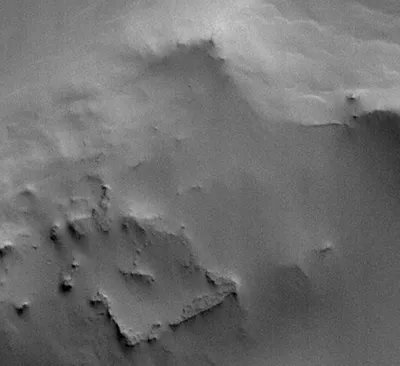
A recent image from NASA's Mars Reconnaissance Orbiter has captured a square-shaped structure on the Martian surface, sparking discussions about its origin.
While some speculate it could be evidence of an artificial construct, experts suggest that the formation is likely a natural geological feature resulting from intersecting fractures or faults.
Such patterns are not uncommon in geology and can occur through natural processes. The phenomenon highlights the human tendency towards pareidolia, where we perceive familiar shapes in random patterns.
This isn't the first time Martian images have led to such interpretations; past photos have featured formations resembling faces and other recognizable shapes. The current consensus leans towards a natural explanation for this square structure.
🤷🏼♀️ 🤔
Plugging @Corican and Prism again: zealy.io/cw/prismgroup/….
Do small tasks, place reviews, leave a comment somewhere, help Nano grow and earn some Nano in the process.
If you want to help Nano adoption there is literally no simpler way.
Nano is #DigitalMoney that can be spent, sent and accepted anywhere in the world.
An easy to use, sustainable currency that is open to all 🌱
Visit nano.org to learn more.
Static grass applicators use relatively high voltage (40,000 V) to apply and recreate realistic grass in diorama and model railroads, and the process is quite mesmerizing
[📹 Model Railroad Hobbyist]