Tuan Le Minh
1.9K posts


AI Will Lead To 300 Million Layoffs In The US And Europe zerohedge.com/markets/ai-wil…


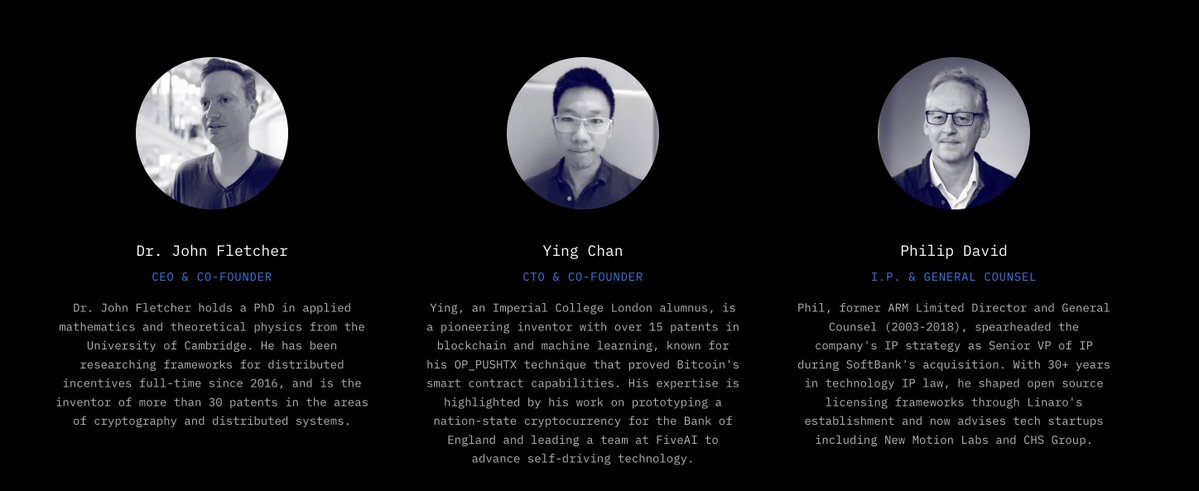
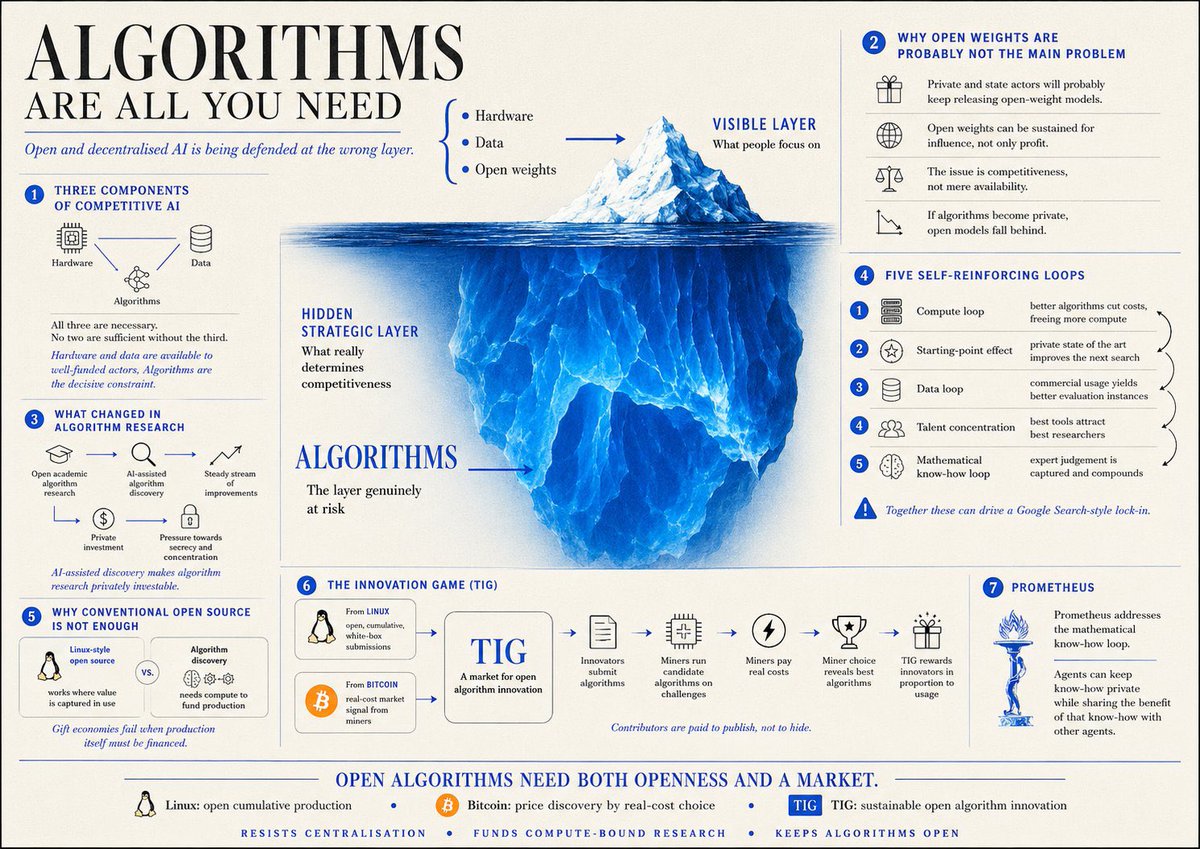
Yeah $TIG is flying under the radar An open protocol for algorithm development listening to John explain how algorithms can optimise & help you extract maximum utility from any given chip DeepMind, OpenAI, Anthropic, they're all racing to own the algorithmic layer if they win, you pay a tax on every optimized query, every solved route, every compressed model Over the last 50 years, we focused on hardware The fight was between Intel, ASML, TSMC: who could etch circuits smallest and cheapest at scale? many years ago we realised Moore's law seemed to be hitting a ceiling, that there may be fundamental limitations of physics as such, the focus changed to how we could extract maximum utility from the hardware the fight will be for the most optimised software I spoke with @Dr_JohnFletcher to discuss the TIG mission Full ep on our youtube 00:00 Intro 00:26 Primer on $TIG 02:18 Cambridge, ARM and the TIG Team 06:33 Why open source? 15:21 Why challenges for algorithms 20:00 Role of IP licensing 23:29 Defending Against Algorithmic Monopolies 27:40 Monetisation 28:40 Use Cases 36:23 Power Struggle vs AI Labs 39:12 Freedom Ideology


THE NIGHTMARE SCENARIO NOBODY IS TALKING ABOUT AN OIL + DOLLAR SHORTAGE The nightmare scenario nobody is talking about right now is what happens if the Dollar skyrockets at the same time as oil. Since the world's oil supply is purchased in Dollars, they are typically inversely correlated. A lower Dollar = increased international demand for oil. The only time we've seen a brief period of oil 🔼 Dollar 🔼 was in 2022, during the economic slowdown. The nightmare scenario we're facing is a global oil supply shortage at the same time as an economic crisis. Both of these compound the demand for Dollars because not only are nations forced to liquidate greater assets to purchase oil, but servicing sovereign debt becomes much more expensive because it's denominated in Dollars. This energy crisis could very well be the beginning of Brent Johnson's @SantiagoAuFund Dollar Milkshake Theory and the United States' plan to take a large portion of its debt out of circulation.

最近一个现象很流行 “瑞典人卖出 ,美国人买入” 。 这指的是瑞典人大量卖出 本地公司 $sive 并且做空导致 $sive在美股开盘前下跌,神奇的事情在美股otc市场开盘后发生了, $sive 每次都能V形反转并且一路从 $1美金 涨到现在的 $6美金附近。 所以我很好奇为什么瑞典人会乐此不疲的“做空” $sive? 并且甚至到厌恶本地公司。 我很不理解因为瑞典也出产了远超其体量的世界级企业比如:爱立信,Volvo商用车,H&M,Nordea,甚至最近的Klarna等企业。 所以他们不缺孕育世界级企业的土壤但为什么现在他们对于小型企业那么憎恨和仇视? 我总结了下原因有几点: 1. 我认为一切的前提都是建立在瑞典是欧洲股权文化最深的国家。这意味着在瑞典每一个家庭都会将超过一半的储蓄投入股市,是欧元区平均水平的两倍以上。近四分之一的瑞典人直接持有上市公司股票,这样的规模在欧洲是绝无仅有的。 你甚至无法想象在过去十年,在瑞典上市的公司比法国、德国、西班牙、荷兰四国加起来还多。所以,瑞典这个土壤孕育了大量的股市资金。 在2012年瑞典还推出了ISK免税投资账户,瑞典散户可以通过手机银行无缝交易股票。 这一个前提造就了一个现象: 瑞典股市是一个极度容易被媒体影响的市场,因为他们散户多、市场活跃、IPO密集,这三个原因造就了他们的股票市场有大量的估值泡沫公司。 2. 在前一个原因的孕育下,瑞典人在2020年到2021年间遇到了IPO狂潮,而这一时期制造了大量猎物,这些猎物就是所谓的“做空机构”的目标。因为ipo上市公司中有大量亏损的小盘科技、游戏、生物医药公司被散户热情推到离谱的估值。2022年加息周期来临后,这些公司股价腰斩,然后这样的瑞典股票市场就成为了空头的狩猎目标。 3. 瑞典人在2022年前都不知道什么是做空报告,但是当2020-2021年间,大量ipo上市公司中有股价腰斩的达到了70%,激进做空者出现了。 激进做空者他们会主动发布研究报告,试图说服市场”目标公司被高估”,从而推动股价下跌。 并且在2022年期间,他们的每一次报告都能获得非常好的收益,因为那个时候的瑞典市场存在大量泡沫,这也是为什么我说第一个原因是大前提。 在2021年高峰期,斯德哥尔摩交易所IPO融资超过115亿美元。随后的大跌让大量投资者受伤,市场风格从”故事驱动”转向”盈利驱动”——对仍亏损的高估值公司极为不利。 所以结合上述原因, 瑞典人会更愿意相信本地媒体和做空机构,因为他们确实经历了 ipo浪潮,通过做空赚到了钱。 这个时候,当一个有着世界领先技术的公司出现,但是财报重述暴露信息质量问题,然后散户驱动的AI概念热情推高估值,这完全符合做空机构的目标,所以他们会疯狂做空。 但这一次是不一样的, 他们忽视了光学的发展速度和对于技术迭代的重视。 瑞典本地人现在投资只看盈利,如果亏损了,他们就会疯狂做空,他们不会理会这个公司潜在的价值和未来的发展。 我们在现在看来会开玩笑的说 “瑞典人卖出,美国人买入” ,但其实他们很可怜,因为他们经历了2020-2022年的ipo浪潮后,他们已经不相信或者说是不愿意去想象这个公司未来的样子,他们只会被眼前的盈利和亏损遮挡视野。 瑞典的股权文化繁荣是双刃剑——培育了欧洲最活跃的资本市场,同时也制造了欧洲最多的做空猎物。 希望瑞典人能够明白,ai的时代是想象的时代。 wish you all the best! #Sweden #NasdaqStockholm #SwedishTech #NordicMarkets #EuropeanTech #SiversSemiconductors #SIVE #Photonics #CPO #AIInfrastructure #Semiconductors #SmallCap #NordicMarkets


Japan dumped ~$30 billion of U.S. Treasuries in Q1


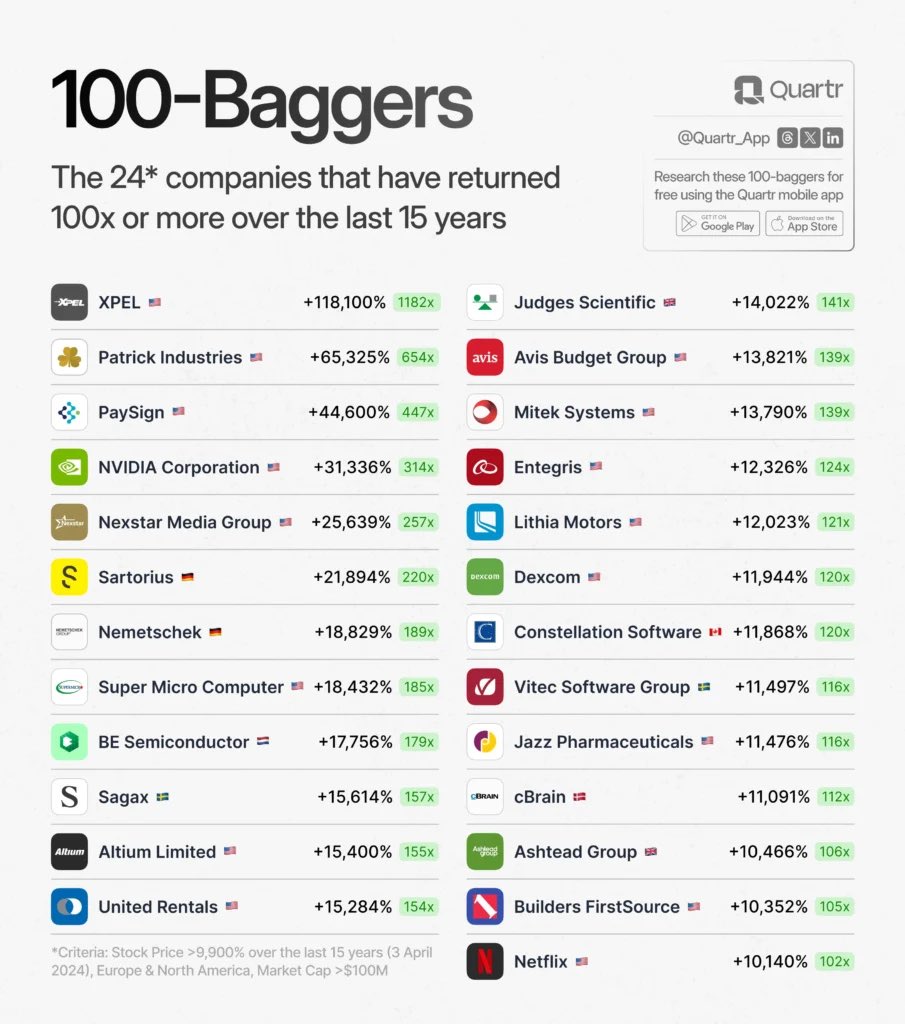
Seven lessons from Christopher Mayer's "100 Baggers." Still one of the best books ever written on long-term investing. 1. Time does the heavy lifting. On average, 100-baggers took 26 years to multiply a hundredfold. The S&P 500 itself became a 100-bagger from 1982. You don't need a magic stock. You need to stay invested. 2. Start small. The average 100-bagger had a market cap of $500 million when it started. It's easier to grow from small to large than from large to huge. 3. Skin in the game matters more than résumés. Founder-led companies whose managers think of shareholders as partners did most of the lifting on Mayer's list. 4. Big ponds grow big fish. A company can only be a 100-bagger if its market is large enough to absorb that growth. Niche dominance is good. Niche dominance in a huge category is great. 5. Pricing power is the cleanest sign of a quality business. If a company can raise prices without losing customers, almost everything else takes care of itself. 6. High returns on capital, reinvested. The real compounding engine is a business that earns 25% on every dollar it puts back to work, year after year. 7. The hardest part is sitting still. Even the best 100-baggers had 50% drawdowns multiple times along the way. The investors who got the full ride were the ones who refused to flinch. Read it. Once read. Read it again.


The last time he cashed out big, especially real estate assets, was late 2018 / early 2019. We all know what happened shortly afterwards. Li Ka-Shing is one of the best at anticipating change in cycles and I’d keep a close eye on his moves.