UAPedia

358 posts

UAPedia banner
UAPedia

UAPedia

@UAPedia_

UAPedia is the world’s first expert-curated, AI-assisted encyclopedia dedicated to Unidentified Anomalous Phenomena. Full UAPCon video here https://t.co/jHHcHFOD2J

Katılım Aralık 2025
472 Takip Edilen314 Takipçiler
Sabitlenmiş Tweet
UAPedia
UAPedia@UAPedia_·
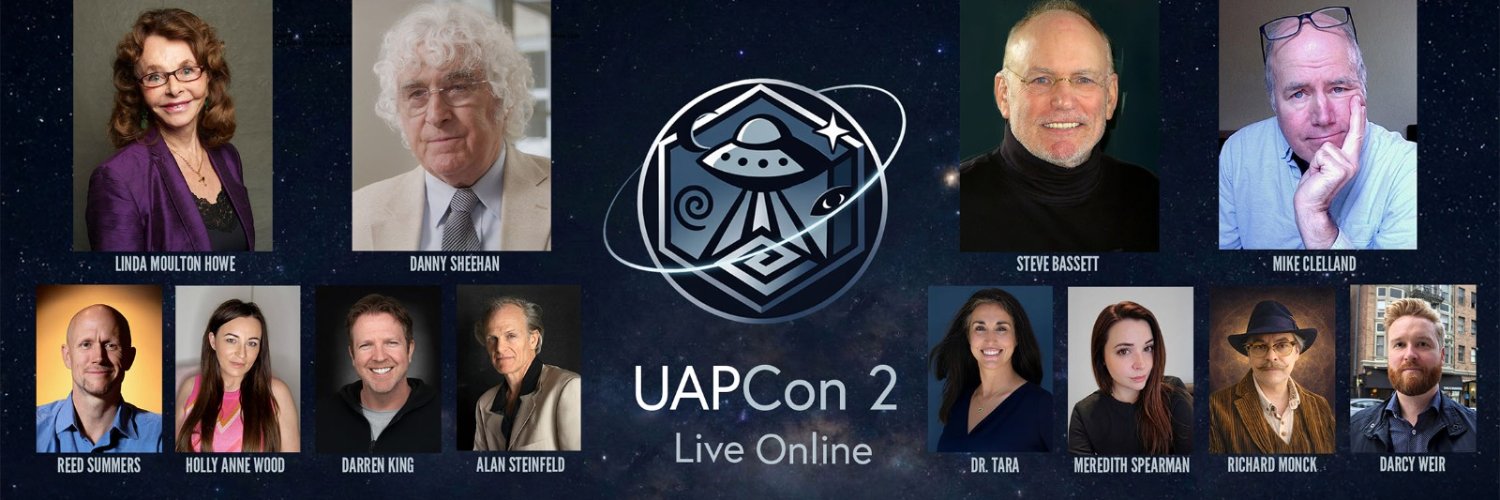
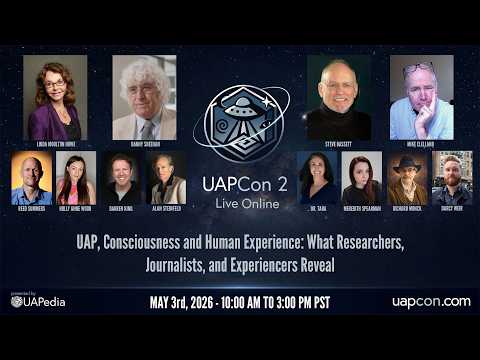
🚨OUR FIRST UAPCon has been watched 37k times! UAPCon = #UAP + #Consciousness What Cutting-Edge Academics Reveal About Unidentified Anomalous Phenomena (UAP) & Non-Human Intelligence (NHI): Implications for Culture and Consciousness. Designed for a moment when the topic of UAP demands higher standards: better questions, clearer definitions, stronger methods, and more maturity in how we speak about anomalous experiences and their implications. Across keynotes, research spotlights, and moderated panels, UAPcon explores three essential dimensions: Evidence: What can be responsibly inferred from observational data and research about the nature of our reality? Experience: How do anomalous encounters with UAP and NHI impact experiencers perceptions, psychology, physiology, and worldview? Implications: Exploring how UAP science, spirituality, psychology, and culture. Whether you’re a scientist, clinician, student, policymaker, investigator, or simply a serious-minded member of the public, UAPCon offers a rare space to engage the subject, without sensationalism, focused on methods, models, and meaning. Watch the full conference video at UAPCon youtube.com/live/irsLGUKWO…
YouTube video
YouTube
English
1
3
10
506
Rizwan Virk
Rizwan Virk@Rizstanford·
Check out my new academic paper about stigma and UFOs /UAP - it includes interviews with profs including @ProfAviLoeb, @GarryPNolan, Kevin Knuth, @MorphoTime, @dwpasulka and others over 2 years. Essential reading on why/how academia doesn't take this topic seriously. 🔗 👇🏽
Rizwan Virk@Rizstanford

I published a preprint of my academic research article on UFOs and stigma in academia: UFOs in the Academy: A Case Study in Stigma, Implicit Boundary Work and the Edges of Legitimate Science.  You can find the preprint here: doi.org/10.31235/osf.i… See thread below 1/4

English
3
6
34
2.2K
UAPedia
UAPedia@UAPedia_·
@Rizstanford Brilliant piece of work and an insightful look into stigma and the world of academia 🛸
English
0
0
1
37
Rizwan Virk
Rizwan Virk@Rizstanford·
I published a preprint of my academic research article on UFOs and stigma in academia: UFOs in the Academy: A Case Study in Stigma, Implicit Boundary Work and the Edges of Legitimate Science.  You can find the preprint here: doi.org/10.31235/osf.i… See thread below 1/4
English
6
26
83
14K
UAPedia
UAPedia@UAPedia_·
Biblical Visions and UAP: an Investigative Read Biblical visions are not modern incident reports. They are older, stranger, and in some ways more useful. Useful, because they preserve recurring human reactions to overwhelming anomalies: light, fear, collapse, voices, altered perception, the sense of a presence with intent. The right claim is not “the Bible proves UAP.” The right claim is narrower: Biblical vision narratives can be read as comparative phenomenology. They preserve recurring encounter motifs that overlap, sometimes strikingly, with motifs found in modern UAP witness literature. That overlap is worth studying. Read the full article at UAPedia uapedia.ai/wiki/biblical-… #UAP #UFO #NHI
UAPedia tweet media
English
0
0
1
31
UAPedia
UAPedia@UAPedia_·
Project STAR GATE: The CIA’s Psychic Spies, the Cold War Data Trail, and the UAP Edge On May 22, 1984, a viewer sat with paper, pen, and a sealed-envelope protocol that reads like it belongs in a stage magician’s handbook. The target was not a bridge, a submarine pen, or a hostage house. The envelope, once opened, reportedly named something far stranger: “The planet Mars,” with a “time of interest approximately 1 million years B.C.” and coordinates written in degrees north and west. Project STAR GATE, often shorthand-labeled “the CIA remote viewing program,” is best understood the same way. Not as a single mythic unit of “psychic spies,” but as a long-running, multi-agency experiment. This is investigative walk-through reports what the record actually shows, where it fractures, and why STAR GATE still shadows modern UAP discourse. Read the full article at UAPedia uapedia.ai/wiki/project-s… #UAP #UFO #NHI
UAPedia tweet media
English
1
1
3
91
UAPedia
UAPedia@UAPedia_·
UAPedia very proud to present "The Archives of Alan Steinfeld" podcast on @Spotify @alan_steinfeld UAPedia opens the vault on never-before-released audio recordings from Alan Steinfeld’s extraordinary career as host of New Realities. This series preserves rare and timely voices from one of alternative media’s longest-running interview platforms. For more than 30 years, Alan has explored consciousness, metaphysics, and the UAP mystery through thousands of interviews with leading researchers, experiencers, and thinkers. The first episode is a never before heard interview with Jacques Vallée from November 9, 2010 open.spotify.com/show/6k2BGY7ou…
English
1
1
18
99K
UAPedia
UAPedia@UAPedia_·
Battelle Memorial Institute and UAP: The Quiet Contract Turning Encounters Into Data In late 1951, the U.S. Air Force’s UAP problem did not look like today’s social-media firestorm. It looked like paper. Thousands of witness letters, pilot debriefs, radar notes, clipped newspaper reports, and a growing sense inside the Air Technical Intelligence Center (ATIC) at Wright-Patterson that the situation was not self-resolving. So ATIC did what governments often do when the data is messy, politically radioactive, and technically ambiguous: it outsourced the thinking. A declassified document trail shows that Lt. Edward J. Ruppelt and Col. Kirkland visited Battelle in Columbus, Ohio on 26 December 1951 to discuss whether there was “enough material available on unidentified aerial objects to warrant a detailed scientific study.” The decision was yes. Battelle would “submit a proposal” to provide consultants (astronomy, applied psychology, physics, and more) and would “attempt to make a statistical analysis of the reports” to detect “some pattern or trend.” The memo’s most revealing sentence is not about statistics. It is a sober, institutional acknowledgment: “It is very reasonable to believe that some type of unusual object or phenomena is being observed as many of the sightings have been made by highly qualified sources.” This is an investigation into what the public record actually supports about Battelle Memorial Institute’s UAP role, what it does not, and why Battelle remains a recurring node in modern UAP discussions. Read the full article at UAPedia uapedia.ai/wiki/battelle-… #UAP #UFO #NHI
UAPedia tweet media
English
0
0
2
55
UAPedia
UAPedia@UAPedia_·
Bill Cooper: The Pale Horse Rider of UAP Culture Before Reddit threads, disclosure hashtags and YouTube UAP livestreams, there was a man on shortwave radio telling late-night listeners that everything they had been taught about government, space and non-human intelligences was a carefully scripted lie. That man was Milton William “Bill” Cooper. Born in 1943 and killed in a shootout with law enforcement in Arizona in 2001, Cooper was a decorated Navy veteran, author of Behold a Pale Horse and host of the cult-status radio show The Hour of the Time. His work stitched together claims about secret space programs, UAP crash retrievals, underground bases, alien treaties and a hidden world government. For a whole generation of listeners and readers, he was the gateway into the idea that UAP were at the center of a vast power struggle. From a UAP perspective, Cooper is important for three reasons: His book and broadcasts seeded UAP-related ideas into hip hop, prison culture and the broader American underground in a way few “classic” UAP authors ever managed. Read his full biography at UAPedia uapedia.ai/wiki/bill-coop… #UAP #UFO #NHI
UAPedia tweet media
English
0
3
6
135
UAPedia
UAPedia@UAPedia_·
Rosicrucians and UAP: When the Rose Cross Met the Flying Saucer Age The Rosicrucians enter European history the way conspiracies often begin: as literature that reads like a revelation. In the early 1600s, three anonymously published books, later attributed by many scholars to Johann Valentin Andreae, outlined the supposed history and mission of a hidden fraternity, symbolized by the rose and cross. In the 1970s, Rosicrucian Digest ran multiple pieces engaging UFO questions. One 1975 piece cautions readers not to presume an “unidentified flying object” must be extraterrestrial – reminding them that UFO literally means unidentified and warning against “undisciplined imagination.” A 1970 issue addresses the UFO topic with an almost sociological tone, placing “flying saucers” among popular wonders and stressing the need for qualified scientific attention to separate what’s explainable from what remains unknown. Read the full article at UAPedia uapedia.ai/wiki/__trashed/
UAPedia tweet media
English
0
0
2
37
UAPedia
UAPedia@UAPedia_·
Gary McKinnon: The Brit Who Hacked U.S. Secret UAP Programs Gary McKinnon is not a conventional UAP figure. He did not arrive through military aviation, astronomy, or government paperwork. He arrived through a modem, an obsession, and a decade-long legal saga that turned one man’s search for “the truth” into a case study in cybercrime, mental health, extradition politics, and the cultural gravity of the UAP question. To some, McKinnon is the cautionary tale: a systems administrator who crossed a bright legal line and paid for it in years of stress, surveillance, and uncertainty. To others, he is the archetype of the modern “anomaly-seeker,” the civilian who believes the most important evidence is hidden behind institutional locks, and who decides, disastrously, to pick them. McKinnon’s alleged intrusions into U.S. military and NASA systems in 2001-2002 were described by U.S. authorities as the “biggest military computer hack of all time.” (cbsnews.com) Whether those claims represent misinterpretation, partial glimpses of mundane systems, or a brush with something genuinely anomalous remains unresolved in public documentation. That unresolved quality is precisely why the McKinnon story continues to circulate in UAP media, often detached from its sober legal realities. Read his full biography at UAPedia uapedia.ai/wiki/gary-mcki… #UAP #UFO #NHI
UAPedia tweet media
English
1
0
3
69
UAPedia
UAPedia@UAPedia_·
Daniel Sheehan: Constitutional Warrior in the Age of UAP Disclosure @NewParadigmInst When people talk about Daniel P. “Danny” Sheehan, two very different images collide. One is the classic cause lawyer of the 1970s and 80s, pacing a courtroom as he helps the New York Times publish the Pentagon Papers, digs into Watergate, or sues over the nuclear contamination surrounding Karen Silkwood. The other is the silver-haired attorney in a Hawaiian shirt on podcast sets and conference stages, calmly telling audiences that the United States has long-running crash-retrieval programs, that non-human intelligences are visiting Earth, and that the public is legally and morally entitled to know. For UAPedia, Sheehan sits at the junction of two worlds: the history of American constitutional law and the modern battle over UAP secrecy. He is one of a small handful of lawyers whose reputations were forged in headline civil-rights cases and who later turned that skill set toward UAP, arguing that the phenomenon is not just a scientific puzzle but a crisis in democratic accountability. Read his full biography here at UAPedia uapedia.ai/wiki/daniel-sh… #UAP #UFO #NHI
UAPedia tweet media
English
0
1
6
111
UAPedia
UAPedia@UAPedia_·
John Podesta: The Power Broker Who Kept Asking About UAP @johnpodesta On his last day as counselor to President Barack Obama in February 2015, John Podesta sent a single, mischievous tweet that lit up the internet. “Finally, my biggest failure of 2014: once again not securing the disclosure of the [UAP] files. #thetruthisstilloutthere.” It sounded like a joke. Reporters ran light features about the “X-Files fan” in the West Wing. But if you look at Podesta’s record, that quip was not a throwaway. For more than two decades he has been one of Washington’s most persistent inside-players pushing for declassification of government records on what previous eras called “UFOs,” now formally labeled UAP. This is the odd dual life of John Podesta. Inside the Beltway he is best known as a master strategist to three Democratic presidents. Inside the UAP world, he is the rare political heavyweight who keeps publicly saying that it is time to open the books. Read his full biography at UAPedia uapedia.ai/wiki/john-pode… #UAP #UFO #NHI
UAPedia tweet media
English
0
1
5
166
UAPedia
UAPedia@UAPedia_·
Kevin Knuth: The Physicist Who Refuses To Look Away From UAP On a January 2026 episode of American Alchemy, the title alone felt like a shot across the bow of respectable science @AlchemyAmerican “NASA Whistleblower: ‘We Systematically Suppress UFO Data!’” (podbean.com) The “whistleblower” in question was Dr Kevin H. Knuth, a soft-spoken professor of physics from the University at Albany, SUNY, and a former research scientist at NASA’s Ames Research Center. For nearly two hours, Knuth talked Jesse Michels through cattle mutilations, nuclear-era UAP, the Catalina Island instrumented mission, secrets inside NASA, and why he believes the phenomenon represents technology far beyond any known nation. (podbean.com) At a moment when mainstream science is finally edging toward the UAP problem, Knuth has become one of its most visible and controversial bridge figures. He is a career physicist who openly entertains the idea that some UAP may be “visitors from afar,” and who calls the failure to study them “one of the greatest intelligence failures in history.” Read the full biography at UAPedia uapedia.ai/wiki/kevin-knu… #UAP #UFO #NHI
UAPedia tweet media
English
0
3
7
213
UAPedia
UAPedia@UAPedia_·
Forecasting the Uninvited: Predicting UAP Waves It is March 1990. Belgium is small, dense, and airspace-conscious, a country where “nothing interesting happens” is often the official tone until it suddenly is not. In the record that survives, the Belgian Air Force scrambles F-16s. Pilots obtain radar “lock-ons.” And yet the why of it remains unresolved in the public story. (National Archives) This reads like a mystery, from a data distance, it reads like something else: a time-stamped spike, a mobilization signature, and a failure mode in collection. This investigation is about that second reading. Not “Can we predict the universe?” but “Could we, with the tools available from the 1980s through the 2000s, have forecasted UAP reporting surges and high-value ‘collection windows’ well enough to be waiting with better sensors and better forms?” That distinction matters. RAND’s 1968 internal draft put the idea on paper in plain language: standardized reporting was needed “so that times and locations of appearances may be anticipated” and objective data obtained. (RAND Corporation) What follows is a deliberately evidence-separated reconstruction: documented facts first, then analytical inference, then clearly fenced hypotheses. Read the full article at UAPedia uapedia.ai/wiki/forecasti… #UAP #UFO #NHI
UAPedia tweet media
English
0
0
2
51
UAPedia
UAPedia@UAPedia_·
UAPedia is very proud to annouce that Richard Monck has joined the UAPedia Guild as a content creator and contributing author. Richard is a lifelong experiencer with vast knowledge of the Phenomena and deep interest in high strangeness. Keep an eye out for his articles and editorials at uapedia.ai Welcome Richard!
UAPedia tweet media
English
0
0
6
111
Kelly Chase
Kelly Chase@kellychasemedia·
The very first episode of Inquiry with Kelly Chase is now LIVE, several days early and 100% ad-free, for all Patrons. It will go live everywhere else on Tuesday, March 24th. Sign up now to get early, ad-free access: ➡️ inquirywithkellychase.com
English
9
9
87
5K
Kelly Chase
Kelly Chase@kellychasemedia·
We lost my dad 20 years ago today. He’s been gone now for as long as I had him. But a spark of him lives on in me and in the work that I do. The part of me that craves the novel, the part that stays up too late to read one more chapter, the part that is never satisfied with the answer—that’s him. He’d think all of this was pretty cool, and I wish he was here for it.
Kelly Chase tweet media
English
19
1
209
3.2K
Kelly Chase
Kelly Chase@kellychasemedia·
As much as I bitch about ufology, I’m never leaving, because the thing about me is that I love nothing more in this world than a real ✨character✨. And this field is so rich with them. It’s the free-range habitat for the most brilliant, complex, eccentric, dynamic group of intrepid mavericks and weirdos on the planet. Ufology makes me feel a lot of things, but boredom is never one of them.
English
17
16
232
6.4K
Kelly Chase
Kelly Chase@kellychasemedia·
Uh…you guys do get that just because they put the word “disclosure” in a movie title that it doesn’t mean it’s actually disclosure, right? And you know that when good information does make it into major Hollywood films that the intention isn’t to reveal anything, but to obscure the good info with bad info so you can’t sort it out, right? And you recognize that putting something in a movie doesn’t make it more likely to be considered as possible by a general audience, but actually makes it easier to dismiss as fantasy, right? Right, guys? ….guys? 😅🫠
English
95
24
335
32K
UAPedia
UAPedia@UAPedia_·
New Realities Recoding from November 9, 2010, "A Conversation with Jacques Valleé about UFOs" This never before published recorded interview with Jacques Valleé, the author who recently co-wrote a book with Chris Aubeck called ‘Wonders in the Sky’ is exclusive to @UAPedia_ Here is an excerpt from the interview with Jacques Valleé @alan_steinfeld: "Well, you cite 500 cases in here, in this book, and it convinced me that it wasn’t just something that these sightings weren’t things that just started in 1947, like many UFO researchers claim. As far as that, I’m convinced that this phenomena has been around a long time. But we still don’t know what it is, is really the first question, what’s going on?" Jacques Valleé: "Well, you know in science, when you encounter a mystery, one of the ways to approach it is to look for other instances of it, and you want to ask when did it begin? Are there other instances of it in other contexts? And do you see any patterns emerging? And when I first became interested in UFOs, like everybody else, I thought the best hypothesis is the extraterrestrial visitation hypothesis, and obviously I’m a strong believer that there is life throughout the universe. This is what we were speculating 50 years ago or 40 years ago. Today the evidence is increasing with the discovery of new planets and so on. The problem is that as we become smarter at analyzing UFO cases or UFO reports, they don’t fall into a pattern that’s consistent with the classic view of spacecraft from the sky. And so it’s very important to go back and look at other hypotheses, and by the way, in this particular book, number one we’re not calling them UFOs, we’re just looking at unexplained aerial phenomena, from antiquity to essentially the modern times. We stop in 1879 because we wanted to cover a period when there was nothing human in the sky. No airplanes, no dirigibles even. And we don’t really have a theory that we’re trying to prove, we just want to put the cases in front of the reader." Listen to the full recording here: uapedia.ai/wiki/a-convers… #UAP #UFO #NHI #Consciousness
UAPedia tweet media
English
0
0
5
91