UIowa Injury Center

2.9K posts

UIowa Injury Center banner
UIowa Injury Center

UIowa Injury Center

@UIIPRC

The University of Iowa Injury Prevention Research Center aims to prevent traumatic #injury and #violence through #research, education, and outreach.

Iowa City, IA Katılım Eylül 2014
638 Takip Edilen735 Takipçiler
Sabitlenmiş Tweet
UIowa Injury Center
UIowa Injury Center@UIIPRC·
🚜 Farming is one of the nation’s most dangerous occupations. Add #dementia or memory loss to the equation, and the risk of serious #injury becomes even greater, according to a new University of Iowa study. 📊 The study, led by Kanika Arora, associate professor of health management and policy at the University of Iowa College of Public Health found that older adults with dementia who experienced farm-related injuries were more likely to suffer severe injuries and require intensive care or surgery than older adults with dementia who were injured outside #farm settings. 💬“Falls caused 94% of traumatic injuries in individuals with dementia alone but accounted for only 35% of injuries in those with both agricultural injuries and dementia. Non-fall mechanisms on the farm may be inherently more severe.” ⚠️Compared with nonfarming older adults with dementia, older farmers with dementia experienced a broader range of injury causes, including motor vehicle incidents and environmental hazards. 🐑Most dementia safety programs, Arora said, focus on residential settings while overlooking farm environments that include hazards such as livestock, heavy equipment, and unsecured firearms. 💬 “They also fail to reflect the lived realities of farming communities, where work is deeply tied to identity and purpose and full retirement is relatively uncommon. Consequently, standard dementia safety recommendations—such as removing access to tractors or ceasing work—can feel intrusive or impractical, leading to low adherence.” 🔗 Go here to read the full blog article: bit.ly/3TbxCiU
UIowa Injury Center tweet media
English
0
1
1
157
UIowa Injury Center
UIowa Injury Center@UIIPRC·
🚗 What should parents and caregivers know about child passenger and hot car safety? We asked Brenda Vergara, outreach program coordinator for the Injury Prevention and Community Outreach Program @UIchildrens. She works with community partners to promote child passenger, bicycle, and ATV safety. As a certified Child Passenger Safety Technician (CPST) and instructor, Vergara oversees the hospital’s car seat distribution program and helps ensure that families with newborns receive guidance on properly installing infant car seats before leaving the hospital. In our Q&A, she shares practical guidance on: 👶 Avoiding common car seat mistakes ✅ Identifying counterfeit car seats ☀️ Preventing tragedies involving children left behind in hot cars “I stepped into this role after my own kids were already out of the car seat stage—and I can see now that I made plenty of mistakes. It really showed me that most parents aren’t doing anything wrong on purpose—we all want our kids to be safe, we just may not have all the information.” Read the full Q&A for tips on how families can keep children safer in cars: bit.ly/4oTKi9I #ChildPassengerSafety #HotCarSafety
UIowa Injury Center tweet media
English
0
0
0
33
UIowa Injury Center
UIowa Injury Center@UIIPRC·
🆕 A new University of Iowa study highlights how #suicide varies across #rural communities in America. Rural communities differ widely in access to health care and treatment and community resources. While individual risk factors matter, they explain only part of the story. Where someone lives within rural America can shape whether they receive mental health or substance use treatment before a suicide death. Researchers analyzed more than 42,000 suicide deaths in rural U.S. counties between 2013 and 2022 and found that 30% had a documented history of mental health or substance use treatment. 💡The study shows that gaps in treatment are closely tied to community- and system-level barriers. Decedents without documented treatment were more likely to live in areas with: • Fewer mental health providers • Fewer primary care physicians • Higher rates of uninsured adults • Greater income inequality • Poorer overall community mental health indicators 📈At the same time, disparities at the individual level persist. Men, older adults, racial and ethnic minority populations, and people with lower educational attainment were less likely to have received treatment, pointing to how individual and structural risks intersect. 🌱The takeaway: Rural communities are diverse. Understanding suicide risk requires moving beyond individual-level explanations and addressing the community- and system-level barriers that shape access to care and treatment and community resources. 🔗 Link to full publication: bit.ly/3Q14UzK
UIowa Injury Center tweet media
English
0
0
0
68
UIowa Injury Center
UIowa Injury Center@UIIPRC·
📢 New blog post: 🎓We interviewed @uiowa alumna Anne Abbott, assistant professor in the School of Public and Population Health @BoiseState. In addition to teaching both undergraduate and graduate courses in health #communications, public health policy approaches, and program evaluation, Abbott is working to prevent teen mental health crises in Idaho through a community-academic partnership called Communities for Youth.💙 🏫Three years ago, Abbott earned her PhD from @UIowaCPH in the Department of Community and Behavioral Health, with a focus on health communication. During this time, she worked on several projects for @IowaHHS, including an evaluation of Iowa’s Rape Prevention Education Program with the UI IPRC. 💬 In this Q & A, Abbott discusses what drew her to #violence prevention, some professional skills that advance prevention, and her advice for #injury and violence prevention students. 🔗 Go to the blog post: bit.ly/3PUGQ1p
UIowa Injury Center tweet media
English
0
0
1
63
UIowa Injury Center
UIowa Injury Center@UIIPRC·
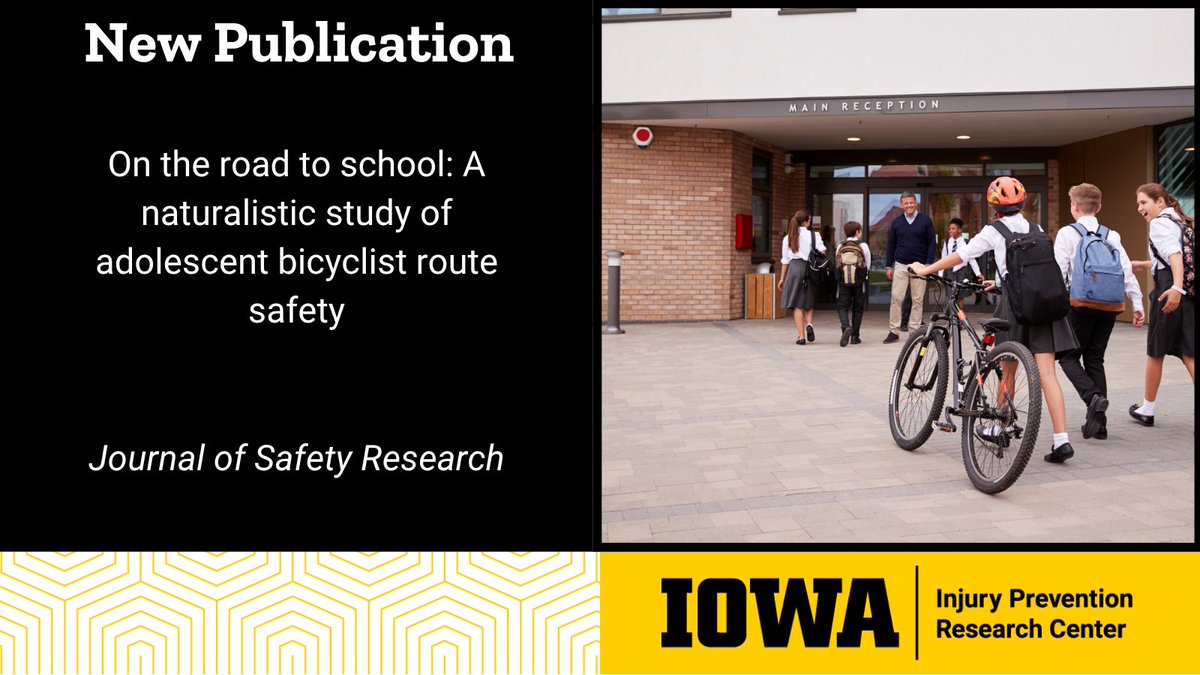
🚲 A new University of Iowa study explores what influences the #safety of adolescents’ bicycling routes to school — and whether popular navigation apps are helping or hindering safe route choices. Using GPS and helmet camera data from 32 adolescents (ages 10–15) and survey responses from both students and parents, researchers evaluated the safety of routes based on environmental, traffic, and roadway characteristics. 🔎 Key findings: • Younger students and those living in more bicycle-friendly neighborhoods selected safer routes. •Sidewalk and street riding were associated with lower safety scores compared to bicycle paths. 70% of trip time was spent riding on sidewalks. • Routes suggested by Komoot — as well as the routes students actually chose — were safer than those recommended by Google Maps bicycle routing. The study highlights the importance of: ✅ Investing in safer #bicycling infrastructure ✅ Supporting parents and students in developing safe bicycling behaviors and route-selection skills ✅ Improving navigation tools to better prioritize bicyclist safety 🔗 Link to the full publication: bit.ly/4urmqwi
UIowa Injury Center tweet media
English
0
0
0
41
UIowa Injury Center retweetledi
SAVIR
SAVIR@savir_org·
Learn how SAVIR Member Dr. Kari K. Harland bridges data and humanity to prevent intimate partner and teen dating violence in this SAVIR member spotlight. Read her profile at buff.ly/ZJfGhPY
SAVIR tweet media
English
0
2
4
190
UIowa Injury Center
UIowa Injury Center@UIIPRC·
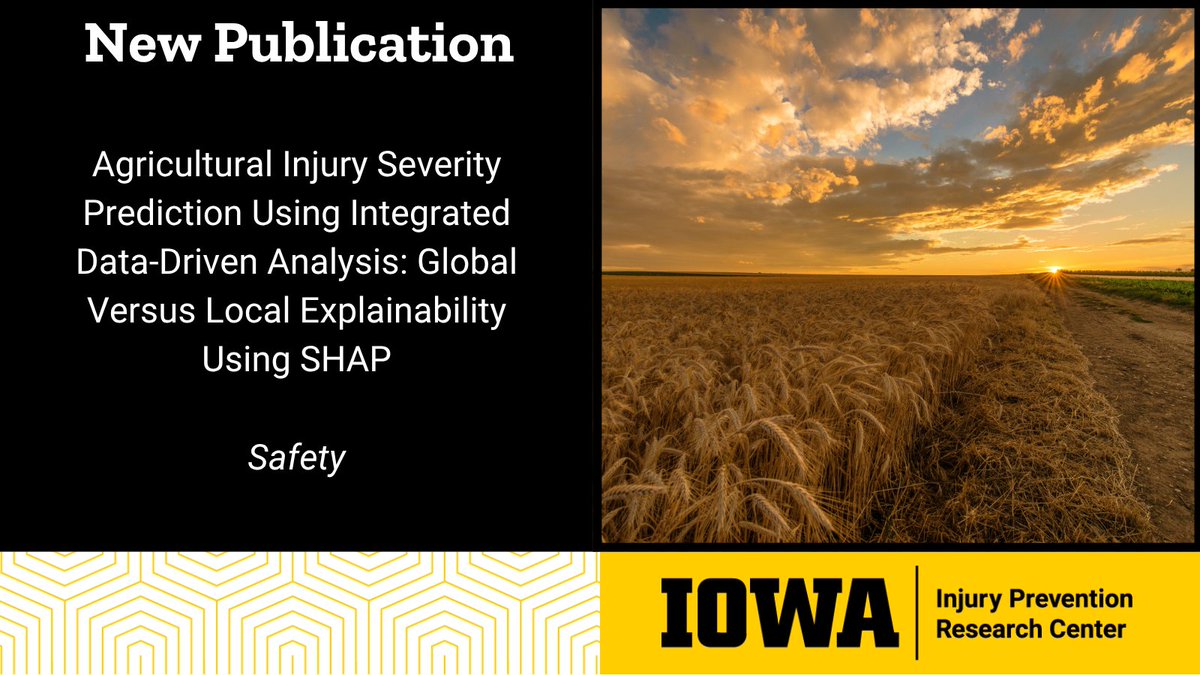
🚜 New research uses AI to better understand agricultural injuries Agriculture remains one of the most dangerous industries in the U.S., yet injuries are often underreported—making it harder to design effective safety solutions. A UI IPRC pilot study tackled this gap by analyzing over 2,400 real-world agricultural incidents using advanced machine learning. This study was a collaboration with the Iowa Initiative for Artificial Intelligence at the College of Engineering. 🔍 What researchers found: ➡️ Their models were able to accurately predict whether injuries were fatal or non-fatal. ➡️ Key factors influencing severity include: o Helmet use o Age of the victim o Type of equipment or hazard involved ➡️️ Context matters: factors like location and a person’s role in the incident can change outcomes in meaningful ways. 💡 These findings offer practical, data-driven insights to support targeted safety strategies and inform policy—helping stakeholders take a more proactive approach to agricultural safety. 🔗 Link to full publication: bit.ly/4fh9Rib
UIowa Injury Center tweet media
English
0
0
0
26
UIowa Injury Center
UIowa Injury Center@UIIPRC·
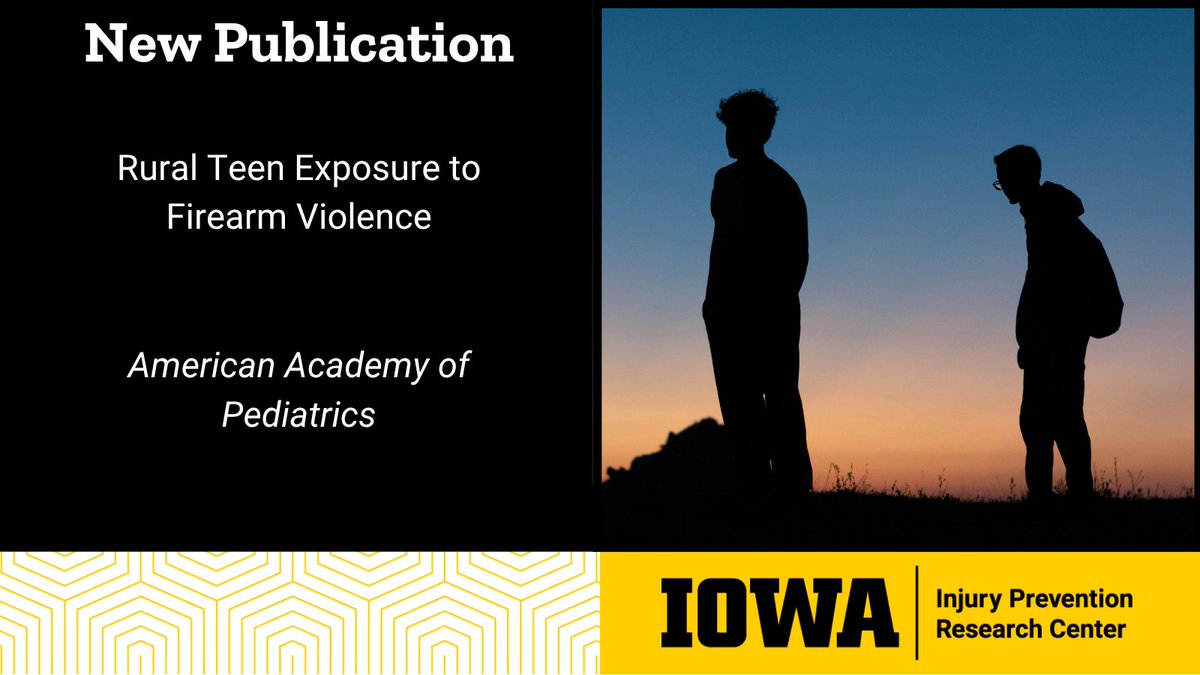
New University of Iowa research sheds light on #rural teens’ exposure to #firearm violence and how these experiences shape their beliefs about firearm safety. Researchers surveyed more than 3,200 adolescents (ages 13–18) at the 2021 National FFA Convention to better understand their experiences with firearm-related violence. 🔍What did they find? • Over one-third (35%) had experienced a school lockdown due to potential firearm violence concerns. • Nearly half (46%) knew someone who had been injured or killed by gunfire — and among these adolescents, 46% knew someone with an unintentional injury/death. • About 10% had personally witnessed someone being threatened with a firearm. • Teens who had experienced a lockdown were more likely to agree with multiple firearm safety interventions. • Participants who knew someone that had been injured or killed by firearms had higher proportions that believed firearms in the home made them safer. 🔗 Link to the full study published in the American Academy of Pediatrics: bit.ly/4doaR2E
UIowa Injury Center tweet media
English
0
0
0
57
UIowa Injury Center
UIowa Injury Center@UIIPRC·
🎉 Today, we mark a big milestone – 10 years of our Injury Blog! Our monthly Injury Blog has brought together researchers, students, and injury and violence prevention partners to share research, ideas, and stories. 💛 We’re grateful to everyone who has read, contributed, and supported this work. Stay tuned – there's more ahead! #Blogiversary 🔗 Link to our full blog: bit.ly/4e7KzTd
English
0
0
2
17
UIowa Injury Center
UIowa Injury Center@UIIPRC·
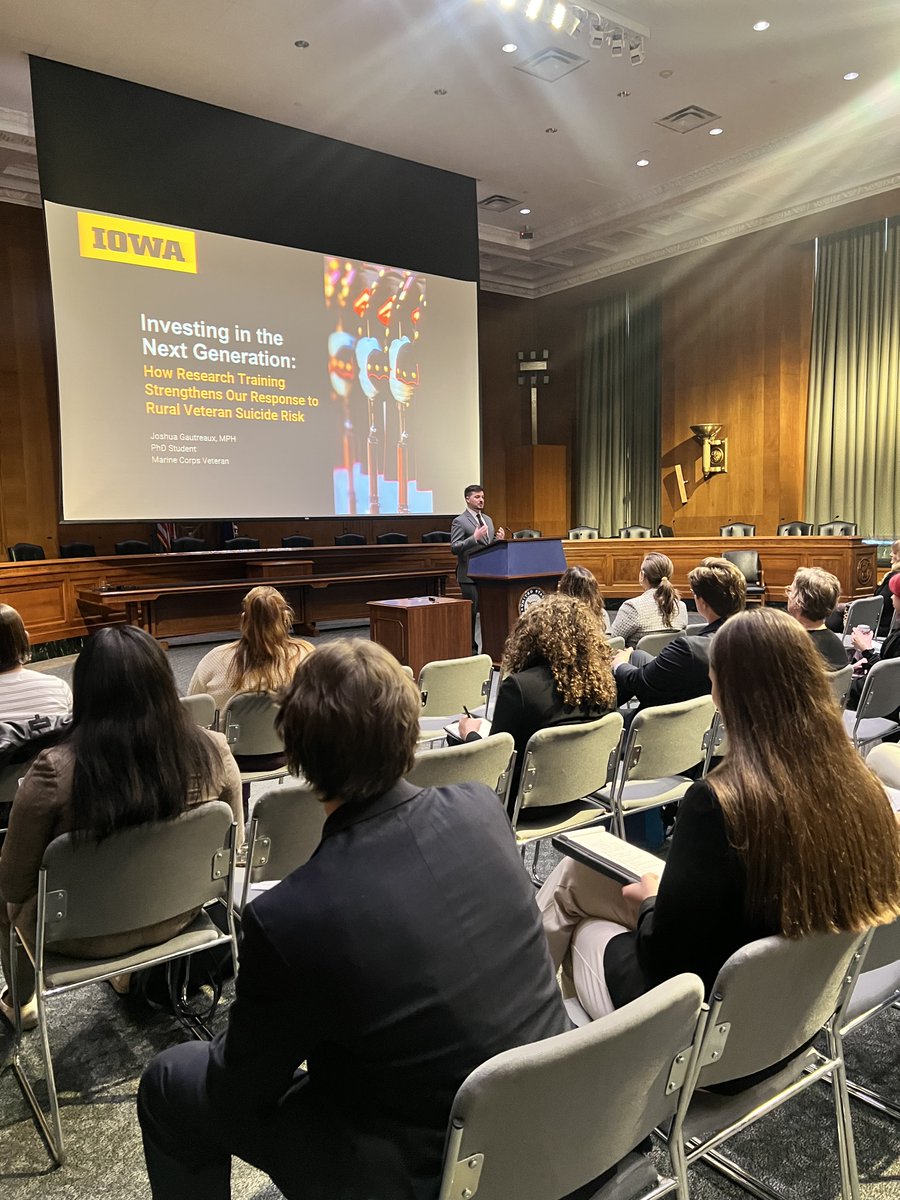
📢 New blog post –A spotlight on rural #veteran suicide. Josh Gautreaux is a PhD candidate in the Department of Occupational and Environmental Health at the University of Iowa College of Public Health. He studies how veterans’ use of Veterans Administration (V.A.) services affects #suicide rates during what is known as the ‘deadly gap’—the first year after a service member returns to civilian life, when veterans face an increased risk of suicide and substance use. He spoke about his dissertation research in March 2026, when he joined the UI IPRC and other CDC-funded Injury Control Research Centers for a congressional briefing in Washington D.C. This event highlighted the importance of mental health and injury prevention research. “I think that the higher we get in academia, the less represented veterans are,” Gautreaux said. “I’m speaking for and representing a lot of my brothers and sisters who don’t have this opportunity.” 🔗 Go here to read the full post: bit.ly/4mMk87S
UIowa Injury Center tweet media
English
0
0
1
40
UIowa Injury Center
UIowa Injury Center@UIIPRC·
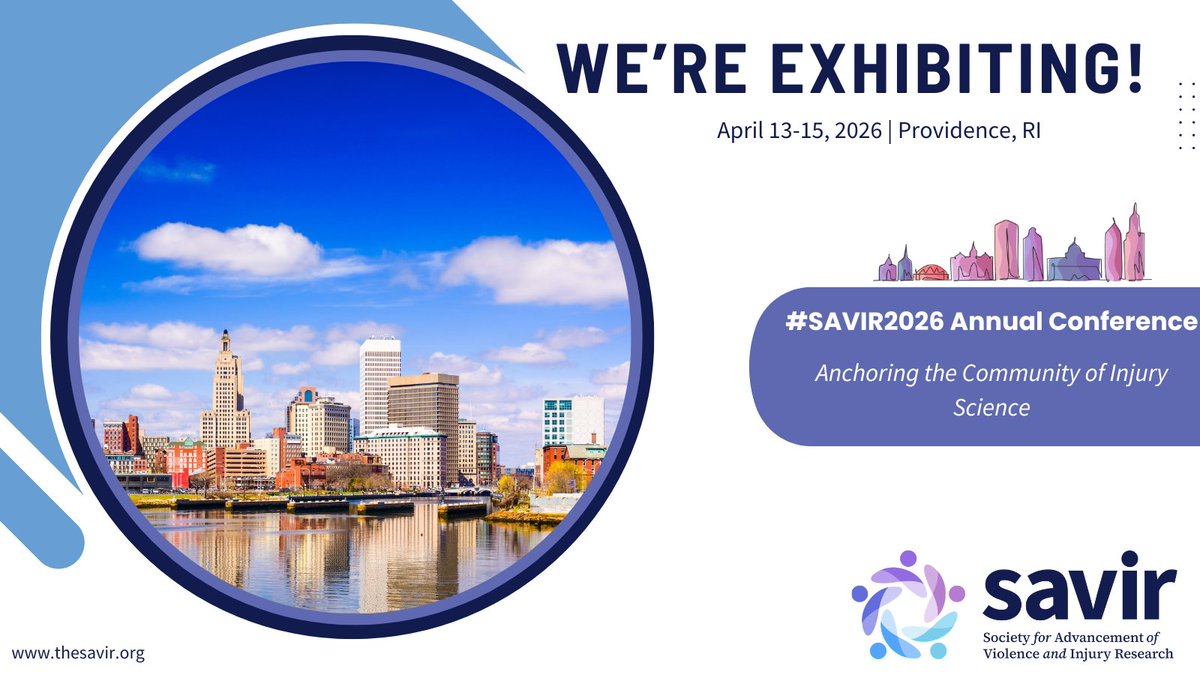
The #SAVIR2026 conference is April 13-15 in Providence, RI. We are excited to be exhibiting our center! If you are attending, stop by our table to learn about our #rural injury and violence prevention research and connect!
UIowa Injury Center tweet media
English
0
0
0
26
UIowa Injury Center
UIowa Injury Center@UIIPRC·
📢 New blog post A new University of Iowa study found that mental illness is linked to #violence overall, but not specifically to #firearm violence or mass shootings. Researchers analyzed data from a sample of 4,550 individuals incarcerated for less than two years from the 2016 Survey of Prison Inmates, a large database of approximately 25,000 incarcerated adults. The study was published in Justice Quarterly. 🔗 Go here to read the full post: bit.ly/482VQQE
UIowa Injury Center tweet media
English
0
0
0
51
UIowa Injury Center
UIowa Injury Center@UIIPRC·
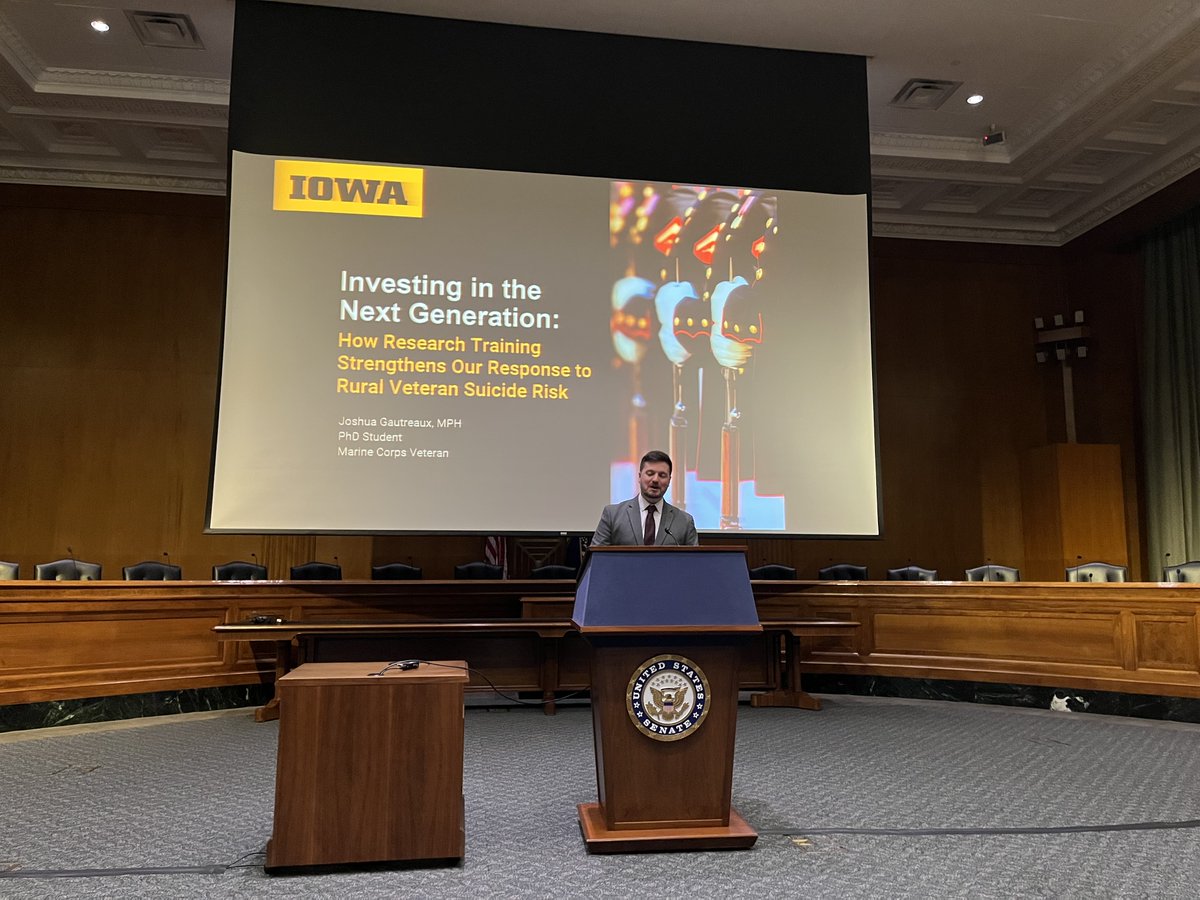
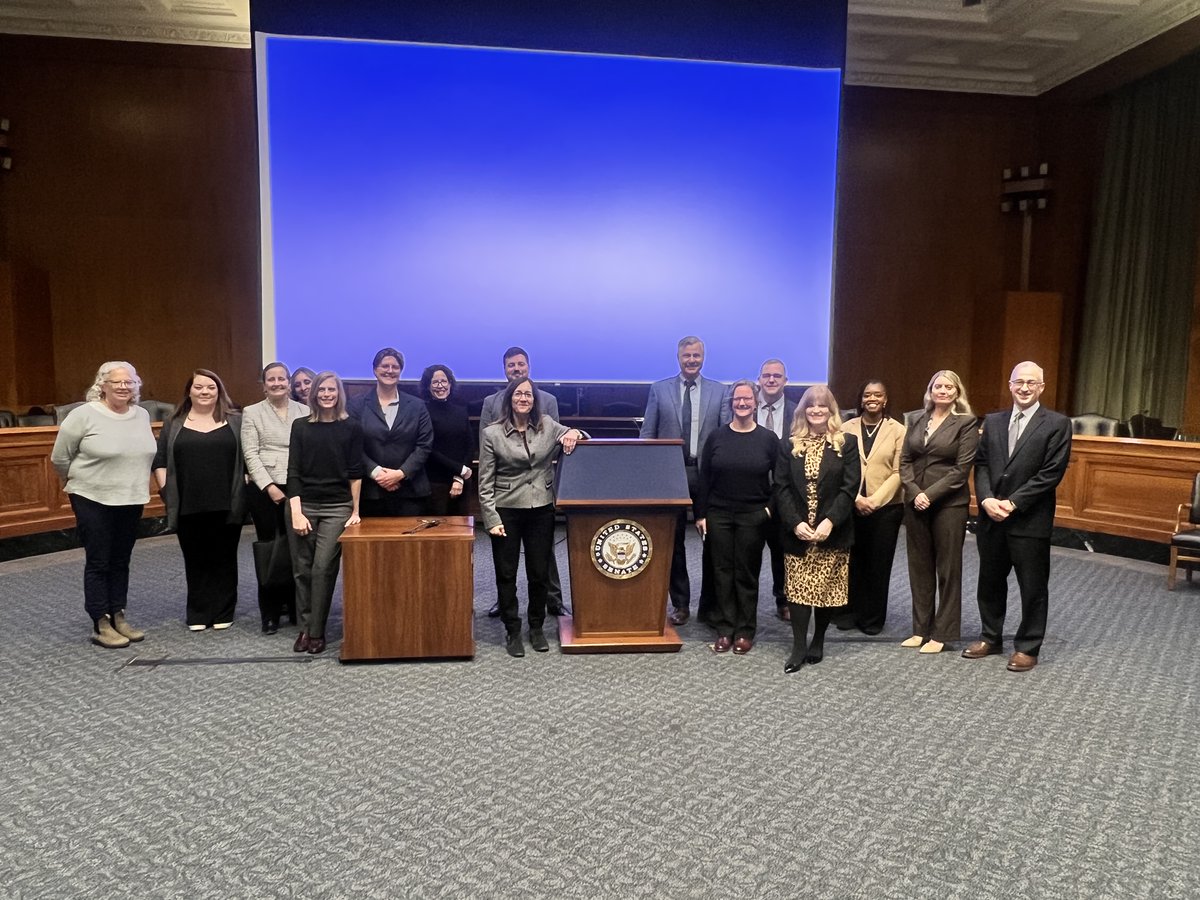
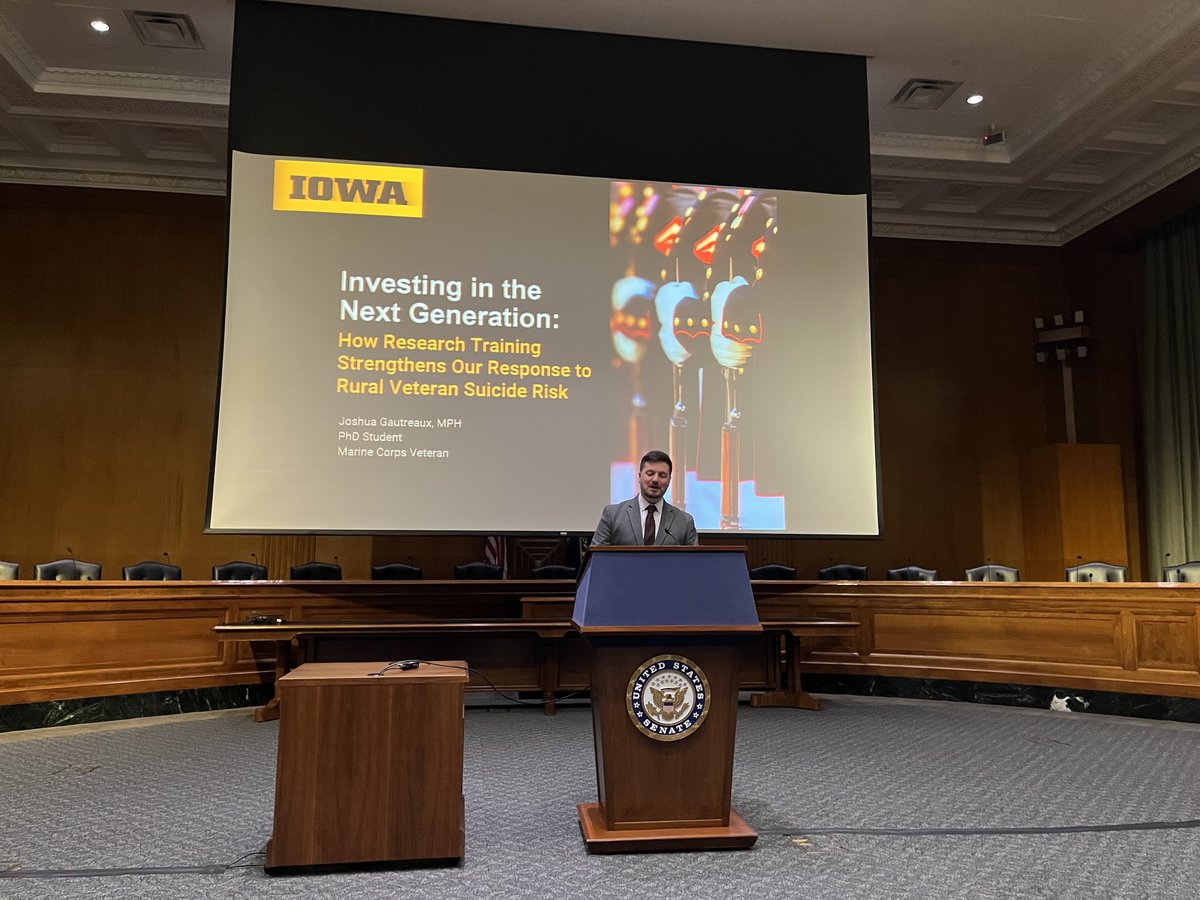
The UI IPRC joined our fellow CDC Injury Control Research Centers (ICRCs) for a congressional briefing in Washington D.C. about the importance of mental health and #injury prevention research. Josh Gautreaux, PhD student @UIowaCPH and Marine Corps Veteran, presented "Investing in the Next Generation: How Research Training Strengthens Our Response to Rural Veteran Suicide Risk." #rural #veterans #suicide @UMInjuryCenter @UNC_IPRC
UIowa Injury Center tweet mediaUIowa Injury Center tweet mediaUIowa Injury Center tweet media
English
0
0
1
66
UIowa Injury Center
UIowa Injury Center@UIIPRC·
A new @uiowa multi‑phase study developed and tested a patient decision aid (PtDA) tailored for Reserve and National Guard women #Veterans to promote safe #firearm storage and #suicide prevention through informed decision-making. Researchers used interviews, surveys, and user‑testing to develop and refine the PtDA based on Veteran and provider input. Researchers found: ➡️ Veterans reported high satisfaction with the PtDA’s information, tone, and preventative approach. ➡️ Among those using shared decision‑making (SDM), nearly half had loaded, accessible firearms, and 70% said SDM made them more likely to create and act on a safety plan. Veterans’ high satisfaction with this PtDA indicates its potential to encourage firearm safety planning, engage support, and foster firearm safety conversations to prevent suicide among women Veterans. 🔍 Learn more about the study: bit.ly/4aWc54d
UIowa Injury Center tweet media
English
0
0
1
48
UIowa Injury Center
UIowa Injury Center@UIIPRC·
🧠 Brain Injury Awareness Month begins in a few days... Maggie Ferguson, project director for the Disability and Injury Prevention Programs @IowaHHS, is shining a light on brain injury in #Iowa – a common, often undiagnosed chronic condition that can cause lifelong challenges without an individual’s awareness. According to the 2023 Iowa BRFSS survey, approximately 570,000 adult Iowans (26%) ages 18 and older have experienced a brain injury. In our new blog post, Maggie discusses why lifetime brain injury screening is important, why proper treatment and prevention are critical for young people, and how Iowa is creating stronger #brain injury programming across the state. 👉 Read the blog post: bit.ly/4saRQ8v #concussions #TBI
UIowa Injury Center tweet media
English
0
1
1
67
UIowa Injury Center
UIowa Injury Center@UIIPRC·
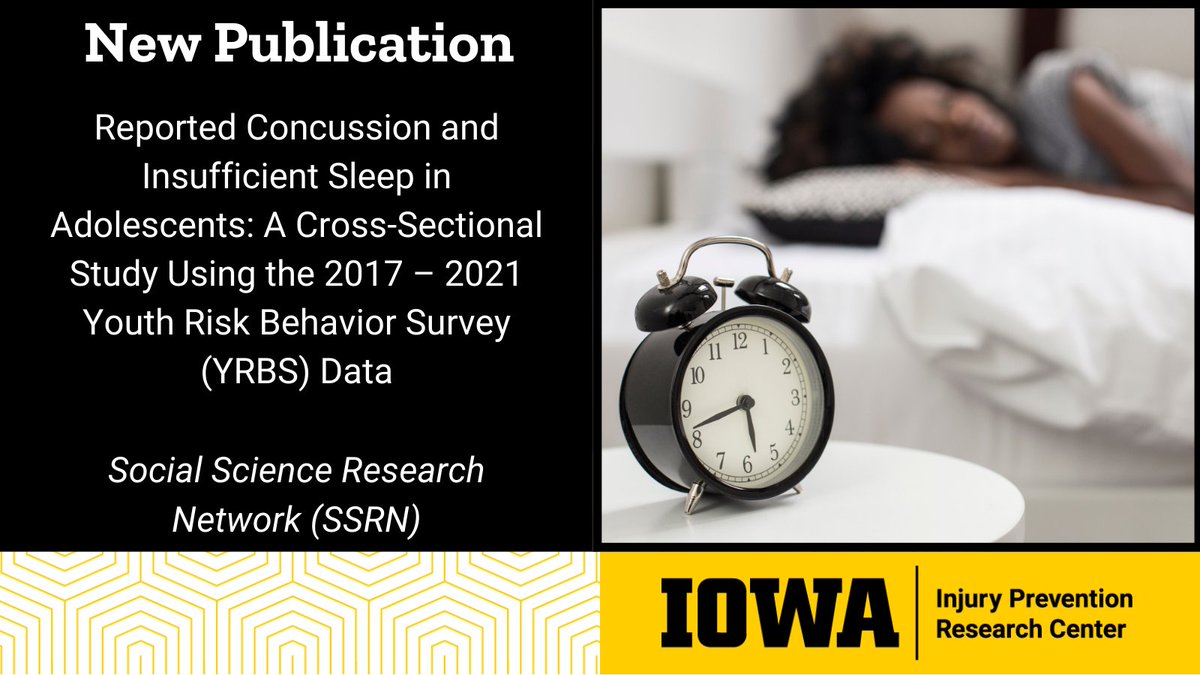
New research from the University of Iowa offers new insight into how #concussions relate to sleep among U.S. high school students. Analyzing survey data from 2017, 2019, and 2021, researchers explored whether teens who report concussions were more likely to experience insufficient sleep. Key findings: ➡️ Students reporting 4 or more concussions had a lower odds of insufficient sleep compared to those reporting no concussions. ➡️ Students with one reported concussion had higher odds of insufficient sleep. The relationship between reported concussions and insufficient sleep may reflect that students with multiple concussions are more likely to receive ongoing medical care, including education about sleep hygiene and concussion recovery, which may support improved sleep outcomes. 🔍 Learn more about the study: bit.ly/4rDi7fV
UIowa Injury Center tweet media
English
0
0
0
34
UIowa Injury Center
UIowa Injury Center@UIIPRC·
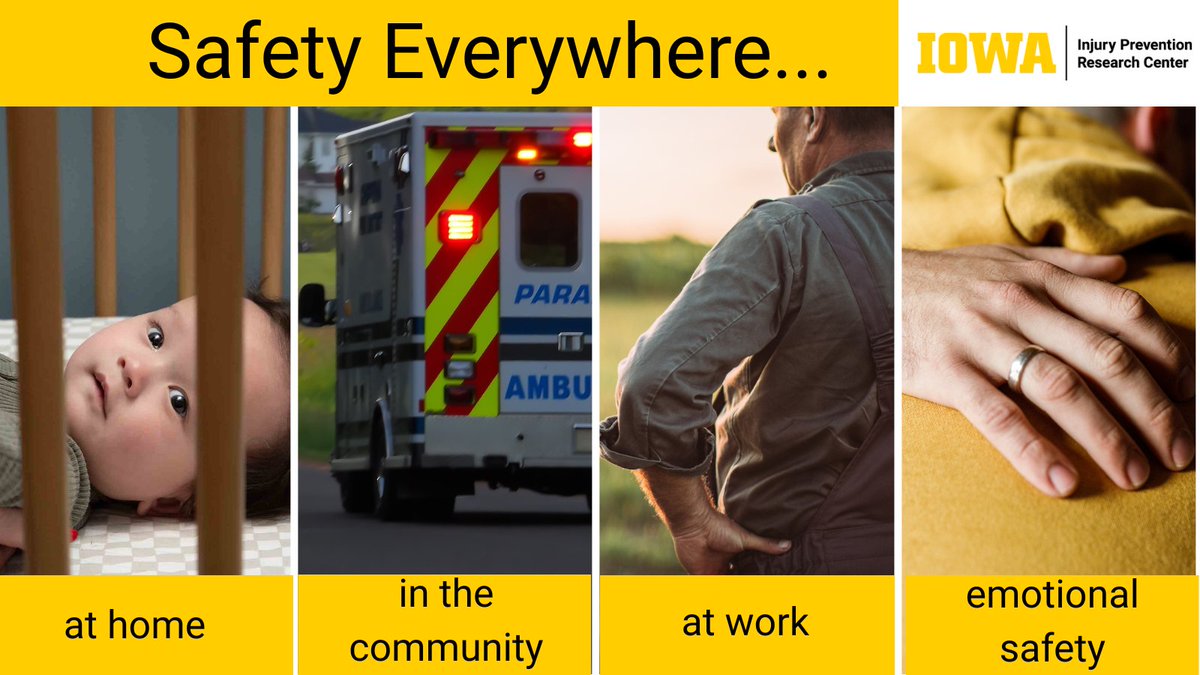
We want people to be safe everywhere 💛 🏚️ Safe at home 🚴‍♀️ Safe in your community 🚜 Safe at work 🩷 Emotional safety/ mental health Visit our website for safety resources for you, your family, and your community: bit.ly/4anAY8A
UIowa Injury Center tweet media
English
0
1
2
31
UIowa Injury Center
UIowa Injury Center@UIIPRC·
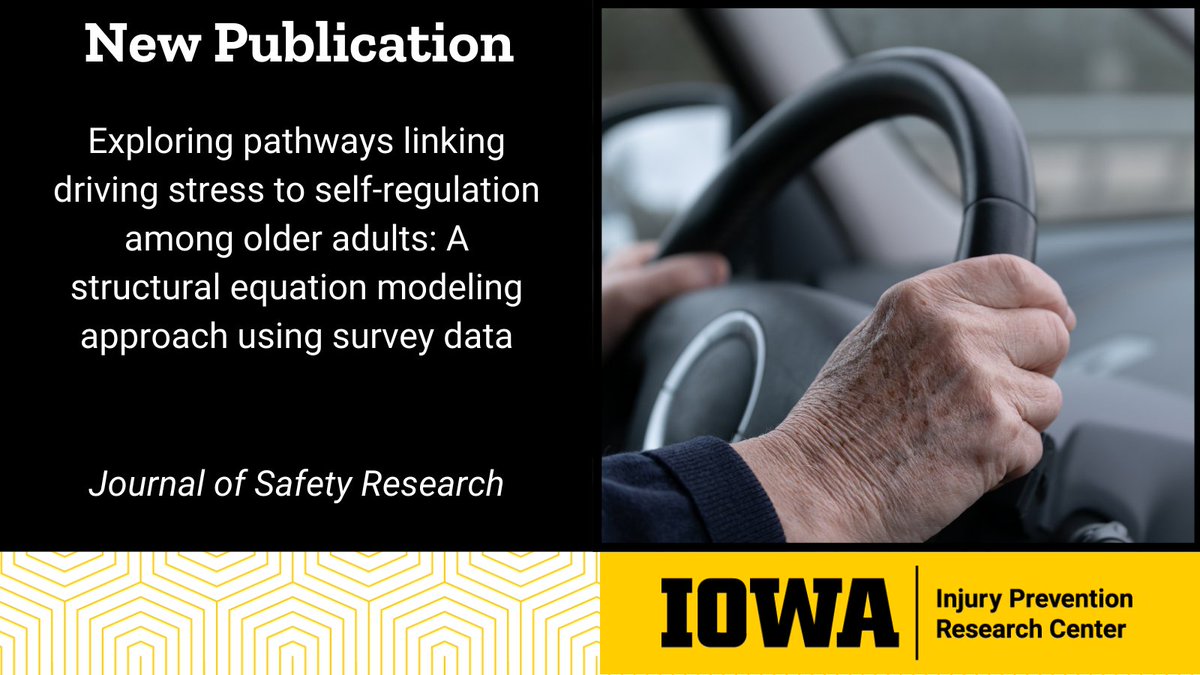
Research @uiowa reveals how driving stress influences safer driving habits among adults 65+. Researchers surveyed 223 older drivers to explore older drivers’ driving behaviors and perceptions. Some findings: 🚗 Older adults who felt less confident in their driving or had a recent crash experienced more driving stress—and that stress is what pushed them to change their driving habits. 👵 Older women reported more driving stress and were more likely to limit when and where they drive, which may lead some to stop driving earlier than necessary. 🚦 Driving stress may actually serve as an important warning sign that an older driver is becoming aware of changes in their driving ability. 🔍 Learn more about the study and its implications for supporting safe mobility in older adulthood: bit.ly/4qsk3Gt
UIowa Injury Center tweet media
English
0
0
0
21