
Sabitlenmiş Tweet

The Construction industry needs YOU
UK building sector launches push for young workers
theworkersunion.com/2026/03/04/con…

English
TWU
972 posts
@UKWorkersUnion
Empowering workers across the UK. Revolutionizing rights with frontline support-putting YOU first. Bold, non-legacy approach. We're redefining the game. Follow

One year on and... x.com/i/status/18943…

Its in Our Hands: Should the UK Harness Its Abundant Natural Resources? The United Kingdom is experiencing an energy crisis whilst sitting atop a treasure trove of natural resources—oil and gas in the North Sea, vast coal reserves beneath its soil—that could bolster its economy, create jobs, and enhance energy security. Yet, in an era of net-zero ambitions, the question looms: should we drill and dig into these reserves for economic gain, or leave them untapped to meet climate goals? This article examines the scale of these resources, their potential monetary benefits, and the trade-offs involved, using the latest available data as of February 24, 2025. North Sea Oil and Gas: A Dwindling Giant Still Packed with Potential. The North Sea has been a cornerstone of the UK’s energy landscape since the 1960s, but its reserves are far from exhausted. According to the North Sea Transition Authority’s (NSTA) Reserves and Resources Report for 2023, the UK Continental Shelf (UKCS) holds approximately 4 billion barrels of oil equivalent (boe) in proven and probable reserves. Additionally, contingent resources—discovered but undeveloped—stand at 6.1 billion boe, with much of this concentrated near existing infrastructure. Offshore Energies UK (OEUK) estimates that untapped prospective resources within a 45km radius of offshore hubs could yield another 8.4 billion boe, roughly eight times the UK’s annual oil and gas consumption. Economically, this is a goldmine. In 2022-23, North Sea revenues hit £9 billion, driven by elevated energy prices and the Energy Profits Levy (EPL). If fully exploited, the remaining reserves and resources could generate tens of billions more over decades. OEUK suggests that with stable fiscal policies, these reserves could sustain the UK for 30 years, reducing reliance on imports, which cost £36 billion in 2022 alone for oil and gas. Each barrel produced domestically avoids the higher carbon footprint of imported liquefied natural gas (LNG), which can emit 2-4 times more during transport. Job creation for workers is another compelling factor. The offshore oil and gas sector currently supports 200,000 workers jobs across the UK, with 60,000 in Scotland’s northeast. Expanding exploration could preserve these roles and add thousands more, particularly in tieback projects—smaller fields linked to existing platforms—that are less capital-intensive and quicker to develop. A revitalized sector could inject £120 billion into GDP over its lifetime, per industry estimates, boosting tax revenues and funding public services. Coal: A Sleeping Giant with a £16 Billion Price Tag. Coal powered Britain’s Industrial Revolution, and though its use has plummeted—generating just 1.6% of electricity in 2020—reserves remain substantial. The Office for National Statistics (ONS) reported in 2024 that UK coal reserves grew by 12% between 2009 and 2022 to 307 million tonnes of oil equivalent (mtoe), thanks to reassessments outweighing the 83 mtoe depleted. At current prices of £200 per tonne (based on 2023 coal market trends), this stockpile is worth roughly £61 billion in raw terms, though extraction costs would reduce the net gain to an estimated £16 billion over decades, assuming selective mining. Coal’s economic case hinges on energy security and industrial use. Steel production, which employs 33,000 people, still relies on coal, and domestic supply could save £1.5 billion annually in import costs. However, mining would likely add only 5,000-10,000 jobs, a fraction of the million-strong workforce of the 1950s, due to mechanization. Economic Wins: Wealth and Stability Drilling and digging could transform the UK economy. The ONS pegged the 2021 annual value of oil and gas extraction at £13.6 billion (£8 billion for oil, £5.6 billion for gas) before depletion adjustments. Scaling up production could double this to £25-30 billion annually during peak years, dwarfing the £4.9 billion North Sea revenue of 2023-24. This windfall could fund tax cuts, infrastructure, or a sovereign wealth fund akin to Norway’s $1.3 trillion nest egg—something the UK missed out on during the Thatcher-era oil boom. Energy independence is another prize. Imports expose the UK to volatile global markets; domestic production could slash bills for households (£150-£200 annual savings per home at 2023 prices) and stabilize manufacturing costs, preserving 1.5 million industrial jobs. The Treasury could see an extra £5-10 billion yearly in taxes, per fiscal models from the Institute for Fiscal Studies, assuming a balanced tax regime. The Carbon Catch: Offsetting the Impact. The climate cost is the elephant in the room. Burning North Sea reserves would release roughly 1.6 billion tonnes of CO2 (400 million boe at 0.4 tonnes CO2 per barrel), while coal could add 600 million tonnes. The UK’s 2050 net-zero target demands an 80% cut in oil and gas use, per the Climate Change Committee (CCC), leaving most reserves “unburnable” under a 1.5°C warming cap—58% of oil, 56% of gas, and 89% of coal, per 2021 studies. Carbon capture, usage, and storage (CCUS) offers a lifeline. The government’s £20 billion CCUS commitment could offset 20-30 million tonnes of CO2 annually by 2035, covering 10-15% of new fossil fuel emissions. Tieback projects, with their lower carbon intensity, align with this strategy. However, scaling CCUS to neutralize all new emissions would cost £50-£70 billion, straining public finances unless offset by resource revenues. Reforestation and renewables—already cutting emissions by 50% since 1990—must accelerate, with wind and solar needing £15 billion yearly investment to replace fossil fuels. Balancing Act: Jobs, Wealth, and the Planet The economic case is strong: £150-£200 billion in total wealth from oil, gas, and coal over 30 years, 50,000-100,000 new jobs, and a buffer against energy crises. Yet, the carbon price tag—billions in offsets or stranded assets—demands a strategic approach. Phasing out coal while prioritizing low-emission North Sea tiebacks could maximize benefits while minimizing harm. A £10 billion transition fund, financed by initial drilling profits, could retrain oil workers for renewables, mirroring Labour’s proposed taskforce. The UK faces a choice: lock away its resources and bet on green tech, or extract selectively to fund the transition. With reserves worth hundreds of billions and a skilled workforce ready, the pragmatic path may lie in tapping this wealth—judiciously—to power both the economy and the journey to net zero. The decision is literally in our hands. Please Comment, Hit The Heart Button or Share
Amazon to cut 16,000 jobs globally as streamlining continues Amazon has confirmed plans to cut around 16,000 jobs worldwide, marking another significant round of redundancies at the global retail and technology giant and raising fresh concerns for workers, including those in the United Kingdom. The announcement comes just three months after Amazon reduced its workforce by approximately 14,000 roles, underlining the scale and pace of restructuring. While most of the latest job losses are expected in the United States, Amazon has acknowledged that its UK operations will also be affected, though precise figures are not yet confirmed. In a message to staff, Beth Galetti, senior vice president of people experience and technology, said the company was continuing efforts to “strengthen our organisation by reducing layers, increasing ownership and removing bureaucracy.” Her comments reflect a broader shift among large multinational employers towards flatter structures and tighter control amid ongoing economic pressures. Galetti stressed that the latest cuts should not be seen as the start of a regular pattern. “Some of you might ask if this is the beginning of a new rhythm – where we announce broad reductions every few months. That’s not our plan,” she wrote. Around 16,000 roles are expected to be impacted globally, following rapid expansion during and after the pandemic. As consumer behaviour normalised and growth slowed, the company has moved to rein in costs and reassess staffing needs. What this means for UK workers For UK-based staff, the lack of detail remains a key concern. Amazon has not specified how many UK roles could be lost or which parts of the business may be most affected. The company operates across fulfilment centres, logistics, cloud services and corporate functions, making the potential impact hard to assess. Amazon UK has been approached for clarification, but no further information has been provided at the time of writing. For UK workers, this uncertainty can be particularly challenging. The announcement fits a wider trend of employers reassessing workforce size in response to rising costs, changing demand and advances in automation. While Amazon continues to invest heavily in innovation, these cuts highlight the tension between efficiency and employment stability. Support and next steps Galetti said Amazon was “working hard to support everyone whose role is impacted,” though details of that support have not been made public. For UK workers, clarity on timelines, consultation processes and available assistance will be critical in the weeks ahead. At The Workers Union, UK workers remain at the heart of everything we do. Developments like this underline the importance of clear communication from employers and access to reliable information for those affected. As more details emerge, understanding rights, options and practical next steps will be essential for anyone facing potential job loss or workplace change. A moment of reflection for the sector Amazon’s announcement is also a moment of reflection for the wider employment landscape. Large-scale employers play a significant role in regional economies across the UK, and even limited job losses can affect families, communities and local services. While Amazon insists these changes are about long-term strength, the immediate reality for workers is uncertainty. How the company manages this transition, particularly in markets like the UK, will be closely watched by employees, policymakers and industry observers. We will continue to monitor the situation and highlight what it means in practical terms for UK workers navigating a shifting employment environment.

Amazon to cut 16,000 jobs globally as streamlining continues Amazon has confirmed plans to cut around 16,000 jobs worldwide, marking another significant round of redundancies at the global retail and technology giant and raising fresh concerns for workers, including those in the United Kingdom. The announcement comes just three months after Amazon reduced its workforce by approximately 14,000 roles, underlining the scale and pace of restructuring. While most of the latest job losses are expected in the United States, Amazon has acknowledged that its UK operations will also be affected, though precise figures are not yet confirmed. In a message to staff, Beth Galetti, senior vice president of people experience and technology, said the company was continuing efforts to “strengthen our organisation by reducing layers, increasing ownership and removing bureaucracy.” Her comments reflect a broader shift among large multinational employers towards flatter structures and tighter control amid ongoing economic pressures. Galetti stressed that the latest cuts should not be seen as the start of a regular pattern. “Some of you might ask if this is the beginning of a new rhythm – where we announce broad reductions every few months. That’s not our plan,” she wrote. Around 16,000 roles are expected to be impacted globally, following rapid expansion during and after the pandemic. As consumer behaviour normalised and growth slowed, the company has moved to rein in costs and reassess staffing needs. What this means for UK workers For UK-based staff, the lack of detail remains a key concern. Amazon has not specified how many UK roles could be lost or which parts of the business may be most affected. The company operates across fulfilment centres, logistics, cloud services and corporate functions, making the potential impact hard to assess. Amazon UK has been approached for clarification, but no further information has been provided at the time of writing. For UK workers, this uncertainty can be particularly challenging. The announcement fits a wider trend of employers reassessing workforce size in response to rising costs, changing demand and advances in automation. While Amazon continues to invest heavily in innovation, these cuts highlight the tension between efficiency and employment stability. Support and next steps Galetti said Amazon was “working hard to support everyone whose role is impacted,” though details of that support have not been made public. For UK workers, clarity on timelines, consultation processes and available assistance will be critical in the weeks ahead. At The Workers Union, UK workers remain at the heart of everything we do. Developments like this underline the importance of clear communication from employers and access to reliable information for those affected. As more details emerge, understanding rights, options and practical next steps will be essential for anyone facing potential job loss or workplace change. A moment of reflection for the sector Amazon’s announcement is also a moment of reflection for the wider employment landscape. Large-scale employers play a significant role in regional economies across the UK, and even limited job losses can affect families, communities and local services. While Amazon insists these changes are about long-term strength, the immediate reality for workers is uncertainty. How the company manages this transition, particularly in markets like the UK, will be closely watched by employees, policymakers and industry observers. We will continue to monitor the situation and highlight what it means in practical terms for UK workers navigating a shifting employment environment.

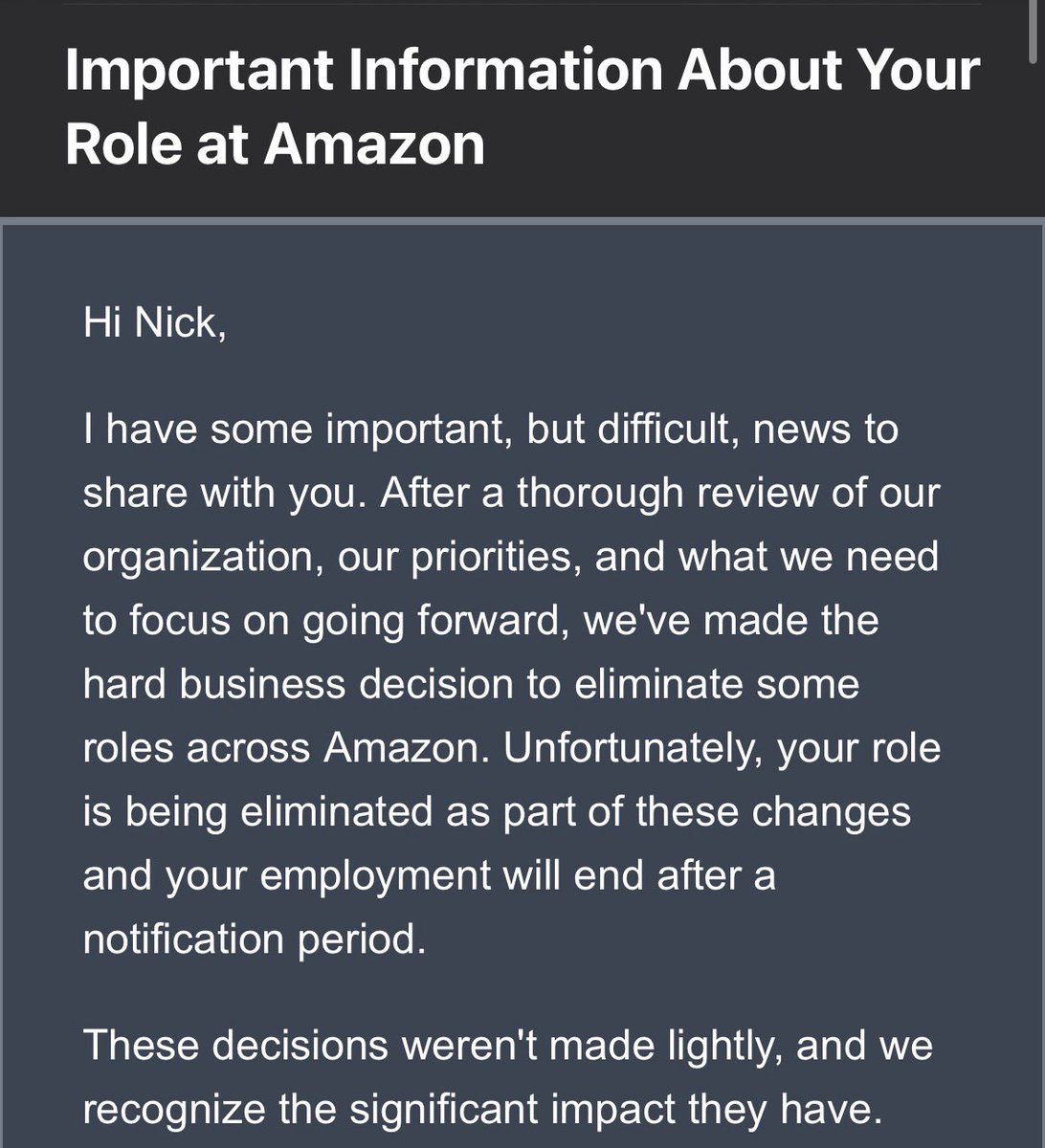

Amazon to cut 16,000 jobs globally as streamlining continues Amazon has confirmed plans to cut around 16,000 jobs worldwide, marking another significant round of redundancies at the global retail and technology giant and raising fresh concerns for workers, including those in the United Kingdom. The announcement comes just three months after Amazon reduced its workforce by approximately 14,000 roles, underlining the scale and pace of restructuring. While most of the latest job losses are expected in the United States, Amazon has acknowledged that its UK operations will also be affected, though precise figures are not yet confirmed. In a message to staff, Beth Galetti, senior vice president of people experience and technology, said the company was continuing efforts to “strengthen our organisation by reducing layers, increasing ownership and removing bureaucracy.” Her comments reflect a broader shift among large multinational employers towards flatter structures and tighter control amid ongoing economic pressures. Galetti stressed that the latest cuts should not be seen as the start of a regular pattern. “Some of you might ask if this is the beginning of a new rhythm – where we announce broad reductions every few months. That’s not our plan,” she wrote. Around 16,000 roles are expected to be impacted globally, following rapid expansion during and after the pandemic. As consumer behaviour normalised and growth slowed, the company has moved to rein in costs and reassess staffing needs. What this means for UK workers For UK-based staff, the lack of detail remains a key concern. Amazon has not specified how many UK roles could be lost or which parts of the business may be most affected. The company operates across fulfilment centres, logistics, cloud services and corporate functions, making the potential impact hard to assess. Amazon UK has been approached for clarification, but no further information has been provided at the time of writing. For UK workers, this uncertainty can be particularly challenging. The announcement fits a wider trend of employers reassessing workforce size in response to rising costs, changing demand and advances in automation. While Amazon continues to invest heavily in innovation, these cuts highlight the tension between efficiency and employment stability. Support and next steps Galetti said Amazon was “working hard to support everyone whose role is impacted,” though details of that support have not been made public. For UK workers, clarity on timelines, consultation processes and available assistance will be critical in the weeks ahead. At The Workers Union, UK workers remain at the heart of everything we do. Developments like this underline the importance of clear communication from employers and access to reliable information for those affected. As more details emerge, understanding rights, options and practical next steps will be essential for anyone facing potential job loss or workplace change. A moment of reflection for the sector Amazon’s announcement is also a moment of reflection for the wider employment landscape. Large-scale employers play a significant role in regional economies across the UK, and even limited job losses can affect families, communities and local services. While Amazon insists these changes are about long-term strength, the immediate reality for workers is uncertainty. How the company manages this transition, particularly in markets like the UK, will be closely watched by employees, policymakers and industry observers. We will continue to monitor the situation and highlight what it means in practical terms for UK workers navigating a shifting employment environment.

BREAKING: Amazon announces they are laying off 16,000 corporate employees due to “rising competition over AI.”







Highly unskilled professionals at work 😂


