

Rafael Rivas 🇻🇪
4.8K posts

Rafael Rivas 🇻🇪
@UNLIMITEDCODE2
Democracia como brújula 🧭📡 Transparencia como hábito 🔎 No tolero la manipulación informativa 💥 Detector de narrativas de dudosas procedencias 😏
Katılım Şubat 2022
1.5K Takip Edilen136 Takipçiler

Cuál es su modelo chino favorito? Para que lo probemos hoy desde cero echando código. En principio tenemos en el radar GLM-5.1 de Z.ai, Kimi K2.6 de Moonshot AI, Qwen3.6 Plus, MiniMax M2.7 y DeepSeek V4 Pro. Vamos a ver qué es lo que es!
Freddy Montes@fmontes
Como Claude no nos paga (@anibal lo dice en cada episodio), hoy vamos a probar EN VIVO modelos chinos. 6 PM 🇲🇽 🇨🇷 7 PM 🇨🇴 🇵🇪 8 PM 🇻🇪 🇨🇱, 9 PM 🇦🇷 LINK ABAJO DALE RT PLISSSSS!!!
Español
@CodeWithAmann 1 Kimi K2.6 / Qwen3.6 Plus
2 GLM-5.1 / MiniMax-M2.7 / Gemma-4-31B-IT
3 DeepSeek V4 Pro
4 Mimo V2.5 Pro / Minstral Large 3 675B Instruct 2512
English

Rafael Rivas 🇻🇪 retweetledi

¡Vaya tesoro! Colección de APIs gratuitas de modelos de Inteligencia Artificial. Sin pagos y con límites claros.
✓ +20 modelos disponibles
✓ ChatGPT, DeepSeek, Gemini, Qwen y más
✓ Con requests/minuto y tokens por día
→ github.com/cheahjs/free-l…

Español
Rafael Rivas 🇻🇪 retweetledi

OpenCode just got a major upgrade.
Native GUI chat, switch to terminal anytime, inline diffs, git panel, message queueing, steering, rich tool calls, switch providers mid-conversation, and more.
English
Rafael Rivas 🇻🇪 retweetledi

Rafael Rivas 🇻🇪 retweetledi

🧵 Day 22/30 — #SystemDesign
Database Indexing: Why some queries take milliseconds… and others take forever
Your database works fine with 1K users.
At 1M users, the same query suddenly becomes slow.
Nothing changed in code.
The problem is how data is searched.
That’s where Indexing comes in.
An index is like a shortcut that helps the database find data quickly without scanning every row.
⸻
Without index:
→ DB scans entire table (Full Table Scan)
→ Time complexity grows with data
→ Slow queries at scale
With index:
→ DB jumps directly to required data
→ Faster reads
→ Efficient lookups
⸻
Simple Example
User table with 10M rows.
Query:
SELECT * FROM users WHERE email = ‘abc@gmail.com’
Without index:
→ Check all 10M rows
With index on email:
→ Direct lookup in milliseconds
⸻
Why It Matters
→ Faster search queries
→ Better performance at scale
→ Reduced database load
→ Improved user experience
⸻
Tradeoff
Indexes are not free:
→ Extra storage
→ Slower writes (index update needed)
→ Too many indexes hurt performance
⸻
Golden Rule
Index what you query often.
Not everything.
#30DaysOfSystemDesign #DatabaseIndexing #BackendEngineering

Nitin.nn@NitinthisSide_
🧵 Day 21/30 — #SystemDesign Load Balancer: The silent system that keeps everything fast & alive One server handling all traffic? Works… until it doesn’t. Traffic spikes → server overload → downtime. That’s why systems use a Load Balancer. A load balancer sits between users and servers and distributes incoming requests across multiple instances. Flow: User → Load Balancer → Multiple Servers Goal: → No single server overloaded → Better performance → High availability Types (keep it simple) Layer 4 (Transport) → Works on IP + Port → Fast, less intelligent Layer 7 (Application) → Works on HTTP/HTTPS → Smart routing (headers, paths) Common Algorithms → Round Robin (equal distribution) → Least Connections (send to least busy) → IP Hash (same user → same server) → Weighted (based on server capacity) Why It Matters → Handles traffic spikes → Improves uptime → Enables horizontal scaling → Supports failover → Better latency Real Usage → AWS ELB / ALB → NGINX → HAProxy → Cloudflare Every scalable system uses one. Golden Rule Scaling = adding more servers. Load balancer = using them efficiently. #30DaysOfSystemDesign #LoadBalancing #BackendEngineering
English
@5eniorDeveloper ¿Y las actualizaciones de firmware de tus dispositivos? ¿TVs sin internet? ¿Qué hacen entonces?
Español

¿Ustedes también segmentan la red de su casa? Yo la tengo así:
1. Main: dispositivos de confianza (computadoras y celulares).
2. Invitados: solo internet con ancho de banda limitado.
3. IoT: Tvs, lavadora, etc. Sin acceso a la intranet.
4. Seguridad: Cámaras sin acceso a la intranet.
5. Una vlan con VPN siempre activo.
Todo el tráfico pasa por pi-hole y tengo algunas reglas de firewall para que mis dispositivos de main puedan ver las tvs y cámaras.
¿Qué me falta?
Español
Rafael Rivas 🇻🇪 retweetledi
Rafael Rivas 🇻🇪 retweetledi

Russia has lost $7 billion in oil revenues due to UAV attacks - President Zelenskyy comments on strikes against Russian oil facilities and promises further actions.
Volodymyr Zelenskyy commented on strikes against oil infrastructure in the Russian Federation and announced further measures.
“Based on the results of this April, our long-range ‘sanctions’ have reached a new level in three components: reducing Russian oil revenues, range, and intensity. It is important that not only is the target itself reached, as defined by the operational objective, but also that the downtime of the facility increases or, at the very least, its operations are significantly reduced,” Zelenskyy said.
‼️ Andrii Klymenko, editor-in-chief of BlackSeaNews:
“In recent weeks, Ukrainian forces have carried out several dozen coordinated and calculated UAV and missile strikes across the entire chain of Russian oil processing and transportation infrastructure - including pipeline junction stations, oil refineries, and maritime export terminals in ports of the Baltic and Black Seas.
Undoubtedly, Russia has sustained significant losses. The exact scale will likely only be assessable in about a month, based on actual export volumes of oil and petroleum products, as well as the condition of the domestic Russian market.
It should be understood that in Russia, all indicators related to oil production, refining, and exports are strictly classified. Therefore, any figures or conclusions based on Russian sources may constitute deliberate disinformation.
In our view, the key development at present is that a surplus of crude oil has formed in Russia, which cannot be processed at refineries due to damage caused by the attacks. As a result, Russia is attempting to push as much of this crude oil as possible onto export markets. However, even with this effort, due to damage to port terminals, we cautiously estimate a reduction in crude oil exports in April 2026 in the range of 17-20%.
Further developments will depend on how quickly Russia can repair its refineries and port terminals, and, of course, on how effective continued Ukrainian military operations will be against Russia’s export capacity - revenues from which are used to finance the import of sanctioned goods for the production of missiles and other weapons.”
📹 The consequences of strikes on oil infrastructure facilities in Tuapse, Perm, and Novorossiysk
Anton Gerashchenko@Gerashchenko_en
The most striking and effective Ukrainian long-range strikes conducted since early spring 2026, utilizing weaponry manufactured by Fire Point (FP-5 'Flamingo' cruise missiles and the FP-1 and FP-2 'Kind Drone' series). 🔥 03.05 - Primorsk Port Oil Terminal (Leningrad Oblast) 🔥 01.05 - An oil refinery in Tuapse was targeted in a UAV attack 🔥 30.04 - Sverdlov State Plant in Dzerzhinsk (Nizhny Novgorod Oblast) - a strategically vital manufacturer of explosives 🔥 28.04 - No sleep in the Port of Tuapse once again 🔥 26.04 - Yaroslavl Slavneft-YANOS Refinery - one of Russia's top five refineries by primary processing volume 🔥 20.04 - Tuapse continues to burn 🔥 18.04 - Novokuibyshevsk Refinery (Samara Oblast) - part of the Rosneft group, with a capacity of 8.8 million tons per year 🔥 16.04 - The start of a "spectacular fire show" at the Tuapse Seaport Refinery (Krasnodar Krai) 🔥 10.04 - Two Russian drilling platforms on the Caspian Sea shelf 🔥 10.04 - The Volgograd-Tikhoretsk main petroleum product pipeline - a key artery for exporting Russian diesel 🔥 8.04 - Feodosia Oil Depot (Occupied Crimea) 🔥 6.04 - Repeat strikes on the Russian frigates Admiral Essen and Admiral Makarov in Novorossiysk (both are Kalibr missile carriers) 🔥 5.04 - Sheskharis Oil Terminal and Port (Novorossiysk, Krasnodar Krai) 🔥 5.04 - LUKOIL-Nizhegorodnefteorgsintez Refinery in Kstovo (Nizhny Novgorod Oblast) 🔥 4.04 - Operations halted at the Alchevsk Iron and Steel Works (Occupied Luhansk region) 🔥 30.03 - PJSC KuibyshevAzot in Tolyatti (Samara Oblast) 🔥 28.03 - Another "bright and hot" night in Ust-Luga 🔥 28.03 - Promsintez Plant in Chapayevsk (Samara Oblast) - produced over 30,000 tons of military-grade explosives annually 🔥 28.03 - Slavneft-YANOS Refinery (Yaroslavl) - the largest refinery in Northern Russia 🔥 26.03 - Kirishinefteorgsintez (KINEF) Refinery (Leningrad Oblast) - one of Russia's largest refineries, capable of processing 18.4 million tons of oil annually 🔥 25.03 - Ust-Luga Port and the NOVATEK-Ust-Luga plant (Leningrad Oblast) 🔥 23.03 - Primorsk Port Oil Terminal (Leningrad Oblast) 🔥 21.03 - Saratov Oil Refinery (annual processing capacity of approx. 5 million tons) 🔥 18.03 - Almaz-Antey concern facility (Occupied Sevastopol); this site is used for repairing SAM systems, radars, and short-to-medium-range aircraft. 🔥 14.03 - The Slavyanin railway ferry (disabled) and the Avangard vessel (damaged) - core elements of the Kerch Strait ferry crossing 🔥 14.03 - Maykop Airfield (Republic of Adygea) 🔥 05.03 - Saratov Oil Refinery and the Engels-2 Strategic Aviation Airbase 🔥 02.03 - Sheskharis Oil Terminal (Novorossiysk, Krasnodar Krai) 📹 Tuapse, May 1. A local inhabitant watches in awe of the Ukrainian "winged sanctions"
English
Rafael Rivas 🇻🇪 retweetledi

“Every day, there are more and more such drones.”
The Russians are complaining that Ukrainian medium-range UAVs with unjammable Starlink communications are increasingly striking their rear-area logistics.
Pictured are a “Hornet,” a “Baton,” and two “Darts” UAVs.




Roy🇨🇦@GrandpaRoy2
The Russians are very concerned about the emergence of the Ukrainian “Hornet” strike UAV (Russian name: “Martian-2”) from Eric Schmidt's Swift Beat company. It reportedly has autonomy and terrain-following capabilities that were previously seen on the Russian “V2U” strike UAV. 1/
English

Cancelled both my Claude Code Pro and ChatGPT Pro for this.
Kimi K2.6 is just as good for my side projects as Opus or GPT 5.4 were. The price for this is crazy low, and there are a bunch of models I can try (like DeepSeek).
Bonus: I'm moving away from building everything on Claude Code - now that both @opencode and @cursor_ai have their SDKs open, I feel I can rebuild the agentic workflows I built for Claude Code in a more platform-independent manner.
Lotto@LottoLabs
Update on Opencode Go It’s great value for $5/month, there’s really no reason not to do the first month. At $10/month it’s still good value and gets you access to all sota OS models. You can’t daily drive it without hitting limits on the big models but w/ Kimi x3 you won’t hit limits unless you’re insane. Overall highly recommend the first month, then make your own decision.
English
Rafael Rivas 🇻🇪 retweetledi

Meet Qwen3.6-27B, our latest dense, open-source model, packing flagship-level coding power!
What's new:
Outstanding agentic coding
Strong reasoning across text & multimodal tasks
Supports thinking & non-thinking modes
Apache 2.0
Smaller model. Bigger results.
English
Rafael Rivas 🇻🇪 retweetledi

Mother of god.
This is already nothing short of a colossal and humiliating slap in Putin’s face.
Russia has ultimately lost Armenia as part of its sphere of influence, and this is far from the end.
Volodymyr Zelenskyy / Володимир Зеленський@ZelenskyyUa
Arrived in Yerevan to take part in the European Political Community Summit. Many meetings ahead. The key priority is more security and coordination for all of us. Glory to Ukraine!
English
Rafael Rivas 🇻🇪 retweetledi

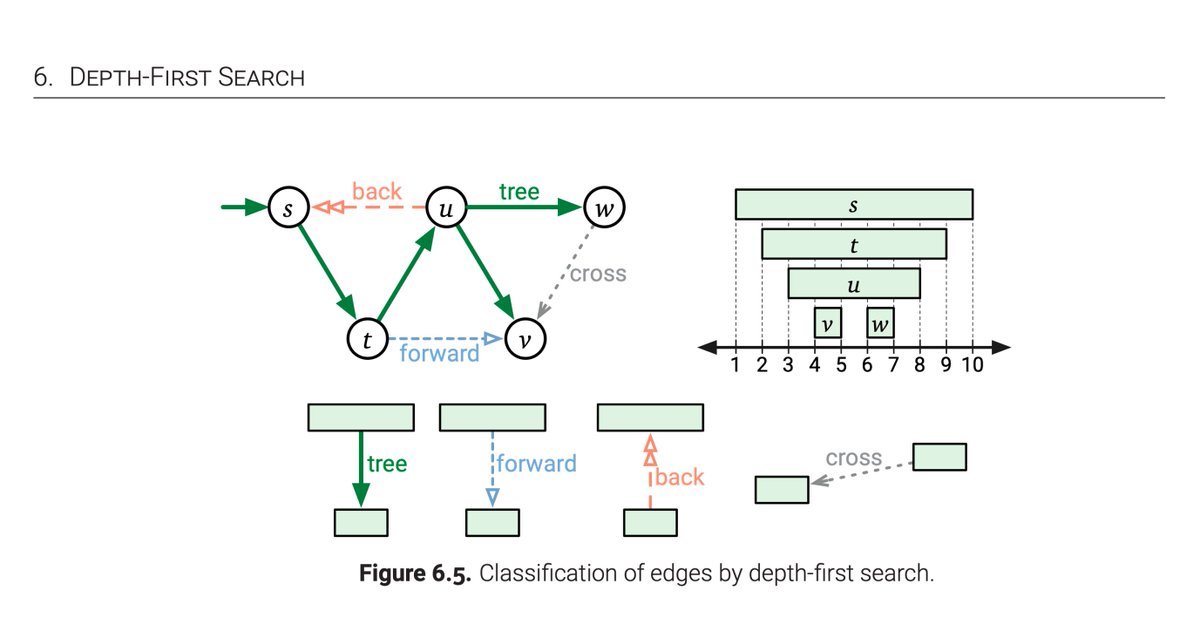
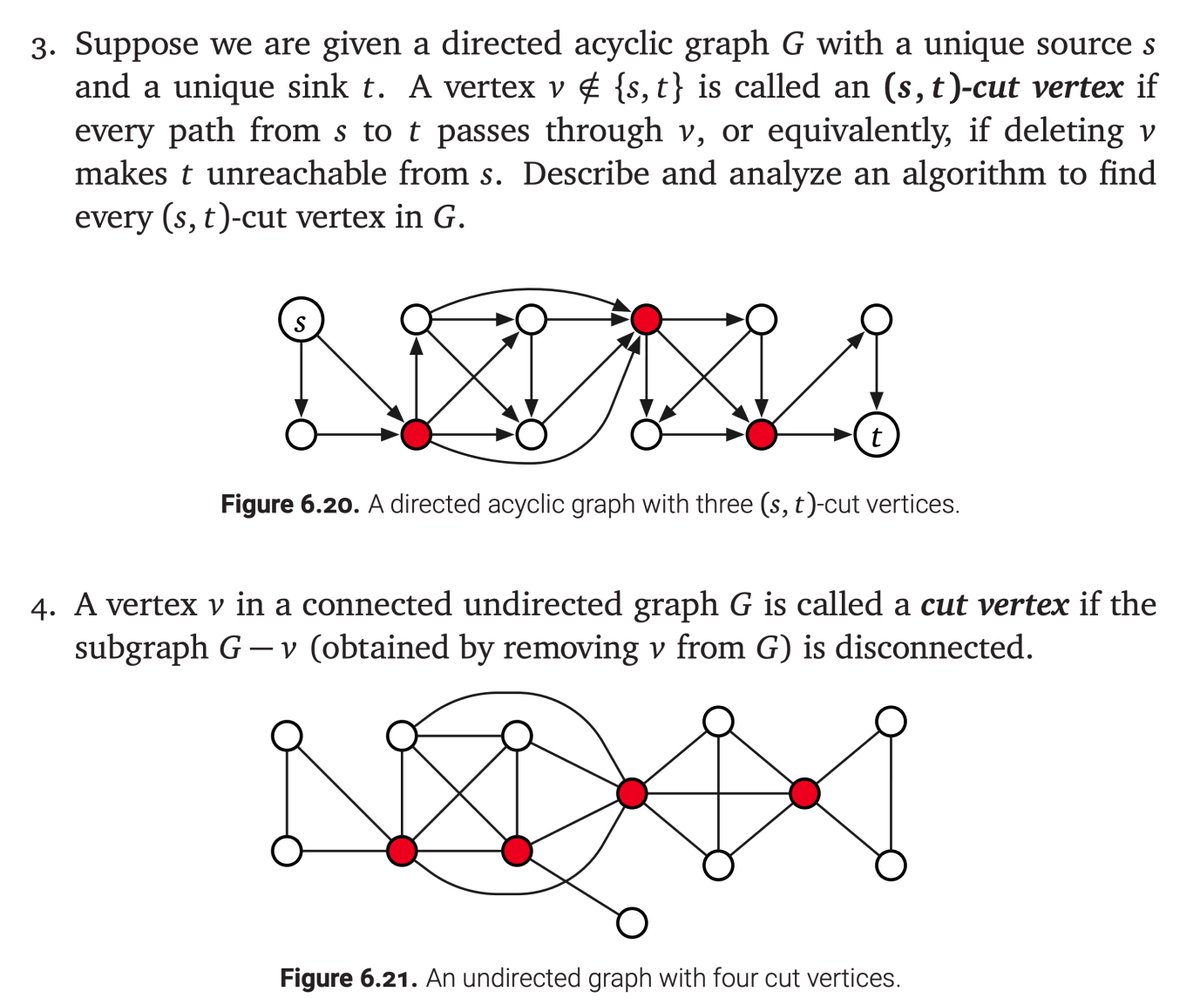
Algorithms by Jeff Erickson - one of the best algorithm books out there.
The illustrations make complex concepts surprisingly easy to follow. Highly recommend this.
jeffe.cs.illinois.edu/teaching/algor…

Vivek Galatage@vivekgalatage
My go-to algorithm visualizer for explaining DSA to students. algorithm-visualizer.org
English
Rafael Rivas 🇻🇪 retweetledi
🧵 Day 21/30 — #SystemDesign
Load Balancer: The silent system that keeps everything fast & alive
One server handling all traffic?
Works… until it doesn’t.
Traffic spikes → server overload → downtime.
That’s why systems use a Load Balancer.
A load balancer sits between users and servers and distributes incoming requests across multiple instances.
Flow:
User → Load Balancer → Multiple Servers
Goal:
→ No single server overloaded
→ Better performance
→ High availability
Types (keep it simple)
Layer 4 (Transport)
→ Works on IP + Port
→ Fast, less intelligent
Layer 7 (Application)
→ Works on HTTP/HTTPS
→ Smart routing (headers, paths)
Common Algorithms
→ Round Robin (equal distribution)
→ Least Connections (send to least busy)
→ IP Hash (same user → same server)
→ Weighted (based on server capacity)
Why It Matters
→ Handles traffic spikes
→ Improves uptime
→ Enables horizontal scaling
→ Supports failover
→ Better latency
Real Usage
→ AWS ELB / ALB
→ NGINX
→ HAProxy
→ Cloudflare
Every scalable system uses one.
Golden Rule
Scaling = adding more servers.
Load balancer = using them efficiently.
#30DaysOfSystemDesign #LoadBalancing #BackendEngineering

Nitin.nn@NitinthisSide_
🧵 Day 20/30 — #SystemDesign Kafka: The backbone behind real-time data pipelines at scale Most systems don’t just serve requests. They produce continuous streams of events — user clicks, payments, logs, metrics, notifications. Handling this data reliably and at scale is not trivial. That’s where Apache Kafka comes in. Kafka is a distributed event streaming platform used to build real-time data pipelines and streaming applications. It allows services to publish and consume events efficiently without tight coupling. ---------------------- Core Idea !! Instead of services calling each other directly: → Producer sends event to Kafka → Kafka stores it durably → Multiple consumers read and process independently Flow: Producer → Kafka Topic → Consumers One event can power many systems at once. --------------------- Key Concepts 1. Topic A category of events (e.g., orders, payments, logs) 2. Partition Topics are split into partitions for parallel processing 3. Producer Sends messages to Kafka 4. Consumer Reads messages from Kafka 5. Consumer Group Multiple consumers sharing load 6. Offset Position of message in partition These concepts define Kafka’s power. ------------------------ Why Kafka Matters → High throughput (millions of messages/sec) → Fault tolerant (replication across brokers) → Scalable horizontally → Durable storage (events persisted) → Real-time processing → Decouples systems It turns data into a streaming backbone. --------------------------- Real-World Example E-commerce order placed: → Event sent to Kafka (OrderCreated) Consumers: → Payment service processes transaction → Inventory updates stock → Notification sends email → Analytics tracks event → Recommendation system updates behavior All from one event stream. -------------------------------- Why Companies Use Kafka → Netflix for event streaming pipelines → LinkedIn (creator of Kafka) → Uber for real-time data flows → Amazon for internal streaming systems → Fintech apps for transaction streams Kafka powers modern data-driven systems. -------------------------------- Important Strength : Kafka stores events, not just forwards them. Consumers can: → Read in real-time → Replay old events → Recover from failures → Process at their own pace This makes systems resilient. ---------------------------- Challenges Most Ignore Kafka is powerful, but not simple: → Requires cluster management → Partition design is critical → Ordering only within partition → Exactly-once semantics is complex → Monitoring and tuning needed Misuse leads to complexity quickly. --------------- Kafka vs Queue Queue: → Message consumed once Kafka: → Message stored + can be consumed multiple times Kafka is more like a log system than a simple queue. Don’t use it for simple request-response systems. #30DaysOfSystemDesign #Kafka #BackendEngineering
English
Rafael Rivas 🇻🇪 retweetledi
OpenCode es la mejor alternativa de Claude Code.
De código abierto, con modelos gratuitos, una experiencia de desarrollo brutal...
Y he creado un curso gratuito completo para ti:
→ youtube.com/watch?v=ZZq4Tp…

YouTube

Español
Rafael Rivas 🇻🇪 retweetledi
¡Brutal TRUCAZO para tus repositorios de GitHub!
Accede a una documentación con diagramas y IA.
Cambia "github" por "deepwiki" en la URL y mira:
Español
Rafael Rivas 🇻🇪 retweetledi
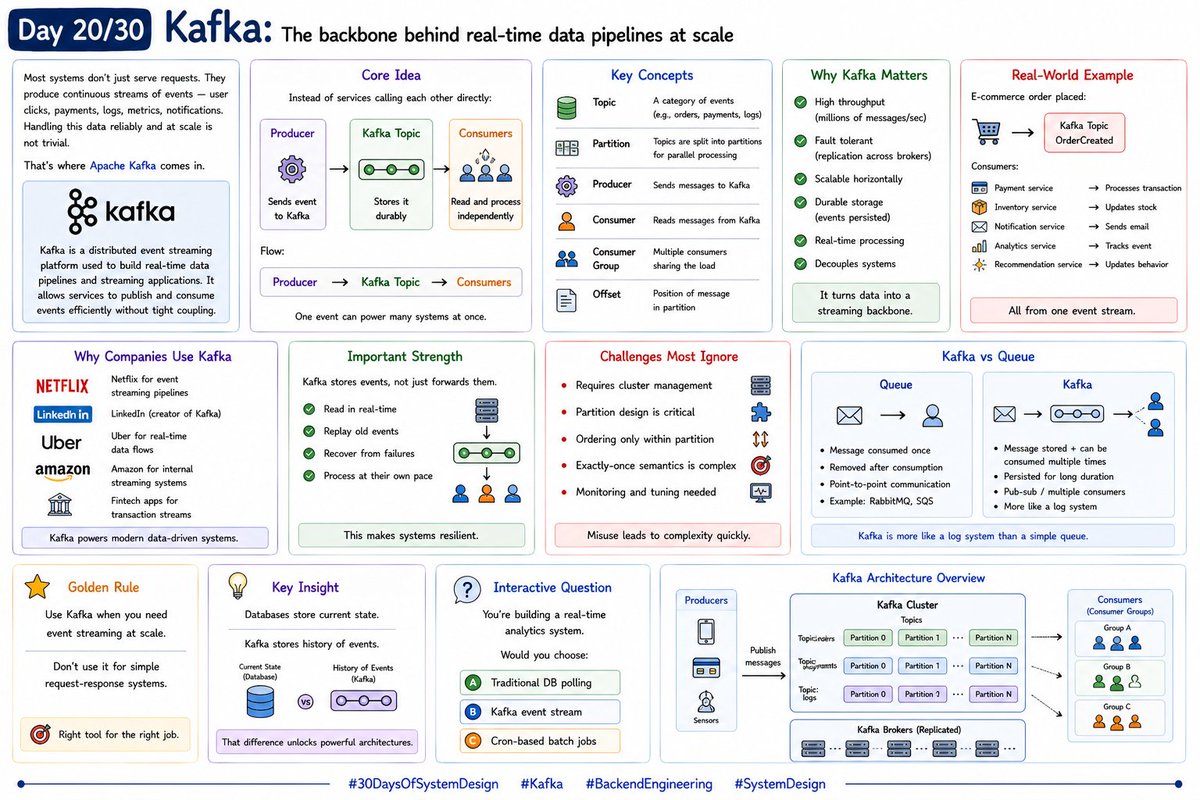
🧵 Day 20/30 — #SystemDesign
Kafka: The backbone behind real-time data pipelines at scale
Most systems don’t just serve requests. They produce continuous streams of events — user clicks, payments, logs, metrics, notifications. Handling this data reliably and at scale is not trivial.
That’s where Apache Kafka comes in.
Kafka is a distributed event streaming platform used to build real-time data pipelines and streaming applications. It allows services to publish and consume events efficiently without tight coupling.
----------------------
Core Idea !!
Instead of services calling each other directly:
→ Producer sends event to Kafka
→ Kafka stores it durably
→ Multiple consumers read and process independently
Flow:
Producer → Kafka Topic → Consumers
One event can power many systems at once.
---------------------
Key Concepts
1. Topic
A category of events (e.g., orders, payments, logs)
2. Partition
Topics are split into partitions for parallel processing
3. Producer
Sends messages to Kafka
4. Consumer
Reads messages from Kafka
5. Consumer Group
Multiple consumers sharing load
6. Offset
Position of message in partition
These concepts define Kafka’s power.
------------------------
Why Kafka Matters
→ High throughput (millions of messages/sec)
→ Fault tolerant (replication across brokers)
→ Scalable horizontally
→ Durable storage (events persisted)
→ Real-time processing
→ Decouples systems
It turns data into a streaming backbone.
---------------------------
Real-World Example
E-commerce order placed:
→ Event sent to Kafka (OrderCreated)
Consumers:
→ Payment service processes transaction
→ Inventory updates stock
→ Notification sends email
→ Analytics tracks event
→ Recommendation system updates behavior
All from one event stream.
--------------------------------
Why Companies Use Kafka
→ Netflix for event streaming pipelines
→ LinkedIn (creator of Kafka)
→ Uber for real-time data flows
→ Amazon for internal streaming systems
→ Fintech apps for transaction streams
Kafka powers modern data-driven systems.
--------------------------------
Important Strength :
Kafka stores events, not just forwards them.
Consumers can:
→ Read in real-time
→ Replay old events
→ Recover from failures
→ Process at their own pace
This makes systems resilient.
----------------------------
Challenges Most Ignore
Kafka is powerful, but not simple:
→ Requires cluster management
→ Partition design is critical
→ Ordering only within partition
→ Exactly-once semantics is complex
→ Monitoring and tuning needed
Misuse leads to complexity quickly.
---------------
Kafka vs Queue
Queue:
→ Message consumed once
Kafka:
→ Message stored + can be consumed multiple times
Kafka is more like a log system than a simple queue.
Don’t use it for simple request-response systems.
#30DaysOfSystemDesign #Kafka #BackendEngineering
Nitin.nn@NitinthisSide_
🧵 Day 19/30 — #SystemDesign Service Discovery: How microservices find each other without hardcoding URLs In a simple app, services talk using fixed URLs: → auth-service.myapp.com → payment-service.myapp.com But in real systems, instances scale up/down dynamically. Containers restart. IPs change. New instances spin up during traffic spikes. So… how does one service know where another service is running right now? That’s where Service Discovery comes in. Service discovery is a mechanism that helps services dynamically find and communicate with each other without hardcoding addresses. ⸻ The Problem Without It : Imagine 10 instances of Payment Service. → New instances added → Some instances crash → IPs constantly change If services rely on fixed addresses: → Requests fail → Routing breaks → Manual updates needed → System becomes fragile This doesn’t scale. ⸻ How It Works : Each service instance: → Registers itself with a Service Registry → Shares its IP, port, health status When another service wants to call it: → It queries the registry → Gets a list of healthy instances → Sends request to one of them Flow: Service A → Registry → Service B instance Dynamic and reliable. ⸻ Two Main Approaches : Client-Side Discovery → Client queries registry directly → Client decides which instance to call Examples: → Netflix Eureka → Consul More control, but adds complexity to client. ⸻ Server-Side Discovery → Client sends request to load balancer → Load balancer queries registry → Routes request automatically Examples: → Kubernetes Services → AWS ELB Simpler for clients. ⸻ Why It Matters → Handles dynamic scaling → Improves fault tolerance → Enables auto-recovery → Removes hardcoded dependencies → Supports containerized environments → Essential for microservices Without it, microservices become tightly coupled again. ⸻ Real-World Usage → Kubernetes uses built-in service discovery via DNS → Netflix uses Eureka for dynamic discovery → AWS uses internal service routing → Consul used in many distributed systems Modern cloud systems rely heavily on this. ⸻ Health Checks (Critical) Registry doesn’t just store instances. It tracks: → Is instance alive? → Is it responding properly? → Should it receive traffic? Unhealthy instances are removed automatically. ⸻ Challenges Most Ignore → Registry itself becomes critical component → Needs high availability → Consistency of service list → Cache vs real-time updates → Network partitions affect discovery Service discovery must be reliable or entire system suffers. #30DaysOfSystemDesign #ServiceDiscovery #BackendEngineering
English
Rafael Rivas 🇻🇪 retweetledi
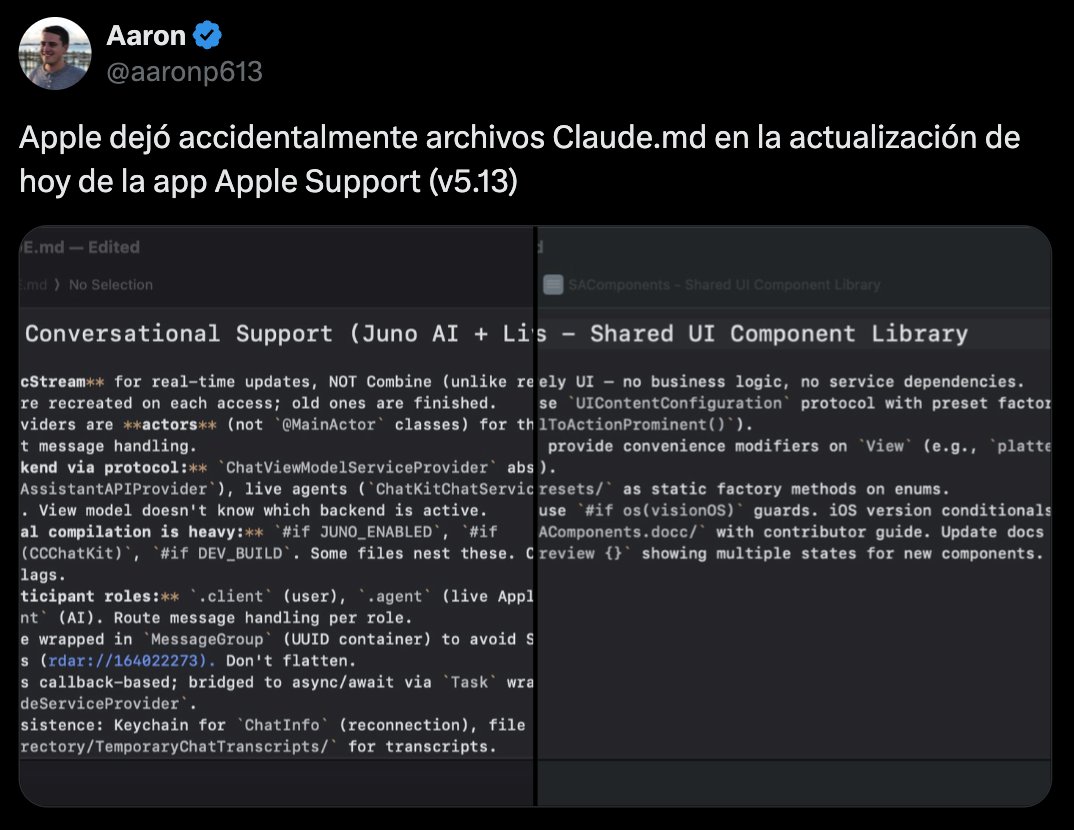
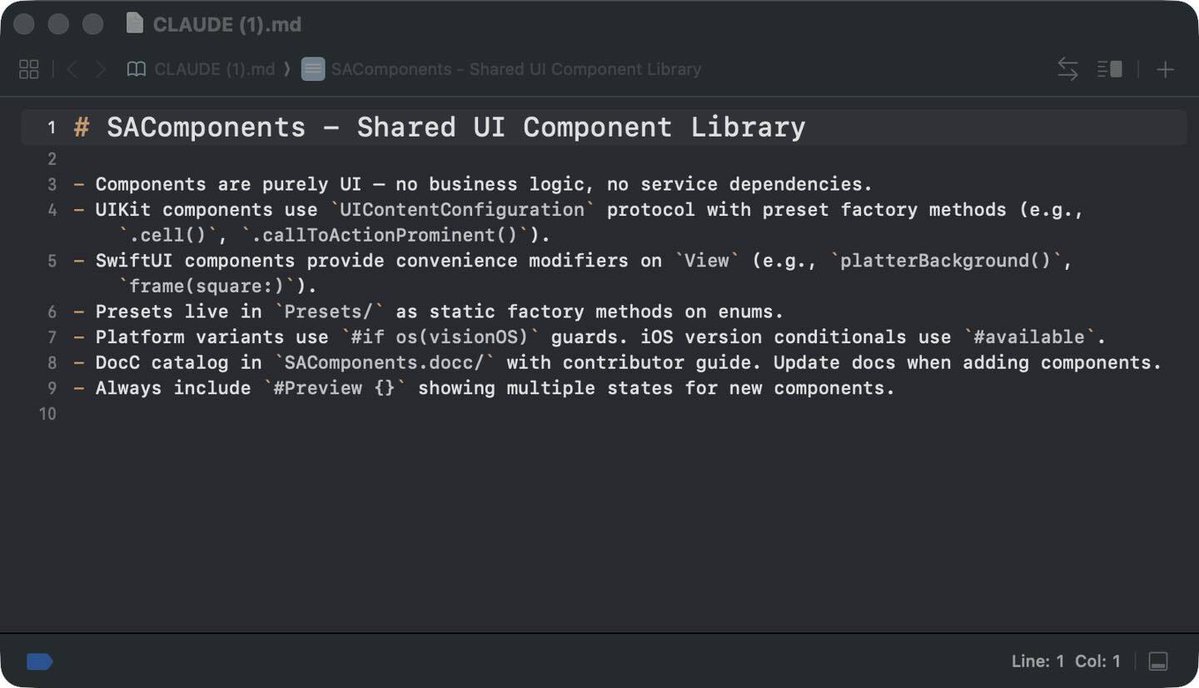
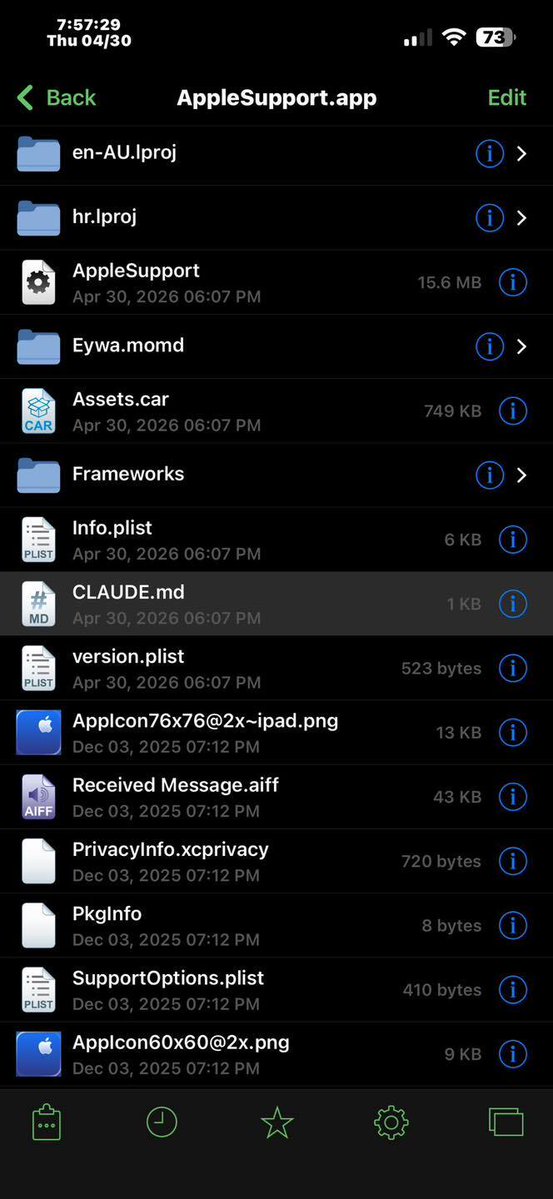
A Apple se le ha colado por accidente un CLAUDE.md.
Ha pasado en su app de soporte.
Además de lo curioso del contenido...
Se confirma que están usando Claude Code para desarrollar su software.

Español