Ubiquity Magazine

1.1K posts

Ubiquity Magazine banner
Ubiquity Magazine

Ubiquity Magazine

@UbiquityACM

Ubiquity an ACM peer-reviewed online magazine devoted to the future of computing and the people who are creating it.

Information Everwhere Katılım Ocak 2012
372 Takip Edilen432 Takipçiler
Sabitlenmiş Tweet
Ubiquity Magazine
Ubiquity Magazine@UbiquityACM·
John Gustafson is the inventor of posits—a superior way to represent numbers in binary. In this two-part article, Gustafson surveys the history of machine number representations. This is the fascinating story of computer numbers. ubiquity.acm.org/article.cfm?id…
Ubiquity Magazine tweet media
English
0
1
0
64
Ubiquity Magazine
Ubiquity Magazine@UbiquityACM·
"How to Recognize and Target Your Audience's Point of View." Exploiting this essential approach to communication can produce dramatic results. buff.ly/Fzb2Pjx
Ubiquity Magazine tweet media
English
0
0
0
7
Ubiquity Magazine
Ubiquity Magazine@UbiquityACM·
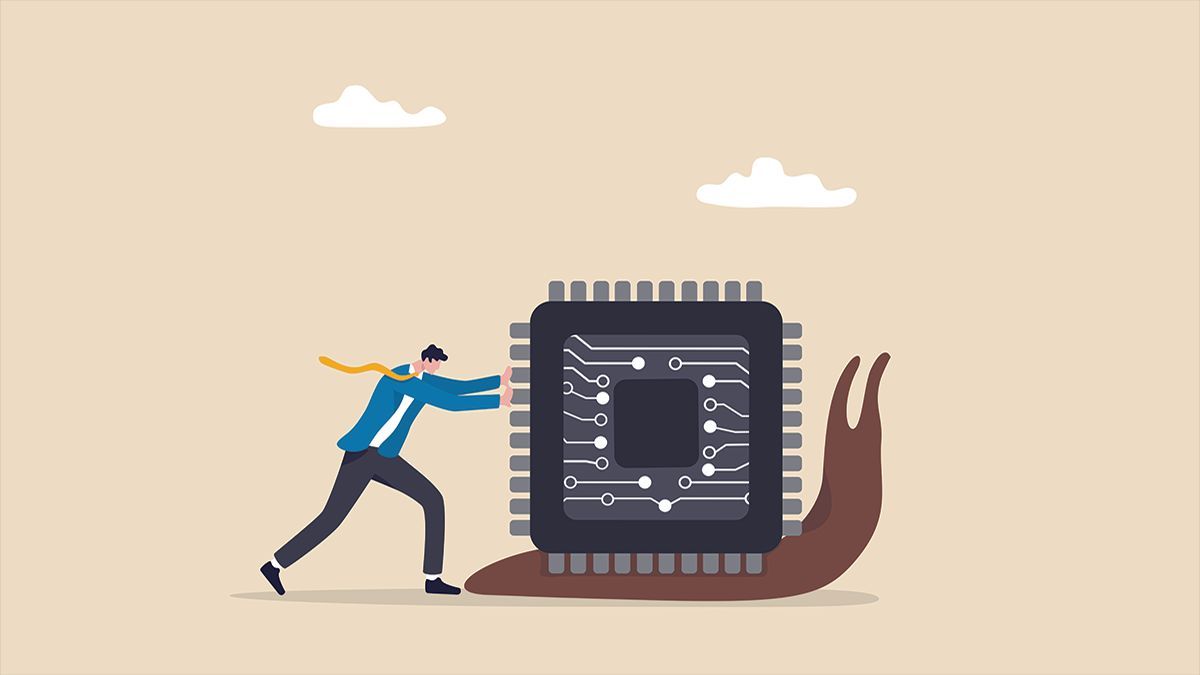
In this interview, Dr.-Ing. Asif Ali Khan discusses computing-in-memory (CIM), a promising paradigm that enables memory devices to perform computation in addition to their primary functionality of data storage. buff.ly/QxlT0hD
Ubiquity Magazine tweet media
English
0
0
0
20
Ubiquity Magazine
Ubiquity Magazine@UbiquityACM·
An open problem is that many machine learning systems are black box classifiers and cannot explain their decisions or recommendations. Read more in "Demystifying Machine Learning in Artificial Intelligence" buff.ly/H9RFgHe
Ubiquity Magazine tweet media
English
0
0
0
7
Ubiquity Magazine
Ubiquity Magazine@UbiquityACM·
"How to Speak and Write about Science for Non-Scientists" buff.ly/j4QUqKr Used correctly, words shed light and generate interest and understanding. Used incorrectly, they confuse and generate mistrust and even animosity. This is particularly true in STEM education.
Ubiquity Magazine tweet media
English
0
0
0
9
Ubiquity Magazine
Ubiquity Magazine@UbiquityACM·
After decades of the IEEE standard for floating-point format, the industry is in a state of flux. But the posit format may become the new standard for representing real numbers. Read more from John L. Gustafson ubiquity.acm.org/article.cfm?id…
Ubiquity Magazine tweet media
English
0
0
0
19
Ubiquity Magazine retweetledi
Gaurav Ahuja
Gaurav Ahuja@gauravahuja·
We are releasing a book today. Artifacts: A visual history of technology from 1965 to the Present. 59 years. 296 breakthrough moments. 403 images. A clean chronology of the innovations that built the modern world. From microprocessors to mobile to AI. Technology is the greatest story of human optimism. It is the belief that fragile ideas can become world changing platforms. Artifacts is that story, in print. A curated gallery of modern computing that fits on your desk. Proud to share it. Link in comments.
Gaurav Ahuja tweet mediaGaurav Ahuja tweet media
English
106
131
1.8K
184.1K
Ubiquity Magazine retweetledi
CACM Editor
CACM Editor@blogCACM·
Integrating Machine Learning into Physical Security Architecture Defining AI technologies safe for use in a security context, and the way(s) they may be used. cacm.acm.org/blogcacm/integ…
English
0
4
2
215
Ubiquity Magazine retweetledi
Ş. Furkan Öztürk
Ş. Furkan Öztürk@SFurkanOzturk61·
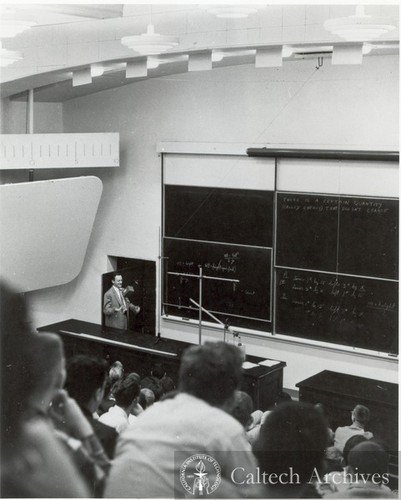
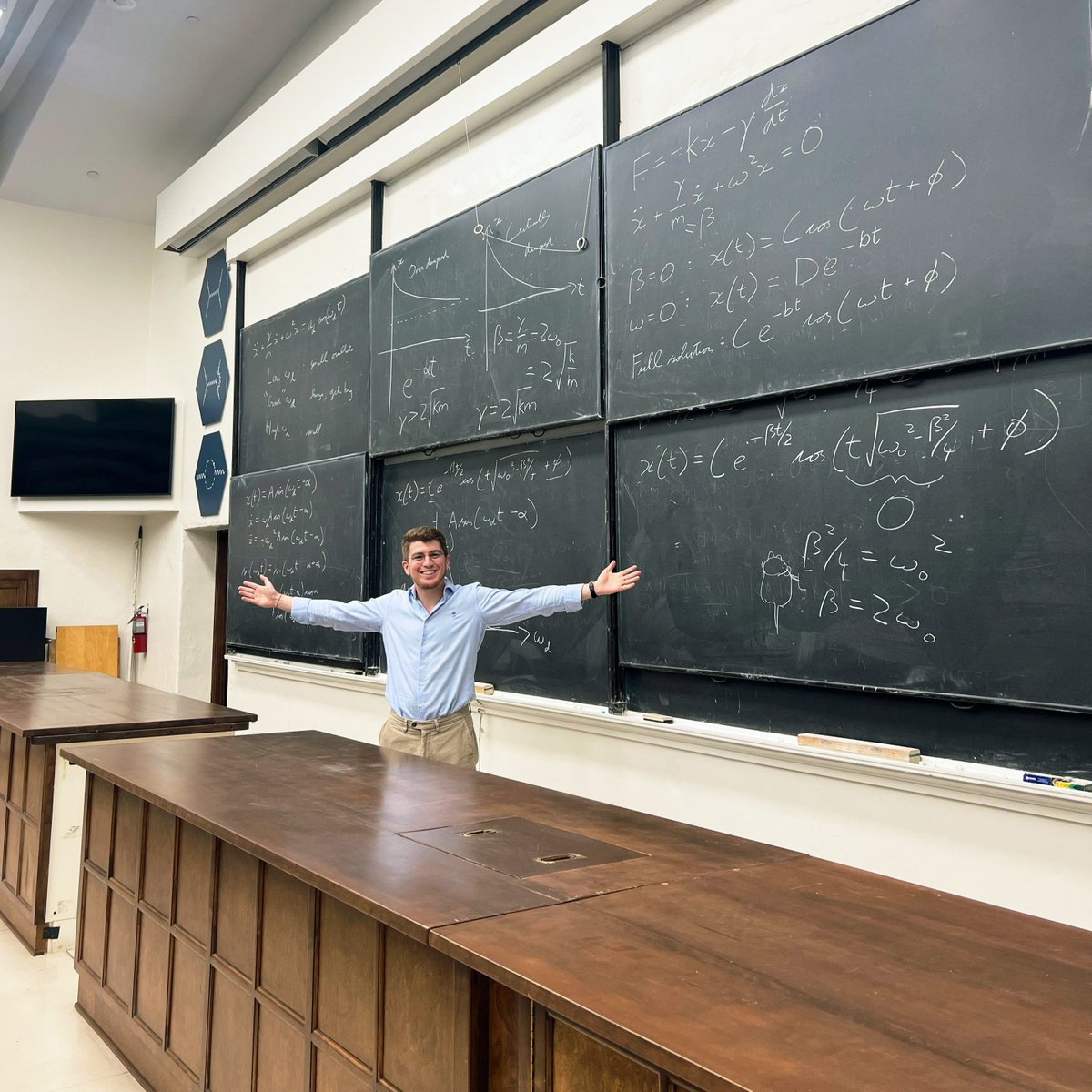
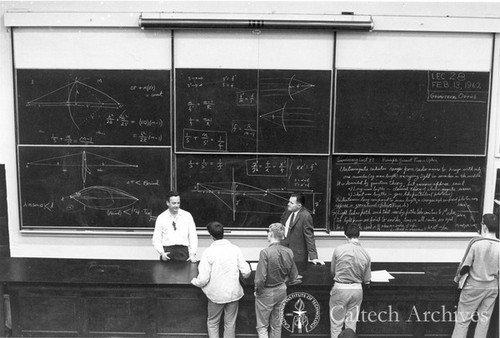
Dream come true. Standing as a professor at Caltech's Feynman Lecture Hall where Feynman used to teach his "Lectures on Physics".
Ş. Furkan Öztürk tweet mediaŞ. Furkan Öztürk tweet mediaŞ. Furkan Öztürk tweet media
English
239
532
13.2K
990.4K
Ubiquity Magazine retweetledi
Andrew Ng
Andrew Ng@AndrewYNg·
I recently received an email titled “An 18-year-old’s dilemma: Too late to contribute to AI?” Its author, who gave me permission to share this, is preparing for college. He is worried that by the time he graduates, AI will be so good there’s no meaningful work left for him to do to contribute to humanity, and he will just live on Universal Basic Income (UBI). I wrote back to reassure him that there will still be plenty of work he can do for decades hence, and encouraged him to work hard and learn to build with AI. But this conversation struck me as an example of how harmful hype about AI is. Yes, AI is amazingly intelligent, and I’m thrilled to be using it every day to build things I couldn’t have built a year ago. At the same time, AI is still incredibly dumb, and I would not trust a frontier LLM by itself to prioritize my calendar, carry out resumé screening, or choose what to order for lunch — tasks that businesses routinely ask junior personnel to do. Yes, we can build AI software to do these tasks. For example, after a lot of customization work, one of my teams now has a decent AI resumé screening assistant. But the point is it took a lot of customization. Even though LLMs can handle a much more general set of tasks than previous iterations of AI technology, compared to what humans can do, they are still highly specialized. They’re much better at working with text than other modalities, still require lots of custom engineering to get it the right context for a particular application, and we have few tools — and only inefficient ones — for getting our systems to learn from feedback and repeated exposure to a specific task (such as screening resumés for a particular role). AI has stark limitations, and despite rapid improvements, it will remain limited compared to humans for a long time. AI is amazing, but it has unfortunately been hyped up to be even more amazing than it is. A pernicious aspect of hype is that it often contains an element of truth, but not to the degree of the hype. This makes it difficult for nontechnical people to discern where the truth really is. Modern AI is a general purpose technology that is enabling many applications, but AI that can do any intellectual tasks that a human can (a popular definition for AGI) is still decades away or longer. This nuanced message that AI is general, but not that general, often is lost in the noise of today's media environment. Similarly, the progress of frontier models is amazing! But not so amazing that they’ll be able to do everything under the sun without a lot of customization. I know VC investors who are scared to invest in application-layer startups because they are worried that frontier AI model companies will quickly wipe out all of these businesses by improving their models. While some thin wrappers around LLMs no doubt will be replaced, there also remains a huge set of valuable applications that the current trajectory of progress of frontier models won’t displace for a long time. Without accurate information about the current state of AI and how it is likely to progress, some young people will decide not to enter AI because think think AGI leaves them no meaningful role, or decide not to learn how to code because they fear AI will automate it — right when it is the best time ever to join our field. Let us all keep working to get to a precise understanding of what’s actually possible, and keep building! [Original text: deeplearning.ai/the-batch/issu… ]
English
149
554
2.5K
302.2K
Ubiquity Magazine retweetledi
CACM Editor
CACM Editor@blogCACM·
Nietzsche’s vision of the human as a value-creating, self-overcoming agent speaks powerfully to the psychological and cultural ruptures of the AI age. cacm.acm.org/blogcacm/why-n…
English
0
3
2
214
Ubiquity Magazine retweetledi
ACM Education & Learning Center
Now available for ACM Members: "Financial Data Science with Python: An Integrated Approach to Analysis, Modeling, and Machine Learning," by Haojun Chen. Beginning w/foundational Python concepts, the author covers essential topics like data structures,... share.percipio.com/cd/a2rL6zwRx
ACM Education & Learning Center tweet media
English
1
1
0
117
Ubiquity Magazine
Ubiquity Magazine@UbiquityACM·
What matters about cryptocurrencies is not really their technology; it's trust and crowd psychology, which are driving us toward the post-truth world in which groupthink helps create "alternate realities." buff.ly/SzoO5R4 #crypto
Ubiquity Magazine tweet media
English
0
1
0
41
Ubiquity Magazine
Ubiquity Magazine@UbiquityACM·
Ubiquity's Dr. Bushra Anjum speaks with Dr. Nikita Joshi about the evolving role of computing in healthcare. The conversation follows Joshi's journey from IoT-based remote patient monitoring to AI-driven mental health prediction. buff.ly/7VzVwee
Ubiquity Magazine tweet media
English
0
0
0
24