
nEbEd.
7.3K posts


nEbEd.
@UcheNebed
Jack of all trades Master of Some. Cloud Architect/DevOps.
South African xenophobic attackers harassing a Nigerian man who possessed a valid passport. Good that the man stood up to them. However, I thought the fight was against illegal migrants?✍️
A 19-year-old Thiel fellow just raised $7.3 million to build an African ‘super app’ fortune.com/2026/04/23/19-…



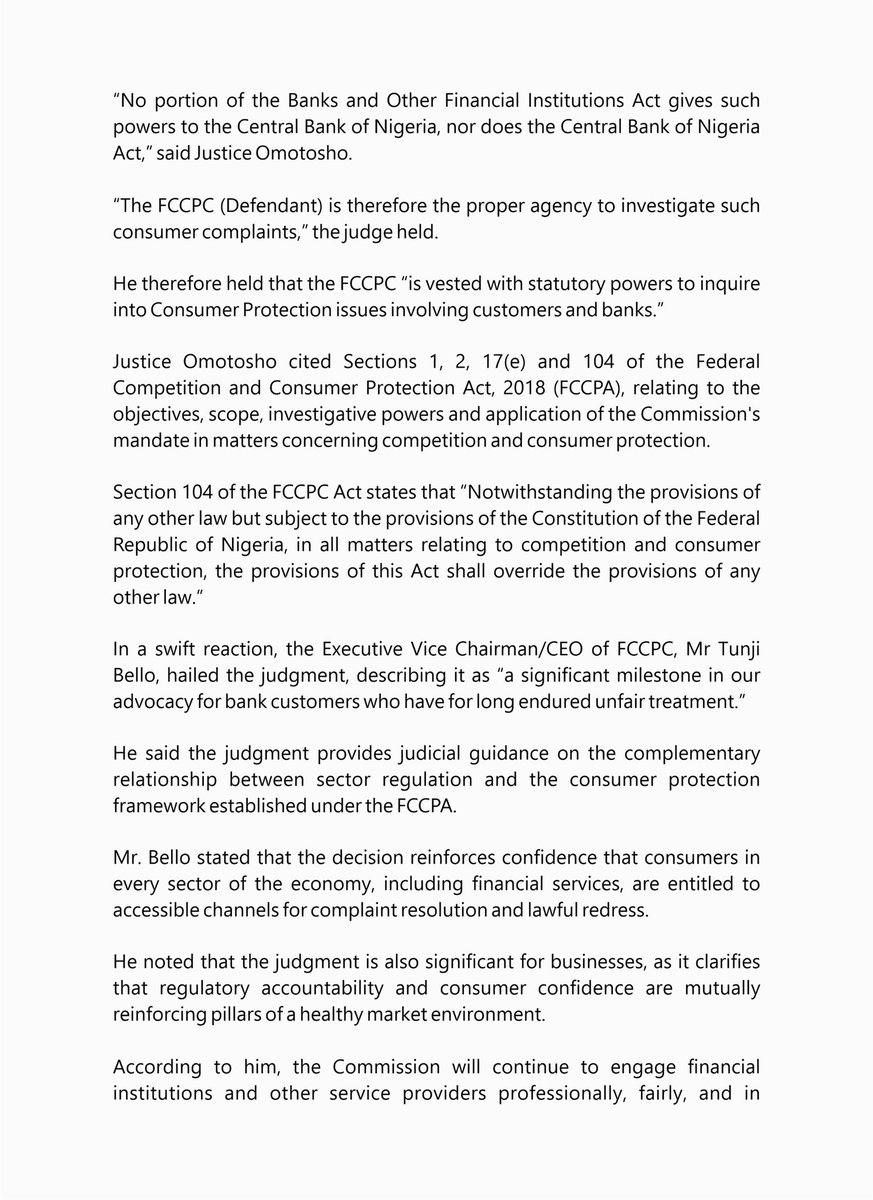


BIG NEWS🚨: Boko Haram is threatening to mass execute 400 women and children they kidnapped in Ngoshe, Borno State, unless the Government pays $2.7M (₦3.7bn) within 72hrs. They dared the Nigerian Army to come after them.

Moment some Agbero in Lagos threw stones at Musical Artist Mavo’s car after he allegedly refused to give them money🤯😳
“I’m a woman DSP, I retired in the year 2024, we served this country and now we’ve turned to sl@ves. We’ve been sl@ves for long, we’ve been under sl@very for long, we’re appealing to President Tinubu to pay us” - Retired policewoman cries out 🥹🧎🏻♂️➡️💔

FEDERAL MINISTRY OF FINANCE PRESS STATEMENT FALSE ALLEGATION OF HIDDEN SPENDING AND DIVERSION OF FEDERATION REVENUE The attention of the Federal Ministry of Finance has been drawn to recent media reports and commentaries that misrepresent the findings of the latest Nigeria Development Update by the World Bank, particularly claims suggesting that a significant portion of federation earnings is being “diverted” or constitutes “hidden spending.” These interpretations misrepresent the World Bank’s analysis and reflect a misunderstanding of the fiscal system. MISINTERPRETATION OF FAAC DEDUCTIONS The misreporting in question incorrectly characterises Federation Account Allocation Committee (FAAC) deductions as “waste” or missing funds. This is incorrect. FAAC deductions, as presented in the World Bank report, include: Statutory transfers, Savings and investments, Security-related expenditures, Cost-of-collection charges, Refunds to Ministries, Departments and Agencies (MDAs), Transfers and interventions benefiting subnational governments. It is important to emphasise that refunds and transfers to states and other tiers of government are not leakages. They represent legitimate fiscal flows, including repayments of obligations and statutorily backed allocations. SELECTIVE USE OF OUTDATED DATA Some commentaries selectively relied on past data while ignoring the forward-looking analysis and ongoing public financial management reforms highlighted in the report. The World Bank explicitly notes that reforms implemented in early 2026, including the recently signed Executive Order to safeguard remittance of petroleum revenues, are already addressing concerns around deductions, and are expected to improve transparency while increasing revenues available to all tiers of government by about 0.4% of GDP annually. Misinterpreting one aspect of the analysis without acknowledging the progressive reforms and measures already introduced to enhance distributable federation revenues gives a distorted picture. STRONGER MACROECONOMIC FUNDAMENTALS The broader message of the World Bank report is positive and forward-looking: Economic growth is becoming more broad-based across sectors. Inflation, while still elevated, is declining due to deliberate policy actions. Nigeria’s external position has strengthened significantly, with improved reserves and a current account surplus. Debt indicators have improved, including a decline in the debt-to-GDP ratio, the first in over a decade. These developments reflect the outcomes of the current administration's ongoing macroeconomic policies and public financial management reforms. THE REAL MESSAGE OF THE REPORT The World Bank does not conclude that Nigeria’s fiscal system is collapsing or that reforms have failed. Rather, it states that reforms are working, and they must be sustained and deepened to translate macroeconomic gains into inclusive growth. CONCLUSION The Federal Government remains committed to strengthening fiscal transparency, improving revenue mobilisation, ensuring efficient public spending, and deepening reforms to support inclusive economic growth. An accurate understanding and responsible reporting of fiscal information are critical to maintaining confidence in Nigeria’s reform trajectory and economic outlook. We urge stakeholders, media organisations, and the public to engage constructively with fiscal information and avoid twisted interpretations that may undermine reform efforts and fuel public discord. Signed Taiwo Oyedele Honourable Minister of State for Finance, Federal Republic of Nigeria April 19, 2026

The insider trading suspicions looming over Trump's presidency bbc.in/4tkKWyi

Apocalypse torching of 100s of FLOATING Malaysia homes
Jagaban is succeeding Get in jor 🤣🤣🤣🤣🤣🤣🤣
Interestingly when people japa, many tend to get angrier about Nigeria. Some folks who didn’t really care about politics began to care when they realized the only reason they were outside Nigeria in the first place was a forced choice. Good.

When you insult, bully and abuse people simply because they don’t support your candidate, you are no different from thugs who come to polling units to snatch ballot boxes. Both of you are impeding the rights of your fellow citizens to support who they want.
“I was a77ack3d yesterday on the street of Fela Shrine by some boys just because I was supporting APC and Tinubu 2027. They wound me and broke my windscreen.” — Music promoter, Ijoba Danny says.