
Bad Guy
33.6K posts

@Ugo_only
I tweet what you won’t like


Classical systems face limits with complex simulations. while quantum architectures enable probabilistic parallelism. The supporting infrastructure will be crucial, and @quipnetwork is quietly positioning itself for the coming quantum era.


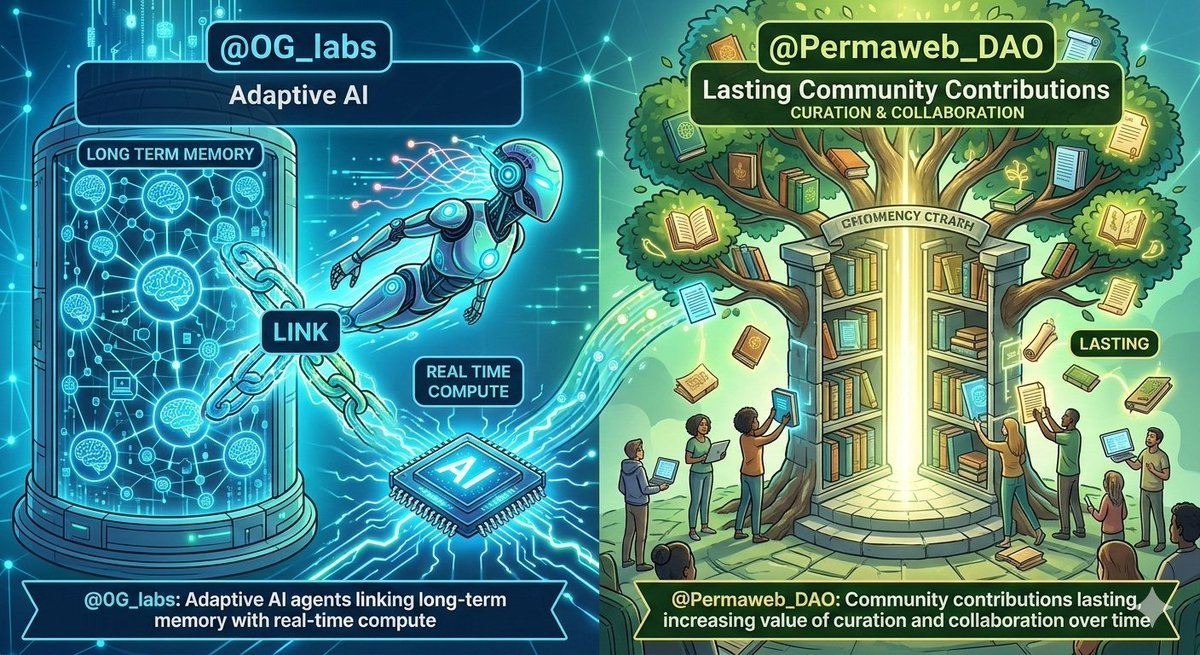
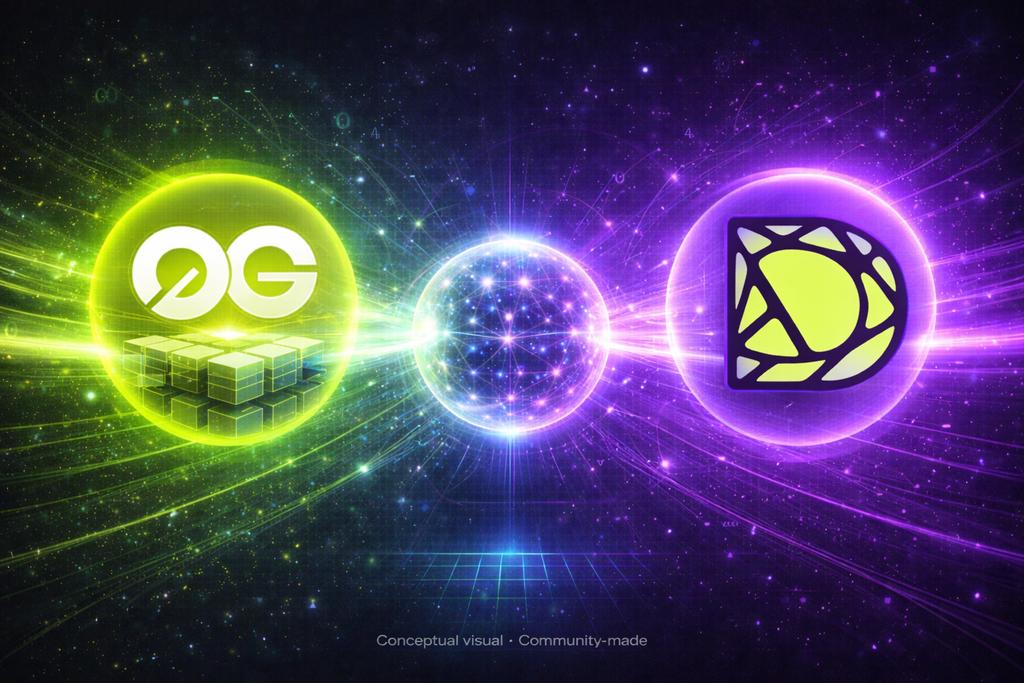
What’s becoming increasingly clear is that the next phase of the internet won’t be defined by who controls the most data but by who can prove that data is real, accessible and unchanged. That’s where the alignment between infrastructure, computation and permanence starts to reshape expectations. At the core of this shift is 0G Labs. It is addressing one of the biggest gaps in modern AI systems: verifiability. Generating outputs at scale is easy; proving those outputs can be trusted is not. By focusing on verifiable AI infrastructure it introduces a model where computation is not only powerful but accountable and provable a crucial requirement as AI becomes more embedded in decision making. Complementing this is Dgrid AI which rethinks how compute resources are distributed. Instead of concentrating power in centralized providers it enables a decentralized network where computation is shared and scalable. This structure is not just efficient it’s resilient, reducing dependency on single points of failure and aligning with the core principles of decentralization. Bringing permanence into the equation is PermawebDAO. It ensures that data is not just stored but preserved for the long term. Information remains accessible and unchanged, creating a reliable foundation for both developers and users. This permanence adds a new layer of confidence knowing that critical data won’t disappear or be silently altered. Building on that foundation, PermaCast makes permanent data interactive and usable. It transforms static storage into dynamic engagement, allowing users to access and interact with content that remains consistent over time while still being practical in real world scenarios. When you connect these layers a deeper pattern emerges: • 0G Labs → verifiable, accountable AI computation • Dgrid AI → decentralized, resilient compute networks • PermawebDAO + PermaCast → permanent, trustworthy data layers Together they represent a shift toward infrastructure where trust is as important as performance. It’s no longer just about building fast systems it’s about building systems people can rely on without second guessing the foundation they’re built on. @0G_labs @dgrid_ai @permacastapp


The Silicon Witness: Moving Beyond the ‘Trust Me’ Era The current AI boom is being built on a foundation of blind faith, a challenge that 0G Labs is now addressing at the structural level. When an AI agent handles a portfolio, processes sensitive data, or makes a high-stakes decision, the industry standard for security is essentially a digital pinky-promise. We check the logs. We look at the "reputation" of the provider. We hope the economic incentives are strong enough to keep them honest. But as the 0G Labs team often points out, "trust" is a human vulnerability, not a technical solution. The real shift happens when the hardware itself becomes the ultimate arbiter of truth. This is the era of Sealed Inference. Imagine a computation that happens inside a digital vault so secure that even the person who owns the physical server cannot peek inside. This isn't a metaphor; it is a physical reality enabled by Trusted Execution Environments (TEEs). By isolating the AI's "brain" within the silicon itself, 0G Labs has stripped away the need for "reputation" and replaced it with a system where the hardware produces a cryptographic attestation, a receipt signed by the chip that proves exactly what was computed, without a single human needing to verify a log. By shifting from social trust to hardware-level proof, 0G Labs is effectively turning the "Black Box" of AI into a "Glass Box" of certainty. This infrastructure ensures that if an agent claims to have executed a specific trade or analyzed a specific dataset, the proof is embedded in the math of the chip, not the word of the operator. It’s the reason why partnerships like the one with Bitkub are so pivotal, they allow for "Private, Verified Wealth Management" run entirely by AI without a third party ever seeing the private prompts or the underlying strategy. The Structural Reality: In a world of distributed intelligence, we don't need better promises; we need better physics. 0G Labs is moving the industry past the "Trust Me" era by making the hardware the judge, jury, and executioner of AI integrity. ______ The Architecture of Autonomy: Why OpenClaw + DGrid_AI is a Paradigm Shift Most people see a "No-Code Dashboard." I see the first functional decoupling of Executive Action and Intelligence. OpenClaw is the Local Runtime. It’s the "hands" of the agent, accessing files, executing shell commands, and managing private context on your own hardware. It is the fortress of user sovereignty. DGrid_AI is the Decentralized Inference Mesh. It’s the "nervous system", providing a verifiable, aggregate stream of 200+ LLMs via a single, trustless gateway. When they meet, the "API Key" era dies. By piping DGrid_AI’s ERC-8004 identity standard into OpenClaw’s orchestration, we are creating agents that aren't just "smart", they are Sovereign. They have a portable reputation, an un-killable brain, and a local body that answers to no one but the owner. The UI is just the invitation. The infrastructure is the revolution. Stop renting your intelligence from a corporate silo. Build a Claw. Give it a DGrid_AI brain. Reclaim the stack.


The next big step in decentralized innovation is about coming together, not just making cool discoveries in isolation. That’s exactly what 0G_labs, Dgrid_a, @permacastapp, and Dango are doing—they’re all working together to create infrastructure that not only makes Web3 bigger but also changes how we use, access, and keep it running. This isn’t just a series of improvements; it’s the groundwork for a new standard for DeFi and beyond. What’s happening with 0G_labs is a fresh look at how data is available. Instead of seeing it as just something we have to pay for, it’s becoming a tool that helps us build things in a modular way, opening up a whole new level of flexibility across different systems. This means builders have a whole new way to think about performance—they can now tweak latency, cost, and scalability at the same time. dgrid_ai is also moving beyond just digital limitations by connecting decentralized systems with real-world resource management. It’s creating a model where infrastructure isn’t just virtual but also economically and physically important, making sure decentralized networks contribute to real-world value. This is where DeFi stops being just a concept and starts becoming part of the bigger economic picture. Then there’s Permacastapp, which is quietly changing how we communicate on Web3. Information flow has always been a bit of a bottleneck, but by decentralizing how content is shared and kept, it makes sure that stories, data, and signals aren’t controlled by big, centralized forces. In a world where information is often unevenly distributed, this is a big step toward making things more open and resilient. Finally, @dango brings everything together by making it easy to use and interact with. Infrastructure is only useful if people actually use it, and Dango focuses on how complex systems can be made accessible to everyone. By simplifying access while keeping decentralization in mind, it acts as the door that turns advanced systems into everyday tools. What makes this moment special isn’t just each project on its own, but how they work together. Data, infrastructure, communication, and usability are all coming together to form a unified whole. This is the beginning of a new era where Web3 is no longer just a collection of separate experiments but a connected ecosystem built for growth, importance, and lasting impact.

🚨 OMIRUS © Bitcoin Fear & Greed Index — LIVE We’ve just launched our new indicator, tracking Bitcoin sentiment in real time. What we’re observing is particularly interesting: Over the past months, price and fear have been moving together, both sitting at extremely low levels. Current state: • Fear & Greed Index → Extreme Fear (8/100) • BTC price → consolidating near lower ranges Historically, when both price + sentiment compress at the bottom, it often signals: exhaustion phase accumulation zones potential for upcoming volatility What this means: We may start seeing short-term bounces and reactions, but the market is still searching for a natural direction. Over the coming months, expect: • gradual stabilization • sentiment normalization • transition into a more “natural” trend This is where cycles quietly reset. Smart money watches sentiment. And right now — fear is dominant. Stay ahead. 👀 #Bitcoin #CryptoMarket #OnChainAnalysis