Kaito AI 🌊@KaitoAI
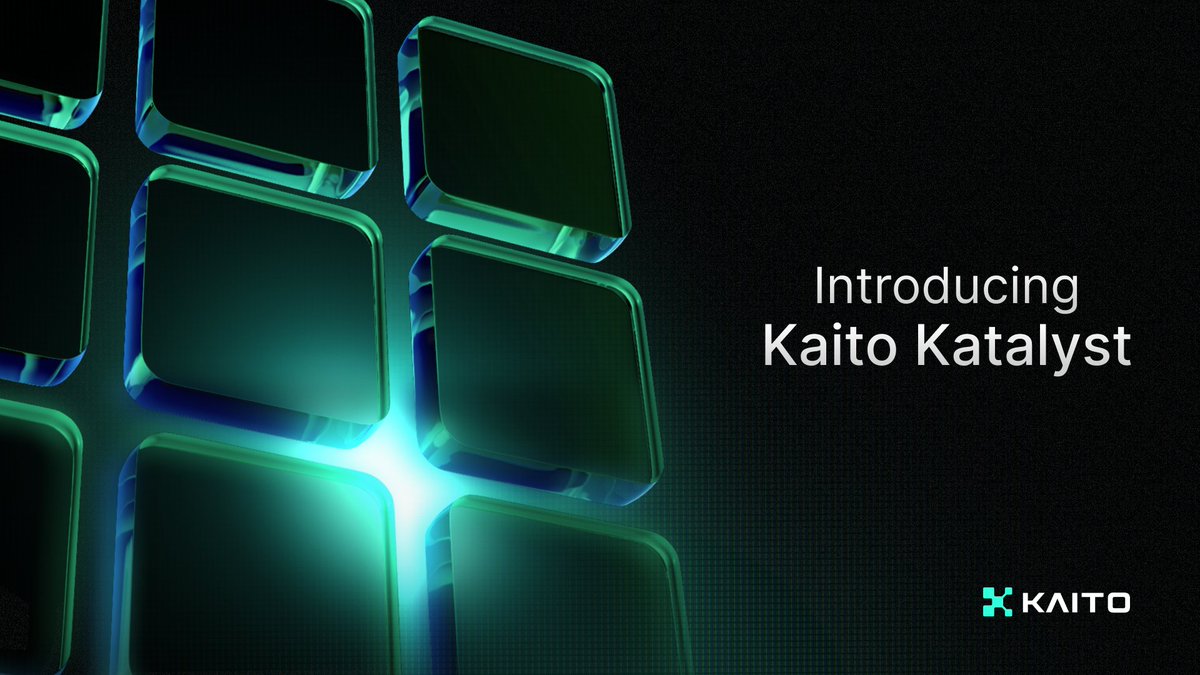
Introducing Kaito Katalyst, a new reward layer for creator campaigns, where projects pay for what creators actually drive.
This is the closest thing yet to the model many of you have been asking for, rebuilt with a better mechanism underneath and in line with platform rules.
Built on Kaito's latest intelligence infrastructure, projects can attribute rewards using a flexible set of criteria, including mindshare, clicks, sign-ups, deposits, in-platform activity, and more.
It is powered by our broader data agreement with X, our verification architecture with @Brevis_zk, and proprietary attribution infrastructure built in-house.
We have spent the past two months piloting Kaito Katalyst with AI labs, consumer AI apps, smart hardware companies, and businesses across crypto and finance. Several are already in test mode, with some launching imminently.
For TGE projects, we are also introducing a dedicated format with no service fee. Instead, projects put up a refundable deposit alongside the reward pool, so creators know the funds are committed before they post. Each campaign publishes its token allocation pool and vesting terms upfront, so creators know exactly what they are earning and when.
80% of each token pool goes to the creators who drove the results, while the remaining 20% goes to $KAITO stakers and YT-sKAITO holders on @pendle_fi. Long-term holders and Yapybara holders earn a multiplier for their commitment.
This brings back the Stakedrop mechanism we have run since 2025, accruing significant value to the broader Kaito ecosystem - equivalent to a ~136% annualized return.
The market structure may look different from the last cycle, though our biggest opportunities have always come from experimental breakout projects - the very teams this format is best suited for. It allows promising projects to get bootstrapped without an upfront cost, gives more creators access to real opportunities, and enables those backing Kaito to share the upside.
The same structure can also extend beyond traditional token launches to tokenized equity projects willing to use tokens or equity to accelerate their growth.
If this sounds relevant to your project, reach out to our team today.
Much more on the way.