James Ulvog

1.3K posts

James Ulvog

James Ulvog

@UlvogCPA

CPA serving the nonprofit community. You can find me at http://t.co/nvnvUGStth. My blogs are http://t.co/LUfCIMv9ZH and http://t.co/w0ld7rxVJB.

Katılım Eylül 2010
171 Takip Edilen165 Takipçiler
James Ulvog retweetledi
Buzz Patterson
Buzz Patterson@BuzzPatterson·
And then there’s this. One of our fallen coming home from the Middle East. Watch the respect from travelers at Raleigh-Durham Airport. Makes me proud! I’m a Chapel Hill boy. And an American fighting man. Proper. ❤️🇺🇸🫡 x.com/mattvanswol/st…
Buzz Patterson@BuzzPatterson

One of my dearest Air Force friends unexpectedly lost his dad a few weeks ago. The Air Force stepped up with a missing man flyby. Brings tears to these Air Force eyes. Tailwinds, Colonel Kapp! Thank you for your service, sir! Your son is incredible. 🫡🙏🇺🇸 Frank Kapp Tribute youtu.be/Ir37EJfTdpU?is… via @YouTube

English
55
357
3.1K
43.3K
James Ulvog
James Ulvog@UlvogCPA·
Hero.
Mike Netter@nettermike

In April 1967, a 20-year-old farm boy from South Dakota did something that would change the Vietnam War—he fell off his ship. Seaman Douglas Hegdahl was standing on the deck of the USS Canberra when the recoil from a five-inch gun knocked him overboard into the Gulf of Tonkin. He treaded water for five hours, then swam for seven more. When fishermen finally pulled him from the sea, they handed him to North Vietnamese forces. The interrogators didn't believe his story. They thought he was a spy, a commando, someone important. They beat him and threw him into the Hanoi Hilton—the most notorious prison of the war. But Hegdahl made a choice that would save hundreds of lives. He became "The Incredibly Stupid One." He played up his country accent. He stared wide-eyed at things he'd never seen before. When they ordered him to write a confession, he claimed he couldn't read or write. The guards, used to illiterate peasants in their own country, believed him completely. They even assigned someone to teach him—who eventually gave up, convinced Hegdahl was hopeless. What they didn't know was that Hegdahl had a photographic memory and the discipline of a soldier. Because they thought he was harmless, the guards let him sweep the prison yards. He walked between cellblocks. He memorized the layout of the camp and the route into Hanoi. He even sabotaged enemy trucks by adding dirt to their fuel tanks. But his real mission was gathering intelligence. With the help of fellow prisoner Joe Crecca, Hegdahl set out to memorize something impossible: the names, ranks, Social Security numbers, and personal details of over 250 fellow American prisoners. How do you remember 250 names under torture, starvation, and the constant threat of death? He used "Old MacDonald Had a Farm." Every day, Hegdahl repeated the names to the tune of the children's song. Over and over. Names became melodies. Data became memory. While the guards laughed at the "stupid" American humming in the prison yard, he was conducting one of the most important intelligence operations of the war. When North Vietnam offered early release as a propaganda tool, Hegdahl initially refused—prisoners had sworn an oath to leave together or not at all. But his commanding officer, Captain Dick Stratton, ordered him to go. "You're carrying the names," Stratton told him. "Their families need to know they're alive." On August 5, 1969, Hegdahl walked out of the Hanoi Hilton. When he returned to the United States, he recited every single name. Every rank. Every identifying detail. His memory transformed 250+ missing men into confirmed prisoners of war. At the Paris Peace Talks in 1970, he confronted North Vietnamese negotiators with firsthand accounts of torture—and the pressure he brought helped secure the eventual release of all American POWs. That farm boy who "fell off a ship" had just freed an entire army. Decades later, in 1998, Hegdahl stood before an audience of veterans and families at the Richard Nixon Library. Thirty years after his release, he stood and sang—to the tune of "Old MacDonald Had a Farm"—the names of 256 men he'd memorized in captivity. Not one name forgotten. Sometimes the most dangerous people are the ones your enemy thinks are harmless. Sometimes genius wears the mask of stupidity. And sometimes, a child's lullaby becomes the most powerful weapon of all. Ever know anyone that smart that could play that dumb for that long? Amazing!

Español
0
0
0
21
James Ulvog retweetledi
Jeremiah Daws
Jeremiah Daws@JeremiahDaws·
Happy Birthday, America! I made this short for you. 🇺🇸
English
38
113
809
61.1K
James Ulvog retweetledi
Geiger Capital
Geiger Capital@Geiger_Capital·
Ages of Founding Fathers in 1776: James Monroe, 18 Aaron Burr, 20 John Marshall, 20 Alexander Hamilton, 21 James Madison, 25 John Jay, 30 Thomas Jefferson, 33 Thomas Paine, 39 John Adams, 40 George Washington, 44 This nation was built by brilliant young men.
Geiger Capital tweet media
English
1.5K
9K
49.7K
4.5M
James Ulvog retweetledi
Echoes of War
Echoes of War@EchoesofWarYT·
Originally called "Yankee Doodle", this is one of several versions of a scene painted by A. M. Willard that came to be known as The Spirit of '76. Often imitated or parodied, it is a familiar symbol of American patriotism.
Echoes of War tweet media
English
1
17
130
2.6K
James Ulvog retweetledi
᛭ Ian ᛭
᛭ Ian ᛭@KnightspurHouse·
The Nation Makers - Howard Pyle.
᛭ Ian ᛭ tweet media
English
10
86
454
7.4K
James Ulvog retweetledi
Rob Maness
Rob Maness@RobManess·
Rob Maness tweet media
ZXX
3
59
244
8.5K
James Ulvog
James Ulvog@UlvogCPA·
@AmRevResurrect One idea runs from 30 ad to 1776 ad to now. We are not the property of those who took power over us - those individuals do not block our access to God and we don't need their permission to hear from or talk to God.
English
1
0
1
14
AmRev Resurrected
AmRev Resurrected@AmRevResurrect·
Galilee, 30 AD. England, 1382. Wittenberg, 1517. Plymouth, 1620. Boston, 1750. Philadelphia, July 4, 1776. Six moments. One sermon. Signed 250 years ago today. Declaration Substack essay is live 👇 🇺🇸 #AmRev
AmRev Resurrected tweet media
English
2
1
9
391
James Ulvog retweetledi
The White House
The White House@WhiteHouse·
HAPPY 250TH AMERICA!!!!
English
1.9K
14.9K
80.3K
1M
James Ulvog
James Ulvog@UlvogCPA·
@jonharris1989 These and parallel ideas had sunk deep into the minds of founders' ancestors for well over a 100 years before the founders were born. These ideas were deeply ingrained before a word of debate at the continental congress, let alone before a word of the declaration was drafted
English
0
0
4
171
Jon Harris 🌲
Jon Harris 🌲@jonharris1989·
The reason it didn’t work in Liberia, Vietnam, Venezuela, Haiti, or frankly much of Western Europe today (since they’ve adopted the equality proposition), is because of something unique to America’s Founding that is still true of her in Bible Belt areas. Jefferson said himself he wasn’t coming up with any new principles in the Declaration. It may have been an experiment in self-government (though they had Hebrew, Greco-Roman, and their own local British democracies to look to), but it was not an experiment in equality. The Founders knew the equality Jefferson spoke of was the equality of British subjects in North America vs. British subjects in England in a corporate sense. The natural rights granted by God and applied as civil rights according to social arrangement in a free society should be protected. Whatever limitations imposed when entering society from a state of nature were never to be injurious to general life, liberty, and happiness. These rights only had definition according to their Anglo-Protestant understanding of divine order and general welfare where responsibility accompanied rights. Without this underlying matrix, in our case nurtured by centuries of British common law, there was no basis for sustaining rights in a positive way. Rights become destructive when defined apart from this context. They become individual claims by which vice is justified and they undermine life, liberty, and happiness in a Christian sense. The Northeastern section of the United Stated prides itself on keeping the proposition, but it is the Bible Belt that actually sustains it.
Jon Harris 🌲@jonharris1989

Liberia borrowed language from our Declaration of Independence and Constitution for their own Constitution, including inalienable rights language and equality. They had the proposition. Why didn’t it work?

English
9
31
167
8.2K
James Ulvog retweetledi
Echoes of War
Echoes of War@EchoesofWarYT·
On this day in 1863, twelve thousand Confederates set out across three quarters of a mile of open Pennsylvania farmland, and the Union guns turned that field into one of the worst killing grounds of the whole war. They came out of the trees around three in the afternoon in the heavy July heat, dressed their lines like a parade, and started walking. There was nothing to hide behind. Just gently rising farmland, a couple of fences, and at the far end a low stone wall on a ridge lined with cannon and riflemen waiting for them. The distance took something like fifteen or twenty minutes to cross at a walk. Fifteen or twenty minutes in the open, in range, the whole way. The Union artillery started the killing while the Confederates were still far off. The big smoothbore Napoleons and the rifled guns threw solid iron shot that came bounding across the ground, and at that range a single ball could plow straight down the length of a marching file and take a dozen men with it, tearing off heads, ripping away arms and legs, cutting a man clean in half at the waist. The survivors would step over the wreckage, close the hole in the line, and keep walking in step. Officers rode up and down calling the ranks together, dress it up, close it up, and the men obeyed even as the shot kept combing through them. Then the guns on the flanks got the angle. Union batteries off to the sides, up on the high ground, could fire straight down the length of the Confederate lines instead of at the front of them, and that is the worst thing that can happen to troops in the open. One shot fired down the length of a line doesn't kill one or two men, it kills ten or twenty, one after another. The men called that kind of fire a whirlwind. Whole companies came apart under it. As the range closed, the cannon switched from long range shot to shell, iron balls filled with powder set to burst overhead and shower the men with hot jagged fragments, and then, when the Confederates got in close, to canister. Canister was a tin can packed with dozens of iron balls, and firing it turned each cannon into an enormous shotgun. At short range some crews double loaded it, two cans at once, and cut whole swaths out of the advancing mass. Men near those blasts weren't just killed, they were shredded, and the survivors were sprayed with the blood and flesh of the men beside them. Partway across, the Confederates hit the Emmitsburg Road, and it ran along a low spot with stout rail fences on both sides. The lines had to stop, climb the first fence, cross the road, and climb the second, all while standing straight up in point blank fire. Men were shot to pieces hanging on those rails. Dead and wounded piled along the fences so thick that in places the living had to push the bodies aside to get over. The neat lines that had started the charge were gone now, broken into clumps and knots of men, but they kept pushing uphill toward the wall through smoke so thick they could barely see. At the top waited the stone wall, at a bend in the Union line they call the Angle, right by a little clump of trees the whole attack had been aiming for. Here it became a close range slaughter. The Union infantry stood two and three deep behind the wall and fired into the packed Confederates at a few paces, so close the muzzle flashes scorched the men in front. A young Union artillery officer named Cushing, already wounded in the belly and holding himself together with his hand, ran his last gun down to the wall and fired it into their faces before he was shot dead. Men clubbed each other with musket butts, stabbed with bayonets, threw rocks, grabbed gun barrels with bare hands. A few hundred got over the wall. Leading them was General Lewis Armistead, hat raised on the point of his sword so his men could see him in the smoke, and he reached a Union cannon and laid his hand on it before he was shot down beside it. For one moment there were Confederates inside the Union line at its very center. Then the Union reserves came pouring in from three sides and closed around them, and the men who had made it over were shot down, bayoneted, or forced to throw up their hands. The breach was gone as fast as it had opened. And then it was just the field. The men who could still move turned and walked back the way they had come, back across that whole three quarters of a mile, and the guns fired into their backs the entire way. They stepped over their own dead and dying to get home, the wounded crawling and calling for help that couldn't reach them. Of the roughly twelve thousand who had stepped off, about half were killed, wounded, or captured in less than an hour. Some regiments came back with barely a handful of men. The grass they had crossed was carpeted end to end with the dead, and the charge that was supposed to win the war was over.
Echoes of War tweet media
English
23
65
422
15.8K
James Ulvog retweetledi
InfantryDort
InfantryDort@infantrydort·
American Exceptionalism IX: The Federalist Papers The World Before: Most governments are born in force, fraud, or inheritance. Men seize power, then explain later why they deserve to keep it. The people are usually handed a system after the powerful have already decided its shape. The American Answer: The Federalist Papers did something rarer. They argued a nation into existence. Hamilton, Madison, and Jay took the machinery of the Constitution and defended it in public, piece by piece, before a people expected to judge it. America did not hide its blueprint. It published the fight. The Legacy: The Federalist Papers proved the republic was not afraid of reason. It explained power before granting it, suspicion before trusting it, and liberty before risking it inside a stronger union. The Constitution was the architecture. The Federalist Papers were the fire in the forge. The Threat: The enemies of this country hate persuasion because persuasion requires respect for the citizen. Every ideology of control prefers slogans, censorship, mobs, and institutional force. The Federalist Papers remain an insult to all of them: a reminder that free men are not managed into obedience. They are argued into conviction.
InfantryDort tweet media
InfantryDort@infantrydort

American Exceptionalism VIII: The Constitution The World Before: Revolutions are easy to begin and hard to survive. Most destroy the old order, then discover they have no architecture strong enough to hold the new one. Rage can topple a crown. It cannot govern a continent. The American Answer: The Constitution turned rebellion into machinery. It divided power because men are dangerous, limited government because liberty is fragile, and bound ambition against ambition so no faction could easily become a throne. America did not trust angels to rule it. It built a system for men. The Legacy: The Constitution gave the Revolution a skeleton. It made freedom durable, scalable, and armed against the oldest disease in politics: power gathering itself into one set of hands. That is why the American republic did not burn out like a fever. It endured. The Threat: The enemies of this country hate the Constitution because it slows them down. Every ideology of control requires speed, emergency, centralization, and obedient institutions. The Constitution was built to frustrate all of it. It is not an obstacle to democracy. It is the barricade that keeps democracy from becoming a mob with paperwork.

English
26
208
556
16.8K
James Ulvog
James Ulvog@UlvogCPA·
Our founders' brilliance: "The Constitution turned rebellion into machinery. It divided power because men are dangerous, limited government because liberty is fragile, and bound ambition against ambition so no faction could easily become a throne."
InfantryDort@infantrydort

American Exceptionalism VIII: The Constitution The World Before: Revolutions are easy to begin and hard to survive. Most destroy the old order, then discover they have no architecture strong enough to hold the new one. Rage can topple a crown. It cannot govern a continent. The American Answer: The Constitution turned rebellion into machinery. It divided power because men are dangerous, limited government because liberty is fragile, and bound ambition against ambition so no faction could easily become a throne. America did not trust angels to rule it. It built a system for men. The Legacy: The Constitution gave the Revolution a skeleton. It made freedom durable, scalable, and armed against the oldest disease in politics: power gathering itself into one set of hands. That is why the American republic did not burn out like a fever. It endured. The Threat: The enemies of this country hate the Constitution because it slows them down. Every ideology of control requires speed, emergency, centralization, and obedient institutions. The Constitution was built to frustrate all of it. It is not an obstacle to democracy. It is the barricade that keeps democracy from becoming a mob with paperwork.

English
0
0
0
9
James Ulvog retweetledi
InfantryDort
InfantryDort@infantrydort·
American Exceptionalism VII: E Pluribus Unum The World Before: Most nations were built from sameness. Blood, tribe, crown, church, language, and soil formed the old bonds of peoplehood. To belong, you usually had to be born into the story. The American Answer: America attempted something stranger and far more dangerous: a nation built from many peoples under one civic creed. Thirteen jealous colonies, divided by interest, region, religion, and habit, placed a Latin warning on their seal before the country was even secure. Out of many, one. Not because men were identical, but because they could be bound by something higher than ancestry. The Legacy: E Pluribus Unum became the American wager. A republic could absorb difference without dissolving, turn strangers into citizens, and make loyalty to an idea stronger than loyalty to blood. That was not diversity as decoration. It was unity as conquest. The Threat: The enemies of this country hate the motto because it denies their favorite weapon. They survive by splitting people into tribes, teaching grievance as identity, and making unity feel like betrayal. America’s answer was carved into its beginning. Many origins. One nation.
InfantryDort tweet media
InfantryDort@infantrydort

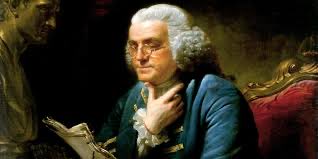
American Exceptionalism VI: Benjamin Franklin The World Before: Europe expected colonies to produce subjects, not statesmen. Civilization was supposed to flow from old capitals, old titles, and old bloodlines. The American Answer: Benjamin Franklin ruined the theory. Printer, inventor, diplomat, revolutionary, and professional menace to dull men, he walked into the salons of Europe like the New World had sent its own weather system. He charmed France, mocked Britain, played kings and ministers against their own arrogance, and somehow found time to flirt like diplomacy was a contact sport. The Legacy: Franklin proved the American mind was not provincial. It could invent, bargain, seduce, persuade, and outthink older powers on their own ground. Before America became a superpower, Franklin made it impossible to dismiss. The Threat: The enemies of this country hate men like Franklin because they cannot be manufactured by systems or contained by class. He was talent without permission, genius without credential, and rebellion wearing spectacles.

English
7
121
451
11.8K
James Ulvog retweetledi
InfantryDort
InfantryDort@infantrydort·
American Exceptionalism VI: Benjamin Franklin The World Before: Europe expected colonies to produce subjects, not statesmen. Civilization was supposed to flow from old capitals, old titles, and old bloodlines. The American Answer: Benjamin Franklin ruined the theory. Printer, inventor, diplomat, revolutionary, and professional menace to dull men, he walked into the salons of Europe like the New World had sent its own weather system. He charmed France, mocked Britain, played kings and ministers against their own arrogance, and somehow found time to flirt like diplomacy was a contact sport. The Legacy: Franklin proved the American mind was not provincial. It could invent, bargain, seduce, persuade, and outthink older powers on their own ground. Before America became a superpower, Franklin made it impossible to dismiss. The Threat: The enemies of this country hate men like Franklin because they cannot be manufactured by systems or contained by class. He was talent without permission, genius without credential, and rebellion wearing spectacles.
InfantryDort tweet media
InfantryDort@infantrydort

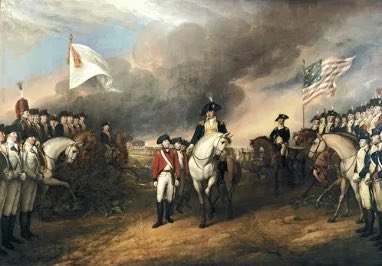
American Exceptionalism V: Yorktown The World Before: Empires were not supposed to lose to colonies. Britain commanded fleets, armies, money, ports, and the confidence of a world that believed power belonged to those already holding it. The American Answer: At Yorktown, that world cracked. Washington trapped Cornwallis against the sea, French guns closed the ring, and the empire that had crossed oceans to command America found itself surrounded on American soil. The king’s army marched out defeated. The Legacy: Yorktown proved the Revolution was not a rebellion to be punished, but a nation to be recognized. The Declaration had named America. Valley Forge had tested it. Yorktown forced the world to see it. A republic had survived the empire sent to strangle it. The Threat: The enemies of this country hate Yorktown because it reminds them that history does not always belong to the largest machine. Sometimes it belongs to the people stubborn enough to outlast it, bleed it, corner it, and make it kneel.

English
14
190
687
15.9K
James Ulvog retweetledi
InfantryDort
InfantryDort@infantrydort·
American Exceptionalism V: Yorktown The World Before: Empires were not supposed to lose to colonies. Britain commanded fleets, armies, money, ports, and the confidence of a world that believed power belonged to those already holding it. The American Answer: At Yorktown, that world cracked. Washington trapped Cornwallis against the sea, French guns closed the ring, and the empire that had crossed oceans to command America found itself surrounded on American soil. The king’s army marched out defeated. The Legacy: Yorktown proved the Revolution was not a rebellion to be punished, but a nation to be recognized. The Declaration had named America. Valley Forge had tested it. Yorktown forced the world to see it. A republic had survived the empire sent to strangle it. The Threat: The enemies of this country hate Yorktown because it reminds them that history does not always belong to the largest machine. Sometimes it belongs to the people stubborn enough to outlast it, bleed it, corner it, and make it kneel.
InfantryDort tweet media
InfantryDort@infantrydort

American Exceptionalism IV: Valley Forge The World Before: Winter has killed more armies than enemy fire. Hunger, disease, naked feet, and the suspicion that no one is coming can destroy a cause before a battle ever begins. The American Answer: At Valley Forge, the Revolution was reduced to its bones. No glory. No momentum. Just a starving army in the Pennsylvania snow while the British rested in Philadelphia. They could have gone home and history would have understood. They stayed. The Legacy: Valley Forge proved America was not held together by comfort, pay, or easy victory. It was held together by men who had every reason to quit and chose instead to become the spine of a nation not yet born. America was declared in Philadelphia. It was earned in the snow. The Threat: Soft ages always forget what freedom costs. They mistake comfort for strength and slogans for conviction. Valley Forge remains the answer: a republic survives only when free men can suffer without surrendering what made them free.

English
10
190
618
19.1K
James Ulvog retweetledi
InfantryDort
InfantryDort@infantrydort·
American Exceptionalism III: George Washington The World Before: Revolutions usually end with a strongman. The old ruler falls, the liberator takes his place, and the people learn too late that they only traded one master for another. History was crowded with men who claimed to free nations and then crowned themselves. The American Answer: George Washington had every ingredient required for power: an army that worshiped him, a nation that trusted him, and enemies too weak to stop him. He could have become king in everything but name. Instead, he resigned his commission and went home. That decision did more than end a war. It taught the republic what power was for. The Legacy: Washington made restraint heroic. He proved that the greatest man in a republic is not the one who seizes power, but the one strong enough to lay it down. Every peaceful transfer of power in America lives in the shadow of that choice. The Threat: The enemies of this nation hate Washington because he exposes their hunger. Every ideology built on control eventually requires men who cannot release the machinery of power once they possess it. Washington did. That is why he remains dangerous.
InfantryDort tweet media
InfantryDort@infantrydort

American Exceptionalism II: The American Revolution The World Before: Rebellion was not new. Men had risen against kings before, usually to replace one master with another. Revolutions burned hot, promised justice, then hardened into new chains. Power changed hands. The throne survived under another name. The American Answer: The American Revolution was different because it was not merely a war against Britain. It was a war against the old architecture of obedience. Farmers, merchants, printers, lawyers, sailors, and militiamen took up arms against the greatest empire on Earth and insisted that government could be built from consent rather than command. That was the danger. Not muskets or cannons. The idea that ordinary men could become citizens instead of subjects. The Legacy: The Revolution proved the Declaration was not poetry. It could march, bleed, freeze, starve, and still win. America did not inherit sovereignty. It seized it, then did something almost no revolution had ever done. It built a republic instead of a throne. The Threat: The enemies of this nation hate the Revolution because it denies their favorite lie: that free people are too weak, too selfish, or too stupid to govern themselves. Every ideology that requires submission must first convince mankind that liberty is chaos and obedience is order. The American Revolution answered that lie with gunfire.

English
34
342
1.1K
24.8K
James Ulvog retweetledi
InfantryDort
InfantryDort@infantrydort·
American Exceptionalism II: The American Revolution The World Before: Rebellion was not new. Men had risen against kings before, usually to replace one master with another. Revolutions burned hot, promised justice, then hardened into new chains. Power changed hands. The throne survived under another name. The American Answer: The American Revolution was different because it was not merely a war against Britain. It was a war against the old architecture of obedience. Farmers, merchants, printers, lawyers, sailors, and militiamen took up arms against the greatest empire on Earth and insisted that government could be built from consent rather than command. That was the danger. Not muskets or cannons. The idea that ordinary men could become citizens instead of subjects. The Legacy: The Revolution proved the Declaration was not poetry. It could march, bleed, freeze, starve, and still win. America did not inherit sovereignty. It seized it, then did something almost no revolution had ever done. It built a republic instead of a throne. The Threat: The enemies of this nation hate the Revolution because it denies their favorite lie: that free people are too weak, too selfish, or too stupid to govern themselves. Every ideology that requires submission must first convince mankind that liberty is chaos and obedience is order. The American Revolution answered that lie with gunfire.
InfantryDort tweet media
InfantryDort@infantrydort

American Exceptionalism I: The Declaration of Independence The World Before: For most of history, power descended at sword point. Kings inherited it, emperors seized it, priests blessed it, and subjects were expected to call obedience virtue. Liberty was not a birthright. It was a favor granted by the powerful and revoked the moment it became inconvenient. The American Answer: The Declaration was a political detonation. It announced that rights do not come from crowns, parliaments, parties, committees, or mobs. They belong to man before government ever enters the room, and any government that exists does so only to secure them. That was not a request for reform. It was a notice of eviction served on empire. The Legacy: Britain lost thirteen colonies. The old world lost the presumption that rulers own the people beneath them. From that moment forward, every tyranny had to argue uphill against an American proposition written in Philadelphia: government is not master, but servant. The Threat: The enemies of this republic have always hated the Declaration because it leaves them nowhere to stand. Every collectivist faith requires rights to be conditional, managed, redistributed, or renamed into privileges. The Declaration allows none of it. It remains what it was in 1776: a loaded weapon pointed at every ideology that demands mankind kneel.

English
7
169
567
21K