J.A.A. Purves

8.6K posts

J.A.A. Purves banner
J.A.A. Purves

J.A.A. Purves

@UnderlyingAssum

Catholic ~ Husband, Father, Son, Brother ~ Lawyer ~ U.S. Army Veteran ~ Writer ~ Confraternitas Sancti Petri ~ Thomist ~ Benedictine ~ Chestertonian

Santa Barbara, CA Katılım Ağustos 2017
977 Takip Edilen247 Takipçiler
Sabitlenmiş Tweet
J.A.A. Purves
J.A.A. Purves@UnderlyingAssum·
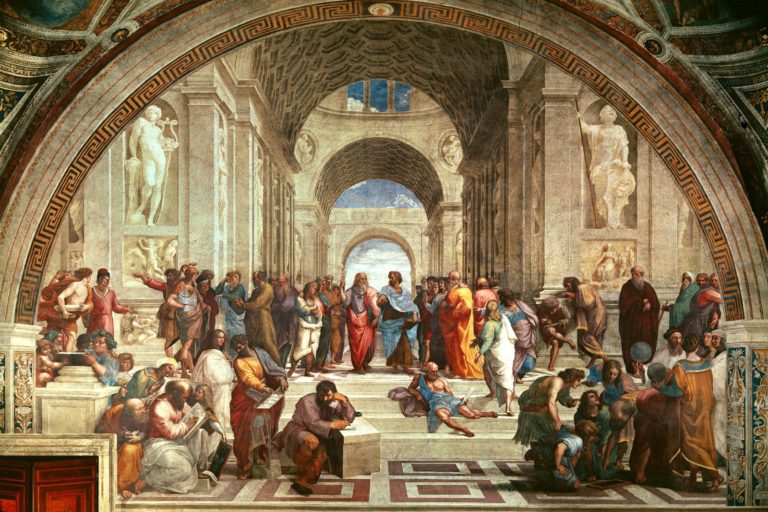
“All beliefs are held within a context or framework of the taken-for-granted, which usually remains tacit, and may even be as yet unacknowledged by the agent, because never formulated.” – Charles Taylor underlyingassumptions.org/2017/09/03/abo…
J.A.A. Purves tweet media
English
0
2
14
0
J.A.A. Purves retweetledi
James Lucas
James Lucas@JamesLucasIT·
This is the largest monastic library on Earth. It’s hidden in an Austrian mountain valley and is believed to have inspired the design of the iconic library in Disney’s Beauty and the Beast, but you’ve probably never even heard of it... Completed in 1776 within the Benedictine monastery Admont Abbey, the library was designed by architect Josef Hueber as the intellectual crown of the abbey. It is 70 metres long, lit by 48 windows, and lined with white-and-gold bookcases that hold 70,000 volumes. Across the entire abbey, the collection runs to roughly 200,000 books and 1,400 medieval manuscripts. Hueber designed the room to embody the philosophy of his era. "Like our understanding, spaces too should be filled with light," he said. The walls are white. The shelves are gilded. Sunlight pours through the windows and reflects off the gold leaf until the entire hall seems to glow from inside. The ceiling holds seven frescoes painted by Bartolomeo Altomonte in the summers of 1775 and 1776. He was almost eighty years old. Each fresco depicts a stage of human understanding, beginning with the sciences and rising, dome by dome, toward Divine Revelation in the central cupola. In 1865, a fire tore through the monastery. It destroyed the church, the dormitories, the workshops, almost everything. But the library survived untouched. Two and a half centuries after it was completed, it is still called the eighth wonder of the world... -- -- -- If you enjoyed this, I write a weekly newsletter read by over 50,000 people who love rediscovering the beauty of the past. You can join us here: James-lucas.com/welcome If you'd like to support my work, a paid subscription is what makes it possible.
English
22
234
1.2K
35.7K
J.A.A. Purves retweetledi
Penner & Purves
Penner & Purves@PennerPurvesLaw·
Two of the essential skills of the legal professional are (1) the interpretation of history, and (2) employing a reliable, nonarbitrary standard of judgment between competing interpretations of history. This means learning to interpret the chronological facts of the recent individual case. This also means learning to interpret the historical facts underlying the law and the legal system. Also, you can’t interpret history without knowing history. This therefore means that good lawyers are deep readers of history. Hence, to be a deep reader of history, you need to read books and you need a standard of measure and criterion of judgment—a way of judging what is and isn’t reliable, credible, valuable, or true. And, guess what? That standard of measure exists. youtube.com/watch?v=4sWYfV…
YouTube video
YouTube
English
0
1
0
8
J.A.A. Purves retweetledi
Edward Feser
Edward Feser@FeserEdward·
What Elizabeth Anscombe labeled “consequentialism” – the mentality according to which there is no act, not even killing the innocent, that should be off the table if it has sufficiently good consequences – is very common today on the right no less than on the left, especially where matters of war are concerned. It underlies the skepticism or even contempt many on the right seem to have for just war doctrine. It also seems to be driving many right-wingers to acquiesce to the GOP’s abandonment of its traditional pro-life position, to rationalize lawfare as a tactic to use against those who have used it against them, and to abandon other norms. As Anscombe warned, consequentialism is deeply morally corrupting, and indeed itself corrupt. It amounts to the view that it is permissible to “do evil that good may come” (Romans 3:8). It is utterly irreconcilable with natural law and Catholic moral theology. Orthodox Catholics are used to thinking that the political right is much closer to Catholic moral teaching than the political left is. I think that used to be true. It pains me to say it, but I don’t think it is true anymore. Jingoism and the lure of political power have led too many right-wingers to adopt an essentially consequentialist mindset, and they rationalize doing so by telling themselves that only those with a “beautiful loser” mentality could object. Christ famously warned: “Beware of the leaven of the Pharisees and the Sadducees.” Different as those sects appeared to be to their adherents, what was more significant were the ways they were both corrupt. Catholics should beware of the leaven of the Democrats and the Republicans, both of whom have become deeply corrupted and should be held at arm’s length. They should put their Catholic moral principles first, their country second, and party affiliation a distant third.
English
29
67
339
14.1K
J.A.A. Purves retweetledi
Penner & Purves
Penner & Purves@PennerPurvesLaw·
A reminder from T.S. Eliot: Information and data are not the same as meaning and knowledge. And knowledge is not the same as understanding and wisdom. Don’t mistake a subpart of a part for the whole. Don’t put all your time, money, and investment into just a subpart, and then expect to achieve the whole. This is a principle of universal application to any profession or vocation, but it certainly has its overwhelmingly practical applications to the legal profession and trial practice. youtube.com/watch?v=Lcp3eh…
YouTube video
YouTube
English
0
1
0
13
J.A.A. Purves retweetledi
Penner & Purves
Penner & Purves@PennerPurvesLaw·
Argument #1: Lawyers should study poetry as there is no other discipline that more deeply teaches how multiple interpretations of a text can be used, hinted at, meant, implied, contrasted, analogically compared, and rhetorically given at different levels as a matter of both art and science. One must make the proper distinctions. Another way of putting it is that it is ultimately poets and lawyers who can best practice the art of both/and instead of merely either/or. By way of an illustration, there is certainly a place for either/or arguments, but the reality in which either/or arguments have their proper place is also the same reality in which both/and arguments can also sometimes be true. To argue that you can ONLY epistemological have both/and arguments OR have either/or arguments is both self-contradictory and ironic. youtube.com/watch?v=NRX00U…
YouTube video
YouTube
English
0
1
1
21
J.A.A. Purves retweetledi
Penner & Purves
Penner & Purves@PennerPurvesLaw·
Our legal staff has been privileged to read law professor George D. Gopen’s four compelling arguments for why the most serious law students, top lawyers, and best judges need to regularly and consistently read and study poetry. Here are all four propositions clearly stated. Future videos to follow. youtube.com/watch?v=eo8eaQ…
YouTube video
YouTube
English
0
1
0
50
J.A.A. Purves retweetledi
Penner & Purves
Penner & Purves@PennerPurvesLaw·
Imagine a scenario where the real world consisted of persons who are made up of both mind and body, both spiritual intellect and physical substance; and then assume that there isn’t any absolute separation between the two. In other words, the experience of living as an embodied being means that your mind affects your body and your body affects your mind. This would also mean that you are vulnerable, because having a body means that you can get hungry, thirsty, tired, hurt, sick, or disabled, that you have physical needs, and that your capacity to provide for those needs will be more or less at different times of life. Indeed, it turns out that the experience of being embodied is a part of the very definition of what it means to be a person who lives in the real world in the first place. Next imagine that you write a set of laws to govern these persons, but do you so instead presuming a Cartesian Enlightenment philosophy viewpoint of the person, assuming not only that mind and body are separate, but that disembodied minds are ultimately what we really are. These laws posit an abstract unencumbered, free, individual mind; and then these laws even go further and prioritize the will as the highest part of a person’s mind, above that of the intellect, the capacity to reason, the affections, feelings, and all other psychological components of a person. The mere will determines all. Everything turns on did I will it? Did I choose it? Did I consent to it? If yes, then it’s good. If no, then it’s bad. Then you base all your laws assuming the existence of this disembodied willing will definition of a person, and you prioritize the freedom of these individual willing “wills” as the highest possible good the laws are designed to protect. It might be that using these laws within the reality of needing to govern actual embodied persons will cause some problems. youtube.com/watch?v=03-GYQ…
YouTube video
YouTube
English
0
1
0
25
J.A.A. Purves retweetledi
Penner & Purves
Penner & Purves@PennerPurvesLaw·
“Where does the family start? It starts with a young man falling in love with a girl. No superior alternative has yet been found.” ― Winston Churchill “Apart from the orphaned child, most people grow up in families in which from birth onward, they learn a way of life that gives meaning to their very existence. For most of us, the word home carries more than just casual memories of a time and place where we spent our childhood; it was the first society from which we learned about life itself. It is within the confines of home that everyone first experiences the repertoire of human emotions and observes how others respond. We absorb family and cultural values, and measure our commitment to those values by how others respond to them. The home is where love is first defined by the care and attention we receive and becomes the place where security is gained, lost, or possibly, never obtained.” — Robert Bucknam & Gary Ezzo “Family is the wellspring of the cultural habits and practices that foster the wisdom, judgment, and local knowledge by which humans flourish and thrive in common and rightly claim the primary role in the education and upbringing of a given community’s children.” ― Patrick J. Deneen “Nothing has given me a firmer sense of the beautiful pageant of life or the manifestation of the truth that penetrates and saturates all things than I have in the company of my wife and in the union of our love made visible in our children. To them I offer my deepest thanks, for they are each great goods in themselves and revelations of the one Good.” ― James Matthew Wilson youtube.com/watch?v=-el2c9…
YouTube video
YouTube
English
0
1
0
268
J.A.A. Purves retweetledi
Max
Max@MaxxingDelusion·
The state of your desk is the state of your mind.
Max tweet mediaMax tweet media
English
18
114
2K
75.6K
J.A.A. Purves retweetledi
Barefoot Pregnant
Barefoot Pregnant@usuallypregnant·
Never forget ❤️
English
38
431
3.7K
296.3K
J.A.A. Purves retweetledi
Penner & Purves
Penner & Purves@PennerPurvesLaw·
If you are married and (1) reside in the state of California; (2) you obtained a dismissal of your divorce case within the last 12 months and you provide us with a copy of that dismissal; and (3) you are one of the first 12 couples to contact us to book this special offer estate planning consultation for the year; then: we will provide you with a free estate planning consultation, and assuming we are a good fit and you wish to retain our law firm to do so, we will provide you with a free estate plan for which we normally charge clients a flat fee ranging from $3,500-$9,500. youtube.com/watch?v=q5N6ky…
YouTube video
YouTube
English
0
1
0
20
J.A.A. Purves retweetledi
Penner & Purves
Penner & Purves@PennerPurvesLaw·
Being defeated can make you more dangerous. Suffering loss can be the cause of your growing much stronger. If you happen to ever read actual history books, instead of just truncated clips, short-attention span excerpts, or “browsing,” then you won’t just see or hear of these ideas, but you will assimilate them into your mind and thinking by reading and pondering the complexities and complications of these stories in their entirety. Be the kind of person who can absorb how characters and peoples from history dealt with hardship, suffering, loss, and defeat. Understand how some of them dealt with these things badly and pause a moment over what happened to them. Then understand how some of them dealt with these things amazingly well and consider what doing that enabled them to do. Then take a look at what virtues and character traits lead to the latter instead of the former. youtube.com/watch?v=Y1s0_L…
YouTube video
YouTube
English
0
1
0
7
J.A.A. Purves retweetledi
Penner & Purves
Penner & Purves@PennerPurvesLaw·
Our telos and ends are related to order and harmony. This is why human beings tend to the building of institutions, hierarchies, and civilization. The thwarting and frustration of our natural ends lead to chaos and discord. This is why revolutionaries tend to destroy and tear down rather than to build or create. And one of these is much easier to do than the other. To disrupt and to knock down is easy. Even toddlers can do it. And it can often be done in only a moment. To harmonize and to bring opposites into unity is very difficult. Masters struggle to do it. And this often takes generations to complete. Hence the fragility of order; and hence the shortcut to disorder. To be anti-institutional is cheap and careless. To actually build lasting institutions requires tough herculean work. youtube.com/watch?v=6dPr_g…
YouTube video
YouTube
English
0
1
0
18
J.A.A. Purves retweetledi
Penner & Purves
Penner & Purves@PennerPurvesLaw·
Do you just automatically name your children as beneficiaries of your life insurance, 401(k), or IRA accounts? Don’t. Also, what about naming your children as POD beneficiaries for bank accounts or TOD beneficiaries for brokerage accounts? Don’t do that. There are less costly and more intentional alternatives. youtube.com/watch?v=lNis0C…
YouTube video
YouTube
English
0
1
0
13
J.A.A. Purves retweetledi
Penner & Purves
Penner & Purves@PennerPurvesLaw·
Let’s assume that you are a successful professional. No matter whether you are just starting out, or settled in a long-term career, or working through a career transition, or building and growing, you likely use strategies that include prioritization, detailed calendar management, values statements, mission objectives, short-term goals and long-term goals, checklists, KPIs, and work flows in order to get from A to Z. You physical health requires active management and maintenance. Your financial health, and your business’s financial and tax planning, requires the same. This is also true in the area of one’s own education and in the area of your family’s legal planning. As an adult, you need to actively manage these things with intentional strategy and the best allocation of limited resources. And yet ... do you do the same thing for your family, for your marriage, and/or for your children? At one extreme there are the control freaks who literally micro-manage everything, including every tiny detail about their own family and children’s daily lives. But, really, aren’t most of us – even those of use who employ good practices professionally – much closer to the opposite extremes when it come to our own families? Do you really employ the best practices that you use in your profession to your family relationships? And, if you don’t believe in “winging it” as to career, finance, or business, why would you “wing it” as to your family? There are some practical and powerful ways to change this. And yes, family education, legal planning, and financial planning are all a few of the parts to a greater relational whole. Without that whole, there is no reason to have confidence that any of the smaller parts will ultimately work. youtube.com/watch?v=c6rsqB…
YouTube video
YouTube
English
0
1
0
5
J.A.A. Purves retweetledi
Penner & Purves
Penner & Purves@PennerPurvesLaw·
Idea Meritocracy is the opposite of Bulverism. Let’s assume that you are successful, motivated, driven, hard-working, and striving to do better. Part of how that works is by your working smart instead of just working hard, and that means using and implementing systems and efficiencies. Among other things, authority is an efficiency. If a job needs to get done within a finite amount of time, it is more important for it to get done than it is to find the very best or most perfect way to do it. If you need 50, or 25, or even 10 people to get the job done, then you need one or more of them to have hierarchical authority so as to give instructions to the others. If you give 10 people a complicated task, tell them that no one is in charge, and then just tell them to talk together about how best to get it done, the odds of it being done in the next 15 minutes are low. If you give 10 people a complicated task, designate 1 of them to be in charge, and tell the one in charge that he or she is responsible for delegating jobs to get the task done in the next 15 minutes, the odds of it being done in the next 15 minutes or much higher. This is why the ideas of the persons with authority are usually the ideas that are implemented. If you are smarter than the person with authority, then your job is to get the authority figure to adopt your idea as his own. This is how the vast majority of businesses and law firms are run. But, all of the above does not negate the fact that truth does not depend upon the person who speaks it or knows it. If it is possible to filter ideas by their objective merit, rather than by who advocates for them, then there is no question that you will be more effective, understand reality better, and achieve more accurate results. This is why we believe in running our law office culture as an Idea Meritocracy. There has to be a way, putting personal feelings and emotions and egos aside, to judge ideas and assertions of truth on their merits, rather than by who speaks them. If you can do that, and still retain the efficiency of hierarchy and authority at the same time, then you will have an advantage over your competition. And, for those who care beyond reasons of mere extrinsic use, you will be more likely to understand what is true. youtube.com/watch?v=uoX2-7…
YouTube video
YouTube
English
0
1
0
13
J.A.A. Purves
J.A.A. Purves@UnderlyingAssum·
RT @PennerPurvesLaw: Returning to our law firm’s decision never to use AI to generate any written work: For AI to generate “language” it i…
English
0
1
0
3
J.A.A. Purves retweetledi
Penner & Purves
Penner & Purves@PennerPurvesLaw·
Every good divorce lawyer should be able to help clients get a divorce. This means competently and effectively protecting a client’s rights in the divorce process, zealously advocating in court when needed, advising the client when settlement will equal savings of time and attorneys fees, and thoroughly preparing for and conducting trial when it is the only way to achieve a fair result. However ... Proposition: Every good divorce lawyer should be able to adequately represent clients who do not want to get a divorce. And, by adequately, we do not mean just helping push the divorce forward because the other party has a right to obtain it. If one party insists on a divorce, the divorce will happen. But that doesn’t mean that other alternatives to divorce cannot be offered in compelling ways. This could mean representing the Petitioner who files because he or she has no choice — maybe it’s the only way to try to wake up and persuade the other spouse to take care of serious life and death issues. You can, contrary to popular belief, even file for a divorce in order to save your family or even your marriage. This could mean representing a Respondent, devastated after being served with divorce papers, who wants to start out with a serious olive branch, one that explores paths toward reconciliation and attempts beginning the hard work of repairing what is broken. In such a case, the ability to communicate that position clearly and persuasively to the other side is critically important. As a family law lawyer, it might even be some of the most important work you ever do. Clients who want to save their marriages merit the same competent and effective legal representation as clients who do not, even when the divorce goes all the way to judgment. youtube.com/watch?v=EjHf3K…
YouTube video
YouTube
English
0
1
0
21
J.A.A. Purves retweetledi
Penner & Purves
Penner & Purves@PennerPurvesLaw·
“But roughly speaking we may say that whereas all history was for our ancestors divided into two periods, the pre-Christian and the Christian, and two only, for us it falls into three—the pre-Christian, the Christian, and what may reasonably be called the post-Christian. This surely must make a momentous difference. I am not here considering either the christening or the un-christening from a theological point of view. I am considering them simply as cultural changes. When I do that, it appears to me that the second change is even more radical than the first. Christians and Pagans had much more in common with each other than either has with a post-Christian. The gap between those who worship different gods is not so wide as that between those who worship and those who do not. The Pagan and Christian ages alike are ages of what Pausanias would call the δρώμενον, the externalised and enacted idea; the sacrifice, the games, the triumph, the ritual drama, the Mass, the tournament, the masque, the pageant, the epithalamium, and with them ritual and symbolic costumes, trabea and laticlave, crown of wild olive, royal crown, coronet, judge's robes, knight's spurs, herald's tabard, coat-armour, priestly vestment, religious habit—for every rank, trade, or occasion its visible sign. But even if we look away from that into the temper of men's minds, I seem to see the same. Surely the gap between Professor Ryle and Thomas Browne is far wider than that between Gregory the Great and Virgil. Surely Seneca and Dr. Johnson are closer together than Burton and Freud?” — C.S. Lewis youtube.com/watch?v=RtfDYr…
YouTube video
YouTube
English
0
1
0
21