Paloma Leé

384 posts

Paloma Leé banner
Paloma Leé

Paloma Leé

@UrpiLee

La Flâneuse

Katılım Şubat 2021
241 Takip Edilen8 Takipçiler
Paloma Leé retweetledi
EXOPLANETAS Noticias de Ciencia y Tecnología
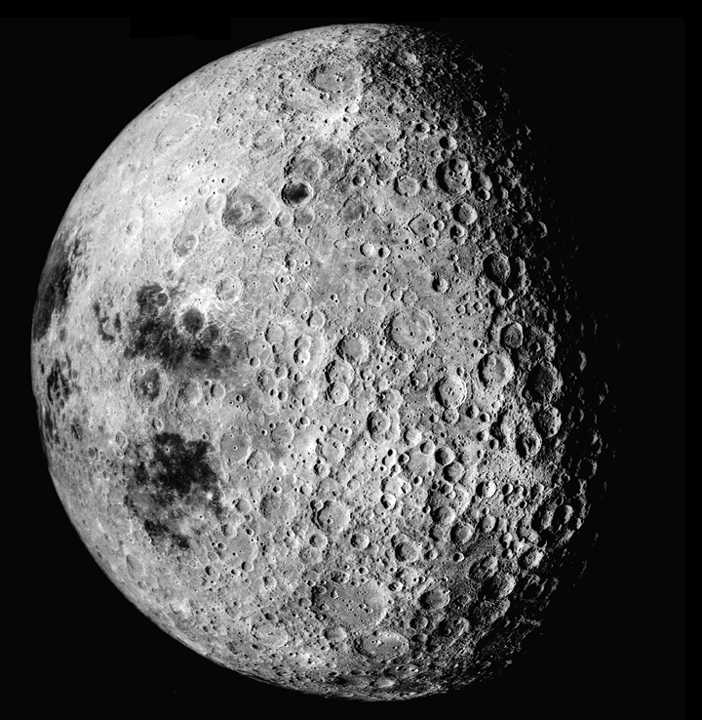
Esta es la CARA OCULTA de la LUNA PARA que no os líen nuestros queridos medios sensacionalistas 🧐: 1º ➡️ NO, los astronautas de la misión Artemis II no serán los los primeros seres humanos en ver la cara oculta de la Luna "con sus propios ojos", esos fueron los astronautas de la misión Apolo 8 en 1968 (Frank Borman, Jim Lovell y William Anders). 2º ➡️El LOGRO de la Artemis II es llevar cámaras de ultra alta definición (4K/8K) que permitirán que el resto de la humanidad vea esa cara con una claridad que las fotos granuladas de los años 60 y 70 no permitían. #ArtemisII #NASA #MoonMission
EXOPLANETAS Noticias de Ciencia y Tecnología tweet media
Español

104
442
2.1K
190.7K
Paloma Leé retweetledi
Silvana Zapata Bedoya EPI-SIG-DS
Silvana Zapata Bedoya EPI-SIG-DS@solsilvanazb·
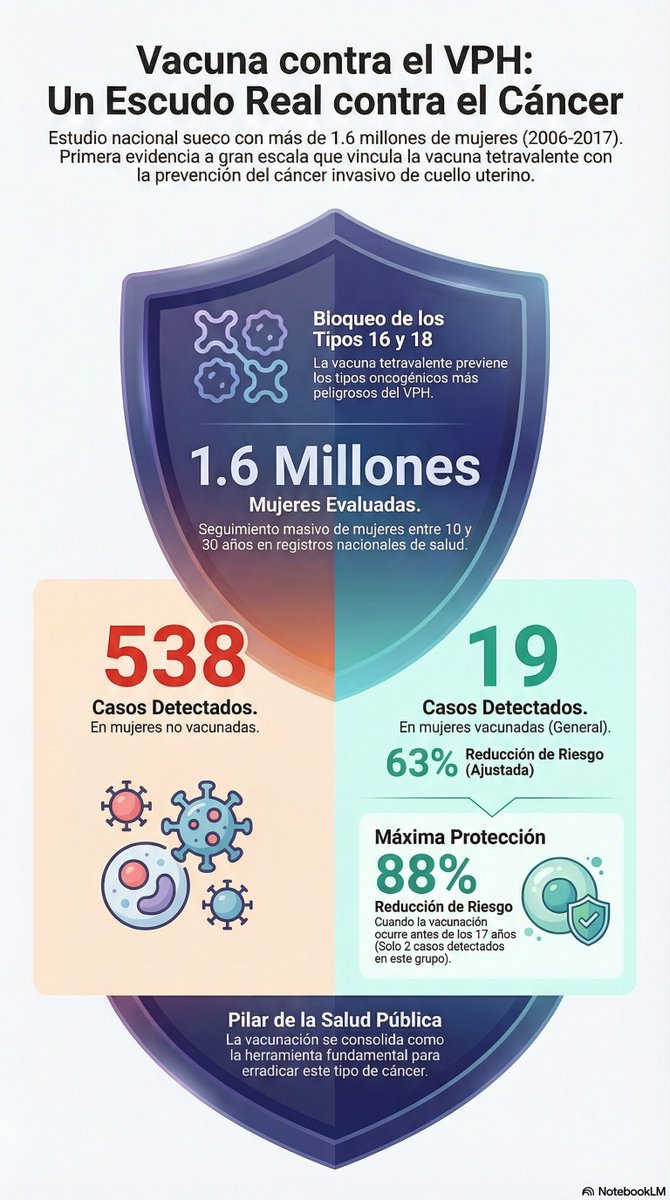
La evidencia científica vuelve a ser contundente: la vacunación contra el Virus del Papiloma Humano (VPH) está cambiando la historia natural del cáncer de cuello uterino. Un estudio poblacional realizado en Suecia, que siguió a más de 1.6 millones de niñas y mujeres entre 10 y 30 años, mostró resultados extraordinarios: 🔹 Entre las no vacunadas se diagnosticaron 538 casos de cáncer cervical invasivo. 🔹 Entre quienes recibieron la vacuna tetravalente, solo 19 casos. 🔹 Cuando la vacunación ocurrió antes de los 17 años, el riesgo se redujo en 88%. 🔹 Incluso en mujeres vacunadas después, entre los 17 y 30 años, se observó una reducción del 53%. 📊 La vacuna tetravalente protege frente a los tipos 16 y 18 del VPH — responsables de la gran mayoría de los cánceres cervicales — además de prevenir verrugas genitales y lesiones precancerosas.
Silvana Zapata Bedoya EPI-SIG-DS tweet mediaSilvana Zapata Bedoya EPI-SIG-DS tweet mediaSilvana Zapata Bedoya EPI-SIG-DS tweet media
Español
8
341
763
22.2K
Paloma Leé retweetledi
Josh Barzon
Josh Barzon@JoshuaBarzon·
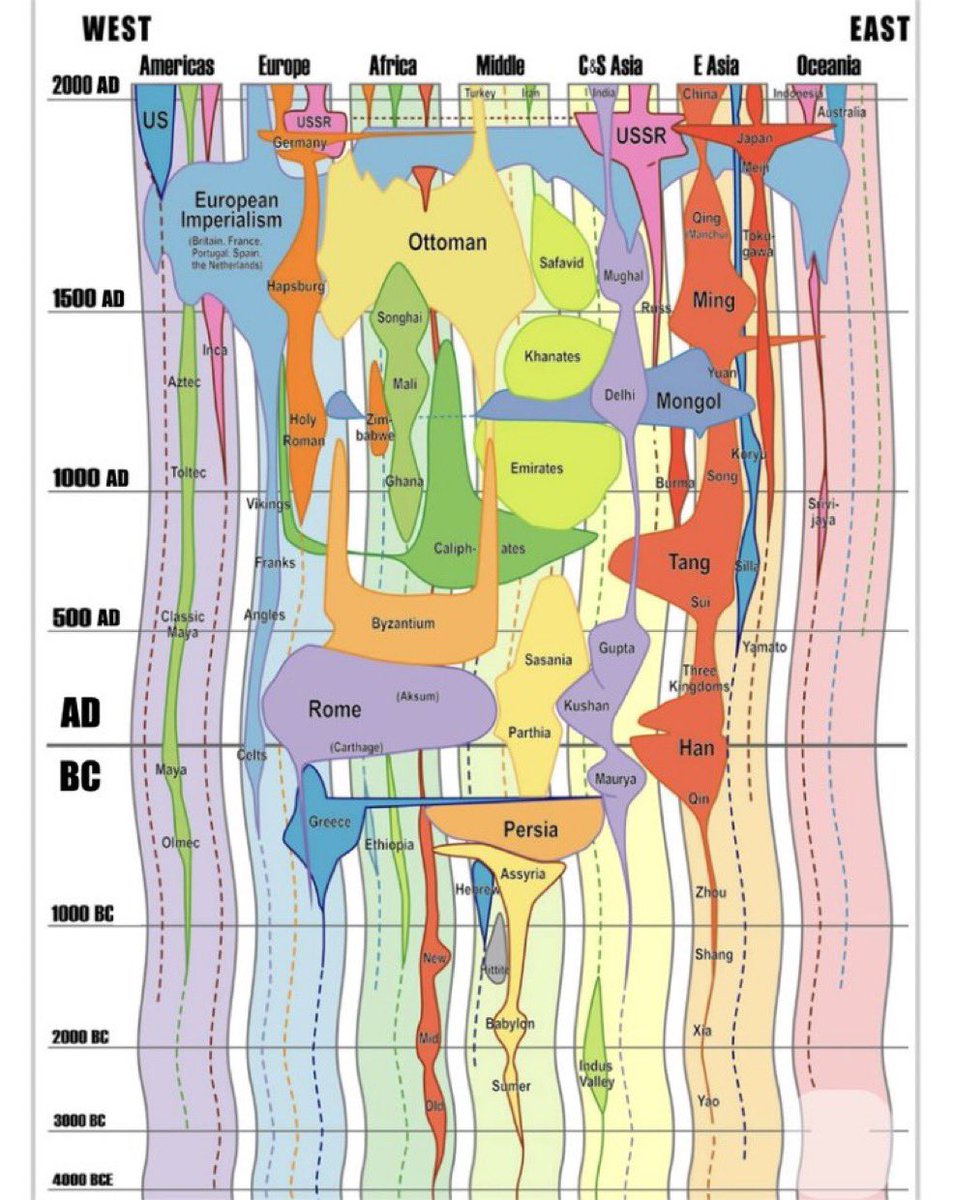
The history of the entire world in one amazing, colorful, creative, & fascinating picture.
Josh Barzon tweet media
English
25
161
1K
97K
Paloma Leé retweetledi
Andrés Elías
Andrés Elías@andreseliascom·
Estamos confundiendo leer con consumir libros. El fenómeno del binge reading —leer mucho, rápido y exhibirlo— no es una victoria cultural. Es la aplicación directa de la economía de la atención a la literatura. La neurocientífica Maryanne Wolf lleva años advirtiéndolo: entrenar al cerebro en lectura rápida debilita los circuitos de lectura profunda —los mismos que sostienen empatía, inferencia y razonamiento complejo. No se destruyen, pero se atrofian por desuso. A esto se suma la presión del número: “Si no lees X libros al año, no eres buen lector”. Ese marco desplaza la motivación intrínseca y activa dopamina social (estatus, validación, pertenencia). La lectura deja de ser exploración cognitiva y se convierte en performance. Exactamente lo mismo que ocurre en redes. Los datos acompañan el diagnóstico: En EE. UU., el porcentaje de adultos que lee al menos un libro al año cayó de ~57% en 2012 a ~48% en 2022–2023. El tiempo de lectura diaria lleva dos décadas descendiendo, sustituido por pantallas. Las evaluaciones de comprensión muestran más dificultad con textos largos y argumentativos. Leemos menos. Y cuando leemos, entendemos peor. Herbert Simon lo anticipó hace décadas: cuando la información abunda, lo escaso es la atención. Hoy podemos añadir algo más incómodo: lo escaso es la capacidad de sostenerla sin interrupciones. Por eso el problema no es leer poco. El problema es no detenerse. Paradójicamente, en un mundo saturado de información, la lectura lenta y profunda se está convirtiendo en un lujo cognitivo. Tal vez el verdadero gesto contracultural en 2025 no sea leer 50 libros al año. Tal vez sea leer uno solo… y que realmente te cambie algo.
Boze Herrington, Library Owl 😴🧙‍♀️@SketchesbyBoze

I read 186 books in the first six months of this year. In today's essay (link below) I explain how I did it, and how you can rekindle your love of reading and become a voracious reader in an age of distraction.

Español
231
2.5K
8.8K
521.3K
Paloma Leé retweetledi
Ismael Sanz
Ismael Sanz@sanz_ismael·
El entorno socioeconómico pesa más que el rendimiento escolar a la hora de definir los planes académicos de los estudiantes. Incluso quienes obtienen buenas calificaciones, si provienen de contextos desfavorecidos, tienden a tener expectativas más bajas de acceder a la universidad que sus compañeros con mayores recursos, aunque estos tengan peores notas. La buena noticia: las actividades de orientación profesional pueden revertir esta tendencia. Los jóvenes que participan en ellas aspiran a trayectorias educativas más ambiciosas. m.youtube.com/watch?v=WqRoWr… oecd.org/en/publication…
Ismael Sanz tweet media
Español
20
666
1.6K
68.3K
Paloma Leé retweetledi
El Club del Arte 🎨📷📚🖼🕍🎼
Se filmaron 30.000 horas de metraje, equivalentes a 3 años y 7 meses, para capturar la floración de 77 tipos de flores, ¡y el resultado es espectacular!
Español
58
3K
10.7K
215.3K
Paloma Leé retweetledi
Marysia
Marysia@marysia_cc·
Junichiro Sekino 1914-1988 Summer Ending
Marysia tweet media
English
12
98
430
10.4K
Paloma Leé retweetledi
Gabriela Tejada
Gabriela Tejada@GTejads·
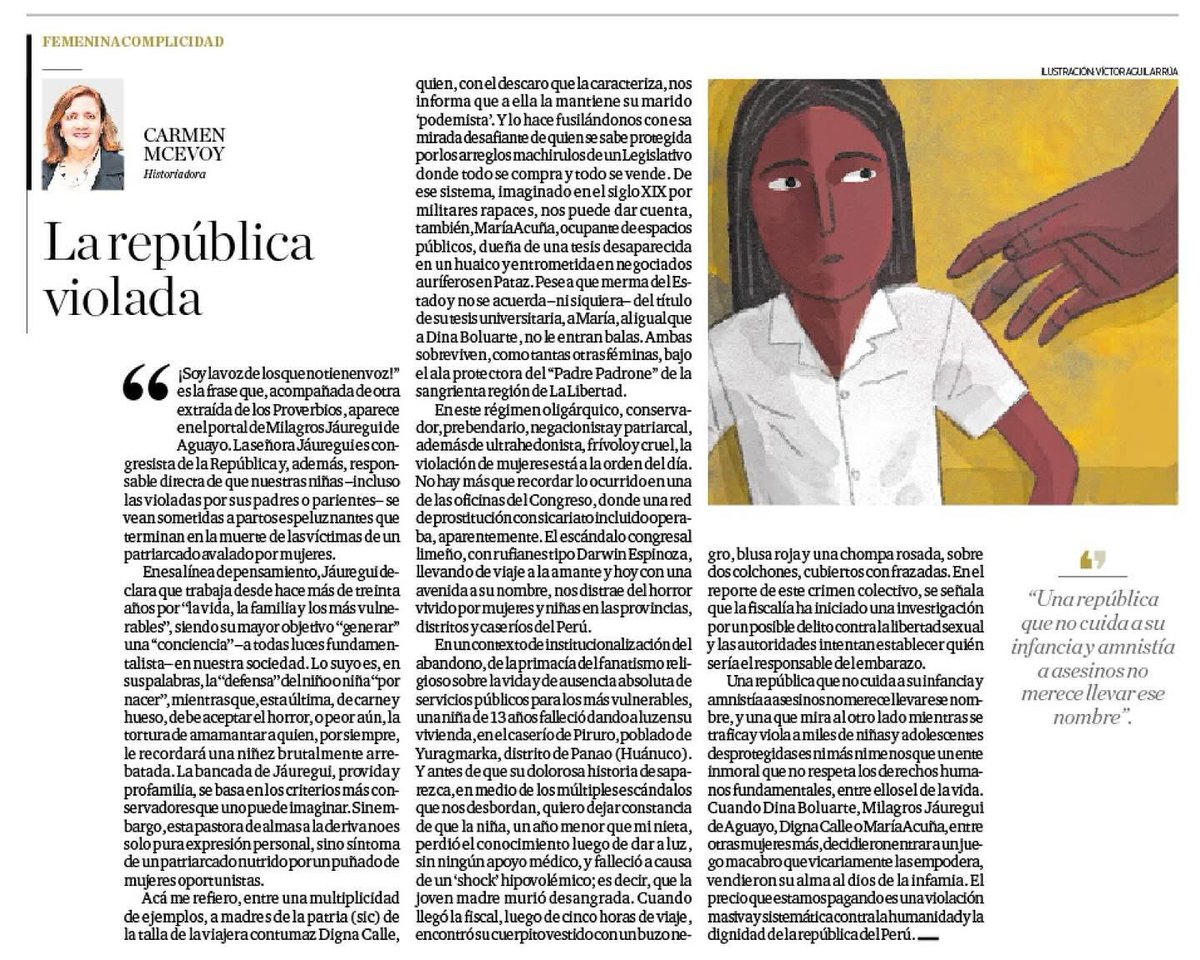
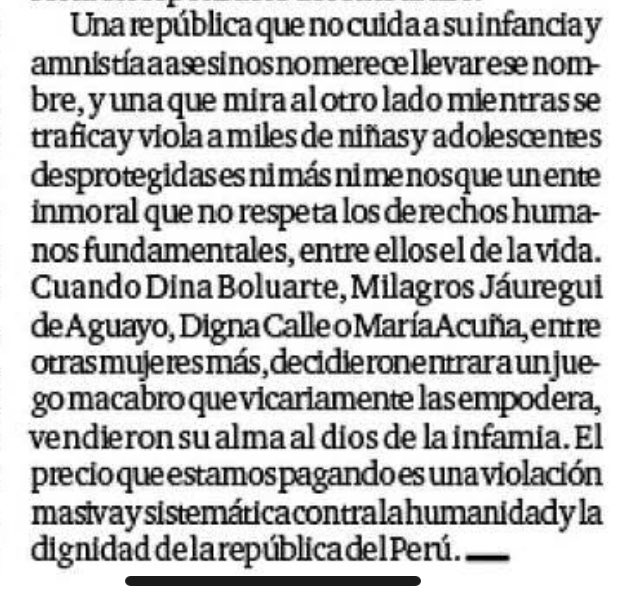
De lectura obligatoria. Absolutamente preciso. Así andamos, mujeres peruanas! @McEvoyPeru
Gabriela Tejada tweet mediaGabriela Tejada tweet media
Español
1
8
18
876
Paloma Leé retweetledi
Adil Haque
Adil Haque@AdHaque110·
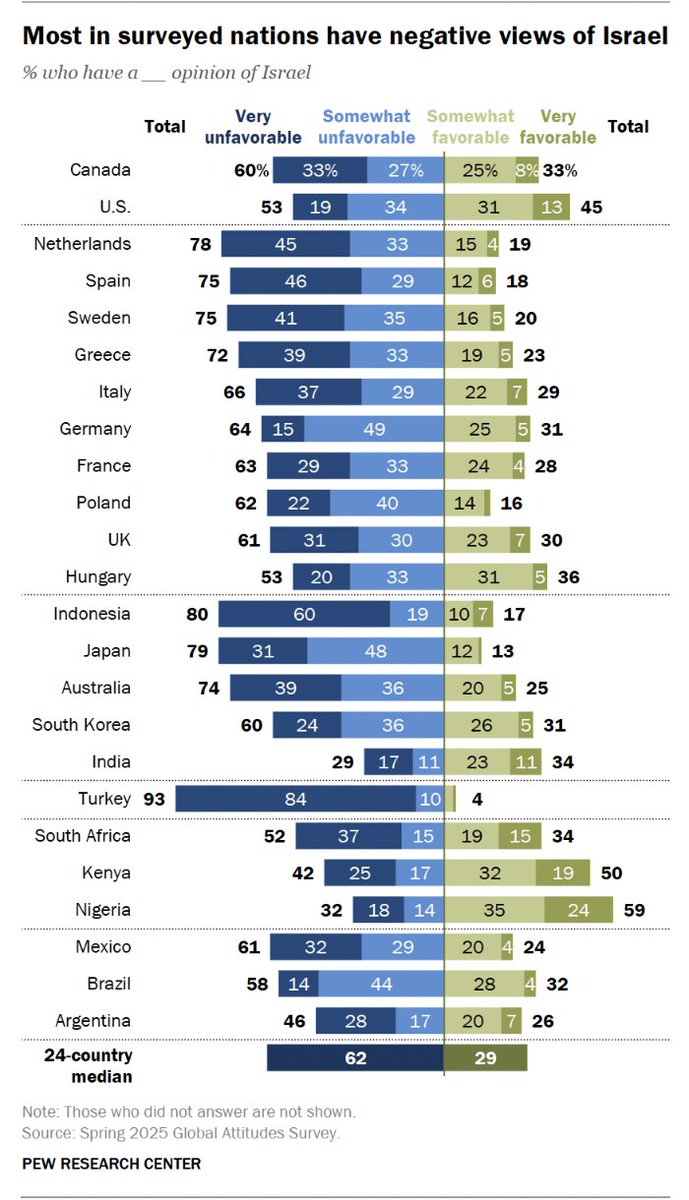
"In 20 of the 24 countries surveyed, around half of adults or more have an unfavorable view of Israel" in the U.S. "the share of adults with a negative view of Israel rose 11 percentage points bet. 2022 and . 2025" "the U.S. has one of the largest age gaps in views of Israel"
Adil Haque tweet media
Pew Research Center@pewresearch

International views of Israel and Prime Minister Benjamin Netanyahu are much more negative than positive among countries surveyed. And among Israelis, 58% say Israel is not too or not at all respected around the world, while 39% think it is, according to a Spring survey. pewresearch.org/short-reads/20…

English
10
78
207
42.1K
Paloma Leé retweetledi
Thomas Piketty
Thomas Piketty@PikettyWIL·
Different rules of the game would have radically changed history. Our counterfactual simulations show that without colonial transfers, Europe would have been a debtor — and South Asia or Latin America could have become global creditors. [5/9]
Thomas Piketty tweet media
English
12
285
825
93K
Paloma Leé retweetledi
Arnaud Bertrand
Arnaud Bertrand@RnaudBertrand·
I'm normally not a fan of Piketty (what kind of person calls their book 'The Capital' but simultaneously badmouths Marx and says he "never managed really to read" the original "Das Kapital"?) But, credit when credit is due, this is a genuinely fascinating study. It is in fact - somewhat ironically - the data-driven and unequivocal proof that Marx was correct when he said that capitalist wealth accumulation in Western imperialist countries was fundamentally based on exploitation and unequal power relations rather than fair market exchange. Let's look through the paper. First of all, a key value of the work is that Piketty and Gastón Nievas (a PhD student) base their study on a new database that they put together (which you can access here: wbop.world) that systematically reconstructs global trade flows and balance of payments for the entire world over more than two centuries (1800-2025). This is genuinely groundbreaking work. No one - to my knowledge - has ever before created such a comprehensive database that tracks not just the "visible flows" of goods trade, but crucially the "invisible flows" of services, foreign income, and foreign transfers across the entire world - covering 48 major countries individually plus 9 residual regions that together achieve complete global coverage of population and GDP over more than 2 centuries. What makes this database particularly valuable is that it allows us, for the first time, to see the complete picture of how wealth actually flowed between regions since 1800. And not just what was officially traded, but the colonial transfers, tribute payments, "home charges" from India to Britain, debt impositions on Haiti and China, and all the other mechanisms through which the West extracted wealth from the Global South. What the data shows is what everyone in the Global South knew instinctively but was contradicted by the dominant economic narrative: the West's wealth was built not through superior productivity or "free trade," but through systematic extraction, forced transfers, and colonial plunder on a scale that dwarfs anything previously quantified. Take this extraordinary metric for instance: the authors' simulations show that a mere 20% increase in primary commodity prices over the 1800-1914 period, which the study says "corresponds to an absolute lower bound estimate of the value of unpaid forced labor in the export production of cotton, sugar, grain, etc. over this period," would have left Europe with foreign debts equivalent to 160% of its GDP, completely reversing global wealth patterns. Put another way: had Western imperialist powers actually paid for what they took instead of extracting it through colonial violence and unpaid forced labor, the "developed" world would have been the "developing" world, and vice versa. What’s also extraordinary is that this system of extraction very much continues to this day. ------------ Read the rest on my new Substack (link in next tweet)
Thomas Piketty@PikettyWIL

Colonial extraction and unequal exchange have shaped two centuries of North-South inequality. 🧵A thread on a NEW STUDY written with @gatonievas [1/9] 🔗 wid.world/news-article/u…

English
125
963
3.6K
325.8K
Paloma Leé retweetledi
IDL-Reporteros
IDL-Reporteros@IDL_R·
"Presidenta Boluarte, busque otros argumentos, si los encuentra. Porque las mentiras y las distorsiones groseras revientan en la cara y luego no hay cirujano plástico que arregle el rostro de la ruina moral", afirma Gustavo Gorriti en su último editorial.
Español
0
1.3K
3.3K
162.8K
Paloma Leé retweetledi
Arnaud Bertrand
Arnaud Bertrand@RnaudBertrand·
People are rightly ridiculing OpenAI over its accusations of Deepseek using their output to train their model, but most people are missing the truly terrifying implications here. The far more worrying aspect here is that OpenAI is suggesting that there are some cases in which they own the output of their model. Now think for a minute what this means in the world of tomorrow where so much will be generated by AI (and already is): all the software code, the emails we send each others, the videos and images, etc. Do you want to live in a future where, if for some reason the AI giants are dissatisfied with the way you use the output of their model, they can claim ownership of it? A future where every piece of content touched by AI - which might be virtually everything in the world of tomorrow - comes with invisible strings attached? The implications for innovation and creativity are staggering. Small businesses and independent developers who rely on AI tools could find themselves trapped in a web of intellectual property claims. Worse, we're looking at a future where the very act of learning and building upon existing knowledge becomes gated by the interests of AI giants. This would be techno-feudalism on steroids: if we don't challenge this now, we risk sleepwalking into a future where human creativity and innovation become the property of a bunch of AI overlords, and a world where they can dictate not only who gets to innovate, but what kind of progress is acceptable based on their own interests.
Arnaud Bertrand tweet media
English
347
1.9K
6.8K
382.4K
Paloma Leé retweetledi
Bernie Sanders
Bernie Sanders@BernieSanders·
When I started talking about Oligarchy, many people didn't understand what I meant. Well, that's changed. When the 3 wealthiest men in America sit behind Trump at his inauguration, everyone understands that the billionaire class now controls our government. We must fight back.
Bernie Sanders tweet media
English
29.2K
55.6K
371.6K
14.5M
Paloma Leé retweetledi
Miqdaad Versi
Miqdaad Versi@miqdaad·
These perpetrators are depraved, evil & deserve the fullest force of justice But the data suggests most grooming gangs are likely not from other countries (85% of group-based child abusers were white) The evil of group-based child sexual abuse should be tackled based on facts
Miqdaad Versi tweet media
Sky News@SkyNews

Conservative leader Kemi Badenoch has said grooming gang perpetrators are "peasants" from "sub-communities" in other countries. 🔗Read more news.sky.com/story/kemi-bad…

English
10
38
90
31.6K
Paloma Leé retweetledi
Alonso Gurmendi
Alonso Gurmendi@Alonso_GD·
Also if I may add, this idea that white Europeans were the first to abolish slavery is a convenient copout. To be specific, Great Britain was the first colonial empire to abolish racialised slavery, but they did not abolish nor disown the underlying racism that made it so different. In fact it did not even terminate its colonial domination of these racialised others. To the point where the UK spent the next two centuries compensating slavers while at the same time avoiding public spending that benefited racialised individuals. To this day, austerity affects people on racial lines. But there’s an important additional caveat: many people thought human beings should not be enslaved before the British. The British were simply the first to have enough power to put it to practice. Tacky’s Revolt in Jamaica (1760), Tupac Amaru’s Rebellion in Peru (1780), the Haitian Revolution (1791), to name a few, were earlier examples. And white Europe certainly played a part in that history of the ending of slavery, not on the side of those who wanted to end it. The history of how racialised slavery ended is not a “white history”
English
7
9
93
3K
Paloma Leé retweetledi
Jacobin
Jacobin@jacobin·
On this day in 1904, the Herero people began a revolt against the colonizers of German South West Africa. In response, the Germans ordered the killing of every Herero person within the occupied territory, marking the first genocide of the 20th century. jacobin.com/2020/07/german…
English
7
213
315
22.2K