Victor Dickinson
20.6K posts

Victor Dickinson
@VDickinson4
Priest. Retired. Yorkshireman. ex Wales: Cardiff, Neath, Cardiff; England: SSHOx, Wallsend, Newcastle (Kenton), N Northumberland (Lowick, Ford, Ancroft); now:
Whithorn, South-West Scotland Katılım Mart 2015
598 Takip Edilen428 Takipçiler

@Math_files Back in the late 1960s, one of my Cardiff Physics lecturers had the line: 'Never mind you Dirac, I'm alright'.
Whithorn, Scotland 🇬🇧 English

Of all his discoveries in the field of mathematics, Dirac was particularly proud of one, which however contributed very little to his fame.
While chatting with the wife of a faculty member one day, he observed her, particularly curious, about the knitting she was doing, a scarf or something similar; returning to his study, tried to remember the rapid movement of needles in the woman's hands and finished quickly that there was another way to handle them.
He hurried to tell her his discovery and was deeply disappointed to learn that both methods, of “right working” and “upside down working”, had been known to women for many centuries.

English

@adamson_ma88843 @oaksandlions Berwick does. 1st May, if I remember correctly.
Whithorn, Scotland 🇬🇧 English

@VDickinson4 @oaksandlions All the historic towns do them - Hawick, Jedburgh, Kelso, Selkirk, Melrose etc. Strangely though don’t think the towns on the English side have the same tradition though.
English

There was a time in England when people did not rely on maps to know where they belonged.
They walked it.
Every year, before Ascension Day, villages carried out a tradition called “beating the bounds.”
A practice recorded as early as the 10th century.
The parish boundary defined daily life. So once a year, the community walked it together.
Fields. Hedgerows. Streams.
At key points, markers were struck with sticks.
Not written down. But carried in memory.
Before maps fixed the land in ink, people fixed it by walking.
A boundary you walk is a boundary you remember.
Follow @oaksandlions for more interesting posts like this.
I’ve written a short 3-minute article expanding on this post. If you’d like to read the full story, check it out 👇🏻.
Oaks And Lions 🏴🇬🇧@oaksandlions
English

@adamson_ma88843 @oaksandlions Berwick is the one I'm familiar with.
Whithorn, Scotland 🇬🇧 English

@VDickinson4 @oaksandlions Yeah, Common Riding, I think it is called. Continuous 500 years+ tradition for sure in some of the historic towns. More recent tourist spectacle in others.
English

@JohnWil45304495 @oaksandlions Refreshments was a key element then, and is so now where it is still practiced.
Whithorn, Scotland 🇬🇧 English

@adamson_ma88843 @oaksandlions Riding, in the Borders.
Whithorn, Scotland 🇬🇧 English
Victor Dickinson retweetledi

Labour Loves the Countryside. It Just Hates the People Who Run It.
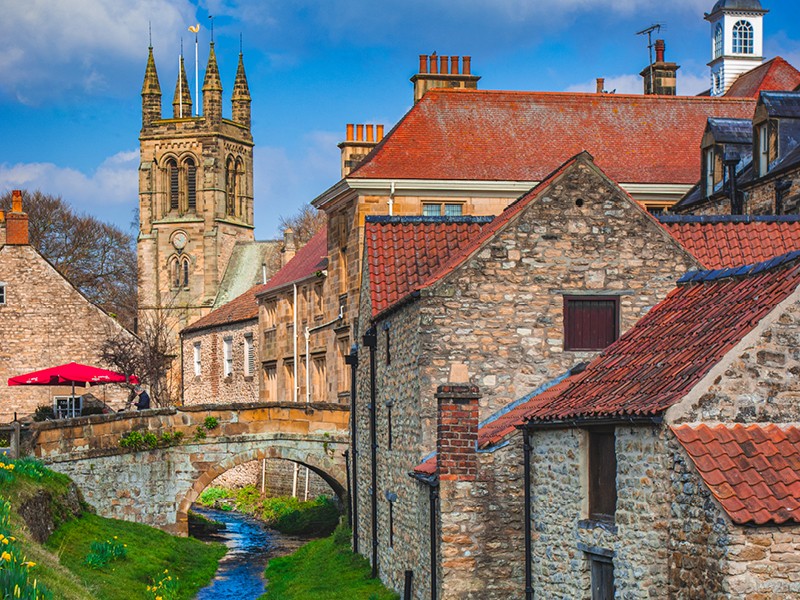
A woman walks into a tailor's shop in Helmsley, North Yorkshire. She loves the heather hills, she says. The wooded dales. The purple moorland stretching to the horizon. What she cannot stand is the shooting that takes place on the Glorious Twelfth.
Jeremy Shaw, the tailor, has heard this before. He considers whether to explain that the heather she travelled three hours to admire exists because of the grouse moor she despises. The gamekeepers who manage the land, suppress the bracken, and keep the moorland in the condition that makes it worth visiting. The cake, in other words, was baked by the baker she came to castigate. What is worrying is that the government shares her confusion.
On March 18, Labour published its Land Use Framework. Half a million acres earmarked for solar panels. Nine percent of farmland committed to rewilding. And buried on page 45, a proposal to license game bird shooting, potentially restricting pheasant and partridge releases onto estates. The trail hunting ban came first. Licensing comes next. Each measure arrives with its own rationale. Together they form a programme.
Licensing does not prohibit. Bureaucracy does not ban. Smaller shoots simply cannot absorb compliance costs, fold quietly, and nobody in Whitehall answers for the consequence. A Natural England case near Helmsley shows the method. A longstanding partridge shoot was barred from releasing birds until after the season had already started. Shoot days cancelled. Revenue gone. Natural England's hands formally clean.
Helmsley bucks every trend in British retail. Four pubs in the town square. A Michelin-starred inn nearby. A tailor forty years in business in what a mentor once called a dying trade. Seventy-five percent of Shaw's revenue is shooting-related. The Pheasant hotel runs at sixty percent shooting occupancy through winter. The deli sells local cheese to Norwegian and German sportsmen. Shooting contributes £3.3 billion annually to the UK economy and supports nearly 147,000 jobs. Pull the shooting thread and the weave comes apart.
One Helmsley pub changed hands a few years ago. The new owners decided they wanted nothing to do with shoot trade. They lost heavily, then went back to the estates cap in hand. The market delivered the verdict that policy is not yet ready to impose openly. Licensing achieves the same result without anyone having to take responsibility.
The conservation argument collapses under scrutiny. Grouse moor owners have restored 217,000 acres of upland heath in the past 25 years. The almost-extinct curlew is four times more likely to fledge on a managed grouse moor than on unmanaged moorland. The landscape that Whitehall has identified as the problem is the reason the landscape exists in the form they claim to value.
When asked what economic trade-offs it had actually modelled, the government was vague. Officials said they recognised shooting's cultural importance and would work with industry toward a sustainable relationship. Starmer has been invited to visit Helmsley and see how the economy functions. He has not replied.
He should go. He should meet the gamekeeper loading double guns through winter to keep the household solvent. The beaters earning seventy pounds a day. The tailor measuring 24 keepers for tweed suits stitched with Essex lining and Yorkshire zips.
What rural Britain is being offered instead is a licensing regime that will first eliminate smaller shoots, then larger ones, then the hotels and tailors and pubs, until the moorland reverts to bracken and the towns that shooting sustained join the dying high streets that apparently only the countryside had managed to avoid.
The heather on the North York Moors, Jeremy Shaw at Carters Country Wear, and the market town of Helmsley. All three exist because of shooting. Labour's Land Use Framework puts all three at risk.


English