Frank
4.8K posts


Frank
@VT90Hokie
Virginia Tech grad and proud husband and father
Katılım Ocak 2019
1.1K Takip Edilen617 Takipçiler
He saw the collapse of the Soviet Union.
He was alive for 9/11.
He was alive for Deepwater Horizon oil spill.
He was the WWE 24/7 champ.
But he’s never seen an Oregon football natty.
Carolina Clash Sports@Carolina_Clash
RIP to Kyle Busch, 2 time NASCAR Cup Series Champion. He passed away at the age of 41.
English


Reject the self help slop
Embrace the Great Man biography

🇺🇸 The American Culturist 🇺🇸@MericaCulture
Reject the self-help slop. Embrace the Great Man biography.
English

@VT90Hokie @JLS1861 One of my favorite moments of the war.
*dead of night*
Mosby- “Have you heard of Major Mosby?”
Gen. Stoughton- “Yes! Have you caught him?”
Mosby- “No General, I’m afraid he’s caught you.”
English
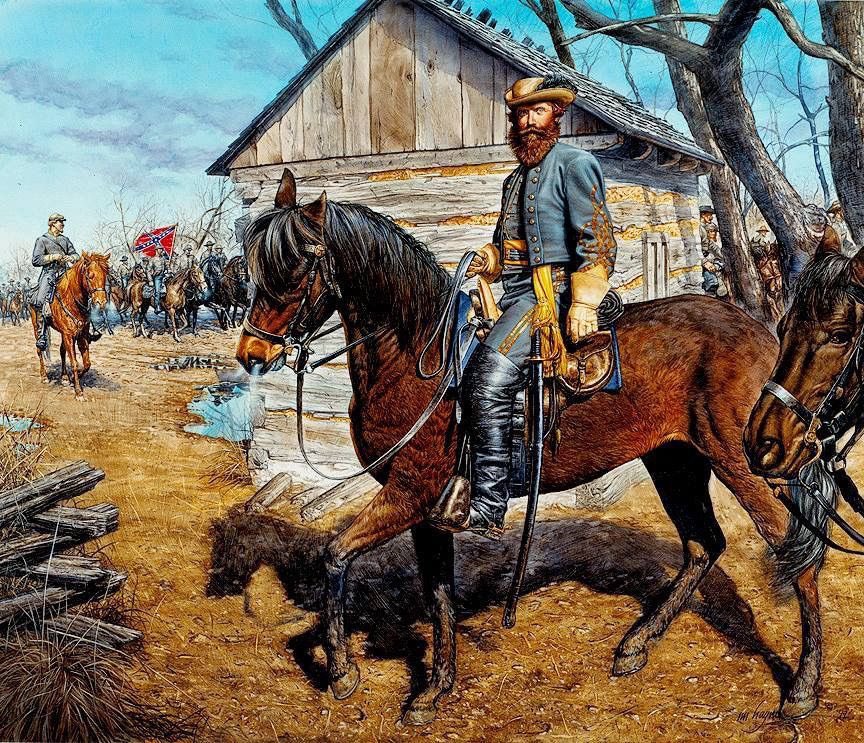
John S. Mosby.
One of the most daring & iconic figures of the war.
Known for his seemingly impossible feats, he was nicknamed “The Gray Ghost.”
He once said, “Only three men in the Confederate army knew what I was doing or intended to do; they were Lee, Stuart, and myself.”


English
English
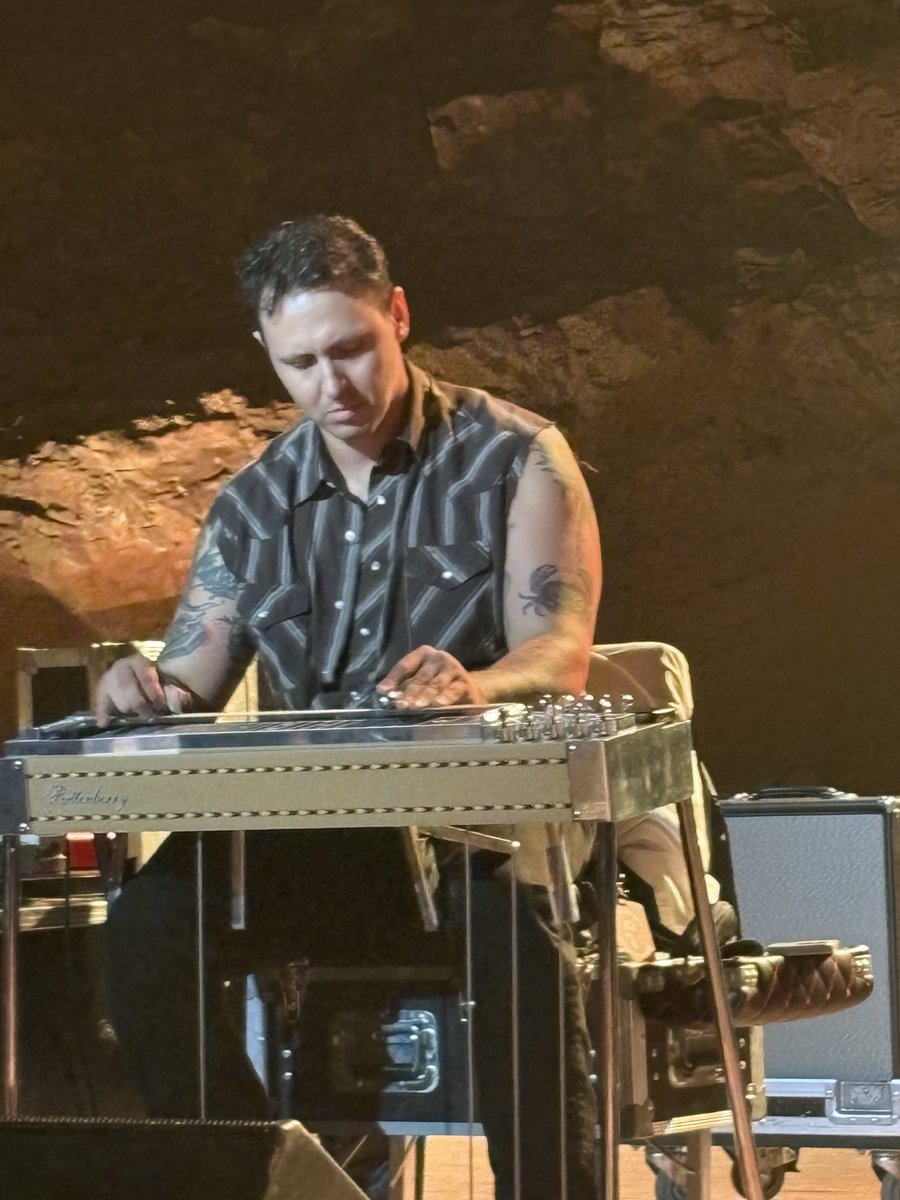
@realcountry1953 I’ve seen Whitey a bunch of times. I go to see him every time he comes around here and have seen him in several other states. He should be way bigger than he is, his shows are intimate usually 2-300 people. I’ve seen him acoustic and with the 78’s both Great shows
@WhiteyMorgan


English



At Belleau Wood, Marines advanced through machine gun fire.
When a French officer suggested retreat, US Captain Lloyd Williams replied:
"Retreat? Hell, we just got here!"

English
@EchoesofWarYT Lee is a great litmus test of who learned history from public schools and who has read contemporaneous writings from the time
English
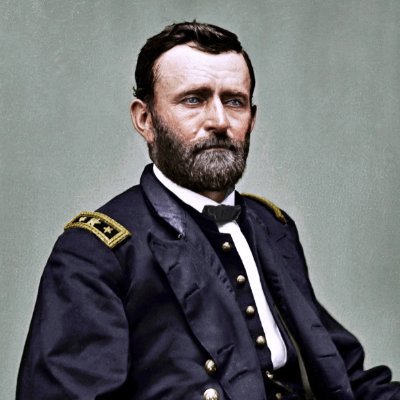
It truly is sad how the public tarnished his image the last 20+ years. I think it’s finally starting to correct back though
JohnQ@quincyduckworth
@EchoesofWarYT Lee was a god fearing patriot to the very end. [><]
English



A little-known hack:
2 slices of Aldi wheat bread: $0.17
3 oz of Aldi deli turkey: $0.86
1 slices Aldi cheddar: $0.15
1 condiment of your choice: $0.02
1 apple: $0.53
1 hard boiled egg: $0.14
5 carrot sticks: $0.17
Cold water from the tap: $0.01
Total: $2.05
You can do this.
Sean Padraig McCarthy@SeanMcCarthyCom
Lunch just costs $28 now. Are they not supposed to eat?
English

My 10 favorite active lyricists in the alt-country/folk realm. Alphabetically ordered.
Avett Brothers, The
BJ Barham
Charles Wesley Godwin
Evan Felker
Ian Noe
Jason Isbell
Joe Stamm
Katie Crutchfield
Nicholas Jamerson
Pony Bradshaw
*Avett Brothers slowed, still active.
English

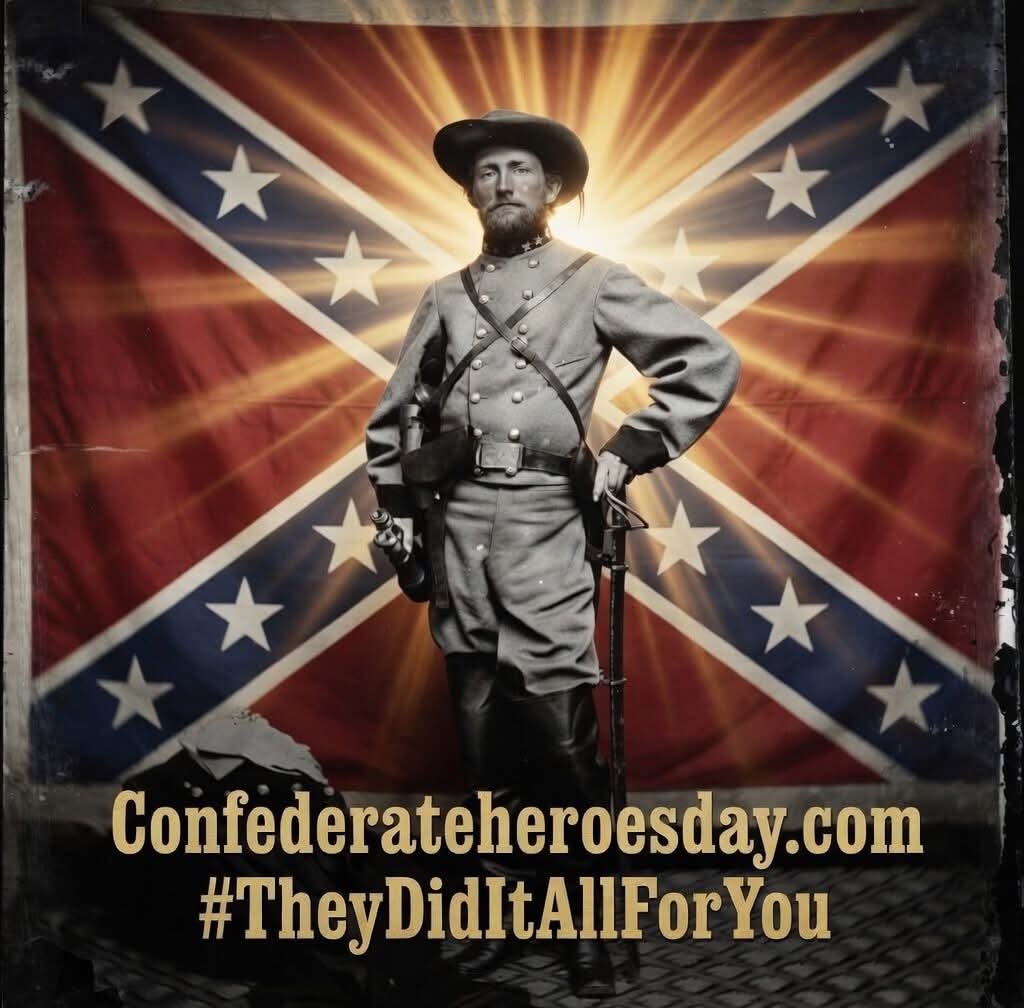
I fixed this image to reflect Stonewall Jackson’s eye color 👀. Apologies for the initial error.
Here is an updated version of the quote-card for anyone that wants it. #OldBlueLight

𝙹.𝙴.𝙱. 𝚂𝚝𝚞𝚊𝚛𝚝’𝚜 𝙶𝚑𝚘𝚜𝚝 🇸🇴@dixie_cavalier
Some problems only have one answer:
English
@VT90Hokie I love that about Jackson. His faith was so strong he was unwavering & took his direction from scripture before all else. He recognized the horror but more importantly his duty, and that the Bible is there to guide us in all things including war.
English
Some problems only have one answer:

The Old World Show@theoldworldshow
“Time for the north to show up in the south,” the gremlin of a foreign invader screeches Worth remembering that the Union Army that marched South was ~43% foreign, with about 25% immigrants and the remainder first generation 48ers and the like This time, hopefully every actual American resists this egalitarian tyranny
English
@2ndMississippi Great post. Buried in the Stonewall Cemetary in Winchester. My GG grandfather served in the 7th VA Calvary

English
The Black Horse
Turner Ashby, the Finest Cavalry the Confederacy Never Quite Organized
[Authors Notes: This piece accompanies my recent overview of Jackson's 1862 Valley Campaign and focuses on the man who made much of that campaign possible — Turner Ashby of Fauquier County, Virginia, commander of the 7th Virginia Cavalry and Jackson's indispensable screen.
Ashby's name rings a faint bell for many students of the war, but his death rarely lands with the weight it deserves. That distinction belongs, in the popular memory, to Jeb Stuart — killed two years later at Yellow Tavern in May 1864, by which point the Confederacy had grown accustomed to Stuart's legend and felt his loss accordingly. Ashby died in June 1862, when the war was barely a year old and the full shape of what was being lost could not yet be seen clearly.
What he might have become is one of the more tantalizing unanswered questions of the conflict. He was thirty-three. He had spent less than fourteen months in the field. He had already pioneered the combined arms rear guard that Stuart and Pelham would refine into an art form, and he had done it with a command that was, by any organizational standard, a shambles. Given time, a proper staff, and the field grade officers Jackson was finally assembling for him at the moment of his death — the mind wanders.
It always does, with Ashby.]
***
There was a man they told stories about before the war started, and the stories were true.
Turner Ashby of Fauquier County, Virginia, was the finest horseman most people who saw him ride had ever encountered. Whenever a colt was found too wild and vicious to be broken by anyone else in the neighborhood, the saying went, it was Ashby's pleasure to mount him. At the tournaments and hurdle races that formed the social fabric of rural Virginia — events where young men of good family competed for ribbons and the admiration of the crowd — Ashby carried off the honors with a regularity that eventually ceased to surprise anyone. He was, by the account of men who competed against him and women who watched, something apart from ordinary riders: a unity of man and animal so fluid that the boundary between them became difficult to locate. He had no formal military education. He had run for the Virginia Legislature as a Whig in a Democratic district and lost. He had made a modest success of himself in business. None of this mattered much to anyone, because none of it was the thing that defined him.
He arrived at Harper's Ferry the day after Virginia passed its ordinance of secession — April 18th, 1861 — and from that morning until the morning of his death, he never left the Valley he had come to defend.
***
What Jackson inherited when he arrived in Winchester on the 4th of November, 1861, was a cavalry force that existed primarily in theory. Ashby had been screening the lower Valley with a collection of companies so loosely organized that calling them a regiment required a certain willingness to overlook the facts. They came from the farms and small towns of the Shenandoah and the surrounding counties, men who could ride before they could read and who had brought their own horses to the war because the Confederacy could not supply them — a policy that seemed reasonable in the autumn of 1861 and would prove catastrophic by the spring of 1862. When a cavalryman's horse was shot or broken down or simply ridden to exhaustion, the man went home to get another one. The army had no mechanism to replace what it had never provided in the first place. The horse was the man's property, and when the horse was gone, so was the soldier.
This was the foundation on which Turner Ashby built his command, and he built it the only way such a thing could be built — through the force of his own example. He rode the screen line himself, covering fifty miles in a fourteen-hour day when he could have sent a subordinate, because the subordinates needed to see what he was doing and because his men performed differently when he was among them. James Avirett, a member of his staff, wrote that Ashby seemed insensible to fatigue, that he preferred performing duties that would have taxed half a dozen ordinary men, and that he had a quality that was difficult to name but impossible to miss: men trusted him with something beyond reason, beyond calculation, in the way men sometimes trust a leader they believe to be incapable of waste.
The problem was that Ashby's command, by the time the active campaign began in the spring of 1862, had grown to twenty-six companies — and Ashby had one field grade officer to help him run them. One. The 7th Virginia Cavalry was critically short at least four lieutenant colonels and any number of captains it needed to function as a coherent military organization rather than a confederation of companies each loyal primarily to its own captain and only secondarily to any authority above him. Jackson knew this. He doubted, as the campaign deepened, whether Ashby's companies could perform correctly without direct supervision, and he compensated by attaching members of his own staff to cavalry missions as a kind of institutional substitute for the organizational structure that didn't exist. It was not a solution. It was an acknowledgment that the problem was insoluble given the resources at hand.
What made it stranger was that the cavalry was, in the most meaningful sense, working.
***
Banks crossed the Potomac in February with twenty-seven thousand men, and Ashby's screen — seventy miles wide, from Harper's Ferry to Hanging Rock — held the Confederate army largely invisible behind it. When Banks moved toward Winchester in early March, it was Ashby who gave Jackson his first intelligence on the Union advance. When Jackson needed to know how many men Shields had left behind at Kernstown after Williams' Division marched for Manassas, it was Ashby who went to look.
This was where Ashby was beaten, in the only way a man of his temperament could be beaten — by a cleverer man playing a more cautious game. James Shields had pulled his army back from Strasburg to Kernstown and hidden the bulk of it behind the town, showing only a single brigade to Confederate reconnaissance. Ashby rode out, saw a brigade, counted approximately two thousand men, and reported accordingly. He was wrong by seven thousand. Jackson attacked on the 23rd of March with thirty-three hundred men against what turned out to be Shields' full division of nine thousand, and when the Stonewall Brigade ran out of ammunition and fell back, the Confederate line came apart around it. They retreated south in the dark, beaten.
Ashby had been deceived, which was humiliating enough. But the deception had been elegant, and it required a certain fairness toward him to note that the purpose of a screening force is to show you what the enemy wants you to see, and Shields had wanted Ashby to see a brigade. The machinery of military deception worked as it was designed to work, and Ashby was its instrument rather than its architect. Jackson understood this, or understood enough of it to keep Ashby in command, and the campaign moved on.
***
Through the winter operations around Romney and Bath, and into the spring as Jackson began the maneuvering that would make the Valley Campaign famous, the cavalry performed the essential labor that made everything else possible. They screened the Confederate army from Federal observation. They collected intelligence from a network of informants that extended through the sympathetic population of the Valley like roots through soil — a young woman from Front Royal who met Jackson on his approach to the town and described the Union position in detail, a series of men and women in farmhouses and crossroads stores who reported Federal movements with a regularity that suggested the Confederacy's best intelligence asset was not its cavalry at all but the countryside itself. They conducted raids on the Baltimore and Ohio Railroad and the Chesapeake and Ohio Canal, destroyed infrastructure, and blocked the mountain passes west of the Alleghenies against Frémont's approach with such thoroughness that Frémont later reported to Washington that of the roads leading from Franklin to Harrisonburg, all but one had been obstructed — bridges down, rocks rolled, trees felled across the way for nearly a mile — and the one road left open ran directly through Ashby's cavalry screen.
On the 30th of April, when Jackson needed to disappear from the Valley entirely — to march his army south through Brown's Gap, load it onto trains at Mechum's River Station, and reappear at Staunton two days later without Banks having any idea what had happened — it was Ashby who remained behind with his companies and demonstrated aggressively in front of the Union position to give every impression that Jackson's army was right there, in the Valley, where Banks expected it to be. Banks lost contact with Jackson on the 2nd of May. For the next three weeks, the Confederate cavalry kept him in that condition, demonstrating, skirmishing, maintaining the screen, while Jackson fought Milroy at McDowell and then swung north through Massanutten Gap to join Ewell.
What Ashby could do with a horse and a handful of troopers and Chew's battery of artillery — the guns he had integrated into his cavalry from the beginning of the campaign in an arrangement that military professionals in both armies would come to study and imitate — was a kind of operational poetry. Captain Roger Preston Chew, barely twenty years old, had developed the technique of moving his guns forward in the front line with the cavalry while charging, an innovation that multiplied the combat power of a force too small to succeed by conventional means. Ashby had perfected the combined arms rear guard: cavalry to screen and slow the enemy, artillery to punish him when he pushed, infantry assigned from Jackson when the situation demanded it. The whole operated as a single instrument, responsive to a single hand. Jeb Stuart would learn from it. John Pelham would refine it. But it began in the Shenandoah Valley with Ashby and Chew.
***
When Jackson struck Front Royal on the 23rd of May — seventeen thousand men descending from the Luray Valley down a back road the garrison had never thought to watch — the cavalry was ahead of the column, cutting communications, overrunning pickets, severing the telegraph lines that might have warned Banks in Strasburg what was coming. The garrison at Front Royal never got a warning out. Both bridges over the Shenandoah fell intact into Confederate hands, and Jackson was in Banks' rear before Banks understood that anyone was behind him.
What followed should have ended the Federal Army of the Shenandoah.
Banks retreated to Winchester on the 24th, his wagon train clogging the Valley Pike in a great lumbering procession that Jackson meant to catch before it reached the Potomac. He sent Ashby's cavalry and an artillery company forward to pursue, to harry the column, to hold Banks from the high ground around Winchester until Jackson's infantry could come up and finish it. The cavalry went forward, and within the hour they found the Union wagons, and they stopped.
What happened next was one of those moments that Civil War veterans described with a particular shame, the kind of shame that requires decades before it can be written down plainly. Ashby's troopers, hungry and undersupplied in the way Confederate cavalrymen were perpetually hungry and undersupplied, fell to looting the captured wagons. The pursuit dissolved. The artillery, without cavalry support, could not go forward. Banks' rear guard, given a respite it had no reason to expect, reformed itself and slowed the Confederate advance to a crawl. Jackson, fearing the Union army would occupy the commanding ground around Winchester before he could prevent it, pushed his exhausted infantry north through the night in a series of running engagements with the Federal rear guard, and called a halt around three in the morning when the men could go no farther.
At dawn he came on again, and at Winchester he finally broke Banks' line — Taylor's Louisianans driving the right flank with a charge that men would describe for the rest of their lives, Ewell rolling the left simultaneously — and Banks' army fled north in complete disarray. The road north was open. Banks' army was disorganized, strung out, running. A cavalry pursuit at this moment might have destroyed it entirely.
The cavalry was not there. Ashby had not reformed. His command was still scattered across the road south of Winchester, individual troopers occupied with the spoils of the previous afternoon's wagons, and when Jackson's staff officers found Brig. Gen. George Steuart — Ewell's cavalry commander, who was west of Winchester with his regiments — Steuart refused to move. His orders came from Ewell, he said. He would not act on Jackson's authority.
Ewell confirmed the order when he heard of it. It was too late. Banks had time to reach the Potomac, and in the night he crossed safely.
A cavalry pursuit of a broken army is one of the functions for which cavalry exists. The tool was there. The edge had been ground off it by a night of looting and a morning of bureaucratic friction between two commands that had never been properly unified, and Banks escaped because of it. Jackson said very little about this publicly. He knew what had happened.
***
In the last days of May and the first days of June, as Jackson raced south with fifty thousand Federal troops converging on the Valley from three directions, the cavalry redeemed itself — quietly, in the dark, in the rain, doing the work that nobody would remember because it looked like nothing had happened at all.
On the night of the 1st of June, Captain Samuel Coyner of Company D, 7th Virginia Cavalry, received orders to cross the Massanutten and burn the bridges over the South Fork of the Shenandoah at Luray and Conrad's Store — the bridges that, if left standing, would allow Shields' army to cross from the Luray Valley and get in behind Jackson before he could reach safety at Port Republic. The distance was thirty miles. The weather was catastrophic. Frémont, thirty miles north, reported hail the size of hen's eggs. Coyner described the darkness as so thick he could almost clutch it in his grasp. His horses were in poor condition. His men were exhausted.
They rode through the night anyway.
At four in the morning, the White House Bridge went up in flames. At sunrise, the Columbia Bridge followed. At the very moment, as it happened, that Shields was telegraphing Washington with his plans to seize those bridges and advance into the Valley from the east, smoke was rising from the Columbia Bridge across the rain-swollen Shenandoah. Coyner's company rested one day and then rode south again, arriving at Conrad's Store thirty minutes after a small Federal detachment, and burned that bridge too. When Shields arrived at Luray on the morning of the 3rd, there was nothing left to cross. He was trapped on the east side of the river, and Jackson would be able to deal with Frémont at Cross Keys and Port Republic without looking over his shoulder.
Nobody made speeches about Coyner's ride. It was the kind of work that succeeds by being invisible, that earns its measure of the victory without appearing in anyone's account of how the victory was won.
***
On the evening of the 6th of June, on a ridge a few miles southeast of Harrisonburg called Chestnut Ridge, Ashby was commanding the rear guard when Frémont's infantry came forward in strength — more than a brigade of Federal foot soldiers with a regiment of cavalry in support, probing south toward Harrisonburg. The Confederates held them, drove them back. Then, in the gathering dark, Ashby went forward on horseback to lead a charge against the Pennsylvania Bucktails — a regiment of sharpshooters from the mountain counties of Pennsylvania, men who wore deer tails in their caps and were as dangerous on foot in broken timber as any soldiers in either army.
He was shot from his horse. He was thirty-three years old.
Henry Kyd Douglas, who had ridden with him, wrote that there was a quality about Ashby's death that seemed almost foretold, that the manner of it was so much of a piece with the manner of his life that one had the sense — which Douglas understood was sentimental, and which he recorded anyway — that Turner Ashby had chosen it, in some essential way, over any other kind of ending.
Jackson heard the news at his headquarters and said nothing for some time. Then he said that as a partisan officer, Ashby had never been surpassed. He said it as a plain factual statement and did not embellish it.
***
The conclusion we can draw — and the evidence supports the conclusion — is that Jackson's cavalry was both effective and inefficient, and that the contradiction between those two words contains most of what there is to say about the role of the mounted arm in the Valley Campaign.
Effective because without the cavalry's screen, Banks could not have been kept ignorant of Jackson's movements for the weeks that mattered. Without the deceptions around Strasburg in May — Ashby's companies demonstrating, skirmishing, keeping Banks looking south while Jackson circled around to the north — there would have been no surprise at Front Royal. Without the bridge burnings on the South Fork, Shields would have crossed and the trap at Port Republic would have closed on Jackson rather than on his enemies. Without the skirmish at Cedarville on the 31st of May — Ashby holding off Shields' advance with cavalry and artillery while Jackson's wagons moved through Strasburg — Robert Tanner would later write that it may have been Ashby's most valuable service of the war. The operational architecture of the campaign rested on the cavalry's work the way a roof rests on its supports: invisible until it fails, irreplaceable when it holds.
Inefficient because the men who owned their own horses went home when the horses died, and nobody replaced them in time. Because Ashby commanded twenty-six companies with one field grade officer and no real organizational structure below the level of his own personal supervision. Because the dual cavalry chain of command — Ashby running the 7th Virginia, Steuart commanding Ewell's regiments, no single chief of cavalry until it was nearly too late — meant that after Winchester the man who could have caught Banks and the man with the cavalry to do it operated in different chains of command and the opportunity slipped away in the bureaucratic gap between them.
Jackson appointed Ashby Chief of Cavalry on the 2nd of June. Four days later, Ashby was dead.
***
The 7th Virginia was reorganized in June into a brigade — the first ten companies became the 7th Virginia Cavalry Regiment, the next ten the 12th Virginia, five more the 17th Battalion — and on the 20th of August, 1862, at Brandy Station, Ashby's old regiment fought with such distinction that Jeb Stuart praised its commander publicly by name. The men who had ridden with Ashby went on to serve the Confederacy for three more years in every theater the war created.
What Ashby left behind was not the organizational tidiness he never managed to achieve. It was the thing he had always been able to do: he made men willing to ride thirty miles in the dark through hail the size of hen's eggs and burn a bridge in a thunderstorm at four in the morning because the safety of the army, and perhaps the country, demanded it, and they had come to understand that such things were what was asked of them, and they had stopped minding.
Not every general could do that with cavalry. Most couldn't.

English