Paul Velonis

9.3K posts

Paul Velonis banner
Paul Velonis

Paul Velonis

@Velona

Tech Investor and Advisor

Melbourne, Australia Katılım Ocak 2009
698 Takip Edilen1.1K Takipçiler
Paul Velonis
Paul Velonis@Velona·
A decade of EV road trips, a jammed charge port at Lakes Entrance, and 4% battery in Pakenham. Australia’s charging infrastructure still isn’t ready for long weekends. realvelona.com/2026/04/08/ten…
English
0
0
0
27
Paul Velonis
Paul Velonis@Velona·
Sounds familiar!
Sukh Sroay@sukh_saroy

🚨Shocking: A 25,000-task experiment just proved that the entire multi-agent AI framework industry is built on the wrong assumption. Every major framework - CrewAI, AutoGen, MetaGPT, ChatDev - starts from the same premise: assign roles, define hierarchies, let a coordinator distribute work. Researchers tested 8 coordination protocols across 8 models and up to 256 agents. The protocol where agents were given NO assigned roles, NO hierarchy, and NO coordinator outperformed centralized coordination by 14%. The gap between the best and worst protocol was 44%. That's not noise. That's a completely different outcome depending on how you organize the agents - not which model you use. Here's what makes this uncomfortable: When agents were simply given a fixed turn order and told "figure it out," they spontaneously invented 5,006 unique specialized roles from just 8 agents. They voluntarily sat out tasks they weren't good at. They formed their own shallow hierarchies - without anyone designing them. The researchers call it the "endogeneity paradox." The best coordination isn't maximum control or maximum freedom. It's minimal scaffolding - just enough structure for self-organization to emerge. But there's a catch nobody building agents wants to hear: below a certain model capability threshold, the effect reverses. Weaker models actually need rigid structure. Autonomy only works when the model is smart enough to use it. Which means every agent framework shipping with one-size-fits-all hierarchies is wrong twice - over-constraining strong models and under-constraining weak ones. The $2B+ invested in agent orchestration tooling may be solving a problem that capable models solve better on their own.

English
0
0
0
35
Paul Velonis
Paul Velonis@Velona·
@Ric_RTP I believe the polar opposite of this, Saleforce, SAP and ServiceNow will be the way most large companies deploy AI into their organisations. I’m extremely bullish on these companies.
English
0
0
2
258
Ricardo
Ricardo@Ric_RTP·
This is the biggest irony in tech history. Microsoft beat revenue estimates. Stock plunged 11%, wiped out $400 BILLION in market cap. Salesforce reported growth. Stock fell 5.6%. ServiceNow beat earnings. Stock crashed 11%. SAP beat projections. Stock dropped 16%. Entire software sector entered bear market territory. Down 22% from peak. These are the companies everyone said would WIN from AI. They spent billions BUYING AI companies. ServiceNow: $7.75 billion for Armis. Salesforce: $8 billion for Informatica. They launched AI products. Built AI workflows. Hired AI teams. And the market said: You're all dead. Because investors just realized something nobody wanted to admit: AI doesn't make software companies stronger. AI makes software companies OBSOLETE. Morgan Stanley: "In an environment of heightened investor skepticism, stable growth falls short of shifting the narrative." Good earnings aren't enough anymore. The market is pricing in a world where AI replaces the software these companies sell. ServiceNow CEO tried defending on the earnings call: "AI needs workflow orchestration. ServiceNow is the gateway to this shift." Market response: 11% crash. Because here's what he didn't say: If AI can write code, automate workflows, and generate apps at a fraction of the cost, why would anyone pay $50,000 per year for enterprise software licenses? The per-seat pricing model that made SaaS companies rich is getting murdered by AI efficiency. One AI agent replaces 10 seats. One prompt replaces months of custom development. One LLM call replaces entire software categories. Klarna already proved it. CEO said they pulled Salesforce out of their stack. Built everything themselves using AI. And that's just the beginning. The software apocalypse hit hardest on companies that INVESTED IN AI: Atlassian: down 12.6% Intuit: down 7.8% HubSpot: down 11.5% Zscaler: down 6.3% Meanwhile, the companies ENABLING AI made money: Nvidia: up Semiconductor stocks: surging Memory firms: rallying The divide is brutal. Hardware companies print cash. Software companies get destroyed. Because in an AI-first world, you need GPUs to build the models. But you don't need software subscriptions when the AI builds the software for you. Jim Cramer called it the "P/E multiple compression crisis." Translation: Investors don't care about earnings anymore. They care about whether your business model survives the next 5 years. And right now software business models look doomed. They're literally stuck: If they DON'T invest in AI, they fall behind. If they DO invest in AI, they cannibalize their own products. It's a death spiral with no exit. ServiceNow spent $12 BILLION on acquisitions in 2025 alone. Trying to buy their way into relevance. And yesterday the market cooked them. The craziest thing to me tho... Most software companies beat earnings. Revenue was solid. Growth was fine. But it didn't matter. Because the market stopped pricing software on what it earns TODAY. It's pricing software on what it's worth in a world where AI does the job for free. And in that world these companies are worth nothing. This is the biggest sector repricing since 2008. $500 billion in market value gone in ONE DAY. And it's not stopping. Because every company watching this is thinking the same thing: "If I can replace ServiceNow with 3 AI agents and save $10 million per year, why wouldn't I?" The answer used to be: "Because you need enterprise-grade reliability." But now? AI agents are getting reliable. Fast. Software companies just realized they're competing with open-source models that cost $0.02 per 1,000 tokens. You can't win a pricing war against free. The companies that spent BILLIONS preparing for AI are getting killed BY AI. What an irony.
English
426
844
4.7K
1.8M
Paul Velonis
Paul Velonis@Velona·
2/ would much prefer if we focused purely on narrow specialised intelligences, which give us most if not all of the economic benefits and kept the general intelligence for humans.
English
0
0
0
24
Paul Velonis
Paul Velonis@Velona·
Finally got around to listening to this podcast with @ilyasut and I’m somewhat depressed that his view is that best case for humanity is some form of neuralink for every human. What kind of Borg dystopia are we hearing towards. podcasts.apple.com/au/podcast/dwa…
English
1
0
1
64
Paul Velonis
Paul Velonis@Velona·
@Replit @stripe I just implemented this with much pain the old way. So annoying, perhaps publishing a roadmap would be helpful!
English
0
0
0
101
Replit ⠕
Replit ⠕@Replit·
It became easier to make money with Replit with our integration with @stripe! 💸 - Add subscriptions or one-time payments to your app with @stripe in one click - Build payment flows, product catalogues, and more - Publish your app and start accepting live payments Now available to everyone 🚀
English
49
62
655
475.7K
Paul Velonis retweetledi
Dave Jones
Dave Jones@eevblog·
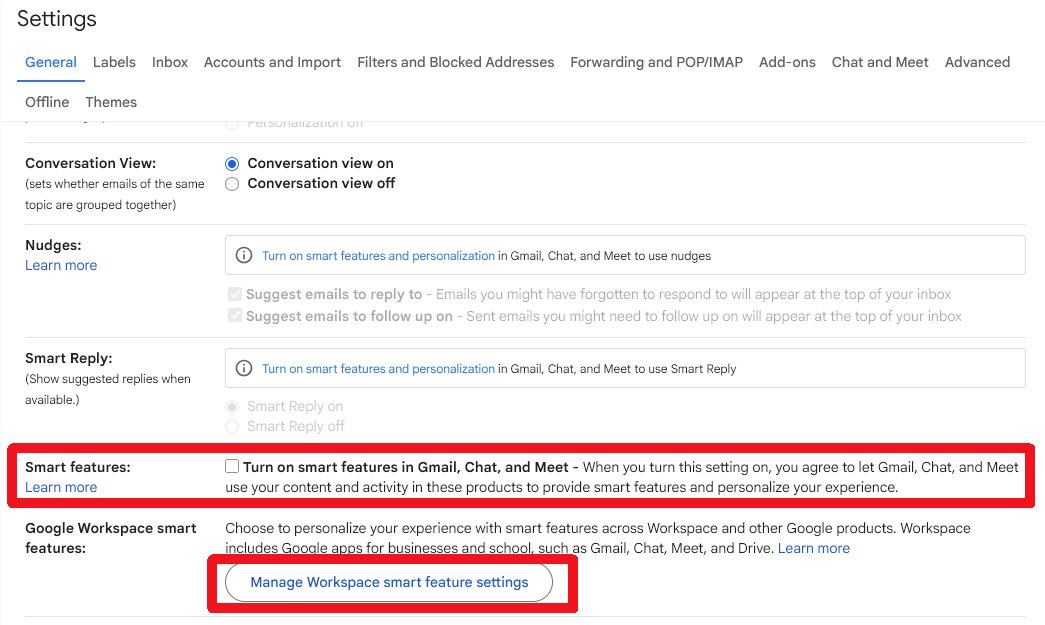
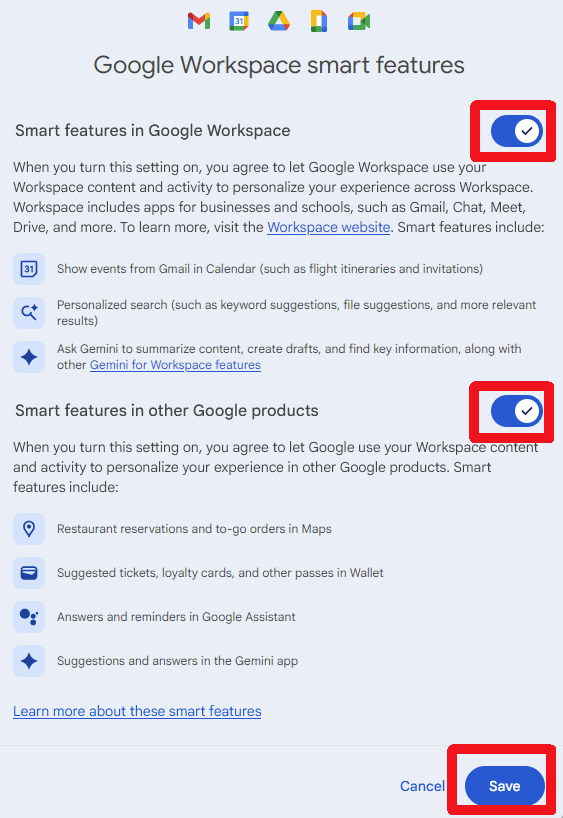
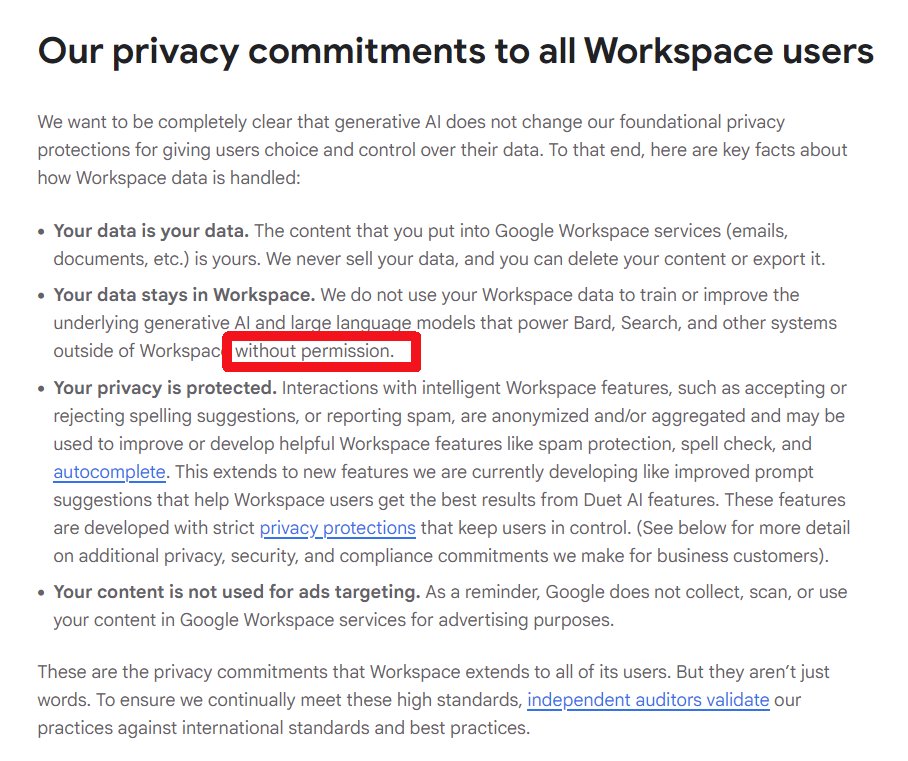
IMPORTANT message for everyone using Gmail. You have been automatically OPTED IN to allow Gmail to access all your private messages & attachments to train AI models. You have to manually turn off Smart Features in the Setting menu in TWO locations. Retweet so every is aware.
Dave Jones tweet mediaDave Jones tweet mediaDave Jones tweet media
English
1.2K
69.4K
159.5K
13.5M
Paul Velonis retweetledi
Andrej Karpathy
Andrej Karpathy@karpathy·
Sharing an interesting recent conversation on AI's impact on the economy. AI has been compared to various historical precedents: electricity, industrial revolution, etc., I think the strongest analogy is that of AI as a new computing paradigm (Software 2.0) because both are fundamentally about the automation of digital information processing. If you were to forecast the impact of computing on the job market in ~1980s, the most predictive feature of a task/job you'd look at is to what extent the algorithm of it is fixed, i.e. are you just mechanically transforming information according to rote, easy to specify rules (e.g. typing, bookkeeping, human calculators, etc.)? Back then, this was the class of programs that the computing capability of that era allowed us to write (by hand, manually). With AI now, we are able to write new programs that we could never hope to write by hand before. We do it by specifying objectives (e.g. classification accuracy, reward functions), and we search the program space via gradient descent to find neural networks that work well against that objective. This is my Software 2.0 blog post from a while ago. In this new programming paradigm then, the new most predictive feature to look at is verifiability. If a task/job is verifiable, then it is optimizable directly or via reinforcement learning, and a neural net can be trained to work extremely well. It's about to what extent an AI can "practice" something. The environment has to be resettable (you can start a new attempt), efficient (a lot attempts can be made), and rewardable (there is some automated process to reward any specific attempt that was made). The more a task/job is verifiable, the more amenable it is to automation in the new programming paradigm. If it is not verifiable, it has to fall out from neural net magic of generalization fingers crossed, or via weaker means like imitation. This is what's driving the "jagged" frontier of progress in LLMs. Tasks that are verifiable progress rapidly, including possibly beyond the ability of top experts (e.g. math, code, amount of time spent watching videos, anything that looks like puzzles with correct answers), while many others lag by comparison (creative, strategic, tasks that combine real-world knowledge, state, context and common sense). Software 1.0 easily automates what you can specify. Software 2.0 easily automates what you can verify.
English
555
1.5K
12.4K
2.1M
Paul Velonis
Paul Velonis@Velona·
It’s getting to “sorry we assume you won’t be home, so pick your package up from the post office” time of the year it seems.
English
0
0
0
20
Paul Velonis retweetledi
Jen Zhu
Jen Zhu@jenzhuscott·
Just a gentle reminder that if OpenAI were to fail, the rest of the players would absorb their talents and move on. There would be 0 impact to the overall progress of AI for the mankind.
English
351
471
8.3K
302.4K
Paul Velonis retweetledi
Leading Report
Leading Report@LeadingReport·
BREAKING: 100-year-old British WWII veteran says the UK of today was not worth the lives lost.
English
420
2.3K
18.6K
3M
Paul Velonis
Paul Velonis@Velona·
I mean it just needs to work one time a year for me. Pretty poor scalability, last year for me.. where is everyone else placing cup wagers these days?
English
0
0
0
24
Paul Velonis retweetledi
Proton
Proton@ProtonPrivacy·
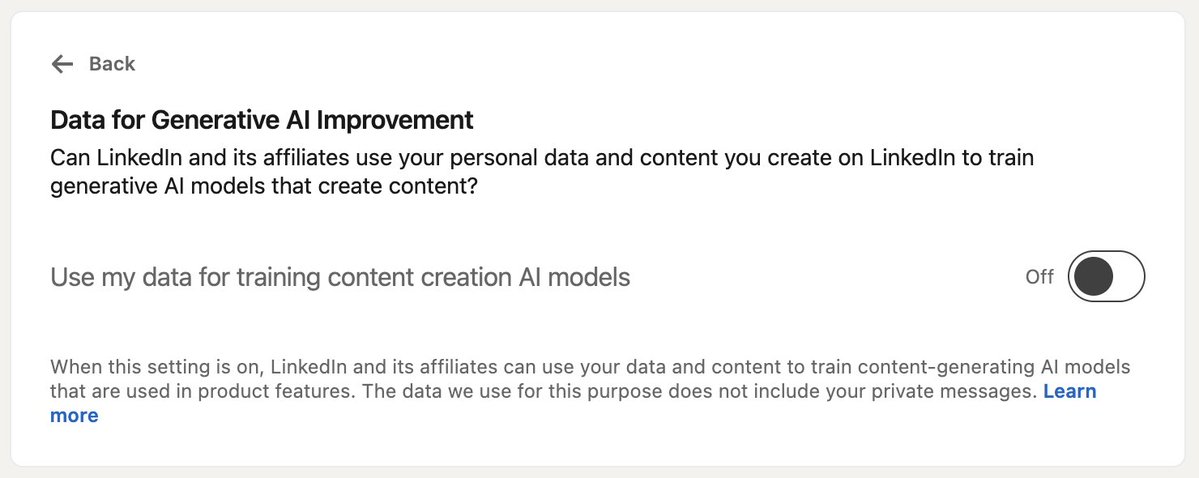
Last chance to turn it off. On Monday, November 3rd, Microsoft will start using your LinkedIn data for AI training. And remember, you're opted in by default. To toggle it off 👉 Account - Settings & Privacy > Data privacy > Data for Generative AI Improvement.
Proton tweet media
English
125
932
2.9K
317.7K
Paul Velonis
Paul Velonis@Velona·
@pmddomingos I think you’ve got this completely backwards. Salesforce will be one of the biggest beneficiaries, probably second to Servicenow.
English
0
0
0
12
Pedro Domingos
Pedro Domingos@pmddomingos·
The first big tech company to be destroyed by AI will be Salesforce.
English
550
354
7.8K
802.7K
Paul Velonis
Paul Velonis@Velona·
“The fundamentals of longevity are whole foods, good sleep, connection and mobility” - Gary Brecka So simple! Bookmark it!
English
1
0
0
27