Paul Overby

11.9K posts

Paul Overby banner
Paul Overby

Paul Overby

@VerdiPlus

Christian, Husband, Farm with wife Diane. Regenerative Farming. Storing carbon. Stewards of our planet.

Wolford, ND 58385 Katılım Aralık 2009
1.3K Takip Edilen1.5K Takipçiler
Paul Overby
Paul Overby@VerdiPlus·
@narj_15 @MaryCKenn Praying for some decent, gentle rains for Nebraska. Looks like it is needed every where
English
0
0
2
152
Tyson Narjes
Tyson Narjes@narj_15·
HRW wheat just may be toast with 80° and 90° days and zero rain chances in the 10 day. Fun, just fun.
Tyson Narjes tweet media
English
17
12
162
39.3K
Gretchen Ronnevik
Gretchen Ronnevik@garonnevik·
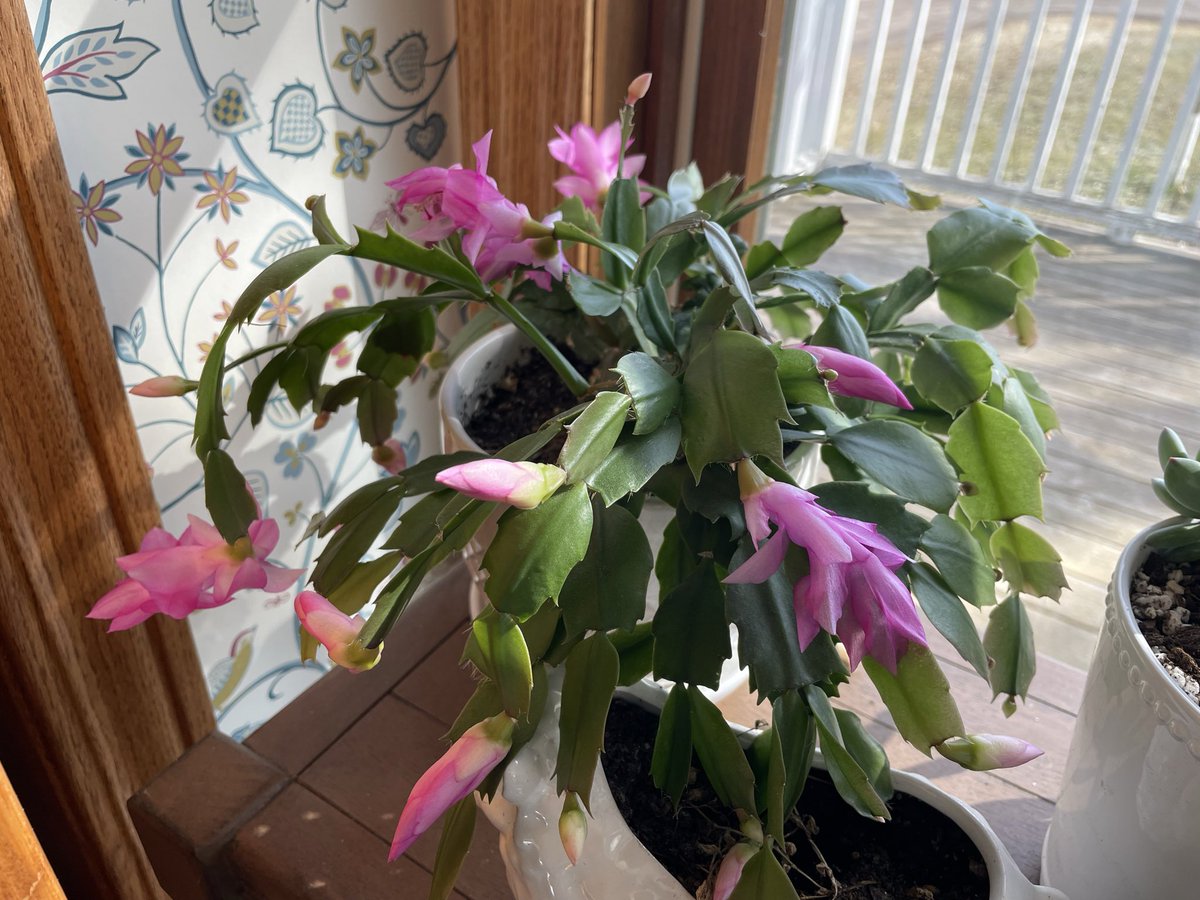
My Thanksgiving cactus is blooming for the 2nd time in a year, and my neighbor said hers is doing the same, and it’s so odd. I know there’s an Easter variety of this plant, but neither of ours has ever bloomed for Easter before. Just Thanksgiving. Typically they only bloom once a year so I dove into figuring out what is up with this bonus bloom cycle and apparently the weather is such that it got really warm and really cold again so dramatically that it triggered the blooming cycle again that happens every fall, and it has just been fed and watered enough that it had the nutrients to do so. Basically, the plant thought those short warmer weeks in February were a Minnesota summer, and was like “Well that was fun. Time to bloom again.”
Gretchen Ronnevik tweet media
English
17
3
186
3.2K
Paul Overby retweetledi
Andrey Sizov
Andrey Sizov@sizov_andre·
Urea rallies. Are phosphates next? Global fertilizer prices have surged since the start of the war. Nitrogen has already moved, up about 30–35% in March. Phosphates are lagging, up only 5–10%. The logic is straightforward. Nitrogen Flows through the Strait of Hormuz have been disrupted, affecting both fertilizers and LNG. Natural gas is the key input for nitrogen production, so the market reacted immediately. Phosphates Prices have moved less so far, but risks are building: Potential supply disruptions from Saudi Arabia More importantly, the sulfur factor still looks underpriced. Sulfur is a critical input for processing phosphate rock into fertilizer. It is also a byproduct of oil and gas processing, directly linking its supply to the energy sector, which is under pressure. A large share of supply is tied to the Gulf: about 30–45% of global sulfur exports come from the region. Phosphate supply is also highly concentrated. Morocco (via OCP) accounts for roughly 30–35% of global DAP/MAP trade, while Saudi Arabia adds another 10–15%. Morocco, the dominant exporter, depends heavily on imported sulfur. Stocks exist, but they are not unlimited. This creates a structural chain: energy → sulfur → phosphates. If disruptions persist, phosphates could start catching up with nitrogen. That is what happened in 2022: in the first half of the year, both nitrogen and phosphates rose by roughly 50% or more. The key constraint is higher price elasticity. Nitrogen translates directly into yields. Phosphates matter more for long-term soil productivity, and applications can be reduced or postponed if needed. #oatt $mos $ntr #iran Front-month Urea [red] and Diammonium phosphate (DAP) [orange] - FOB US Gulf:
Andrey Sizov tweet media
English
4
28
98
11.7K
Paul Overby
Paul Overby@VerdiPlus·
@silvopasturist @SoybeansRus Do you have a link to that Iowa report? We are on a 6-7 year rotation that includes peas, sunflowers, flax, oats which are all relatively low N users. Starting winter camelina, another low N crop, but that one is for fuel
English
2
0
1
34
Drake
Drake@silvopasturist·
@SoybeansRus 😂 why? You guys always want to work so hard. Why not just stop growing commuter fuel and beans for China. Grow a 5-7 year crop rotation made to feed Americans. Iowa State’s long rotation work shows 91% mineral nitrogen reduction. Dump the Asia and commuter allegiance and farm.
English
2
1
32
487
RiverFarmer
RiverFarmer@SoybeansRus·
If you took an average of 92,000 Farmers in the U.S. and each chipped in roughly $135,000 dollars a one time payment we could build Ammonia plant in the U.S. That’s If you scale Blue Point’s cost by capacity, a Donaldsonville-sized ammonia complex 1.4 million metric tons per year that would pencil out around $12.4 billion as a rough modern replacement-cost estimate. 🤷‍♂️
GIF
English
8
2
22
4.8K
Paul Overby retweetledi
Daniel Gross
Daniel Gross@grossdm·
Pretty astonishing. In Texas, between 10:00 am and 4:00 p.m., 80-90% of electricity comes from carbon free sources. And storage is already a significant contributor in the early morning and evening
Daniel Gross tweet media
English
167
748
3.8K
290.1K
Paul Overby retweetledi
Drake
Drake@silvopasturist·
The best time to start a nitrogen fertilizer reducing 5-7 year crop rotation was three rotation cycles ago. The second best time is 1 rotation ago. Now would work too I suppose. If not now, never.
English
2
3
32
1.5K
Paul Overby
Paul Overby@VerdiPlus·
@agronomistag I've tried the purchased jugs. Probably the most interesting concept to me is the promotion of the Korean IMOS systems that use native biology to create an inoculant to apply to the seed. Basically a biome booster similar to a starter fertilizer. Have you seen research on it?
English
3
0
0
139
Andrew McGuire
Andrew McGuire@agronomistag·
Most soil inoculants fail for the same reason: the soil decides who survives. If conditions don’t support the “right” microbes already, why would purchased ones thrive? csanr.wsu.edu/why-soil-inocu…
English
6
6
40
3K
Pamela
Pamela@PamelaBies·
Advice to the younger generation: Skip the degree. Buy land. Become a farmer.
Pamela tweet media
English
1.9K
1.7K
11.9K
11.5M
Paul Overby retweetledi
OSU Small Grains
OSU Small Grains@OSU_smallgrains·
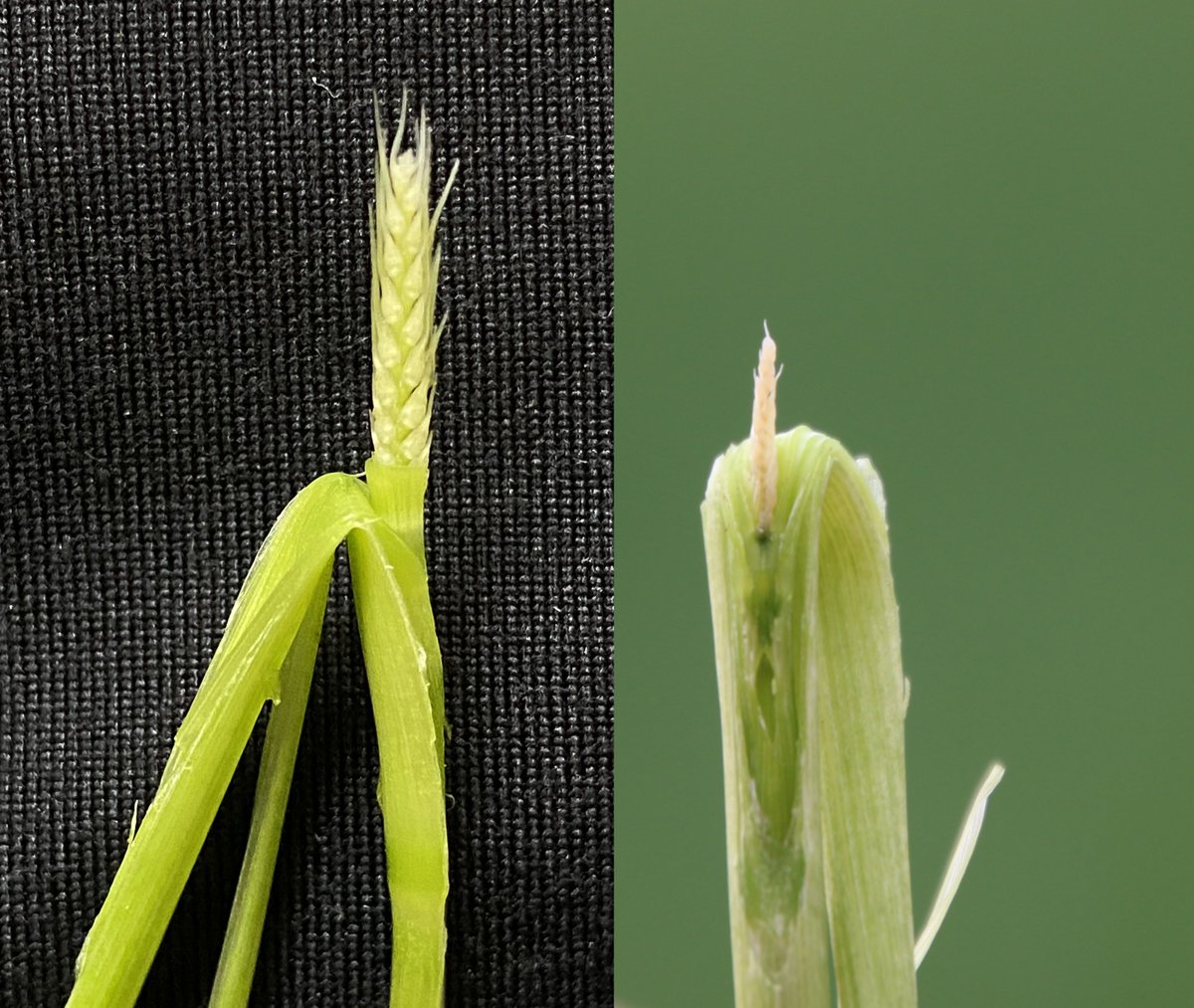
Recent freezing temperatures across Oklahoma may have impacted wheat fields that have reached jointing or later growth stages. Here is what to watch for and how to assess potential freeze injury in the coming days. osuwheat.com/2026/03/16/fre…
OSU Small Grains tweet media
English
2
7
27
3.6K
Paul Overby retweetledi
Matt Fernley
Matt Fernley@matt_fernley·
I think the most dangerous thing that I see in markets currently is this assumption that, as soon as the war ends, commodity production will just switch back on again. It won’t. It can’t. Commodity production is not like a manufacturing plant where you just line up your raw materials, flick a switch and production restarts again. Restarting oil and gas production, for instance, can take several months, depending on the assets. Some simple wells may only take a few days or a few weeks, but offshore fields or LNG facilities can take weeks or months. Delays are caused by the need to repressurise systems, inspect equipment and ensure the safety integrity. Reservoir behaviour can also change during shut-ins, requiring careful ramp-up to avoid damage or flow issues. So, this assumption that fields will just restart production immediately is not realistic. For LNG plants it takes weeks to cool down the cryogenic systems. It's a similar situation in aluminium, as I discussed in previous posts. When you idle an aluminium smelter, the molten aluminium in the pots freezes. It can then take 6 months+ to restart a plant. While not as bad as oil&gas and aluminium, turning a urea plant back on can take 2-3 weeks. It takes 1-2 weeks to restart ammonia plants and then another 7-14 days to restart the urea plant around it. Likely it will take 1-4 weeks to restart the petrochemicals and plastics plants, and the oil refineries will also take a similar amount of time to restart. And those factors don’t even consider that the world’s shipping fleets are now mispositioned and it will take weeks in many cases for those ships to reposition themselves to the right places. So this assumption the market’s making that, as soon as peace breaks out, everything will go back to normal is very dangerous. Supply disruption is into its third week now. Even if the war stopped tomorrow, it would be several months before supply of many of these commodities will be re-established. And that’s simply not being priced into commodity prices or economic expectations, in my view.
Matt Fernley tweet media
English
29
156
503
47.2K
Paul Overby retweetledi
Shanaka Anslem Perera ⚡
Everyone is covering the Hormuz crisis as a list of problems. Energy. Fertiliser. Shipping. Insurance. Each gets its own headline. Each gets its own analyst. Each gets modelled independently. That is exactly why every model is wrong. The crisis is not a list. It is a loop. And the loop is feeding on itself in ways that no linear framework can capture. Follow the chain. Gulf sulfur supply is cut. Nearly half of global seaborne sulfur trade is Gulf-dependent. Without sulfur there is no sulfuric acid. Without sulfuric acid there is no phosphate processing. China sees its own phosphate production threatened and bans exports through August. Global phosphate tightens. Blended fertiliser costs spike. Corn economics collapse relative to soybeans. American farmers shift 1 to 2 million acres away from corn. Corn supply tightens. But the ethanol mandate does not care. The Renewable Fuel Standard requires 15 billion gallons of corn ethanol annually, consuming roughly 43 percent of the US corn crop regardless of price. Ethanol demand is inelastic. Corn gets squeezed from both the supply side and the demand side simultaneously. Corn prices rise. Feed costs rise. The protein cascade flips. US cattle herd sits at 86.2 million head, a 75-year low. Poultry and pork were benefiting from cheap feed. That reverses when corn crosses $5 per bushel. The entire animal protein complex margin-compresses. Meat prices rise. Food import bills for developing nations swell. Egypt, already facing $29 billion in external debt repayments, cannot absorb it. Pakistan, where debt service consumes a devastating share of tax revenue, cannot absorb it. Sub-Saharan Africa’s $90 billion 2026 debt wall leaves zero fiscal space. Sovereign stress worsens. The fiscal capacity for fertiliser subsidies erodes. Application rates fall further. Yields drop further. Grain markets tighten further. Import bills rise further. The loop closes. And starts again. Tighter each cycle. Now layer the channels nobody is modelling. Iran struck a desalination plant in Bahrain on March 8. Kuwait depends on desalination for 90 percent of its drinking water. The Gulf holds 42 percent of global desalination capacity, co-generated with power infrastructure under active bombardment. Australia imports virtually all its urea, two-thirds from the Gulf. Its entire heavy freight network runs on AdBlue, which is 32.5 percent high-purity urea. No urea, no AdBlue, no freight movement, no groceries delivered. A Gulf drone dictates whether Sydney supermarkets stock shelves. Southeast Asian aquaculture, 68 percent of the world’s farmed fish, depends on soybean meal for the majority of feed costs. Soy is repricing as corn-to-soy acreage shifts alter the entire oilseed complex. US cotton acres declining 3.2 percent to 9.0 million. Bangladesh imports over 95 percent of raw cotton and faces simultaneous synthetic disruption from the same petrochemical shutdown. The garment sector generating 85 percent of export earnings is being hit from three directions. And underneath all of it: PE, PP, PET, aluminium, tinplate, glass. All rising simultaneously. Adding several percentage points to retail food prices through a channel no farm futures contract tracks. The Fed meets tomorrow with core PCE at 3.0 to 3.1 percent and GDP growth deteriorating. Markets price at most one rate cut in December. The central bank that is supposed to stabilise prices is watching fourteen transmission channels reprice simultaneously through a single chokepoint it has no tool to reopen. This is not fourteen separate crises. It is one system consuming itself. Full analysis: open.substack.com/pub/shanakaans…
Shanaka Anslem Perera ⚡ tweet media
English
32
255
640
89.6K
Paul Overby
Paul Overby@VerdiPlus·
@JoelSchneekloth @cbfarms_bogert @agronomistag It would be interesting to know your moisture losses in this region due to evaporation vs. from crop uptake. I realize that warm, dry winds in your area are different than north central ND.
English
1
0
0
10
Paul Overby
Paul Overby@VerdiPlus·
@dougerickstad @schrieferranch 30 years ago I said to my dad that I was "farming with antique farm machinery." It was machinery I had bought from him and was 15-20 years old at the time. And now my equipment is pushing 30 years old. But the quality IS a lot better. He gets the last laugh!
English
0
0
0
10
Paul Overby
Paul Overby@VerdiPlus·
@JoelSchneekloth @agronomistag So far we have been doing mostly fall covers with some in-season interseeding. These are all relatively low rates of seed. I try to keep seed costs under $20/acre. Not seeing a yield drag and slowly building soil moisture.
English
1
0
0
18
Joel Schneekloth
Joel Schneekloth@JoelSchneekloth·
@VerdiPlus @agronomistag Tried cover crops for 4 years. Spring covers terminated by early June for crop insurance. No till since early 90's. Worst result was a 25% yield reduction and the best was 10% reduction in the wheat crop with the cover crop vs fallow.
English
2
0
1
25
Paul Overby retweetledi
Farm Action
Farm Action@FarmActionUS·
“Four grocers control 85% of the grocery market.” “Four meatpackers control 85% of meatpacking.” “Two seed companies control 90% of the seed genetics in farming.” “Three big [companies] control 85% of the inputs.” “We’ve allowed the consolidation of just about every industry to the detriment of the consumer.” Regenerative farmer Zach Lahn is calling for strong and swift antitrust action to break up Big Ag monopolies. “Community values, according to our ancestors and according to our Founders, were more important than shareholder value.” “Thomas Jefferson actually said in the early 1800s, right after they founded the country… I hope we kill in its infancy the aristocracy of our moneyed corporations who are already challenging us to a battle of wills.” “And in the 80s, we really took our eye off the ball.” “Now, we’re facing the repercussions of that.” @ZachLahn @leah_wilson
English
184
2.9K
5.9K
72.2K
Nick Horob
Nick Horob@NickHorob·
An ironic and true story of why you should document your processes. I'm on a vacation in Turks and Caicos, staying at Beaches Resort. Sat down for lunch today and got a big plate of fruit. After eating most of it, I took a bite of a piece of watermelon and all of a sudden I tried clearing my throat and realized the piece of watermelon was stuck. I tried coughing it up for a few seconds and I walked away from the table and hacked a little harder. I then realized, "Oh shit, I'm choking on this thing and can’t breathe." Some woman looks over at me realizes that I’m choking and freaks out. So a bunch of workers ran over and it's a chaotic few seconds before my wife gives me some version of Heimlich that gets that little piece of shit out of my throat. After 30-40 seconds of panic, all was well. Other than a bit of embarrassment. So be careful when you're on vacation. It could be the cartel, robbery, or a piece of watermelon. Regardless, document your processes, so they don’t live in your head until the “end”! (True story 🤦‍♂️)
Nick Horob@NickHorob

One of the best decisions I made at Harvest Profit was taking the time to thoroughly document a few of the processes that I was handling that weren't add much value to the business. This ensured that they were done correctly, and I could hand them off others. I put together a free guide on how you can use AI to create SOPs for your farm or ranch (or any business). This isn't meant to tell you exactly how to get operations done in your farm, but it's meant to be a guide for how you can use these tools to simplify the creation process. fullstack.ag/free/farm-sops
English
2
0
27
13K
Paul Overby retweetledi
Shanaka Anslem Perera ⚡
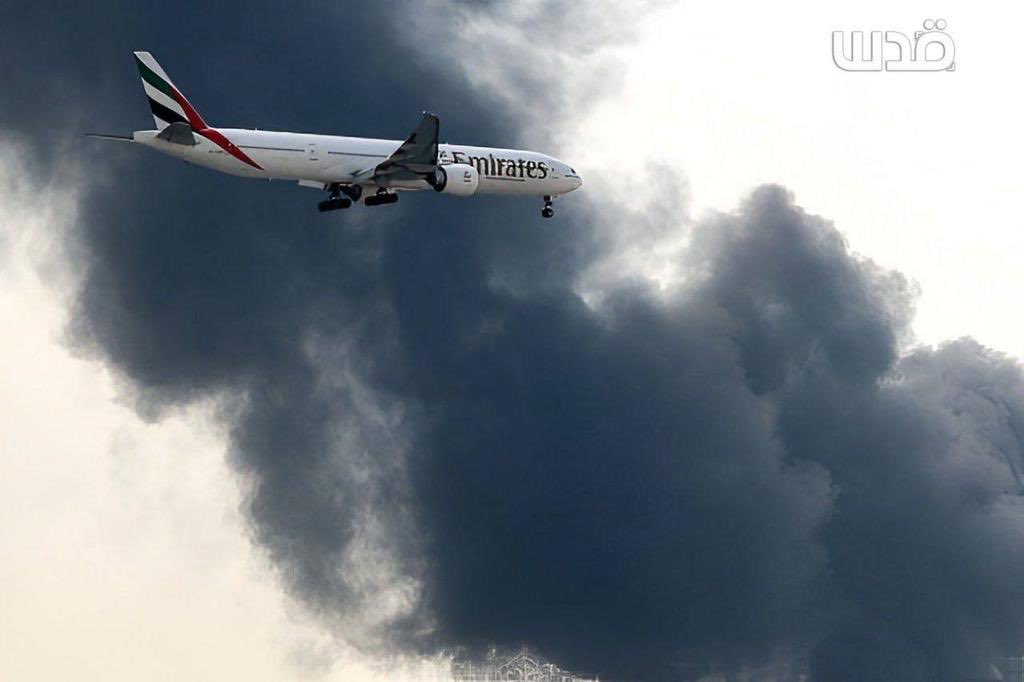
The UAE just closed its entire airspace. Not a runway. Not a terminal. The country’s airspace. All of it. The General Civil Aviation Authority called it an “exceptional precautionary measure” after UAE air defences engaged six Iranian ballistic missiles and 21 drones in a single day. A drone hit a fuel tank at Dubai International Airport yesterday. The busiest international aviation hub on Earth. Smoke across the city. Flights suspended. And now Emirates, Qatar Airways, Lufthansa, Air India, British Airways, United, Pegasus, Virgin Atlantic, IndiGo, and Wizz Air have all cancelled, suspended, or severely restricted routes to and from Dubai. Over 23,000 flights cancelled across the Middle East since late February. The reason most of these airlines are grounding routes is not the missiles themselves. It is the same force that closed the Strait of Hormuz to fertilizer vessels three weeks ago. Insurance. War-risk aviation premiums have repriced on the same actuarial logic as marine war risk. Solvency II capital buffers, already depleted by 26 months of Red Sea losses, cannot absorb correlated risk across both sea and air simultaneously. When insurers cannot underwrite the route, the route does not fly. When the route does not fly, the cargo does not move. When the cargo does not move, the supply chain fractures at a second altitude. The crisis just went three-dimensional. Hormuz closed the sea lanes. One-third of global seaborne fertilizer trade trapped. Twenty-three fertilizer vessels stranded in Gulf ports. Premiums surged from 0.25 percent to as high as 3 percent of hull value per transit. The $20 billion DFC sovereign reinsurance facility has zero confirmed fertilizer vessel utilization. Now the airspace is closing. Dubai is not just a passenger hub. It is a critical node for air cargo: pharmaceuticals, high-value agricultural inputs, electronics, spare parts for the logistics networks that move food from port to warehouse to shelf. Emirates SkyCargo alone handles over 2 million tonnes of freight annually. That capacity is now intermittent at best, suspended at worst, and repricing at rates that make marginal routes uneconomic. Iran did not need to build an air force that could challenge American fighters. It needed drones cheap enough to launch by the dozen and missiles numerous enough to force a sovereign nation to close its own skies. The cost asymmetry is staggering. A $10,000 drone forces the cancellation of commercial flights worth millions in revenue and cargo value. The actuarial mathematics do the rest. Insurers calculate. Airlines ground. Supply chains fracture. And the molecules that feed four billion people remain trapped behind a chokepoint that is no longer just a strait. It is an entire region rendered commercially uninsurable by sea and by air simultaneously. The coalition that was supposed to fix this does not exist. Germany refused. Japan declined. Australia declined. The US Navy is not yet ready for sea escorts, let alone providing the integrated air defence umbrella that would allow commercial aviation to normalize across Gulf airspace. Every hour the airspace stays closed compounds the sea closure. Pharmaceutical supplies to India deplete faster. Emergency food shipments to Egypt route longer. Agricultural input deliveries that might have moved by air cargo as a workaround for the sea blockade now have no workaround at all. The same formula closed the sea. The same formula is closing the sky. And between them, the spring planting calendar keeps counting down toward deadlines that neither actuaries nor air defences can extend. Full analysis: open.substack.com/pub/shanakaans…
Shanaka Anslem Perera ⚡ tweet media
Shanaka Anslem Perera ⚡@shanaka86

A drone struck a fuel tank at Dubai International Airport. The world’s busiest international hub. Flights temporarily suspended. Smoke visible across the city per live footage. ADNOC, the UAE’s national oil company, has shut in more than 50 percent of crude output. Fujairah loading halted. This is no longer a crisis contained to a 21-mile strait. Proxy forces attributed to Iranian-backed groups are now striking civilian energy and aviation infrastructure in a Gulf state that is not a direct belligerent in this conflict. The UAE did not conduct strikes in Operation Epic Fury. Yet it hosts Fertiglobe, one of the largest nitrogen fertilizer operations in the region at 6.6 million tonnes of annual capacity, whose entire export volume is now trapped behind a strait that is mined, uninsured, and unescorted. The ADNOC shut-ins are not the result of direct hits on oil facilities. They are the result of a Hormuz transit collapse so total that production without export capacity becomes a liability. When you cannot ship it, you stop pumping it. This is the escalation path that markets have not priced. The consensus assumption is that the Hormuz crisis is a transit problem. Reopen the strait, restart the flow. But what happens when the conflict expands beyond the chokepoint itself and begins striking the energy infrastructure of the Gulf states that sit behind it? The transit problem becomes a confidence problem. Even if the strait reopened tomorrow, would commercial operators trust that the facilities loading their cargo are safe from the next drone? Would insurers underwrite a vessel loading at Fujairah when a fuel tank at Dubai airport was struck this morning? Tehran does not need to match American airpower. What Iranian-backed forces are demonstrating is that asymmetric pressure on Gulf civilian infrastructure accomplishes three objectives simultaneously. It raises the cost of Gulf states hosting American operations. It undermines commercial confidence in the production and loading infrastructure that would restart exports. And it stretches US defensive resources across yet another front, from Baghdad embassies to Gulf fuel depots, further delaying the Hormuz escorts that remain the only pathway to restoring fertilizer flows. The US military is now defending personnel and facilities across Iraq, partner infrastructure in the Gulf, and its own carrier groups in the Arabian Sea. All while trying to assemble a multinational escort coalition that Germany formally refused today, Japan previously declined, and Australia has not joined. Washington is shouldering this burden largely alone against an adversary executing a multi-front resource-denial strategy with disciplined patience. Meanwhile the fertilizer arithmetic grows worse by the hour. One-third of global seaborne fertilizer trade passes through Hormuz per UNCTAD. Transit down 97 percent. Nearly 49 percent of traded urea tied to conflict-exposed Gulf exporters. Bangladesh has shut four to five of its six major urea factories. India is running plants at 60 percent capacity and has formally asked China for emergency urea. China has banned phosphate exports through August. Egypt faces $28 billion in debt repayments while feeding 69 million people on bread subsidies hemorrhaging at prices nobody budgeted. 318 million were at crisis-level hunger before February 28. The Corn Belt needs nitrogen by mid-April. India needs Kharif prep by May. Australia needs urea by June. Every drone that hits Gulf infrastructure is not just an act of aggression against a sovereign state. It is an extension of the same siege that is strangling the food system sustaining four billion people. The planting calendar does not distinguish between a blocked strait and a burning fuel depot. Both produce the same outcome: molecules that do not arrive in time. The window is not just closing because the strait is blocked. It is closing because the crisis is expanding beyond it. open.substack.com/pub/shanakaans…


English
57
566
1.3K
362.2K