Video Shop Conspiracies retweetledi
Video Shop Conspiracies
728 posts

Video Shop Conspiracies
@VideoShopGuys
Movie & culture review show from deathfab art and entertainment
Katılım Ağustos 2023
671 Takip Edilen63 Takipçiler
Video Shop Conspiracies retweetledi
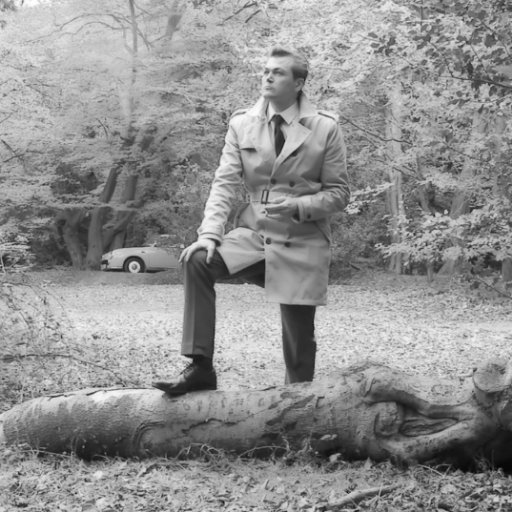
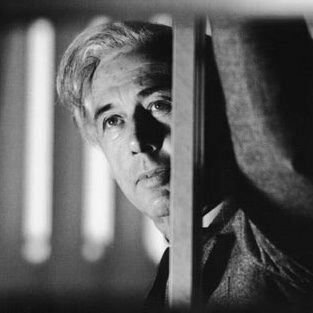
Jean-Luc Godard on Alfred Hitchcock's "The Man Who Knew Too Much" (1956):
"This film by a supposedly misogynous director has as its sole mainspring— assuming one resolutely rejects metaphysics—feminine intuition. It is, like his preceding films, without self-indulgence, but the better displays its moments of grace and liberty.
Sometimes, like the little boy held prisoner in the embassy who hears his mother’s voice as she sings in the salon, we are touched in the work of this caustic and brilliant man by a grace which may only come to us in snatches from afar, but which minds more immediately lyrical are incapable of dispensing with such delicacy.
Let us love Hitchcock when, weary of passing simply for a master of taut style, he takes us the longest way around"
("Godard on Godard", 1972)
P.S: On this day, 70 years ago, "The Man Who Knew Too Much" (1956) premiered at the Cannes Film Festival, France.
English
Video Shop Conspiracies retweetledi

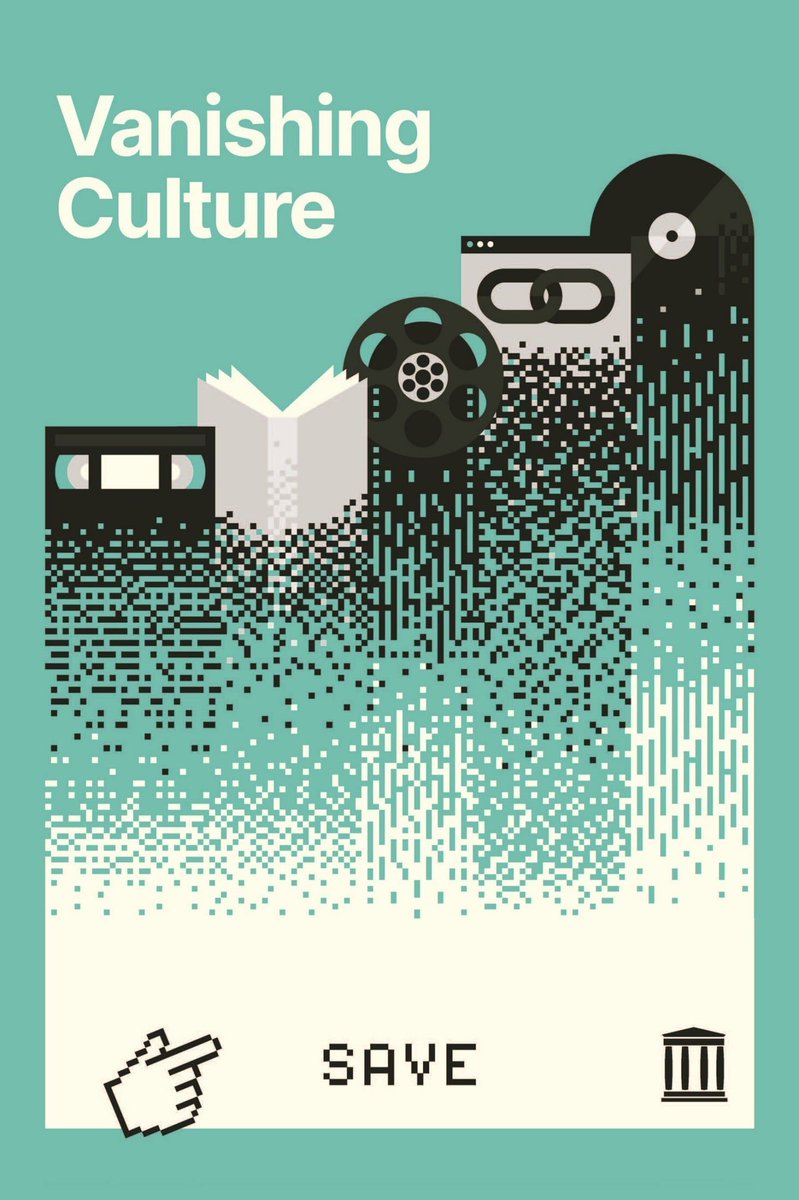
🧵 VANISHING CULTURE is out now 📚
We tend to think the internet is permanent, but this book starts with a simple reality: our digital record is far more fragile than we think 🕳️
📖 Download & read: archive.org/details/vanish…
🛒 Purchase in print: betterworldbooks.com/product/detail…
#VanishingCulture #DigitalMemory #InternetArchive

English
Video Shop Conspiracies retweetledi

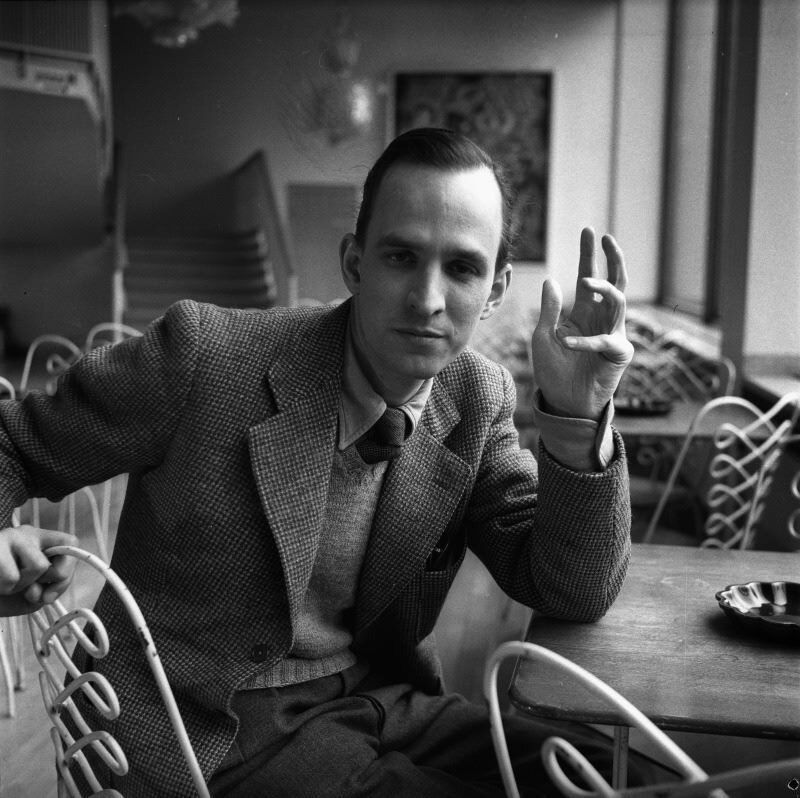
“I usually take a walk after breakfast, write for three hours, have lunch and read in the afternoon. Demons don’t like fresh air – they prefer it if you stay in bed with cold feet; for a person who is as chaotic as me, who struggles to be in control, it is an absolute necessity to follow these rules and routines.”
- Ingmar Bergman

English
Video Shop Conspiracies retweetledi

This one will require a stiff drink.
In the early 1990s, the government came up with a clever idea. Instead of borrowing money cheaply to build hospitals, schools, and roads, it would get the private sector to build them and then pay the private sector back over 25 to 30 years. The Private Finance Initiative. PFI.
The attraction was obvious. You got a shiny new hospital today. The bill didn't show up on the government's books. The cost was deferred into the future. Politicians got ribbon-cutting ceremonies without the awkward conversation about borrowing.
It was, in effect, the nation's credit card. Buy now, pay later. Except the interest rate was extraordinary.
The total capital value of everything built under PFI was around £50 billion. As of March 2024, there were 665 PFI contracts still running across the UK, with roughly £136 billion in remaining payments stretching out to the early 2050s. These are payments public bodies are contractually locked into. Hospitals, schools, councils, government departments. Paying for buildings that in many cases were constructed twenty or thirty years ago.
And the terms are extraordinary.
PFI contracts were structured so the private sector would not just build the facility but manage its services. Cleaning. Maintenance. Catering. Portering. These services are bundled into long-term contracts with built-in inflation increases that the public sector cannot renegotiate, cannot exit without paying massive penalties, and often cannot even fully scrutinise because of commercial confidentiality clauses.
In one case raised in Parliament, a hospital was charged £333 to change a lightbulb. That isn't an urban myth. It was cited in Hansard.
The NHS has been hit hardest.
According to parliamentary analysis, the capital cost of NHS PFI projects was around £13 billion. The total repayments are estimated at around £80 billion. And the peak of NHS PFI annual repayments isn't even here yet. It arrives in 2029. The bills are still going up.
In 2020-21, NHS trusts paid £457 million purely in interest charges on PFI contracts. Not services. Not maintenance. Interest. In the last five years, NHS trusts have handed over more than £1.8 billion in PFI interest alone. We Own It calculates that money would have covered the starting salaries of over 50,000 new doctors.
One NHS trust, Essex Partnership, has reportedly paid back 27 times what was originally borrowed. Some hospitals are spending more on PFI repayments than on medicines for patients. And remember, these repayments come out of the same NHS budget that's supposed to fund patient care, staff, and equipment.
Scotland got it just as badly. Audit Scotland reported that Scottish taxpayers will pay a cumulative £40 billion for PFI assets worth just £9 billion. North Ayrshire Council will have paid £440 million by 2038 for four schools that cost £83 million to build.
Now here's what makes this worse.
Many of these contracts are starting to expire. The buildings are being handed back to the public sector. And the NAO has warned of significant risks around the handback process, including cases where public bodies were dissatisfied with the condition of assets being returned to them. Decades of payments. And some of these buildings may come back needing significant further investment.
So what actually happened?
The government could have borrowed money at significantly lower rates to build these hospitals and schools itself. Sovereign borrowing has always been cheaper than private finance. Instead, it paid the private sector to borrow at a premium and passed the inflated cost on to the taxpayer. The private sector took the profit. The taxpayer took the risk. The buildings are now ageing. The debts are still being paid. And the services that were supposed to benefit are being squeezed partly because so much of their budget is locked into contractual obligations they cannot escape.
PFI wasn't investment. It was an accounting trick. A way for governments to build things without the borrowing showing up in the national debt figures. It made politicians look fiscally responsible while loading future generations with obligations they had no say in and no ability to renegotiate.
Both parties did this. The Conservatives created PFI in 1992. Labour massively expanded it after 1997. More than 700 projects were signed. The coalition eventually wound it down. The current government scrapped the latest version. But the contracts remain. The payments continue. And the damage is already done.
This is what it looks like when a country chooses to buy its infrastructure on hire purchase instead of investing properly. You lock in above-market rates for decades. You lose control of the assets. You tie the hands of future governments. And when the bill keeps coming due, you're told there's no money for doctors, teachers, or social care.
There was always money. It just went somewhere else.
English

@TheDefiantGhost It's possibly not at odds with simulation theory. The cult in this scenario would be the simulation runners, games masters
English

In 2021, David Icke laid out the reptilian/non-human force in a sharp interview clip with Anthony Rogers.
He explained that the same research proving so many other truths correct also led him to one conclusion:
“Behind all this is a non-human force. One of its expressions is a reptilian form… but there are others. And ultimately it’s a very distorted, inverted state of consciousness which is behind all this.”
“This global cult… when we see expressions of this global cult in your Bill Gates’s and your George Soros’s and all these people and your Anthony Fauci’s, what you see is a perceptual mentality expression of this other force, this non-human force.”
“Because this network of secret societies and satanic groups that form this global cult, they are expressions in our reality of this force. Their job is to impose the will of this force on human society.”
The agenda of relentless power centralization “has been running for thousands of years at least” across empires - Babylon, Egypt, Rome, and beyond.
The reason most people can’t see it?
“We are only seeing a narrow band of frequency… visible light… is just 0.05% of reality. So we are seeing next to nothing. We are basically blind.”
Was this just wild theory or something far more revealing?
English
Video Shop Conspiracies retweetledi

The world at 2am looks more beautiful because, to your brain, it is. After midnight, the part of your brain that filters your emotions starts shutting down. The part that feels everything gets 60% louder.
UC Berkeley's sleep lab ran brain scans on people after a full night's rest, then again after keeping them up all night. The emotion center of the brain fired 60% harder when they were sleep-deprived. But the logical, filtering part, the region that normally keeps a leash on how much you feel, had gone quiet. The connection between the two had weakened. Your brain at 2am is processing the world with the emotional volume cranked and nobody at the controls.
A follow-up from the same lab found that pleasure and reward circuits fire harder under sleep loss too. Music lands differently, colors look sharper, and a random breeze at 3am can feel like something worth remembering. Every emotion gets louder at night. Sadness, yes, but also joy and nostalgia, the pull of an old song at low volume. Your emotional system is running wide open.
Late at night, your brain also changes how it connects ideas. During the day, it's constantly responding to input, texts, emails, conversations, an endless stream that never lets your mind wander. After midnight, that stream dries up, and a part of your brain that only turns on when you daydream comes online. It starts linking ideas your focused, daytime brain would never put together.
Researchers at two universities tested 428 students on creative problems at their best and worst times of day. Students were consistently better at the "aha" type problems, the ones needing a sudden flash to crack, during their off-peak hours. In one set of tests, success rates roughly doubled. Morning people scored higher at night, and night owls scored higher in the morning. The mental sharpness that helps you focus during the day is the same thing that blocks creative leaps when it fades.
A team in Paris pushed this further in 2021. They found that the first 15 seconds of drifting off, that twilight zone right between awake and asleep, tripled the odds of cracking a creative problem. 83% of people in that state figured it out, compared to just 30% of those who stayed fully awake. Edison knew this, which is why he used to nap in a chair holding steel balls. They'd clang on the floor and wake him right at that edge before he slipped into deeper sleep.
Cortisol, the stress hormone, drops to its lowest point between midnight and 4am. So stress is quiet, emotions are running hot, and your mind is wandering freely. That combination makes a Tuesday night at your window feel like a scene from a film. But doing this regularly shrinks the filtering part of your brain, chips away at memory, and kills the creativity that made those hours feel alive in the first place. You're borrowing from tomorrow to fund tonight. And your brain charges interest.
mafy@mafyfy25
Tentando regular o sono, mas entre 00h e 05h o mundo parece mais bonito e eu não sei abrir mão disso
English
Video Shop Conspiracies retweetledi

James Cameron is the mind behind the movie The Terminator. He says what’s taking place with AI is scarier than his movie script
“AGI will not emerge from a government funded program. It will emerge from one of the tech giants currently funding this multi-billion dollar research, so then you'll be living in a world that you didn't agree to, didn't vote for that you are co-inhabiting with a super intelligent alien species that answers to the goals and rules of a corporation.
An entity which has access to the comms beliefs, everything you ever said, and the whereabouts of every person in the country via your personal data.
Surveillance capitalism can toggle pretty quickly into digital totalitarianism. At best, these tech giants become the self-appointed arbiters of human good, which is the fox guarding the hen house. They would never, ever think of using that power against us and strip mining us for our last drop of cash.
That's a scarier scenario than what I presented in the Terminator 40 years ago. If for no other reason, then it's no longer science fiction.”
English
Video Shop Conspiracies retweetledi

Eyes Wide Shut camera man told Professor Simon that the theatrical release of the film was NOTHING like the film he shot. He worked with Kubrick for 4 years and NONE of that footage is in the final draft.
This is one of many insider stories that seem to confirm the original film was actually about an elite pedo ring. The studio and Kubrick allegedly fought over the film after having seen an edit.
Kubrick died before the film was released and the studio reedited it significantly before the premier.
English
Video Shop Conspiracies retweetledi

The best 20 minutes you’ll spend today.
David Lynch on living more by doing less. x.com/thebeautyofsaa…
English
Video Shop Conspiracies retweetledi

John Cassavetes on the decline of the American Dream & the reason why he made 'Faces' (1968):
"In the last couple of decades or so, something has happened to the American dream. I don’t quite know what it is, and it’s still not very clear in my mind. Confusion has replaced Patriotism. The intellect has replaced love. America has changed. Look everywhere.
It’s all about money. If something doesn’t make money, no one is interested. Every thing is for sale. Emotions are sold. Sex is sold. Everything is sex. Cars, women, clothes, your face, your hands, your shoes! Look at the ads, at television. My emotions aren’t for sale. My thoughts can’t be bought. They’re mine. I don’t want movies that sell me something. I don’t want to be told how to feel.
I wrote 'Faces' (1968) out of a lot of anger and dismay with society. I was really angry at our age and especially at those adults who without thinking go to discotheques, without thinking join into anything that is fashionable and without any understanding.
I wanted to show the inability of people to communicate; what small things will do to people; how people can’t handle certain things that they hear and read in news papers, see in films; and how, when they are not prepared to think with their own minds and to feel, how all this can become tragic circumstances.
Old ladies trying to be young, shaking their fat asses. Men trying to be sexually attractive. All these old people acting like kids. People are afraid to be themselves, until they become other people, and they can never become themselves again. The change that overcomes all of us is so subtle it’s frightening. There’s where the frustration is: we never see where and how we started; how we got so mechanical; or what to do about it. You beat your brains out trying to find some way that you can encompass what people are feeling rather than what they are led to think.
The result was a barrage of attacks on contemporary middle-class America, an expression of horror at our society in general, focusing on a married couple – old-fashioned in nature, safe in their suburban home, narrow in their thinking.
The script gives them new situations to cope with, takes them out of their house, releases them from the conformity of their existence, forces them into a different context when all barriers are down."
('Cassavetes on Cassavetes', edited by Ray Carney, 2001)
P.S: On this day, 58 years ago, 'Faces' (1968) premiered in Montreal, Canada.
English