

Xin Wen
169 posts



Xin Wen retweetledi

💡 𝐍𝐚𝐧𝐨𝐂𝐮𝐫𝐢𝐨𝐬𝐢𝐭𝐢𝐞𝐬 Series: Wonder how #lightnings form?
🧊 @GustauCatalan & Dr Xin Wen reveal that bending #ice can generate electricity through #flexoelectricity, a property of some materials that could explain lightning in storms!
▶️ Curious? More in the video!
English
Xin Wen retweetledi
📢 Sortim a TV3!
En un estudi liderat per Gustau Catalán i Xin Wen s'ha vist que el #gel amb #sal augmenta fins a 1000 vegades la seva capacitat de generar #electricitat en doblegar-se.
▶️ Possibles aplicacions? 👉 f.mtr.cool/tdwfcipfbq
📰 Article 👉 f.mtr.cool/hmnvwgptze


Català
English


Scientists just discovered that twisting ice literally creates energy.
Ice may look cold and quiet—but under pressure, it comes alive electrically.
A new study in Nature Physics reveals that when ice is bent, twisted, or stretched, it generates an electric charge through a process called flexoelectricity. Unlike piezoelectricity, which requires special crystal structures, flexoelectricity occurs in all insulators—meaning even ordinary ice can do it.
Researchers from Spain, China, and the U.S. found that ice’s electrical behavior not only responds to mechanical stress but also changes with temperature in unexpected ways. At ultra-cold conditions, they observed the formation of a ferroelectric surface layer, capable of flipping its polarity like a magnet.
This discovery reshapes our understanding of ice, which has long been considered a passive material. “This paper changes how we view ice,” said lead author Xin Wen, “from a passive material to an active one.” Beyond deepening our knowledge of natural phenomena—like how lightning charges form in storm clouds—it opens up the possibility of ice-based electronics in extreme environments. From flexible sensors to energy-harvesting materials, this once-humble substance might soon play a surprising role in future technologies.
Source: Wen, X., et al. (2025). Flexoelectricity and surface ferroelectricity in ice. Nature Physics.

English
@Akitti Great idea. We have another paper later this year showing that doping salt into ice enhances the flexoelectricity by three orders of magnitude.
Links to download these two papers👇
rdcu.be/eCFRV
rdcu.be/eGtyN
English

@ShiningScience Thanks for showcasing our research! In addition to this work you mentioned, we have another paper showing that doping salt into ice enhances the flexoelectricity by three orders of magnitude.
Links to download these two papers👇
rdcu.be/eCFRV
rdcu.be/eGtyN
English
@Rainmaker1973 Thanks for showcasing our research! In addition to this work you mentioned, we have another paper showing that doping salt into ice enhances the flexoelectricity by three orders of magnitude.
Links to download these two papers👇
rdcu.be/eCFRV
rdcu.be/eGtyN
English

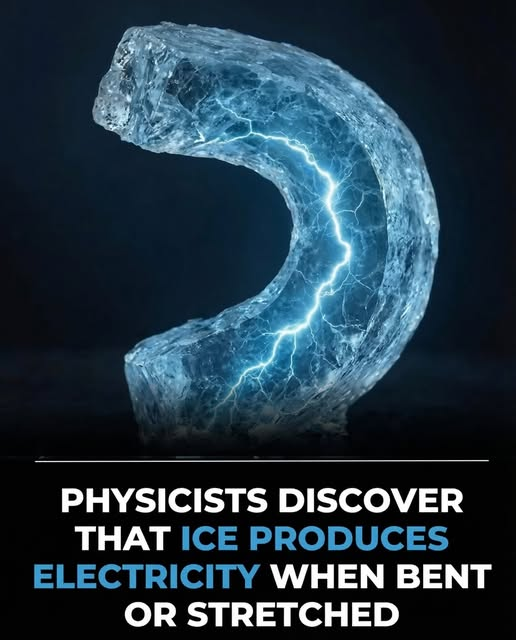
Scientists just discovered that twisting ice literally creates energy.
Though ice appears inert and non-conductive, a recent breakthrough reveals it harbors surprising electromechanical properties.
Published in Nature Physics, an international collaboration involving researchers from Spain (ICN2), China (Xi'an Jiaotong University), and the United States (Stony Brook University) has experimentally confirmed that ordinary hexagonal ice (Ih) exhibits flexoelectricity—generating an electric charge when subjected to uneven mechanical stress, such as bending, twisting, or stretching.
Unlike piezoelectricity, which depends on specific non-centrosymmetric crystal structures and produces charge under uniform pressure, flexoelectricity arises from strain gradients and can occur in any dielectric material, including ice. The measured flexoelectric coefficient is comparable to that of common ceramics like TiO₂ or SrTiO₃.
Additionally, at temperatures below approximately 160 K (-113°C), the experiments uncovered a thin ferroelectric "skin layer" on the ice surface, where spontaneous polarization emerges and can be reversed by an applied electric field—akin to flipping magnetic poles.
Lead researcher Dr. Xin Wen noted that this dual capability means ice can generate electricity in two ways: through flexoelectricity across a wide temperature range up to 0°C, and via surface ferroelectricity in ultra-cold conditions.
These findings challenge the traditional view of ice as electrically passive and may explain charge separation in thunderstorm ice-graupel collisions, contributing to lightning formation. Looking ahead, the properties could enable low-cost, in-situ transducers, flexible sensors, or energy harvesters in polar or extraterrestrial environments.
[Wen, X. et al., "Flexoelectricity and surface ferroelectricity of water ice", Nature Physics (2025). DOI: 10.1038/s41567-025-02995-6]
English
@CRISPRKING Thank you for the question. Our second paper show that doping salt increase the flexoelectric coefficient of ice by three orders of magnitude.
Access to download the article👇
rdcu.be/eGtyN
English

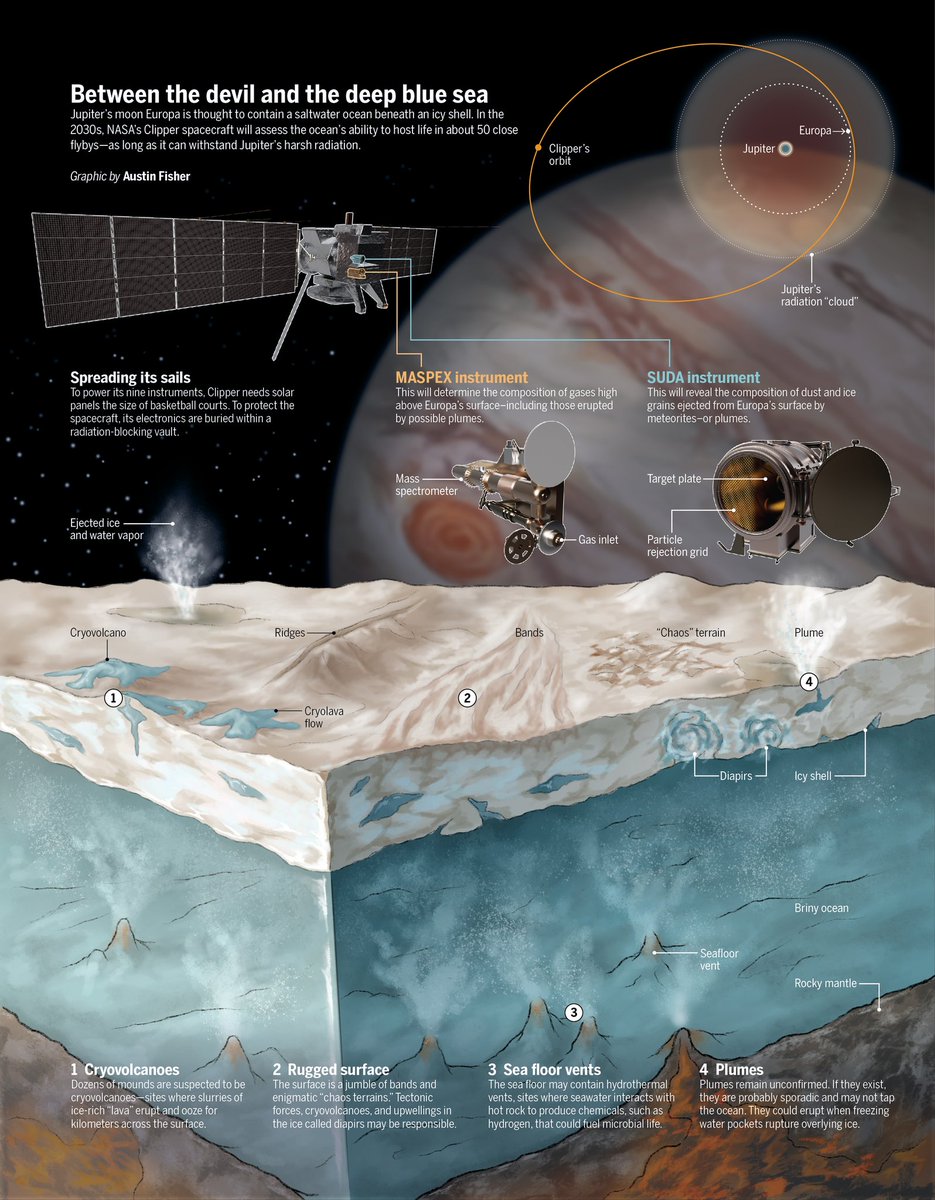
This changes the math for Europa and Enceladus.
If the crustal ice on these moons is constantly undergoing tidal flexing, we’re looking at a massive, naturally occurring planetary battery.
Question for you: Does the flexoelectric coefficient scale with ice purity, or do salt inclusions in 'dirty' space ice amplify the charge separation?
Massimo@Rainmaker1973
Scientists just discovered that twisting ice literally creates energy. Though ice appears inert and non-conductive, a recent breakthrough reveals it harbors surprising electromechanical properties. Published in Nature Physics, an international collaboration involving researchers from Spain (ICN2), China (Xi'an Jiaotong University), and the United States (Stony Brook University) has experimentally confirmed that ordinary hexagonal ice (Ih) exhibits flexoelectricity—generating an electric charge when subjected to uneven mechanical stress, such as bending, twisting, or stretching. Unlike piezoelectricity, which depends on specific non-centrosymmetric crystal structures and produces charge under uniform pressure, flexoelectricity arises from strain gradients and can occur in any dielectric material, including ice. The measured flexoelectric coefficient is comparable to that of common ceramics like TiO₂ or SrTiO₃. Additionally, at temperatures below approximately 160 K (-113°C), the experiments uncovered a thin ferroelectric "skin layer" on the ice surface, where spontaneous polarization emerges and can be reversed by an applied electric field—akin to flipping magnetic poles. Lead researcher Dr. Xin Wen noted that this dual capability means ice can generate electricity in two ways: through flexoelectricity across a wide temperature range up to 0°C, and via surface ferroelectricity in ultra-cold conditions. These findings challenge the traditional view of ice as electrically passive and may explain charge separation in thunderstorm ice-graupel collisions, contributing to lightning formation. Looking ahead, the properties could enable low-cost, in-situ transducers, flexible sensors, or energy harvesters in polar or extraterrestrial environments. [Wen, X. et al., "Flexoelectricity and surface ferroelectricity of water ice", Nature Physics (2025). DOI: 10.1038/s41567-025-02995-6]
English
Xin Wen retweetledi

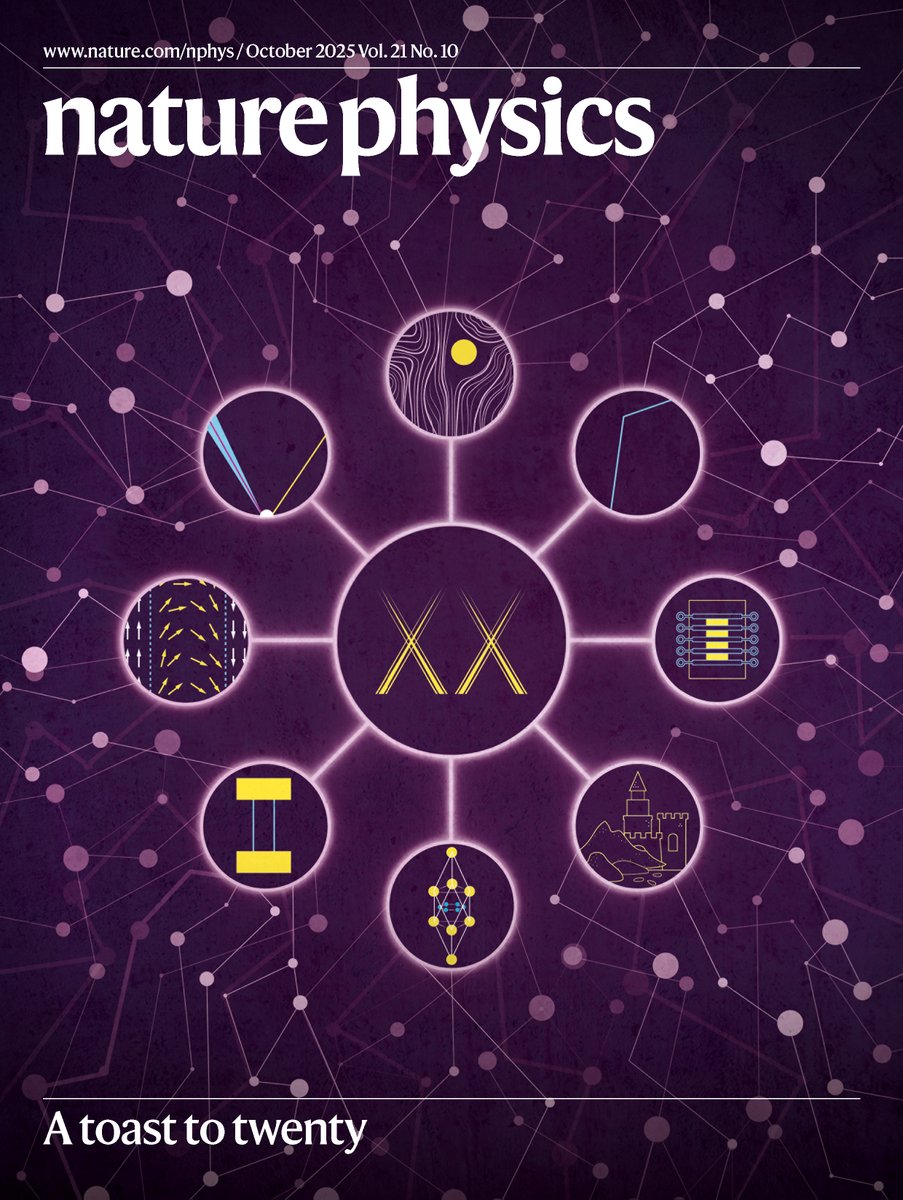
This month we celebrate Nature Physics' twentieth birthday, consider the flexoelectricity of water ice, and feature a Perspective on chiral phonons.
Have a look at go.nature.com/NPoct25
English

@VincentXjtu Congratulations on your findings. Very appreciating your hard work. 🙏
English
The brine network in sea ice greatly enhances its flexoelectric response, making it comparable to high-quality piezoelectrics. This points toward using frozen water / ice environments in cold regions as low-cost energy harvesters. nature.com/articles/s4156…

English
Xin Wen retweetledi
📃 NEW PAPER OUT
🤔 Can #salt make ice more flexible?
🧊 Dr @VincentXjtu & Prof. @GustauCatalan found that salt boosts ice's electricity when unevenly bent.
🚀 This could lead to innovative low-cost #sensors
ℹ️ Learn more about this phenomenon! 👉 f.mtr.cool/dxgtrjrebd

English
Scientists find that ice generates electricity when bent.
A new study reveals that ice is a flexoelectric material, meaning it can produce electricity when unevenly deformed. This discovery could have major technological implications while also shedding light on natural phenomena such as lightning.

English
Xin Wen retweetledi

🌩️ Com es creen els llamps de les tempestes? Un científic català està a punt d'esbrinar-ho
🔎 Gustau Catalán, investigador de l’Institut Català de Nanociència i Nanotecnologia, ha impulsat la recerca
✍️ @Eliforcat
ara.cat/societat/creen…
Català
Xin Wen retweetledi
📢 NEW PAPER OUT❗
🧊 The study reveals that ice is a flexoelectric material, meaning it can produce electricity when unevenly deformed.
🤝 ICN2 Oxide Nanophysics Group, Xi’an Jiaotong University and @stonybrooku
📜 Nature Physics
ℹ️ 👉bit.ly/45Sangl

English
Xin Wen retweetledi
Xin Wen retweetledi

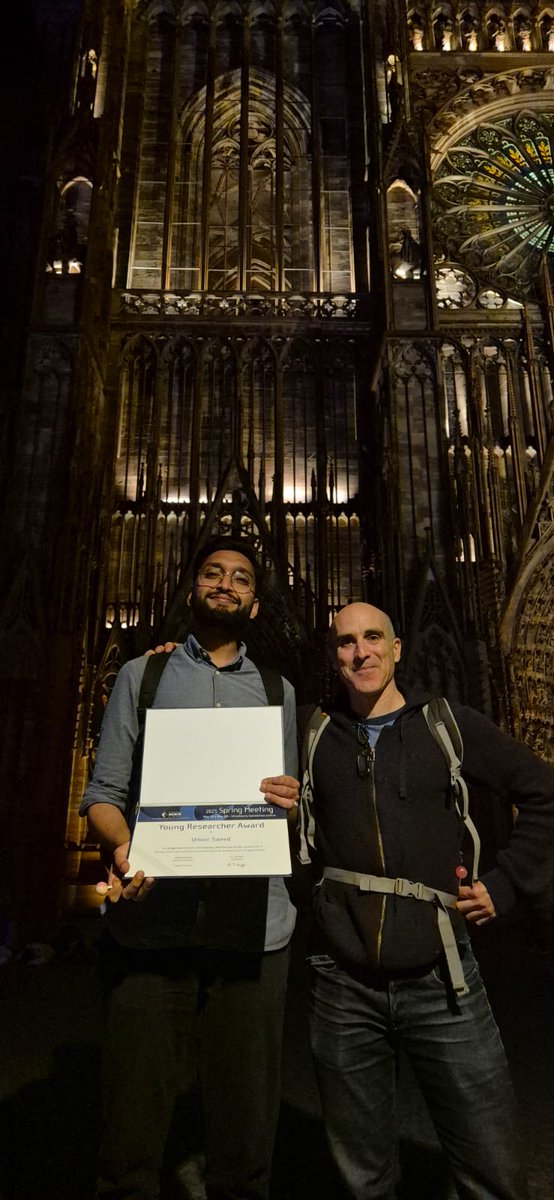
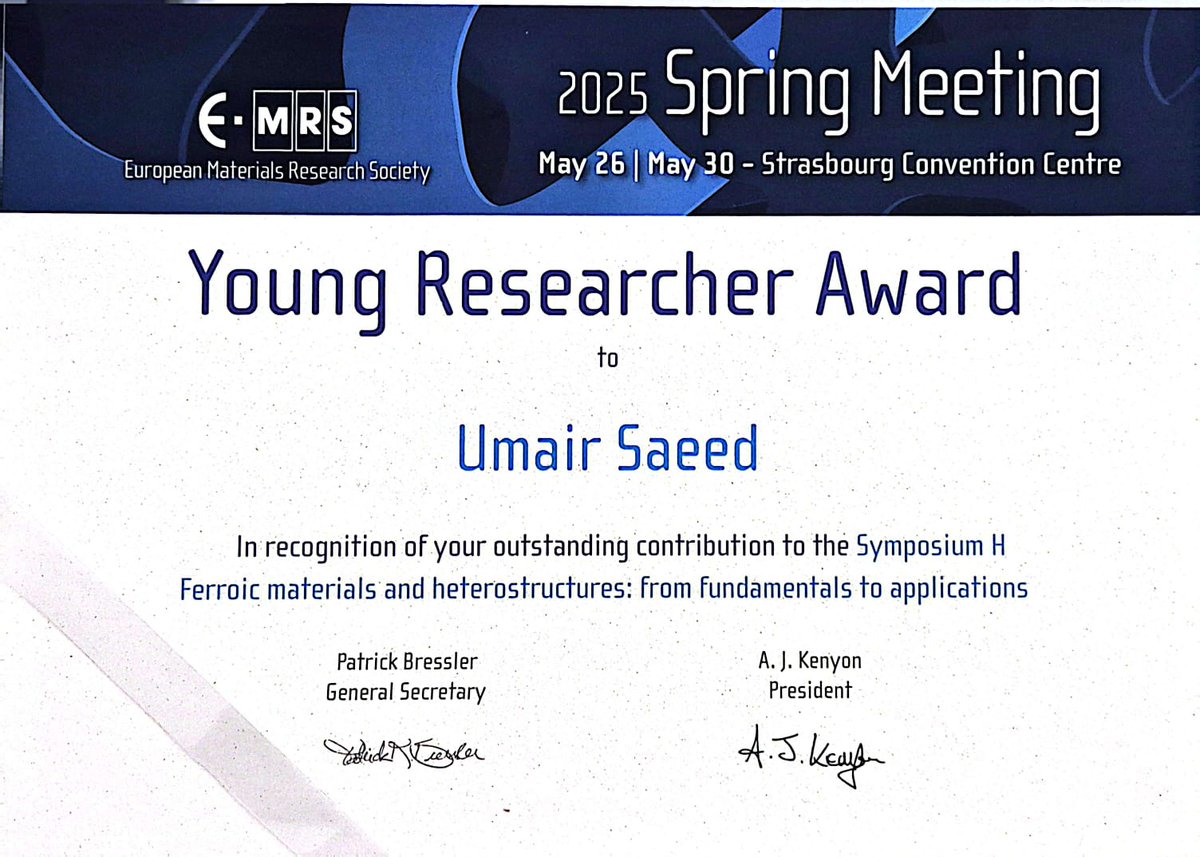
So, the E-MRS spring meeting in Strasbourg is over. It's been great every day, but my personal top spot has to be Umair Saeed (soon Dr Saeed) receiving his Young Researcher Award.
Reseach highlights are good for the ego, but student successes are
food for the soul.
@icn2nano
English
Xin Wen retweetledi
It turns out that polar topologies also exist in non-polar materials...
rdcu.be/emNVK
@icn2nano @icreacommunity @jarbiol @NatureMaterials
English
Xin Wen retweetledi

Florence’s beauty isn’t fragile.
It’s defiant.
It says:
Art matters.
Beauty matters.
Excellence matters.
It’s a city that whispers to every visitor:
“Dare to be more.”

English
Xin Wen retweetledi

Beneath Europa’s icy crust is a salty ocean, perhaps the best place in the Solar System to look for life.
Learn more on #NationalSpaceDay: bit.ly/3U3574q @NewsfromScience
English